Indian Recipes
Fiery, Tangy Goan Chicken Curry
Last updated: September 30, 2026
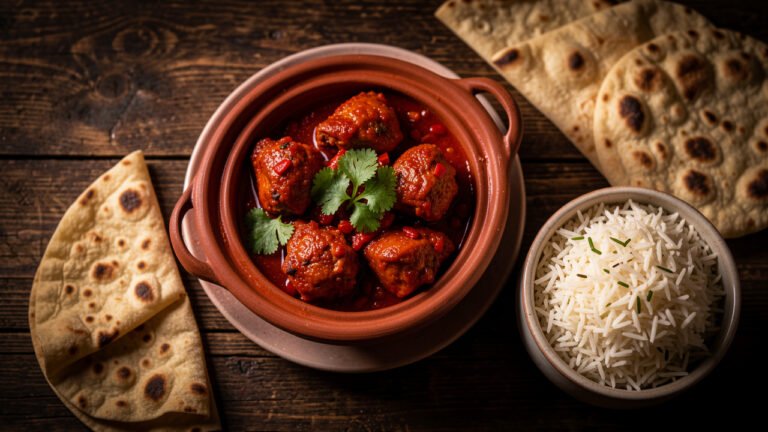
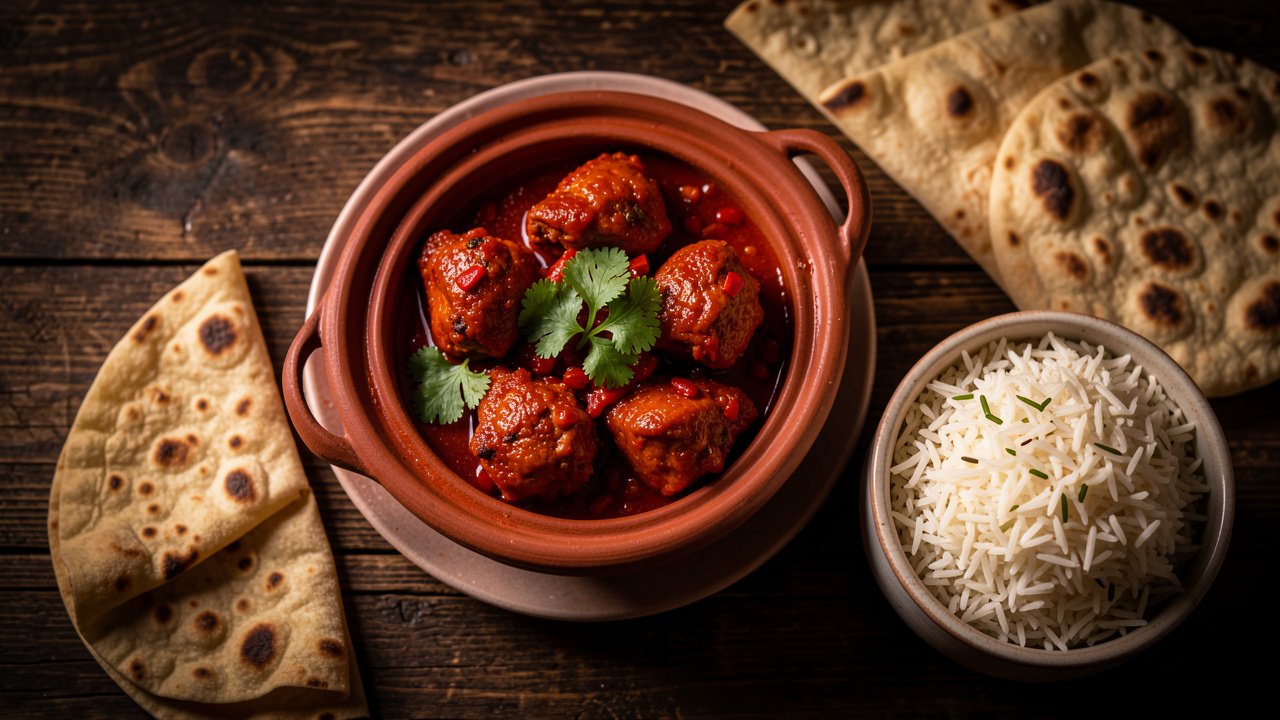
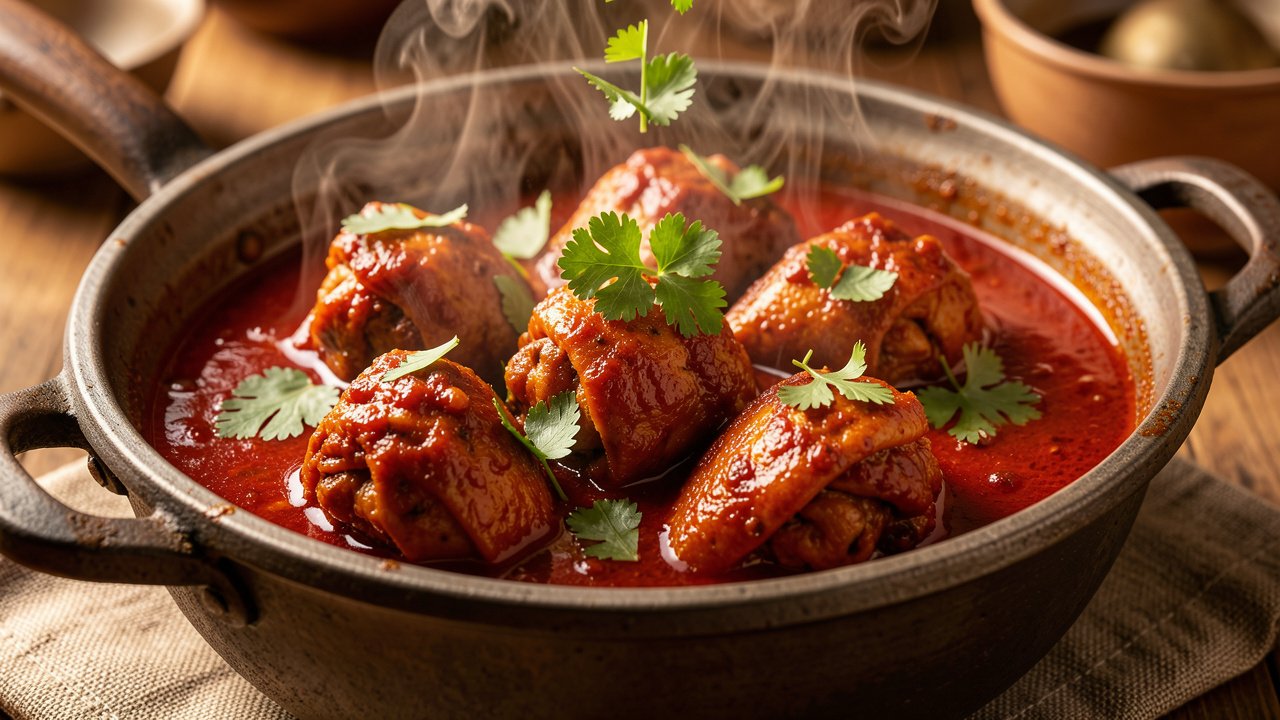
Chicken vindaloo has a reputation as one of the boldest curries on any menu, and this Goan classic earns it. Chicken is marinated in vinegar and chili, then simmered in a deep sauce of onion, tomato, garlic, ginger, and warm spices until it turns glossy and rich. What sets vindaloo apart is the tang: a good splash of vinegar cuts through the heat and the spices, giving every bite a sharp, savory edge that keeps you reaching for more rice.
Why This Vindaloo Works
Vindaloo can taste harsh when it is nothing but heat, or dull when it is only tomato. This recipe works because it balances three things: the deep sweetness of slowly fried onion and tomato, the bright sourness of vinegar, and the warmth of the spices. Get those three in tune and the chicken tastes layered rather than punishing, with heat that builds instead of just burning.
The marinade does quiet, important work. Tossing the chicken with vinegar, chili, and turmeric before it cooks seasons the meat all the way through and starts to tenderize it, so the finished pieces are juicy and flavorful rather than bland cubes sitting in a spicy sauce. Even a short rest while you build the base makes a real difference.
The sauce is built in layers. Onions are fried until deep golden, which is where the body and gentle sweetness come from, then the garlic, ginger, and ground spices are bloomed in the oil to wake up their aroma. Only then do the tomatoes go in and cook down to a thick, glossy base. Rushing any of these steps leaves the curry thin and raw-tasting.
Finally, the tang is added in two stages: some vinegar in the marinade, and a final splash at the end. Cooking mellows the first hit, while the last splash keeps that unmistakable sharp, mouthwatering edge that defines a real vindaloo. It is the single feature that sets it apart from milder curries.
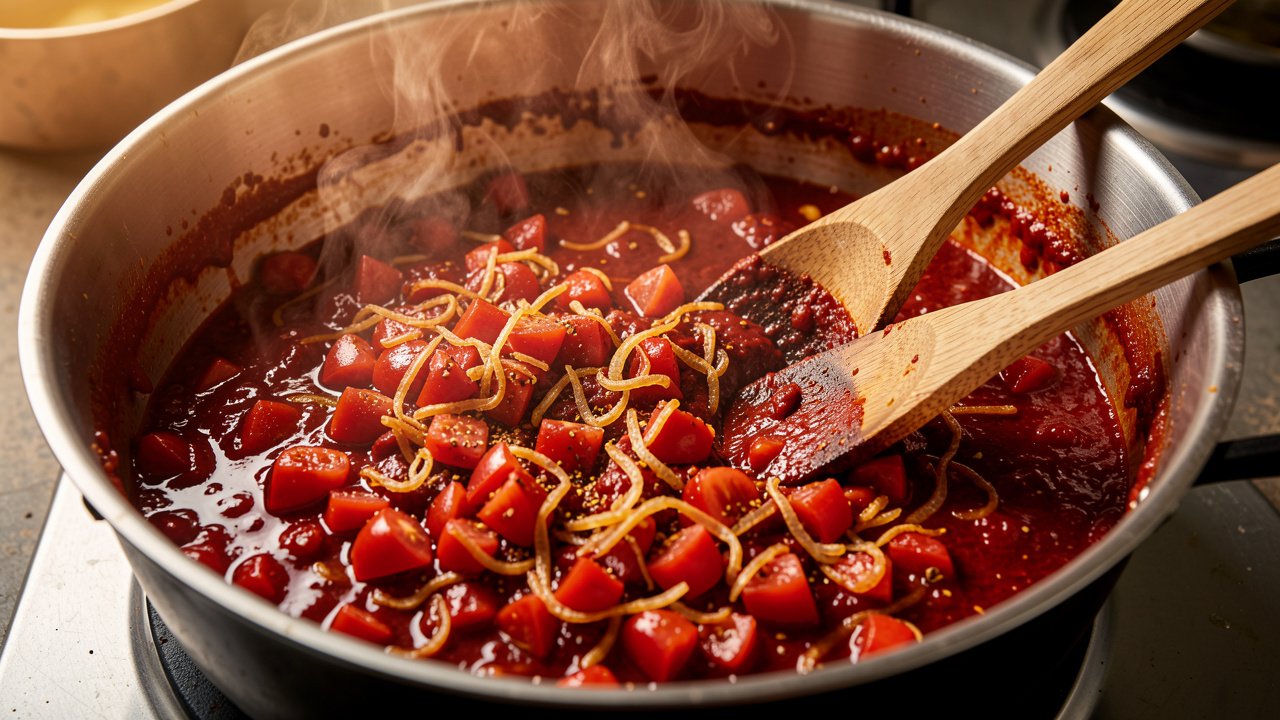
Pro observation: The sauce is ready for the chicken when the oil starts to separate and pool at the edges of the tomato base. That glossy sheen means the water has cooked off and the spices have fried properly, which is the secret to a rich, deep-colored vindaloo instead of a pale, watery one.
Ingredients
Kitchen Measurement Converter
Need to convert an amount while you measure? Pick a category, enter a value, and the result updates instantly.
Ingredient Notes & Substitutions
Chicken
Boneless, skinless thighs are ideal because they stay moist through a long simmer and soak up the tangy sauce. Bone-in thighs or drumsticks work too and add extra flavor; just simmer a little longer. Breast meat can dry out, so cut it larger and add it later.
Vinegar
Vinegar is the soul of vindaloo and provides its trademark tang. Plain white vinegar is the everyday choice, while apple cider vinegar or cane vinegar adds a mellow, fruity note. Add most of it early and save a final splash for the end so the sourness stays bright.
Chilies
Kashmiri red chili powder gives a deep red color and moderate heat, which is why it is the base here. For a hotter curry, add a spoon of hot chili powder or a chopped fresh chili. For a milder one, cut the Kashmiri powder with sweet paprika.
Aromatics & Warm Spices
Plenty of garlic and ginger are essential, echoing the garlic-heavy marinade the dish is named for. Cumin and turmeric build the earthy base, and garam masala stirred in at the end adds warmth from cinnamon, clove, and cardamom. A pinch of sugar can balance the tang if needed.
Equipment
- Heavy pot or Dutch oven
- Wooden spoon or spatula
- Sharp knife and board
- Mixing bowl
- Box grater or microplane
- Measuring spoons
Before You Start
1. Get the chicken into the marinade first. Toss the thighs with the vinegar, half the chili powder, turmeric and half the garlic and ginger before you touch an onion. The acid needs those 20 to 30 minutes to season the meat through; skip it and you get bland chicken in a spicy sauce.
2. Split the vinegar before you begin. Two tablespoons go into the marinade; pour the last tablespoon into a small cup and park it by the stove. That reserved splash goes in at the very end, and if it all disappears into the marinade the finished curry loses its bright, sharp edge.
3. Keep a cup of water next to the stove. Kashmiri chili powder and cumin scorch within seconds in hot oil, and burnt chili turns the whole pot bitter. A splash on standby cools the pan the moment the spices darken, and you need about a cup for the simmer anyway.
Step-by-Step Instructions
Vindaloo is not hard, but it rewards patience. Marinate the chicken first, then build the sauce slowly so the onions and spices have time to develop. Start a pot of rice while the curry simmers so everything is ready together.
Marinate the Chicken
In a bowl, toss the chicken chunks with 2 tablespoons of the vinegar, half the chili powder, the turmeric, half the salt, and half of the garlic and ginger. Mix well so every piece is coated, then set it aside to marinate while you build the sauce. Even 20 to 30 minutes deepens the flavor and starts to tenderize the meat.
Fry the Onions
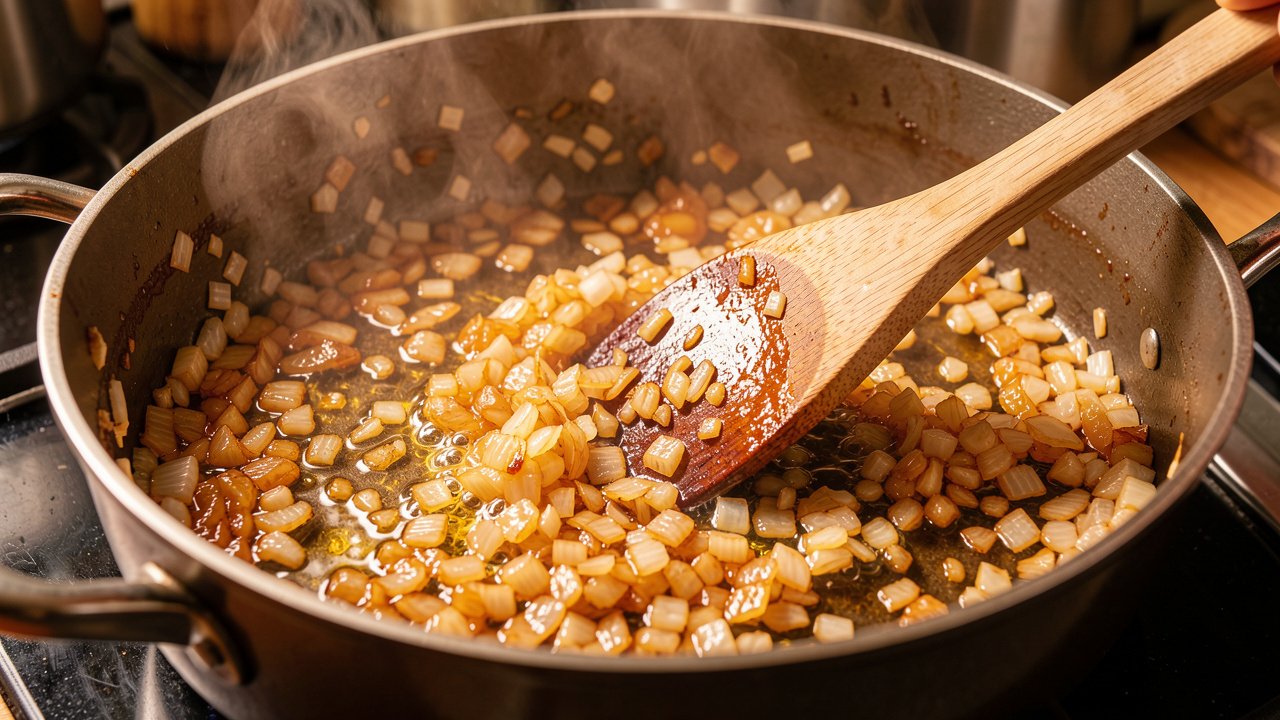
Heat the oil in a heavy pot over medium heat and add the chopped onions with a small pinch of salt. Cook 8 to 10 minutes, stirring often, until they are deep golden and jammy. This slow fry is where the sauce gets its body and gentle sweetness, so do not rush it or let the onions burn.
Bloom the Spices
Stir in the remaining garlic and ginger and cook for about 1 minute, until fragrant. Add the remaining chili powder and the cumin, and cook another 30 to 60 seconds, stirring constantly, so the ground spices fry in the oil and lose their raw edge. Add a splash of water if the pot looks dry to keep the spices from scorching.
Build the Tomato Sauce
Add the chopped tomatoes and the rest of the salt. Cook 6 to 8 minutes, stirring and mashing, until the tomatoes break down and the mixture turns thick, glossy, and darkened, with the oil starting to separate at the edges. This jammy base is what gives vindaloo its deep color and rich flavor, so let the liquid cook off fully.
Simmer the Chicken
Add the marinated chicken along with any juices in the bowl and stir to coat it in the masala. Pour in about 1 cup of water, bring to a gentle boil, then lower the heat, cover, and simmer 20 to 25 minutes, stirring now and then, until the chicken is tender and the sauce has thickened around it.
Finish and Serve
Stir in the garam masala and the last tablespoon of vinegar, then simmer uncovered for 2 to 3 more minutes to marry the flavors. Taste and adjust the salt, adding a small pinch of sugar if you want to soften the tang. Scatter fresh cilantro over the top and serve hot over steamed rice or with warm bread.
Chef’s Tips From Real Kitchen Testing
Fry the onions until they are genuinely deep golden, not just soft. This is the single biggest factor in a sauce with real body and color instead of a thin, pale gravy.
Add the vinegar in two stages, some in the marinade and a final splash at the end. Cooking mellows the first hit, while the last splash keeps that bright, tangy edge alive.
Let the tomato base cook until the oil separates before adding the chicken. Adding meat to a watery, under-cooked masala leaves the whole curry tasting raw and flat.
Recipe Variations
Serving Suggestions
- Steamed basmati rice to soak up the sauce
- Warm naan or roti for scooping
- Cooling cucumber-yogurt raita on the side
- Sliced red onion and a wedge of lime
Nutrition Facts
| Nutrient | Amount per serving |
|---|---|
| Calories | 380 |
| Protein | 34 g |
| Carbohydrates | 12 g |
| Fat | 22 g |
| Saturated Fat | 4 g |
| Fiber | 3 g |
| Sugar | 5 g |
| Sodium | 640 mg |
Values are estimates per serving and vary with the exact ingredients and brands you use.
Make-Ahead Tips
Vindaloo actually tastes better the next day, once the vinegar and spices have had time to settle into the chicken. Cook it fully, cool it, and refrigerate; the flavor deepens overnight, which makes it a great dish to prepare a day before serving.
Storage, Freezing & Reheating
Common Mistakes to Avoid
Troubleshooting
Too sour? The vinegar overwhelmed the dish. Simmer a few minutes longer and stir in a small pinch of sugar to round it out, or add a splash more water.
Too thin? The sauce needs more time. Uncover and simmer to reduce it, or mash a few chicken pieces against the side of the pot to thicken the gravy.
Too hot? Serve it with plenty of steamed rice, and next time cut the Kashmiri chili powder with sweet paprika to keep the color without the burn.
A Note on Goan Cooking
Vindaloo comes from Goa, on India’s western coast, where centuries of Portuguese trade left a lasting mark on the local kitchen. The dish traces back to a Portuguese preparation called vinha d’alhos, a garlic-and-vinegar marinade used to keep meat flavorful and preserved on long sea voyages. Goan cooks adopted that garlic-and-vinegar idea and transformed it with local dried red chilies and warm spices, and over time the name itself shifted toward the words for vinegar and garlic, which is why tang and garlic remain the two flavors that define it.
It is easy to confuse vindaloo with other curries, but one distinction matters most: unlike a korma, which is mild, creamy, and mellow, vindaloo is fiery, tangy, and built on a tomato-vinegar base with no cream at all. If you love the gentler, richer style, a dish like butter chicken (murgh makhani) sits at the opposite end of the spectrum. Goan cooking spans that whole range, from soothing coconut curries to bracing, chili-forward stews.
What makes vindaloo endure is exactly that boldness. It keeps beautifully, tastes better the next day, and scales up to feed a crowd, which is why it remains a centerpiece of Goan celebration tables. For a milder, coconut-rich cousin from the same coast, try a Goan tomato coconut curry alongside it.