Venezuelan Recipes
Quick Vegetarian Breakfast Scramble
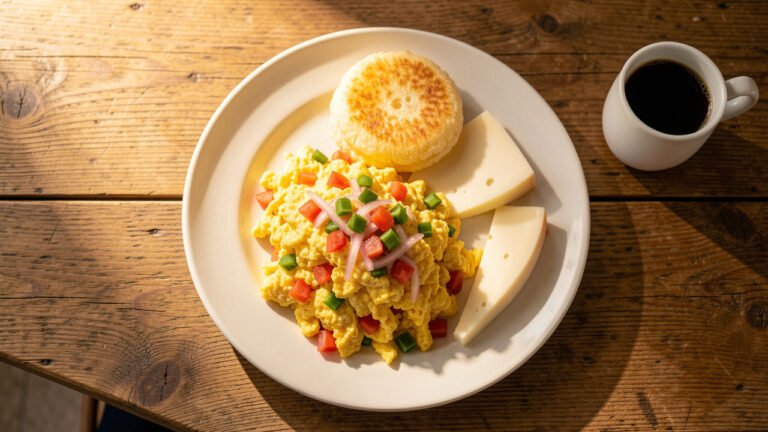
Perico is what a Venezuelan kitchen smells like in the morning. Onion and sweet pepper soften in a little butter, ripe tomato collapses into them, and then eggs go in and pull the whole thing together into a soft, savory scramble. It is humble, one-skillet food built from four everyday ingredients, and the balance of sweet cooked vegetables against soft, just-set eggs is what has kept it on the Venezuelan breakfast table for generations.
Why This Perico Works
Perico is proof that a great breakfast does not need a long list of ingredients. Eggs, tomato, onion, and sweet pepper are the whole show, and the magic is entirely in the order and the timing. Build the vegetable base first, cook the moisture out of the tomato, and only then let the eggs join. Do that and you get a scramble that is soft, glossy, and full of flavor rather than a plate of wet eggs swimming in tomato water.
The vegetable base is a small soffritto: onion and sweet pepper softened gently until they turn sweet, then tomato added and cooked until it stops being raw and starts to look jammy. This is the same instinct behind sauces all over Latin America and the Mediterranean, and it rewards a few minutes of patience with real depth.
The eggs are treated kindly. They go in lightly beaten, sit for a moment to set at the edges, and then get folded in slow, gentle strokes over low heat. You pull the pan before they look fully done, because the residual heat keeps cooking them for a few seconds on the plate. That single habit is the difference between creamy perico and rubbery perico.
It is also wonderfully flexible. Perico is a canvas for whatever you have: a handful of cheese stirred in at the end, a chopped chili for heat, or extra scallion for freshness. Once the method is second nature, you can make it your own without a recipe at all, which is exactly how it is cooked in home kitchens across Venezuela.
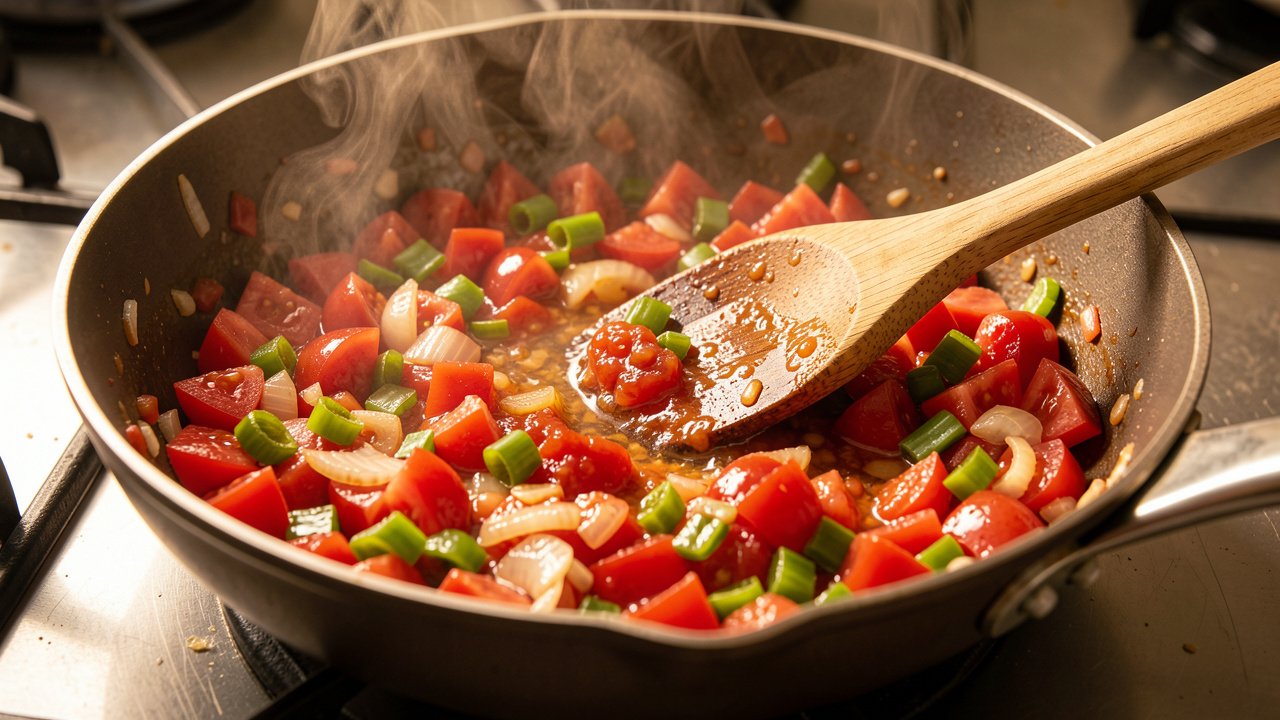
Pro observation: The tomato base is ready for the eggs when the pan looks glossy and the watery liquid has cooked off, leaving a soft, thick jam. If there is still a puddle in the pan, wait; that water is the number one cause of runny perico.
Ingredients
Ingredient Notes & Substitutions
Eggs
Fresh large eggs are the heart of perico. Room-temperature eggs cook more evenly and stay softer. Beat them just enough to blend the whites and yolks; over-beating makes the finished scramble tight rather than tender.
Tomatoes
Ripe, red tomatoes give the sweetest base. If yours are watery, scoop out some of the seeds and jelly first so the scramble does not turn soupy. Out of season, drained chopped canned tomatoes are a reliable stand-in.
Sweet Pepper
In Venezuela this is often aji dulce, a small fragrant pepper with no heat. A green bell pepper is the easy everyday swap and is what most cooks abroad reach for. Red or yellow bell pepper works too and tastes a little sweeter.
Onion & Scallion
White or yellow onion builds the savory base, while scallion is stirred in near the end for a fresh, grassy lift. Using both is traditional and gives the dish its layered oniony aroma. Cilantro at the finish is optional but classic.
Equipment
- Nonstick skillet
- Wooden spoon or spatula
- Sharp knife and board
- Mixing bowl
- Fork or whisk
- Measuring spoons
Kitchen Measurement Converter
Need to convert an amount while you measure? Pick a category, enter a value, and the result updates instantly.
Step-by-Step Instructions
Perico moves fast once the pan is hot, so chop and measure everything and lightly beat the eggs before you turn on the heat. Warm the arepas while you cook so the whole breakfast reaches the table together.
Prep the Vegetables
Finely chop the onion, bell pepper, and tomatoes, and thinly slice the scallions. Mince the garlic. Crack the eggs into a bowl with a pinch of salt and beat them lightly with a fork until just blended. Having everything ready means the eggs never sit and overcook while you catch up.
Soften the Onion and Pepper
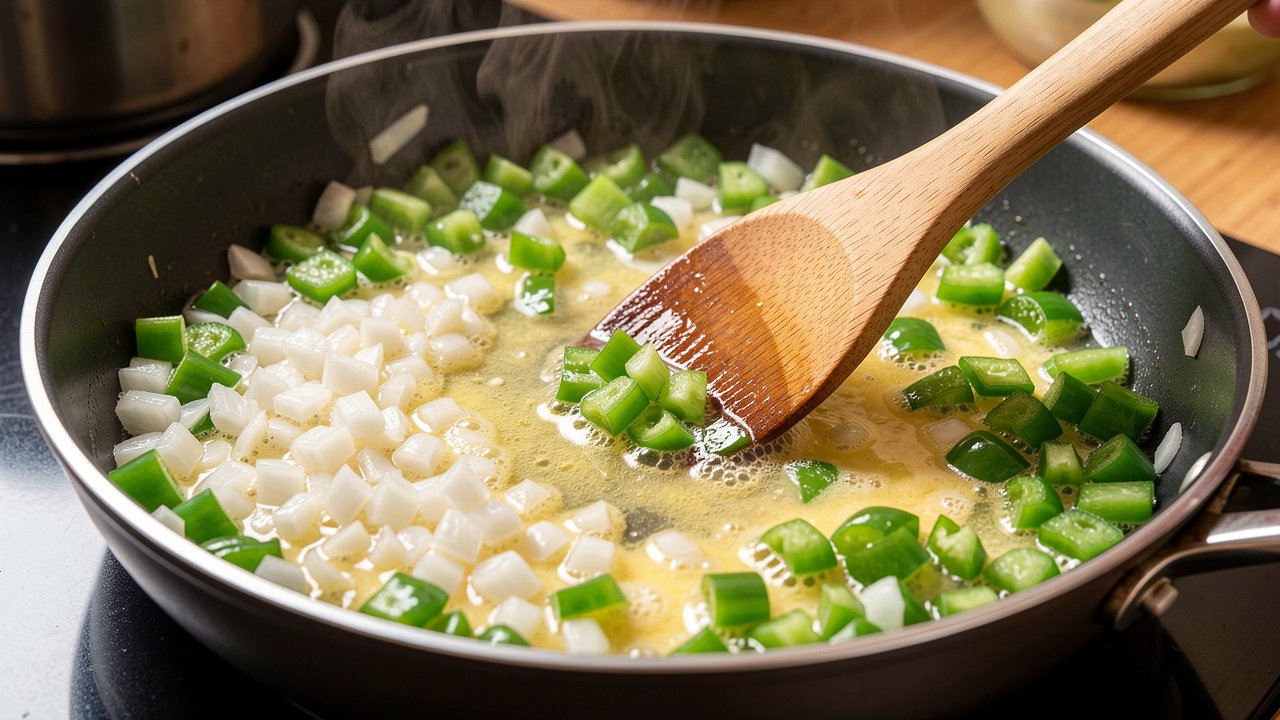
Melt the butter in a nonstick skillet over medium heat. Add the chopped onion and bell pepper with a small pinch of salt and cook 5 to 6 minutes, stirring now and then, until soft and just starting to turn golden at the edges. This gentle start is where the sweetness comes from.
Add the Garlic and Scallions
Stir in the minced garlic and most of the sliced scallions, saving a little scallion to scatter on top later. Cook for about 1 minute, until fragrant and the raw garlic smell fades. Keep the heat moderate so the garlic does not brown and turn bitter.
Cook the Tomatoes Down
Add the chopped tomatoes along with the salt and black pepper. Cook 5 to 7 minutes, stirring, until the tomatoes break down and most of their liquid cooks off, leaving a soft, glossy, jammy base. This step is not optional; if the pan still looks watery, keep going. Dry vegetables make soft, creamy eggs.
Add the Eggs
Lower the heat to medium-low and pour the beaten eggs over the vegetable base. Let them sit undisturbed for 15 to 20 seconds so the edges begin to set, then use a spatula to fold the eggs over in slow, gentle strokes, pulling the set curds toward the center and letting the loose egg run underneath.
Finish and Serve
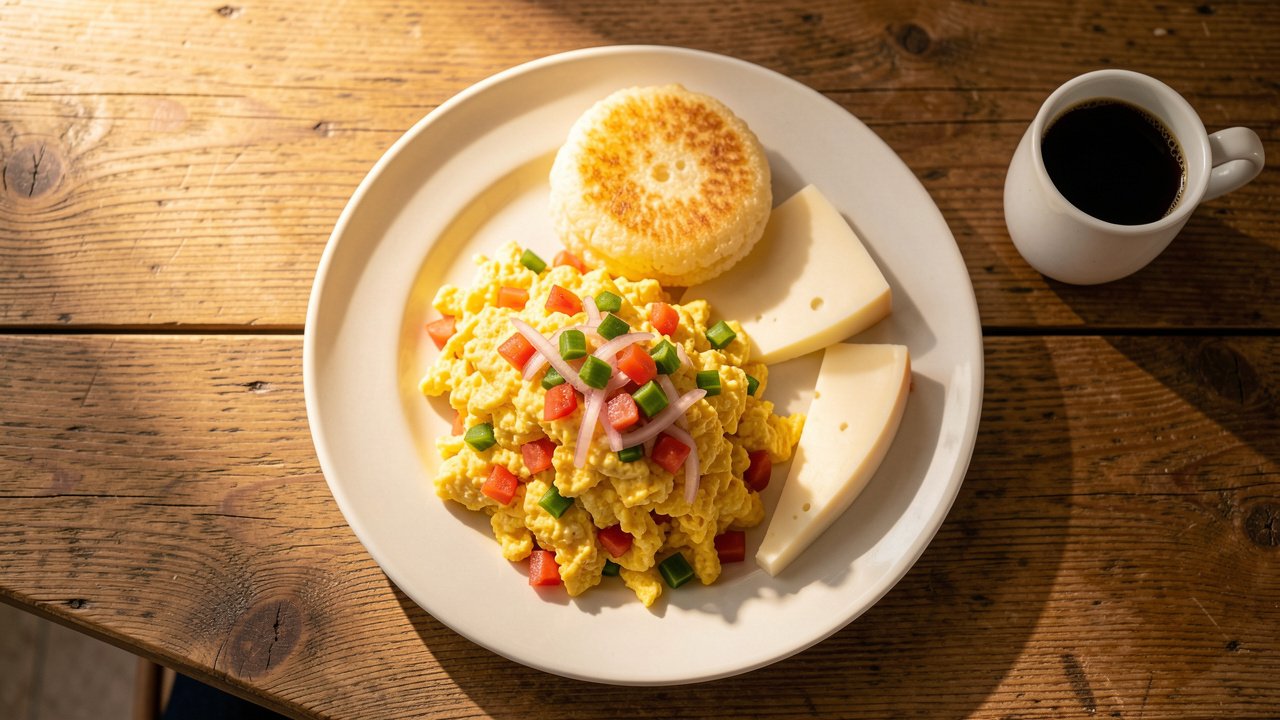
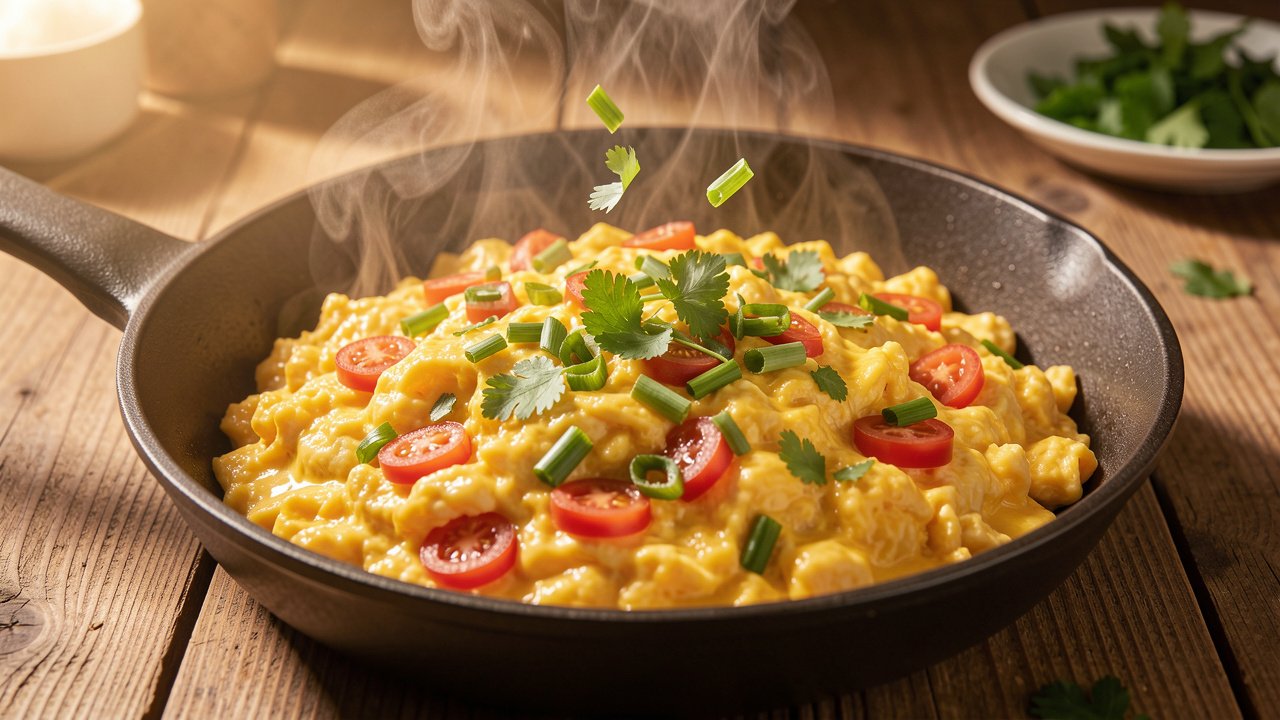
Keep folding gently until the eggs are just set but still glossy and a touch soft, about 2 to 3 minutes. Pull the pan off the heat while they still look slightly underdone, since they finish cooking from residual heat. Taste and adjust the salt, scatter the reserved scallion and the cilantro over the top, and serve right away with warm arepas and white cheese.
Chef’s Tips & Troubleshooting
Cook the moisture out of the tomatoes before the eggs go in. A dry, jammy base is the single biggest factor in perico that is creamy instead of watery.
Keep the heat medium-low once the eggs are in, and stop cooking while they still look a little soft. Carryover heat finishes them into the perfect texture.
Season the vegetable base and taste it before the eggs join, since it is much harder to correct the salt once the eggs have set.
If it did not turn out right
Watery? The tomatoes were not cooked down enough. Reduce the base until the pan looks glossy and dry, and scoop out watery tomato seeds before you start.
Rubbery eggs? The heat was too high or they cooked too long. Drop to medium-low and pull the pan while the eggs still look slightly underdone.
Tastes flat? It needs salt. Season and taste the base before the eggs go in, then finish with fresh scallion or cilantro.
Recipe Variations
Serving Suggestions
- Warm arepas, split and stuffed with the perico
- A slice of soft white cheese on the side
- Sliced avocado and extra scallion
- Strong black coffee to finish the plate
Nutrition Facts
| Nutrient | Amount per serving |
|---|---|
| Calories | 210 |
| Protein | 12 g |
| Carbohydrates | 6 g |
| Fat | 15 g |
| Saturated Fat | 6 g |
| Fiber | 1 g |
| Sugar | 3 g |
| Sodium | 380 mg |
Values are estimates per serving and vary with the exact ingredients and brands you use.
A Note on Egg Safety
Perico is meant to be eaten soft, but food-safe still matters. Cook the eggs until they are set and no longer runny, which corresponds to an internal temperature of about 160 F (71 C) if you want to check. Serve perico hot and freshly made, and do not leave cooked eggs sitting out at room temperature for more than two hours. If you are cooking for young children, older adults, or anyone with a weakened immune system, cook the eggs until firmly set rather than glossy and soft.
Make-Ahead, Storage & Reheating
A Note on Venezuelan Cooking
Perico belongs to the Venezuelan breakfast table, where the anchor is almost always the arepa: a round of ground-corn dough griddled until it forms a crisp shell around a soft center, then split and filled or served alongside. Perico spooned into a warm arepa with a slice of white cheese is one of the most beloved starts to the day, usually with a small, strong cup of coffee close by.
The name is a clue to how the dish looks. Perico is the Venezuelan word for a parakeet, and the scramble is named for the way flecks of red tomato and green pepper speckle the pale eggs like a parakeet’s bright plumage. It is close kin to the tomato-and-egg breakfasts cooked around the world, from Turkish menemen and North African shakshuka to a Chinese tomato and egg stir-fry. One dish it is often confused with is Colombian huevos pericos, which shares the name but usually skips the sweet pepper and leans on just tomato and scallion, so the Venezuelan version tastes a little sweeter and more layered.
What makes the dish so enduring is how forgiving and affordable it is. It uses pantry basics, scales up for a full table, and adapts to whatever is in the kitchen, which is the spirit of home cooking across the region.
Frequently Asked Questions
More Tomato Recipes to Try
Last updated: September 29, 2026