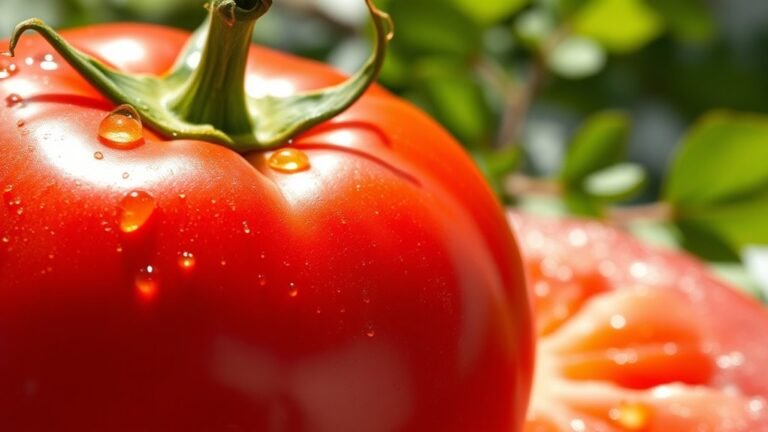
Tomatoes contain beta-carotene, which the body can turn into vitamin A. But how much vitamin A do they actually provide?
Tomatoes contain beta-carotene, a plant pigment your body can convert into vitamin A. Vitamin A is needed for normal vision, immune function, and healthy skin.
The short answer: tomatoes provide a modest amount of vitamin A, not a large one. According to USDA data, 100 grams of raw red tomato provides about 42 micrograms of vitamin A (as RAE), and a medium tomato (123 grams) about 52 micrograms, roughly 6% of the 900-microgram Daily Value. That is below the 10% level the FDA requires before a food label can call something a “good source.”
Cooking tomatoes and eating them with a little fat can help your body absorb more of their carotenoids, but this does not turn tomatoes into a major vitamin A source.
This guide answers the question “Are Tomatoes a Good Source of Vitamin A?”, explains what vitamin A does, and shows practical ways to get more of it from tomatoes and other foods.
Key Takeaways
- Tomatoes provide a modest amount of vitamin A (about 6% of the Daily Value in a medium tomato) in the form of beta-carotene.
- Vitamin A supports normal vision, including vision in low light.
- Vitamin A also helps maintain healthy skin and immune function.
- Cooking tomatoes can make their carotenoids easier to absorb.
- Maximize absorption by pairing tomatoes with healthy fats like olive oil.
How Tomatoes Help Protect Your Vision With Vitamin A
The red color of a tomato comes mainly from lycopene, with a smaller amount of beta-carotene.
Your body can convert beta-carotene, but not lycopene, into vitamin A. The retina needs vitamin A to make the pigment that lets you see in dim light, and a shortage can cause night blindness.
Vitamin A also helps keep the cornea and the surface of the eye healthy. Tomatoes supply only a small share of the vitamin A you need, and on their own they do not protect your eyes.
Adding tomatoes to salads and sauces is an easy way to include one more source of carotenoids in a varied diet.
How Tomatoes and Vitamin A Maintain Glowing Skin
Vitamin A also matters for healthy skin, and tomatoes contribute a little of it through beta-carotene.
Tomatoes contribute beta-carotene, which the body can use to make vitamin A, a nutrient needed for normal skin maintenance.
Beta-carotene also has antioxidant activity, although eating it has not been shown to prevent skin aging or to replace sun protection.
That said, its benefits go deeper. Vitamin A helps regulate skin cell production and turnover. Getting enough vitamin A from a varied diet supports the skin’s natural renewal process.
Tomatoes can be one part of that varied diet, alongside richer vitamin A sources.
Can You Get Enough Vitamin A Just From Tomatoes?
Tomatoes provide some vitamin A, but you cannot realistically get enough from them alone. The adult RDA is 900 micrograms RAE a day for men and 700 for women (NIH Office of Dietary Supplements). At about 52 micrograms per medium tomato, you would need more than a dozen tomatoes every day.
They are still a useful part of a varied diet. Your body absorbs their carotenoids best with a little healthy fat. Drizzle on olive oil or add some avocado.
For more vitamin A, pair tomatoes with richer sources such as carrots, sweet potatoes, spinach, eggs, or dairy.
Cooking vs. Raw: Which Provides More Tomato Vitamin A?
Cooking can increase the share of carotenoids your body absorbs. Heat breaks down the plant’s cell walls, which makes beta-carotene easier to release, and your body can then convert some of it into vitamin A. The research on this effect is strongest for lycopene, which does not become vitamin A.
A fresh salad is still a good choice, and raw tomatoes keep more vitamin C.
Tomatoes in sauces, soups, or roasted dishes are a good alternative, especially when cooked with a little oil.
Eating tomatoes both raw and cooked is a sensible mix.
Why Tomato Vitamin A Is a Safer, Daily Choice
The vitamin A in tomatoes comes as beta-carotene, which is a safe choice for everyday eating. Your body converts beta-carotene into vitamin A as needed, so beta-carotene from food does not cause vitamin A toxicity. The only known effect of very high intake is carotenodermia, a harmless yellow-orange tint to the skin.
Supplements are different. Preformed vitamin A from high-dose supplements can build up to toxic levels, and too much during pregnancy can cause birth defects. In two large trials, high-dose beta-carotene supplements raised lung cancer risk in smokers. In the US, the FDA does not approve dietary supplements before they are sold, and supplements can interact with medicines, so talk to your doctor before taking vitamin A or beta-carotene supplements, especially if you are pregnant, smoke, or take medication.
For most people, a food-first approach that includes tomatoes and other colorful vegetables is the simplest way to get enough vitamin A.
5 Easy Recipes to Boost Vitamin A With Tomatoes
Tomatoes are an easy, versatile ingredient to include in meals. They contain beta-carotene (which your body can convert to vitamin A), and several of these recipes add other vitamin A sources such as eggs, cheese, and red bell pepper.
These 5 simple recipes make it effortless. Every dish puts tomatoes front and center, paired with healthy fats (olive oil, cheese, eggs, or avocado) to help your body absorb the carotenoids. All are quick and simple.
1. Sun-Dried Tomato Morning Omelet
Whisk 3 eggs with a splash of milk, stir in ¼ cup chopped sun-dried tomatoes, a handful of fresh herbs, and a sprinkle of grated cheese. Cook in 1 tsp olive oil for 4–5 minutes. A quick breakfast; the eggs and cheese add vitamin A of their own.
2. Chilled Tomato Gazpacho
Blend 4 large ripe tomatoes, ½ cucumber, ½ red bell pepper, 1 garlic clove, 2 tbsp olive oil, a splash of apple cider vinegar, and salt until silky. Chill for 20–30 minutes (or make it the night before). This no-cook, vibrant soup keeps all the raw beta-carotene intact and tastes like summer in a bowl.
3. One-Pan Roasted Cherry Tomato Pasta
Toss 2 cups cherry tomatoes with olive oil, garlic, dried oregano, and salt on a sheet pan. Roast at 400°F (200°C) for 15 minutes until caramelized and bursting. Toss with cooked pasta and parmesan cheese. The roasting concentrates the flavor and the fats from oil and cheese help your body absorb the carotenoids.
4. Quick Creamy Tomato Basil Soup
Sauté 2 garlic cloves in olive oil, add 4 chopped fresh tomatoes (or one 28-oz can), simmer 10 minutes with a handful of basil. Blend smooth, then swirl in 1 tbsp olive oil or coconut milk. Ready in 20 minutes flat. Cozy and comforting, and cooking the tomatoes in oil makes their carotenoids easier to absorb. Good for lunch or dinner.
5. Fresh Tomato Avocado Bowl
Dice 3 ripe tomatoes and 1 avocado, mix with red onion, lime juice, fresh cilantro, and a generous drizzle of olive oil. Add chickpeas for extra protein if you want. Takes 5 minutes, zero cooking, and the avocado and olive oil help your body absorb the tomatoes’ carotenoids. Great as a light lunch or side.
These recipes are simple enough to become kitchen staples.
Healthy eating does not need a fancy kitchen or hours of prep. Pick one recipe to try this week.
Pair Tomatoes With Fat for Maximum Vitamin A Benefit
Those recipes are a great start, but here’s the thing: how you prepare tomatoes matters just as much. Your body needs a little healthy fat to absorb carotenoids such as beta-carotene and lycopene well.
This is easy to do.
For a quick fix, just drizzle extra virgin olive oil over cherry tomatoes in a salad. That said, don’t stop there. Top your bruschetta with fresh mozzarella or a sprinkle of Parmesan.
You can also cook tomatoes into a sauce. Simmer them with avocado oil for a richer, more bioavailable pasta topping.
Tomatoes provide a modest, safe amount of vitamin A in the form of beta-carotene, roughly 6% of the Daily Value in a medium tomato. To maximize their benefits, remember to cook them and pair them with a little healthy fat. For complete nutrition, enjoy them as part of a varied diet. Share your favorite tomato recipe with our community below.