Chadian Recipes
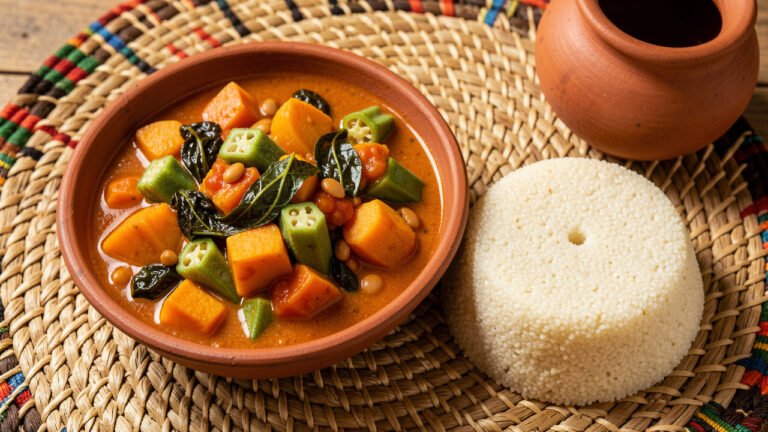
Okra, Peanut and Tomato Vegetable Stew
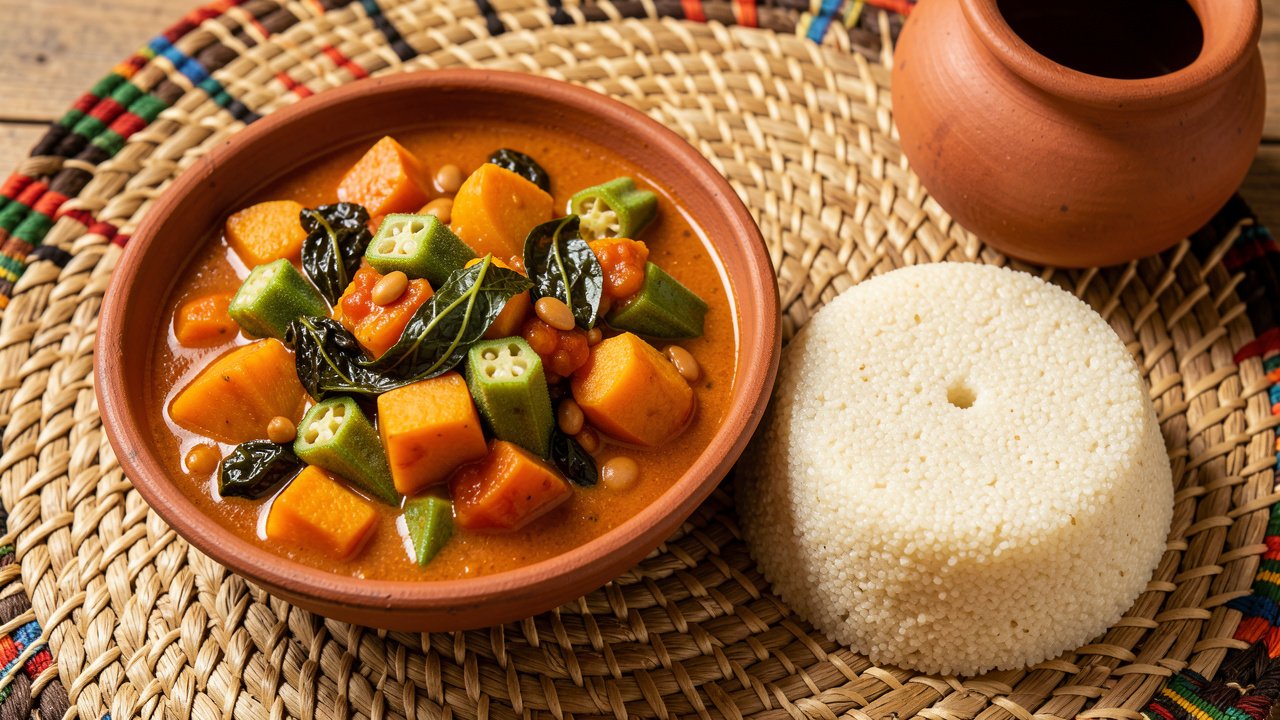
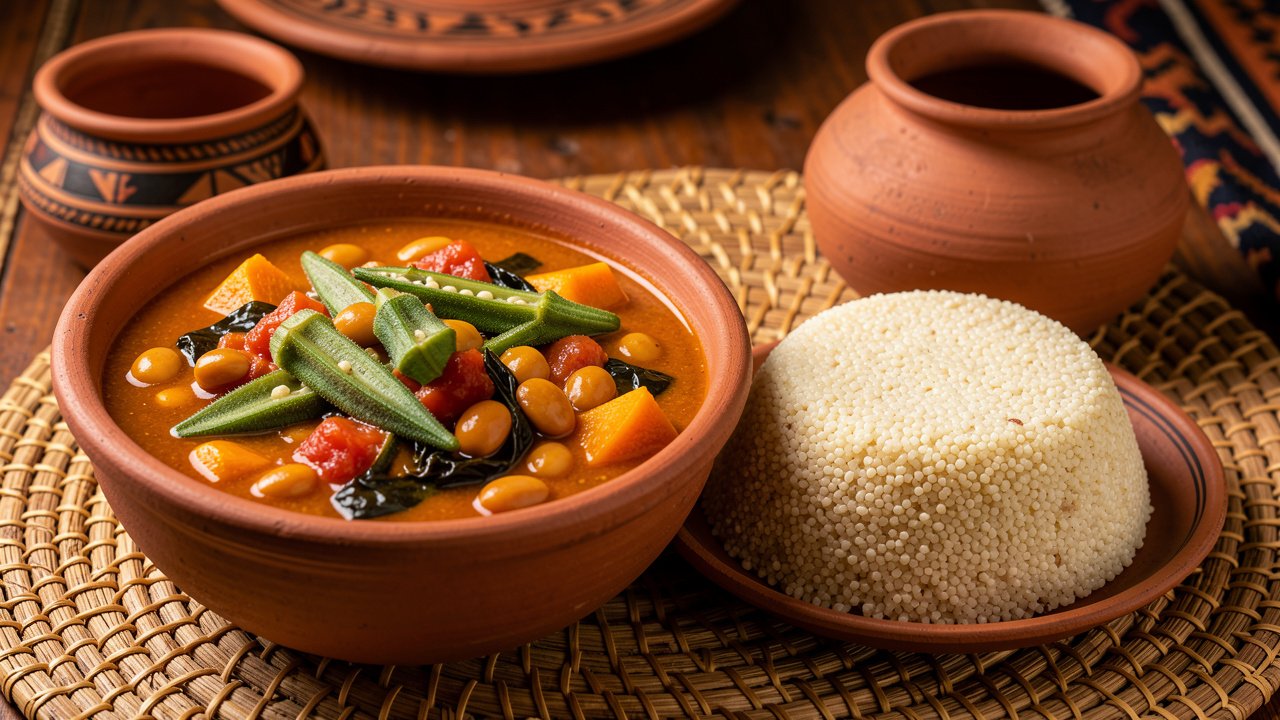
Daraba is the kind of stew that makes a whole pot of humble vegetables taste like a celebration. The okra and peanut butter do something clever together, turning a watery vegetable pot into a glossy, spoon-coating sauce that clings to every bite. It is filling without any meat, and it stretches easily to feed a crowd.
I first learned how forgiving this dish is when I ran out of pumpkin and doubled the sweet potato instead. The stew did not mind at all. That is the spirit of daraba across Chad and its neighbors: you cook with whatever the market gives you, bind it with groundnuts, and let the tomatoes carry the tang.
Why This Chadian Daraba Works
Daraba works because it is built on two natural thickeners that need no flour and no cream. Okra releases a gentle gel as it cooks, and peanut butter melts into the tomato base to give the sauce body and a rich, roasted depth. Together they turn a pot of mixed vegetables into a stew that feels substantial and complete.
The vegetables are not just filler either. Sweet potato and pumpkin bring a soft sweetness that balances the tang of the tomatoes, eggplant melts down to add silky texture, and the leafy greens keep everything fresh and earthy. Each vegetable is added in the right order so that nothing turns to mush before the rest is ready.
The tomato and onion base is the quiet backbone. Cooked down until jammy, it seasons the whole pot and stops the peanut butter from tasting flat or heavy. A little chili and garlic lift the finish so the stew stays lively from the first spoonful to the last.
Best of all, daraba is naturally vegan and endlessly flexible. Once you understand the method, you can swap vegetables with the seasons and never make the exact same pot twice, which is precisely how it is cooked across Chad and the wider Sahel.
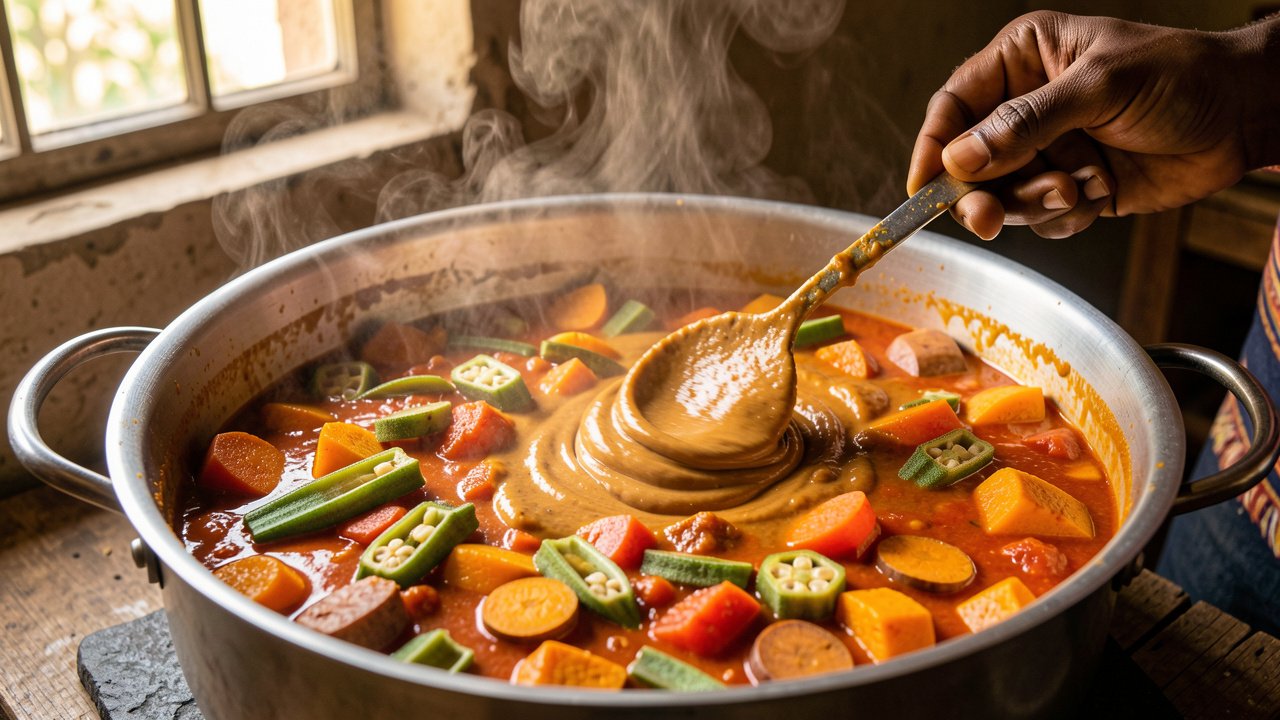
Pro observation: The sauce is ready when a spoon dragged across the bottom of the pot leaves a brief trail before the sauce flows back. That is the peanut butter and okra doing their thickening work together.
A Note for Peanut Allergies
Important: Daraba is built on peanuts. Peanut butter is a defining, non-optional ingredient, and peanut oil may also be used. This dish is not suitable for anyone with a peanut or groundnut allergy, and it should never be served where a peanut allergy is a concern. There is no safe substitution that keeps the dish authentic. If you need a nut-free stew, please choose a different recipe entirely rather than trying to adapt this one.
Ingredients
Kitchen Measurement Converter
Quickly convert between common cooking measurements without leaving the recipe. Pick a category, enter a value, and the result updates instantly.
Ingredient Notes & Substitutions
Peanut Butter
Use a smooth, natural peanut butter with no added sugar for the truest groundnut flavor. Stir it into a little warm broth first so it loosens and blends smoothly instead of clumping in the pot.
Okra
Fresh okra gives the best texture and natural thickening. Frozen sliced okra works well too. Slice it just before it goes in and stir gently, since heavy stirring makes it release too much of its slippery gel.
Vegetables
Sweet potato, pumpkin and eggplant are traditional, but the mix is forgiving. Butternut squash stands in for pumpkin, and carrot or cassava can join the pot. Keep the dice roughly even so everything cooks in step.
Leafy Greens
Amaranth leaves are classic across the Sahel, but spinach, chard or collard greens all work. Sturdier greens go in a little earlier; tender spinach needs only the last few minutes to wilt.
Equipment
- Large heavy pot or Dutch oven
- Wooden spoon
- Sharp knife and board
- Small bowl for the peanut mix
- Vegetable peeler
- Ladle
Before You Start
1. Cut the vegetables by cooking time. Dice the sweet potato and pumpkin small so they soften in time, and keep the tender greens separate to add at the very end.
2. Loosen the peanut butter. Whisk it with a ladle of warm broth in a small bowl so it pours in as a smooth cream and does not seize into lumps.
3. Start the boule or rice. Daraba is best with millet porridge or rice, so get that going before the stew reaches its final simmer.
Step-by-Step Instructions
Build the Tomato and Onion Base
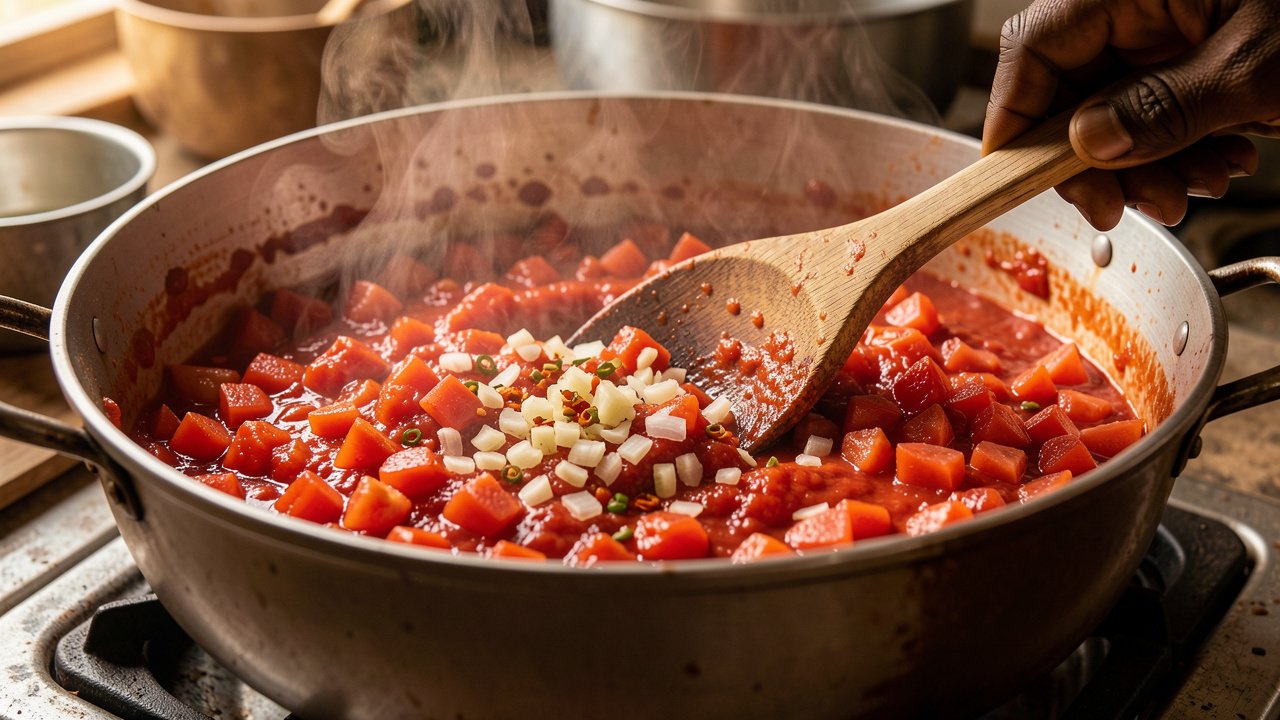
Heat the peanut oil in a large heavy pot over medium heat. Add the chopped onion and cook 5 to 6 minutes until soft and golden. Stir in the garlic and minced chili and cook 1 minute more until fragrant, then add the ground ginger and let it warm through for a few seconds.
Cook Down the Tomatoes
Add the chopped tomatoes and tomato paste along with a pinch of the salt. Cook 8 to 10 minutes, stirring often, until the tomatoes collapse into a thick, jammy base and the oil begins to glisten at the edges. This step builds the deep, tangy foundation of the stew.
Add the Firm Vegetables
Add the diced sweet potato, pumpkin and eggplant, then pour in the vegetable broth. Bring to a gentle boil, lower to a simmer, and cook 15 minutes with the lid ajar until the sweet potato and pumpkin are starting to turn tender but still hold their shape.
Stir in the Peanut Butter and Okra
Whisk the peanut butter with a ladle of the hot broth in a small bowl until smooth, then stir it back into the pot. Add the sliced okra and the rest of the salt. Simmer gently 12 to 15 minutes, stirring only now and then, until the sauce thickens and turns glossy and the okra is tender.
Wilt in the Greens
Fold in the chopped leafy greens and let them simmer 4 to 5 minutes until wilted and tender. If the stew has thickened more than you like, loosen it with a splash of warm broth or water. It should be thick and stew-like, not dry.
Taste, Adjust and Serve
Taste and adjust with more salt or a little more chili for heat. Let the daraba rest off the heat for a few minutes so the flavors settle, then serve hot with a mound of millet boule or steamed rice alongside.
Chef’s Tips From Real Kitchen Testing
Loosen the peanut butter in warm broth before it goes in. Adding it straight from the jar makes it clump and sit on top instead of melting into a smooth sauce.
Stir the okra gently and sparingly. The more you beat it around, the more gel it throws off, which can tip the stew from silky into slippery.
Keep the heat low once the peanut butter is in. A hard boil can make the peanut oil separate and pool on the surface, so a gentle simmer keeps everything glossy and bound.
Recipe Variations
Serving Suggestions
- Millet or sorghum boule, the classic pairing
- Steamed white rice or fluffy couscous
- Extra minced chili or hot sauce on the side
- A wedge of lime and a scatter of fresh herbs
Nutrition Facts
| Nutrient | Amount per serving |
|---|---|
| Calories | 340 |
| Protein | 11 g |
| Carbohydrates | 38 g |
| Fat | 18 g |
| Saturated Fat | 3 g |
| Fiber | 9 g |
| Sugar | 12 g |
| Sodium | 640 mg |
Values are estimates per serving and vary with the exact ingredients and brands you use.
Make-Ahead Tips
Daraba is an excellent make-ahead dish, because the peanut and tomato flavors deepen as it rests. Cook it a day in advance, cool it fully, and refrigerate. Reheat gently on the stove and stir in a splash of warm broth or water to loosen the sauce, since it thickens considerably as it sits. Add fresh greens or herbs at the end if you want to brighten it back up.
Storage, Freezing & Reheating
Common Mistakes to Avoid
Troubleshooting
Stew turned slimy? The okra was stirred too hard or cooked too fast. Next time slice it just before adding, stir gently, and keep the simmer low and steady.
Peanut oil pooling on top? The pot boiled too hard and the sauce split. Lower the heat and whisk in a splash of warm broth to bring it back together.
Sauce too thick or pasty? Loosen it with warm broth or water, a little at a time, until it flows like a hearty stew again.
A Note on Chadian Cooking
Groundnuts are woven through the cooking of Chad and the wider Sahel, where peanuts thrive in the dry climate and turn up in sauces, snacks and stews of every kind. Daraba is one of the best-loved examples: a peanut-thickened vegetable pot that stretches a modest harvest into a filling meal for the whole family, which is why it is so often called a national vegetable dish.
Okra is the other quiet hero of the region. Cooks across West and Central Africa rely on it to thicken sauces naturally, and in daraba it teams up with peanut butter to give the stew its signature glossy body. The tomato base ties it to a broader family of tomato-rich African stews that lean on ripe fruit for tang and color.
The traditional partner is boule, a smooth stiff porridge of millet or sorghum that is pinched into pieces and used to scoop up the sauce by hand. If you enjoy building meals around a good tomato base, our hearty tomato lentil soup shares the same generous, one-pot spirit, and you can browse more ideas in our full collection of tomato recipes.
Frequently Asked Questions
More Tomato Recipes to Try
Last updated: August 25, 2026