Ukrainian Recipes
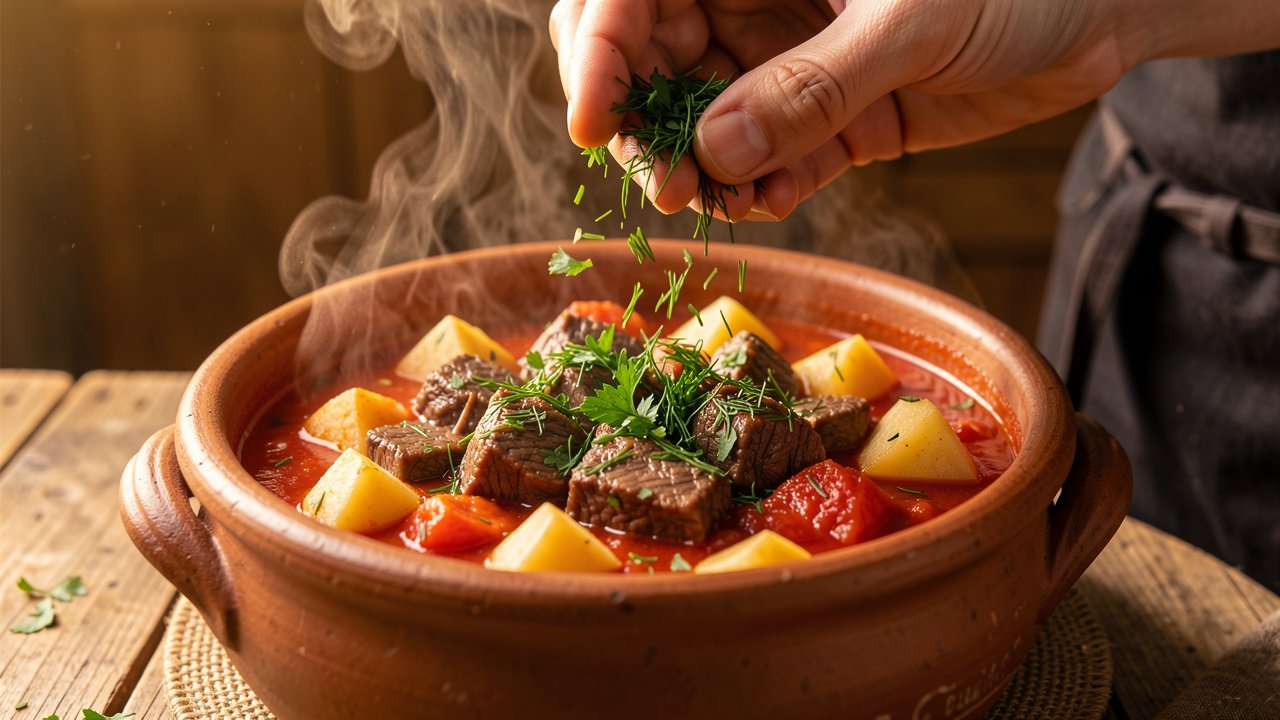
Homey Beef and Potato Tomato Stew
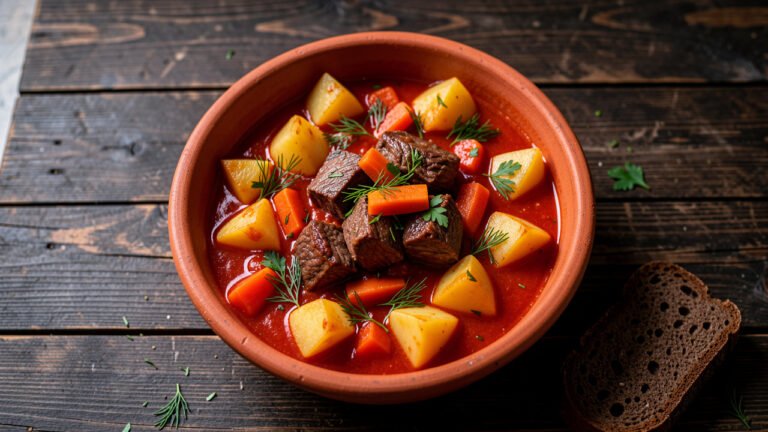
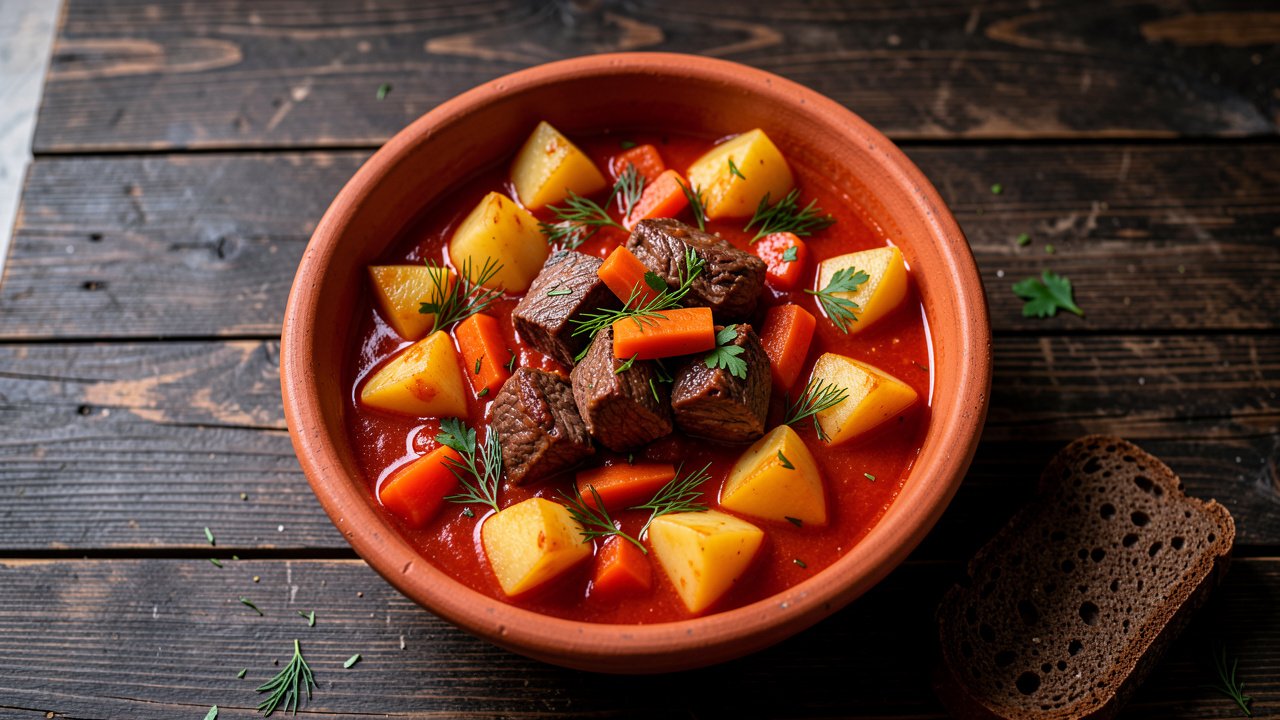
Zharke is the kind of dish that fills the whole house with the smell of slow-cooked beef and sweet onions before you have even set the table. It is unfussy, forgiving, and built around a handful of everyday vegetables, yet the long, gentle braise turns them into something that tastes like a special occasion. The secret is patience, not technique.
I learned that lesson the hard way. The first time I made zharke I hurried the beef and dropped the potatoes in far too early. The meat was chewy and the potatoes had collapsed into the sauce. Slow it all down, and the same ingredients reward you with tender beef and potato chunks that hold their shape in a thick tomato gravy.
Why This Ukrainian Zharke Works
Zharke works because it builds flavor in clear, unhurried stages. Browning the halal beef first creates a deep, savory crust that dissolves into the sauce as it braises. That single step is the difference between a stew that tastes rich and one that tastes merely warm. Do not crowd the pot, or the meat steams instead of browns.
The tomatoes and tomato paste do double duty. Fresh tomatoes bring brightness and body, while a spoonful of concentrated paste adds a mellow, roasted depth and helps the sauce cling to every chunk of beef and potato. Together they give zharke its signature glossy, brick-red gravy.
Timing the vegetables is what keeps the dish from turning to mush. The carrot and onion go in early to melt into the base, but the potatoes are added later so they cook through while still holding their shape. Bay and peppercorns quietly perfume the whole pot without ever shouting.
Best of all, zharke is generous and adaptable. The same slow-braise method welcomes mushrooms, swaps beef for chicken, or moves into a clay pot for the oven. Once you understand the rhythm of brown, soften, braise, and finish, you can turn a few root vegetables into a comforting dinner any night of the week.
Pro observation: The braise is ready when a fork slides into a chunk of beef with almost no resistance and the sauce coats the back of a spoon. If the meat still feels tight, it simply needs more time over low heat.
Ingredients
Kitchen Measurement Converter
Quickly convert between common cooking measurements without leaving the recipe. Pick a category, enter a value, and the result updates instantly.
Ingredient Notes & Substitutions
Halal Beef
Use a well-marbled cut of halal beef such as chuck, shoulder, or shin, cut into generous chunks. These braise into tender, juicy pieces. Lean cuts can turn dry over a long braise, so favor pieces with a little connective tissue.
Potatoes
Choose firm, waxy or all-purpose potatoes that hold their shape. Cut them into large, even chunks so they cook through without falling apart. Peel them for a classic look, or leave the skins on for a rustic finish.
Tomatoes and Paste
Ripe fresh tomatoes give the brightest flavor, but a 14-ounce can of chopped tomatoes works well out of season. The spoonful of tomato paste is not optional; it deepens the color and body of the sauce.
Dill and Parsley
Fresh dill is the classic Ukrainian finish and gives zharke its unmistakable aroma. Parsley adds a clean, grassy note. Stir both in at the very end so they stay bright rather than cooking down into the sauce.
Equipment
- Heavy pot or Dutch oven
- Clay pot (optional)
- Sharp knife and board
- Wooden spoon
- Tongs for the beef
- Measuring spoons
Before You Start
1. Pat the beef dry. Dry meat browns far better than wet meat. Blot the chunks with a paper towel and season them just before they hit the hot oil so they build a good crust.
2. Cut vegetables in even chunks. Match the potato and carrot pieces in size so everything cooks at the same rate and nothing turns to mush while the rest is still firm.
3. Have your stock warm. Adding warm stock keeps the braise from cooling down and stalling, so the beef gets straight back to gentle bubbling.
Step-by-Step Instructions
Brown the Halal Beef
Pat the halal beef chunks dry and season with salt. Heat the oil in a heavy pot over medium-high heat until it shimmers. Working in batches so you do not crowd the pot, brown the beef on all sides until it has a deep, savory crust, about 6 to 8 minutes per batch. Transfer the browned meat to a plate.
Soften Onion and Carrot
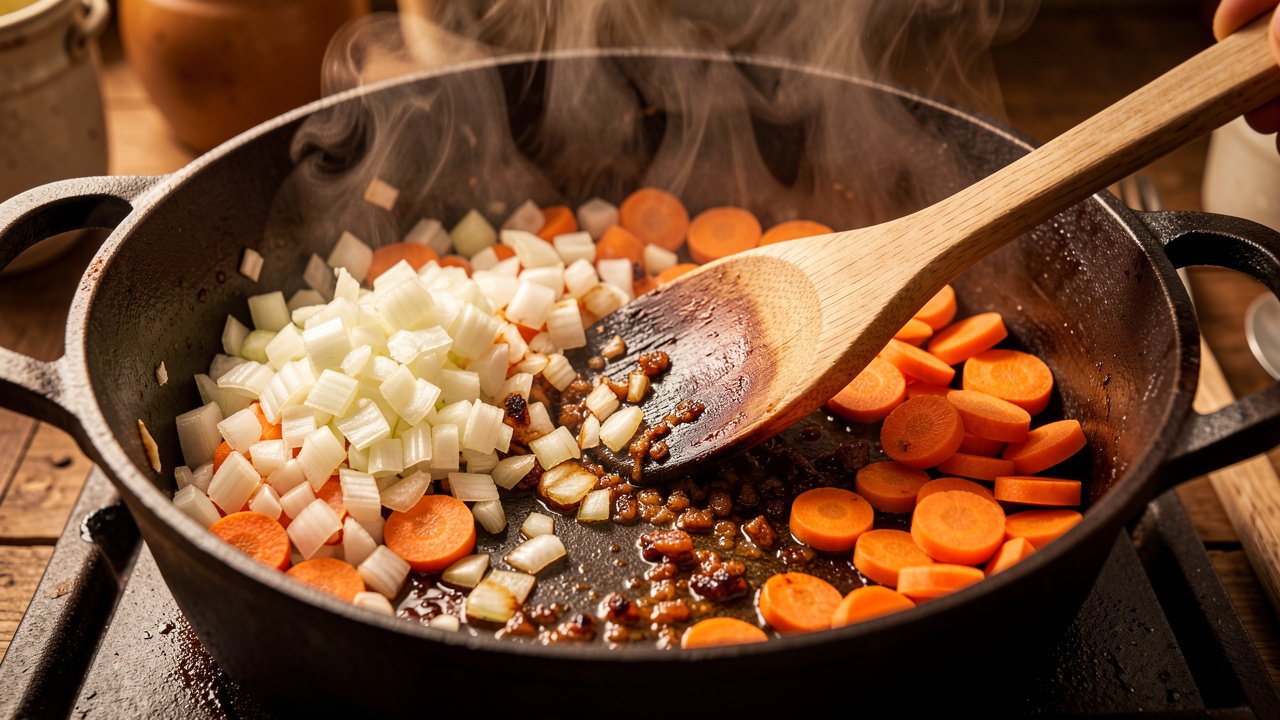
Lower the heat to medium and add the chopped onions to the same pot, scraping up the browned bits from the bottom. Cook 5 to 6 minutes until soft and golden, then stir in the sliced carrots and the minced garlic. Cook another 2 minutes until the garlic smells fragrant and sweet.
Build the Tomato Base
Stir in the tomato paste and paprika and cook for 1 minute, letting the paste darken slightly. Add the chopped tomatoes and cook 4 to 5 minutes, stirring, until they break down into a thick, glossy sauce. Return the browned beef and any resting juices to the pot and stir to coat everything in the tomato base.
Braise the Beef Low and Slow
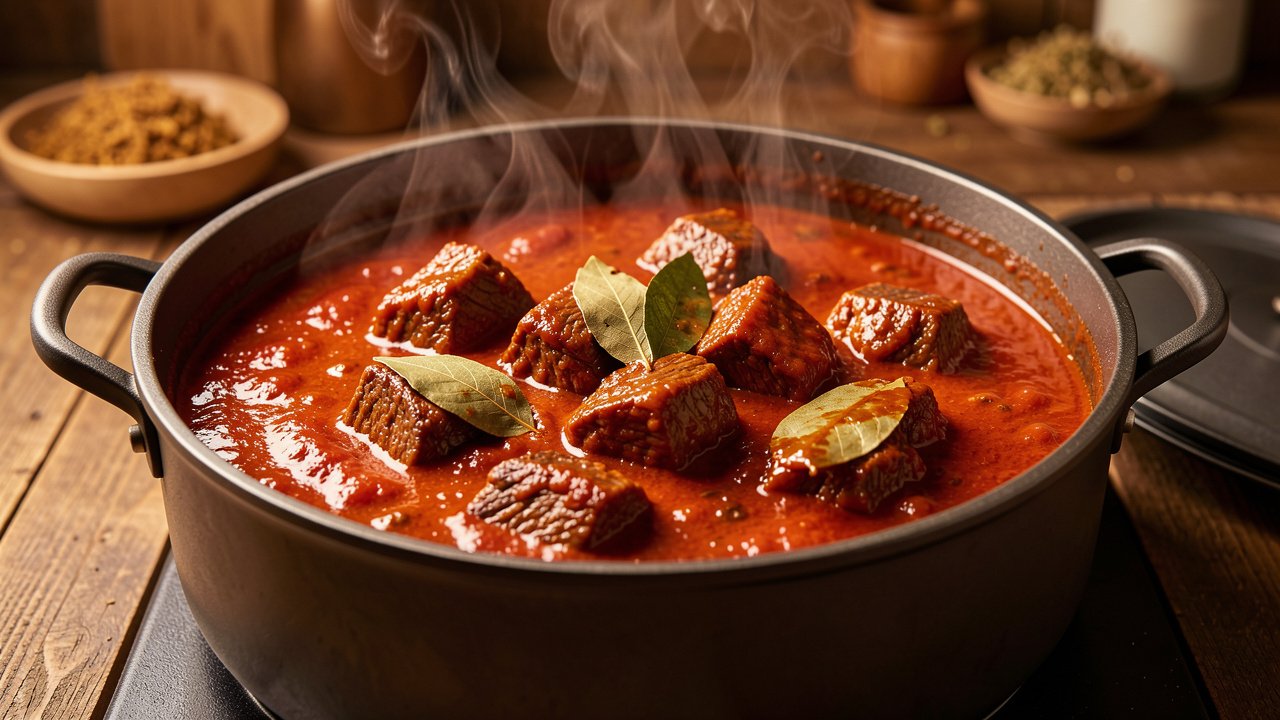
Pour in the warm stock, then tuck in the bay leaves and peppercorns. Bring to a gentle simmer, cover, and lower the heat so it barely bubbles. Braise for about 1 hour, stirring now and then, until the beef is starting to turn tender. Keep the heat gentle; a hard boil toughens the meat.
Add the Potatoes
Stir in the cubed potatoes, pushing them under the sauce. Cover and continue to braise for 25 to 30 minutes, until the potatoes are tender all the way through and the beef pulls apart easily. If the sauce looks thin, uncover for the last 10 minutes to let it reduce and thicken.
Finish with Dill and Parsley
Fish out the bay leaves, then taste and adjust with more salt. Stir in most of the fresh dill and parsley and let the pot rest off the heat for 5 minutes so the flavors settle. Ladle the zharke into bowls, scatter the remaining herbs over the top, and serve hot with bread.
Chef’s Tips From Real Kitchen Testing
Brown the beef in batches and resist the urge to stir too soon. A dry, uncrowded pan gives you the deep crust that makes the whole braise taste rich.
Add the potatoes only in the last half hour. Put them in too early and they overcook into the sauce; too late and they stay firm in the center.
If the sauce is thinner than you like, lift the lid for the final ten minutes. Reducing it uncovered concentrates the tomato flavor and thickens the gravy.
Recipe Variations
Serving Suggestions
- Crusty dark rye or country bread for the sauce
- A dollop of sour cream stirred through
- A sharp pickled cucumber or cabbage salad
- Extra fresh dill and cracked black pepper
Nutrition Facts
| Nutrient | Amount per serving |
|---|---|
| Calories | 420 |
| Protein | 32 g |
| Carbohydrates | 34 g |
| Fat | 18 g |
| Saturated Fat | 6 g |
| Fiber | 5 g |
| Sugar | 7 g |
| Sodium | 680 mg |
Values are estimates per serving and vary with the exact ingredients and brands you use.
Make-Ahead Tips
Zharke is even better the next day, once the beef has rested in the sauce and the flavors have deepened overnight. Cook it a day ahead, cool it quickly, and refrigerate. Reheat gently on the stove with a splash of stock or water to loosen the gravy, since it thickens as it sits. Stir in a little extra fresh dill just before serving to wake it up.
Storage, Freezing & Reheating
Common Mistakes to Avoid
Troubleshooting
Beef still tough? It just needs longer. Keep it at a gentle simmer and give it another 20 to 30 minutes until a fork slides in easily.
Sauce too thin and watery? Uncover the pot and let it bubble gently to reduce, or stir in an extra spoonful of tomato paste to add body.
Potatoes falling apart? They cooked too long or were cut too small. Next time, use larger, waxy chunks and add them only in the final half hour.
A Note on Ukrainian Cooking
Zharke belongs to a wider family of Ukrainian home cooking built around the slow braise, the clay pot, and the garden. Root vegetables like potato, carrot, and onion form the backbone of countless everyday dishes, and fresh dill is scattered over almost everything from soups to stews. Baking a braise in a covered clay pot, sometimes called a horshchyk, lets the meat and vegetables cook in their own steam so nothing dries out. It is honest, seasonal, comforting food meant to be shared at a busy table. If you love these warming tomato-rich bowls, explore more ideas in our tomato recipes collection, or try the cozy hearty tomato lentil soup for another slow-simmered favorite.
Food-safety note: Braise the halal beef until it is fully cooked and fork-tender, with no pink remaining, and reaches an internal temperature of at least 145 F (63 C) for whole cuts or 160 F (71 C) if using ground beef. Always reheat leftovers until piping hot throughout before serving.
Frequently Asked Questions
More Tomato Recipes to Try
Last updated: September 23, 2026