Bolivian Recipes
Spicy Chicken in Aji and Tomato Sauce
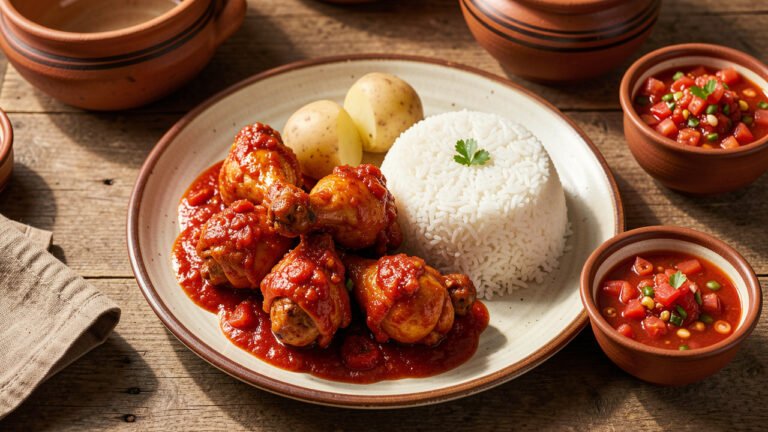
This is Sunday-lunch food in Bolivia, the kind of plate that shows up for birthdays, holidays, and anything worth celebrating. The chicken goes deeply tender in a sauce that is warm, earthy, and gently fiery, all thanks to the Andean chili pastes that give the dish its name. The first time I made it I stirred the aji paste straight into the liquid and wondered why the sauce tasted sharp and raw; frying the paste first is the whole secret.
Why This Picante de Pollo Works
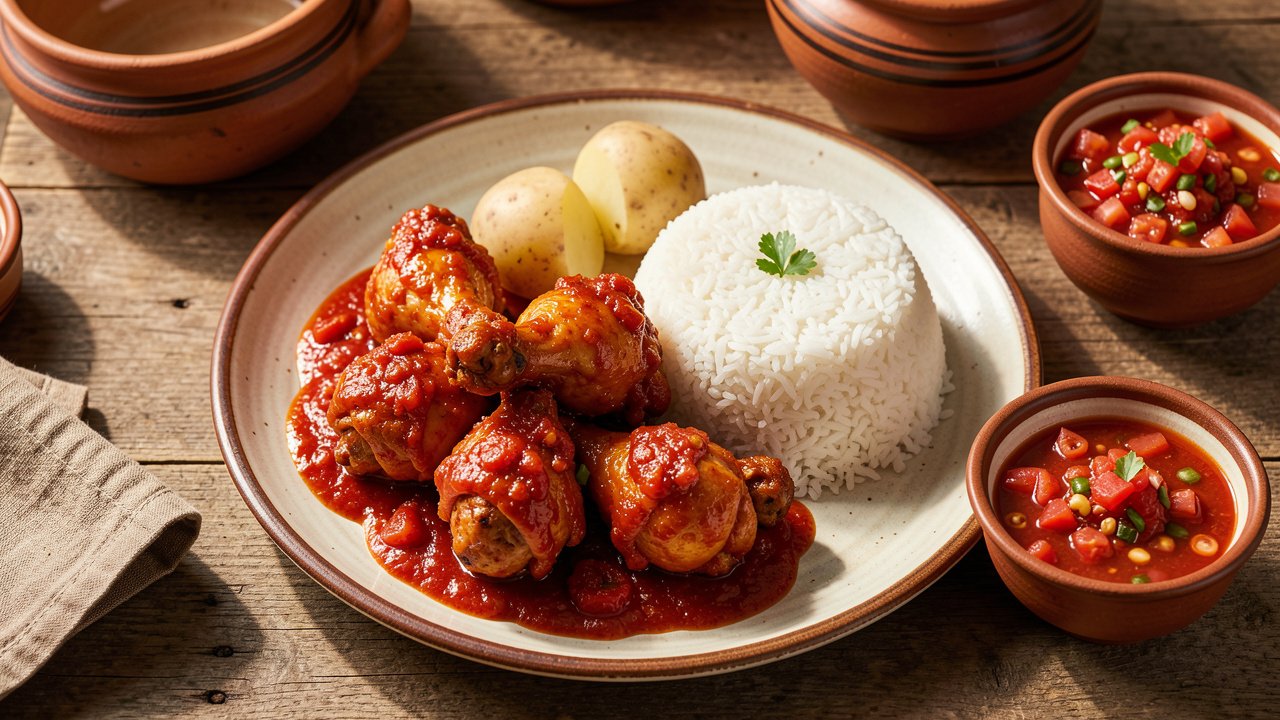
Bolivian cooking loves a slow-built sauce, and picante de pollo is a perfect example. The word picante simply signals that a dish is spicy with aji, and here the heat comes layered rather than sharp. Browning the chicken first leaves fond in the pot, the onion and garlic build a sweet base, and the tomatoes bring body and a bright tang that keeps the sauce from feeling heavy.
The step that makes or breaks it is frying the aji paste. Andean chili pastes, whether the deep red aji colorado or the fruity orange aji amarillo, taste raw and slightly bitter straight from the jar. Cooking them in a little oil for a couple of minutes wakes up their color and their warm, almost smoky depth, so the finished sauce tastes rounded instead of aggressive.
Simmering the browned chicken back in that sauce does two things at once: it cooks the meat through to a safe temperature and it lets the chicken drink up the flavor while its juices thicken the sauce. Bone-in pieces reward you here, since the bones add richness as they simmer.
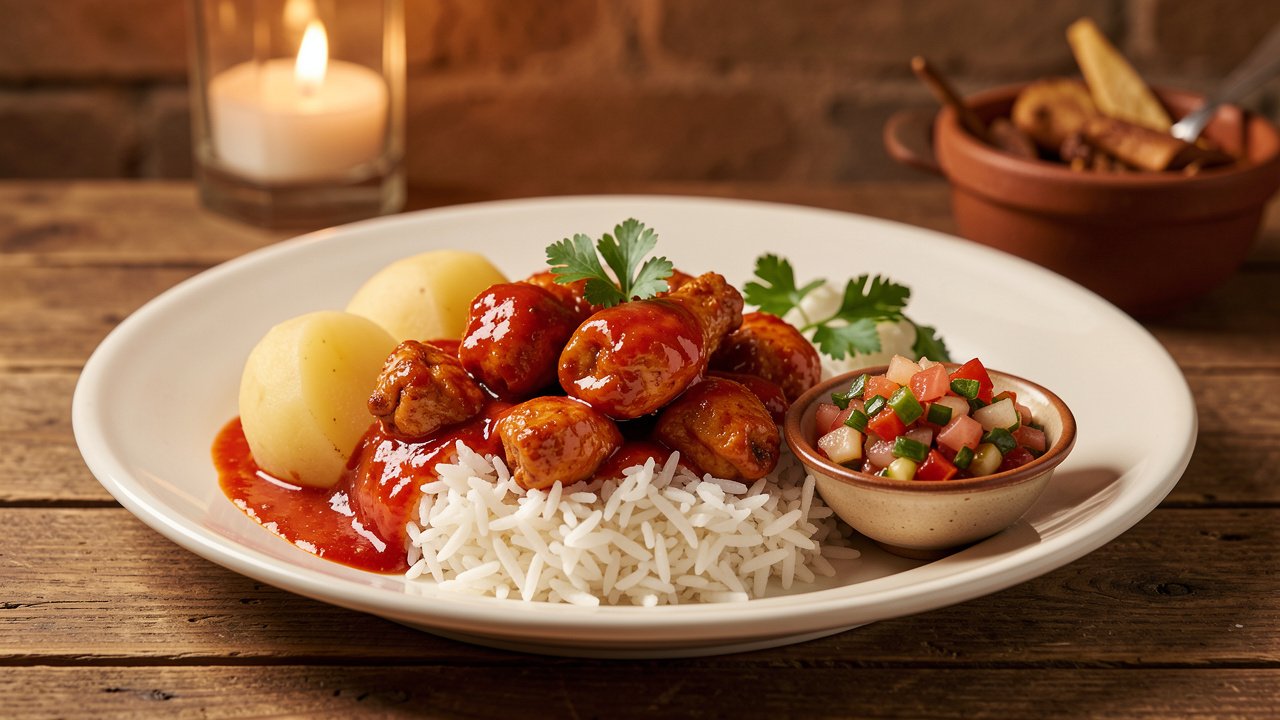
Finally, the plate is a study in contrast. The spicy chicken sits against plain white rice and a mild boiled potato that soak up the sauce, while a spoon of fresh llajwa on the side adds a raw, garden-bright heat. That balance of cooked and fresh, rich and clean, is what makes the dish feel festive.
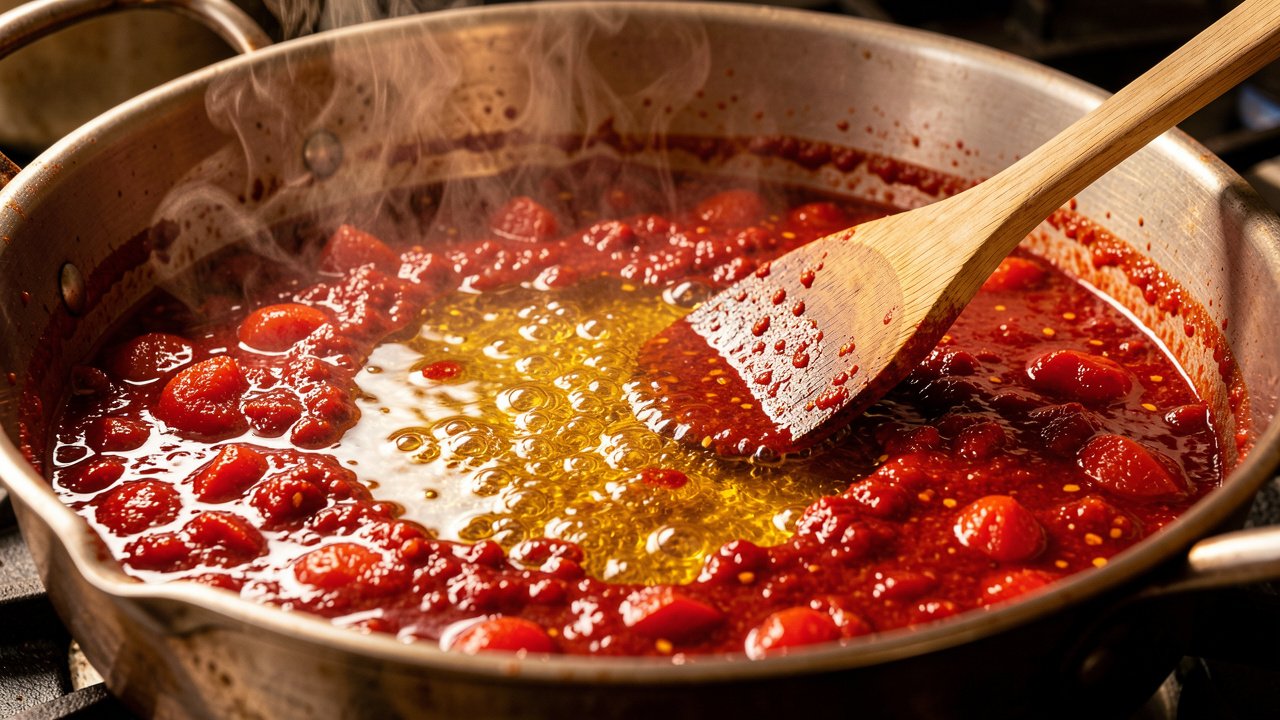
Pro observation: The aji paste is properly fried when the oil around it turns a glossy brick red and the raw, sharp smell softens into something toasty. That color is the color your whole sauce will take on.
Ingredients
Kitchen Measurement Converter
Quickly convert between common cooking measurements without leaving the recipe. Pick a category, enter a value, and the result updates instantly.
Ingredient Notes & Substitutions
Halal Chicken
Bone-in, skin-on halal chicken pieces such as thighs and drumsticks stay juicy through the simmer and add richness to the sauce. Boneless thighs also work; reduce the simmer time so they do not dry out.
Aji Colorado & Amarillo
These Andean chili pastes are the soul of the dish. Aji colorado is deep and earthy, aji amarillo is fruity and bright. Find them at Latin markets or online; a mild red chili paste plus a pinch of paprika is a rough stand-in.
Tomatoes
Ripe, red tomatoes melt into the sauce and balance the chili heat with tang. Out of season, one 14-ounce can of chopped tomatoes gives a more reliable result than pale fresh ones.
Potatoes
A starchy potato boiled until tender is the traditional partner. In Bolivia, freeze-dried chuno is common, but any everyday boiling potato soaks up the sauce beautifully on the plate.
Equipment
- Wide heavy pot or Dutch oven
- Tongs for turning chicken
- Sharp knife and board
- Saucepan for rice
- Pot for boiling potatoes
- Blender or mortar for llajwa
Before You Start
1. Pat the chicken dry. Dry skin browns far better than wet, so blot the pieces with a towel before they hit the hot oil. Good browning is the first layer of flavor.
2. Prep your sides in parallel. Set the rice and the potatoes going while the chicken simmers, so everything finishes together and the plate comes out hot.
3. Have the aji ready. Measure the aji pastes into a small bowl before you start. They fry quickly, and you do not want to be scooping from a jar while the pot is hot.
Step-by-Step Instructions
Season and Prep
Pat the halal chicken pieces dry and season them all over with the salt and black pepper. Finely chop the onion, mince the garlic, and chop the tomatoes. Measure the cumin, oregano, and both aji pastes into small bowls so everything is within reach of the stove.
Brown the Chicken
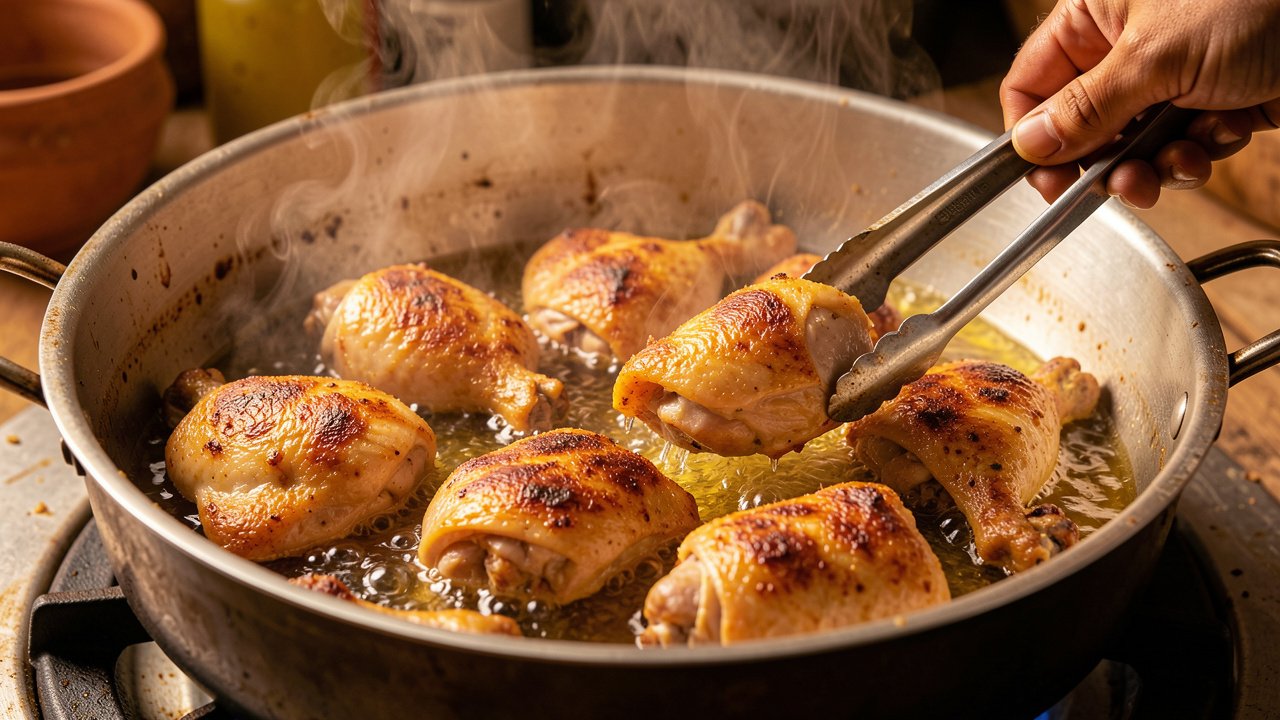
Heat the vegetable oil in a wide heavy pot over medium-high heat. Add the chicken pieces skin-side down and brown them well on both sides, about 4 minutes per side, working in batches so the pot is not crowded. You are after color, not full cooking here. Lift the browned pieces onto a plate and set them aside.
Soften the Onion and Garlic
Lower the heat to medium. In the same pot, using the flavorful oil left behind, cook the chopped onion for 5 to 6 minutes until soft and golden at the edges. Stir in the minced garlic and cook 1 minute more, until fragrant and no longer raw. Scrape up any browned bits from the bottom of the pot as you stir.
Fry the Aji and Build the Sauce
Add the aji colorado and aji amarillo pastes along with the cumin and oregano. Fry them, stirring constantly, for 2 to 3 minutes until the paste darkens and the oil turns a glossy brick red. Add the chopped tomatoes and cook 6 to 8 minutes until they collapse into a thick sauce, then pour in the chicken stock and stir to loosen it into a rich, spoonable gravy.
Simmer the Chicken
Return the browned chicken and any resting juices to the pot, nestling the pieces into the sauce. Bring to a gentle simmer, then cover and cook on low for 25 to 30 minutes, turning the pieces once, until the chicken is fork-tender and cooked through. Check that the thickest piece reaches an internal temperature of 165F (74C) with a thermometer before serving.
Boil the Sides, Make Llajwa, and Serve
While the chicken simmers, boil the peeled potatoes until tender and steam or boil the white rice. For a quick llajwa, blitz a tomato with a little aji, salt, and fresh herbs into a chunky salsa. Plate the chicken with its sauce over the rice, add a potato, scatter parsley, and serve the llajwa on the side.
Chef’s Tips From Real Kitchen Testing
Always fry the aji paste before adding liquid. Thirty seconds is not enough; give it a full two to three minutes so the raw, bitter edge cooks off and the color deepens.
Do not crowd the pot when browning. Chicken packed too tightly steams instead of searing, and you lose the golden crust that flavors the sauce.
Taste the sauce before serving. The two aji pastes vary in heat, so adjust salt and add a spoon of stock if it tightens up too much during the simmer.
Recipe Variations
Serving Suggestions
- Fluffy white rice to soak up the sauce
- A boiled potato, or chuno if you can find it
- Fresh llajwa salsa spooned on the side
- A simple sliced tomato and onion salad
Nutrition Facts
| Nutrient | Amount per serving |
|---|---|
| Calories | 520 |
| Protein | 34 g |
| Carbohydrates | 52 g |
| Fat | 18 g |
| Saturated Fat | 4 g |
| Fiber | 5 g |
| Sugar | 6 g |
| Sodium | 780 mg |
Values are estimates per serving and vary with the exact ingredients and brands you use.
Make-Ahead Tips
The chicken and sauce actually improve with a rest, so this is a smart make-ahead dish. Cook the chicken and sauce a day early, cool, and refrigerate; the flavors deepen overnight. Reheat gently on the stove with a splash of stock to loosen the sauce, then cook fresh rice and potatoes and make the llajwa just before serving so the salsa stays bright.
Storage, Freezing & Reheating
Common Mistakes to Avoid
Troubleshooting
Sauce tastes raw or harsh? The aji paste was not fried long enough. Next time cook it a full two to three minutes until the color darkens and the smell mellows.
Chicken came out dry? The pot ran too hot or too long. Keep it at a low, gentle simmer and pull the chicken as soon as it reaches 165F (74C).
Sauce too thin? Uncover and let it reduce for a few minutes, or mash one of the boiled potatoes into it to thicken naturally.
A Note on Bolivian Cooking
Bolivian food leans on the ingredients of the high Andes, and few are more central than aji. The dried red aji colorado and the golden aji amarillo turn up in stews, sauces, and festive plates across the country, giving them their signature warmth and color. A picante is any dish built around that chili heat, and picante de pollo is one of the best loved, the kind of celebratory plate served at family gatherings alongside rice and potatoes.
The fresh counterpoint is llajwa, a raw salsa of tomatoes, chili, and herbs ground together, traditionally on a flat grinding stone called a batan. It sits on almost every Bolivian table so each person can add heat to taste. If you enjoy building bold sauces at home, our fresh tomato salsa guide and the wider collection of tomato recipes share the same spirit of turning ripe tomatoes into something lively.
Frequently Asked Questions
More Tomato Recipes to Try
Last updated: September 23, 2026