Algerian Recipes
The Ramadan Soup of Algeria
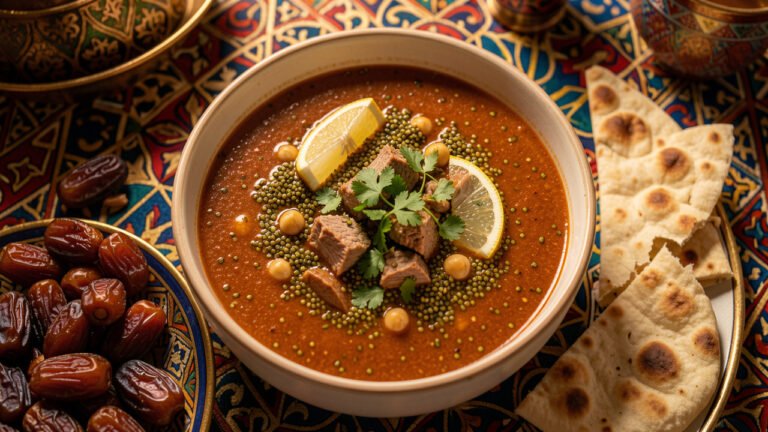
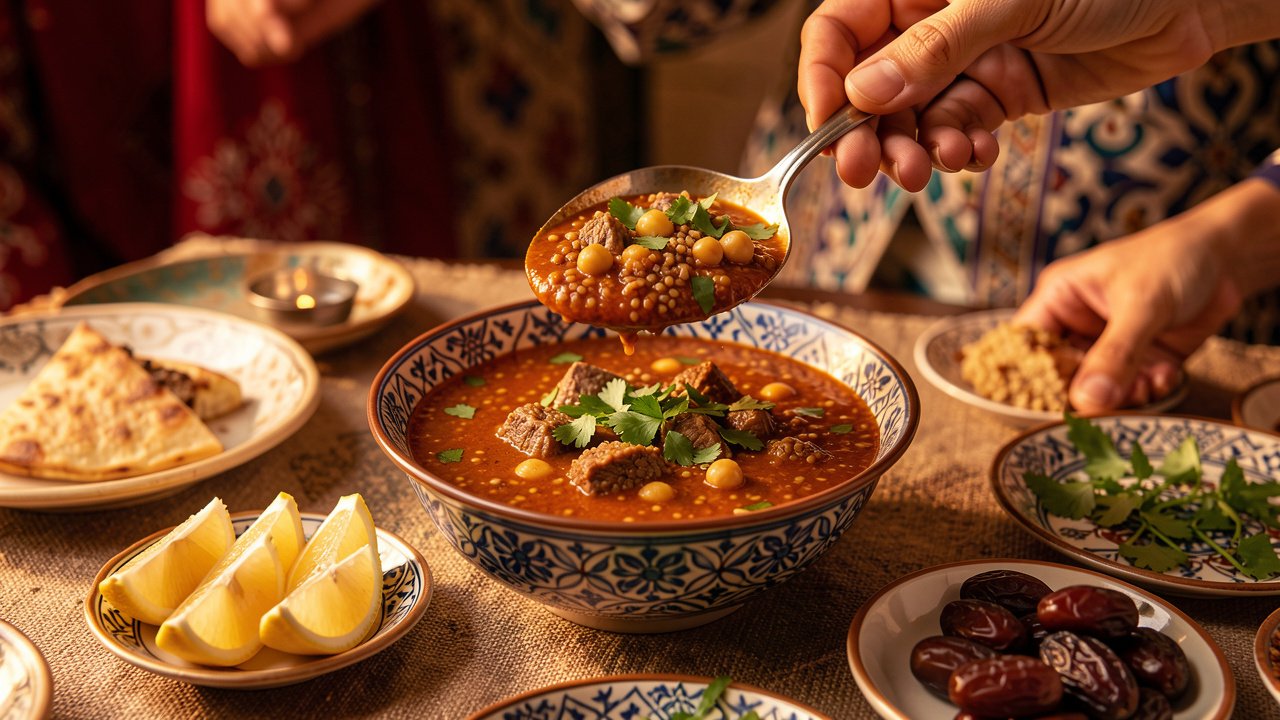
In Algeria this soup is not a once-a-year dish. It appears on the table every single night of Ramadan, ladled out the moment the fast breaks, and most households cook it so often through the month that the smell of cinnamon and tomato becomes the smell of the season itself. The freekeh is what makes it chorba frik rather than any other chorba: young green wheat, harvested early and roasted over fire, cracked into gritty little grains that drink up the broth and turn it thick and nutty.
I cooked this a dozen times before I understood that the soup is really about patience in two places. The lamb needs a proper browning before any liquid goes near it, and the freekeh needs a long, low simmer so the grains soften completely instead of staying chalky in the middle. Get those two right and the rest is seasoning.
Why This Chorba Frik Works
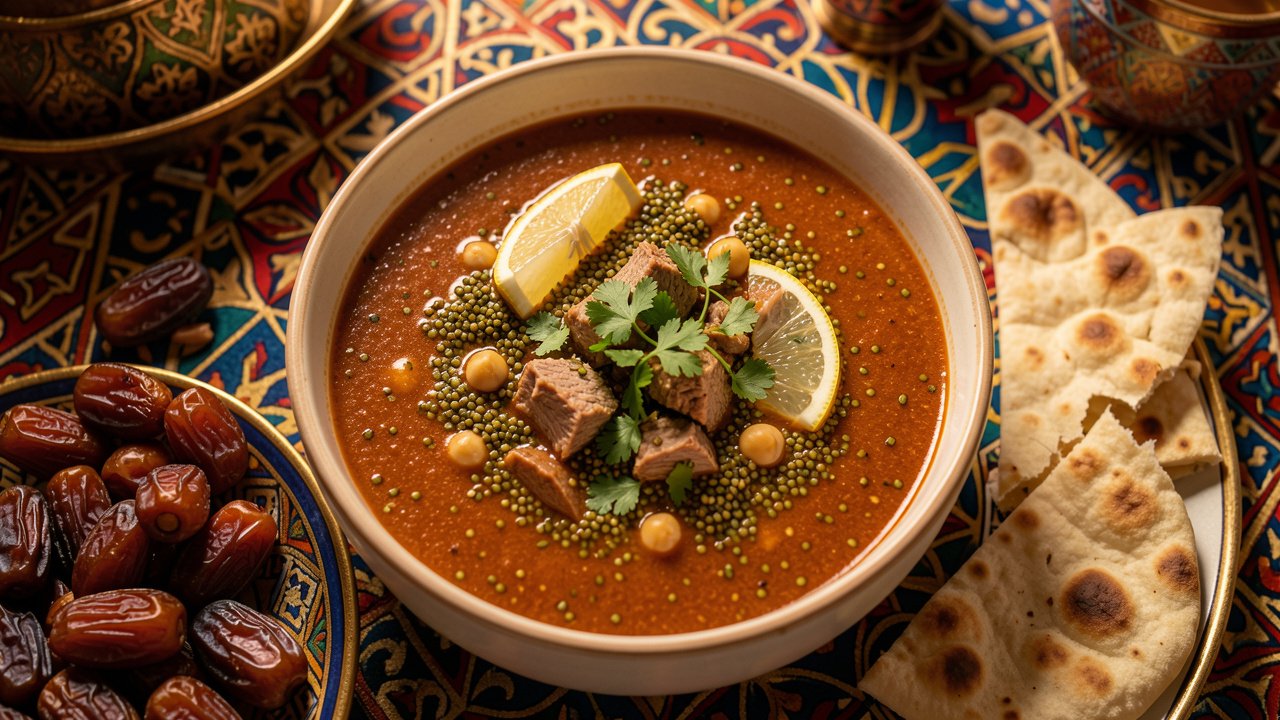
Most soups ask you to choose between a clear, brothy bowl and a thick, spoon-coating one. Chorba frik refuses the question. The freekeh releases starch slowly as it cooks, so the liquid tightens into something between a soup and a very loose stew, while the grains themselves stay distinct and slightly chewy. You get body without any flour, cream or blending.
The flavour comes from a three-layer build. First the halal lamb is browned hard in oil or smen so the outside caramelises and leaves a sticky film on the bottom of the pot. Then the onion and celery soften in that fat and lift the film back into the soup. Finally the tomatoes and tomato paste go in and are cooked down until they darken from bright red to a deeper brick colour, which is the point where the raw, tinny edge disappears.
The spicing is restrained on purpose. A little cinnamon, ground coriander, black pepper and sweet paprika give warmth rather than heat, and dried mint crumbled in near the end adds the cooling, slightly resinous note that makes an Algerian chorba taste different from a Moroccan harira or a Levantine lentil soup. Nothing here is meant to shout.
It is also a genuinely practical dish for a busy household. One pot, ingredients that keep in the cupboard, and a soup that reheats better than it started. If you like tomato-based bowls that lean on a grain or pulse for body, our hearty tomato lentil soup follows a similar logic with lentils instead of freekeh.
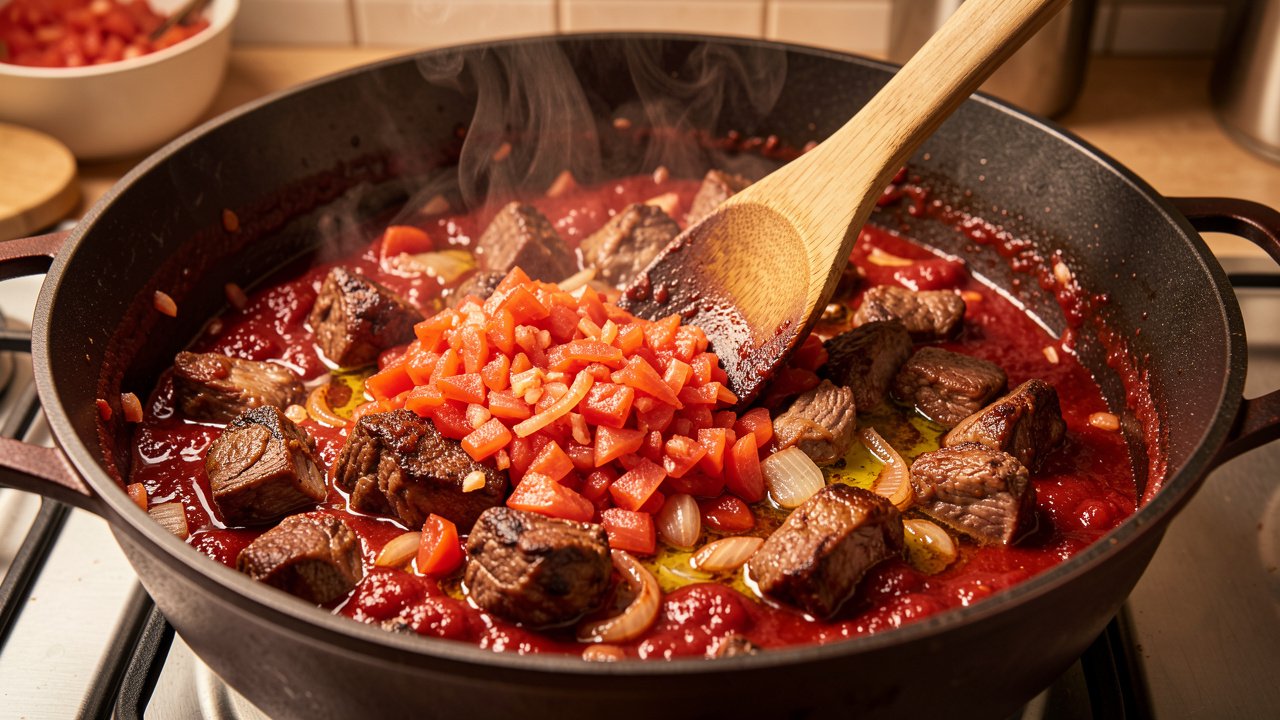
Pro observation: The tomato base is ready for liquid when the paste has darkened and a wooden spoon dragged across the pot leaves a clean line that fills in slowly. If the tomatoes still look watery and bright, keep going for another two or three minutes.
Ingredients
Kitchen Measurement Converter
Freekeh and chickpeas are usually sold by weight but measured by cup, so this converter saves a lot of guessing. Pick a category, enter a value, and the result updates instantly.
Ingredient Notes & Substitutions
Freekeh
Buy cracked freekeh, sometimes labelled frik or freekeh farik, not the whole grain. Whole freekeh takes far longer and never breaks down enough to thicken the soup. Cracked bulgur is the nearest emergency swap, but add it in the last 15 minutes because it cooks much faster.
Halal Lamb
Shoulder is ideal because the connective tissue melts into the broth. Cut it into pieces no bigger than a thumbnail so every spoonful gets some. Halal beef chuck works the same way and needs about the same simmering time.
Tomatoes
Grated ripe tomatoes give the freshest base. Halve them, grate the cut side on a box grater, and discard the skin left in your hand. Out of season, one 14-ounce can of chopped tomatoes is a better bet than pale winter fruit.
Smen and Dried Mint
Smen is an aged, salted North African butter with a pungent, almost cheesy depth. A teaspoon stirred in with the oil is transformative, but plain olive oil is completely fine. Dried mint, not fresh, is what gives chorba its familiar aroma.
Equipment
- Heavy stockpot or Dutch oven
- Box grater
- Sharp knife and board
- Fine sieve for rinsing
- Wooden spoon
- Ladle
Before You Start
1. Rinse the freekeh properly. Freekeh is fire-roasted in the field, so it arrives with ash, chaff and grit. Put it in a sieve and run cold water through it, rubbing with your fingers, until the water runs clear. This takes about a minute and it is the single step people regret skipping.
2. Cut the lamb small and dry it. Pieces the size of a thumbnail brown faster and cook through in the time the freekeh needs. Pat them dry with paper towel so they sear instead of steaming.
3. Have hot liquid ready. Adding cold water to a hot pot stalls the cooking and can tighten the meat. Boil a kettle before you start browning.
Step-by-Step Instructions
Prep Everything First
Cut the halal lamb into small, roughly even pieces and pat them dry. Finely chop the onion and celery. Grate the tomatoes and set the pulp aside. Rinse the freekeh under cold running water until the water runs clear, then leave it to drain. Measure the cinnamon, ground coriander, paprika and black pepper into one small bowl so they can go in together.
Brown the Lamb
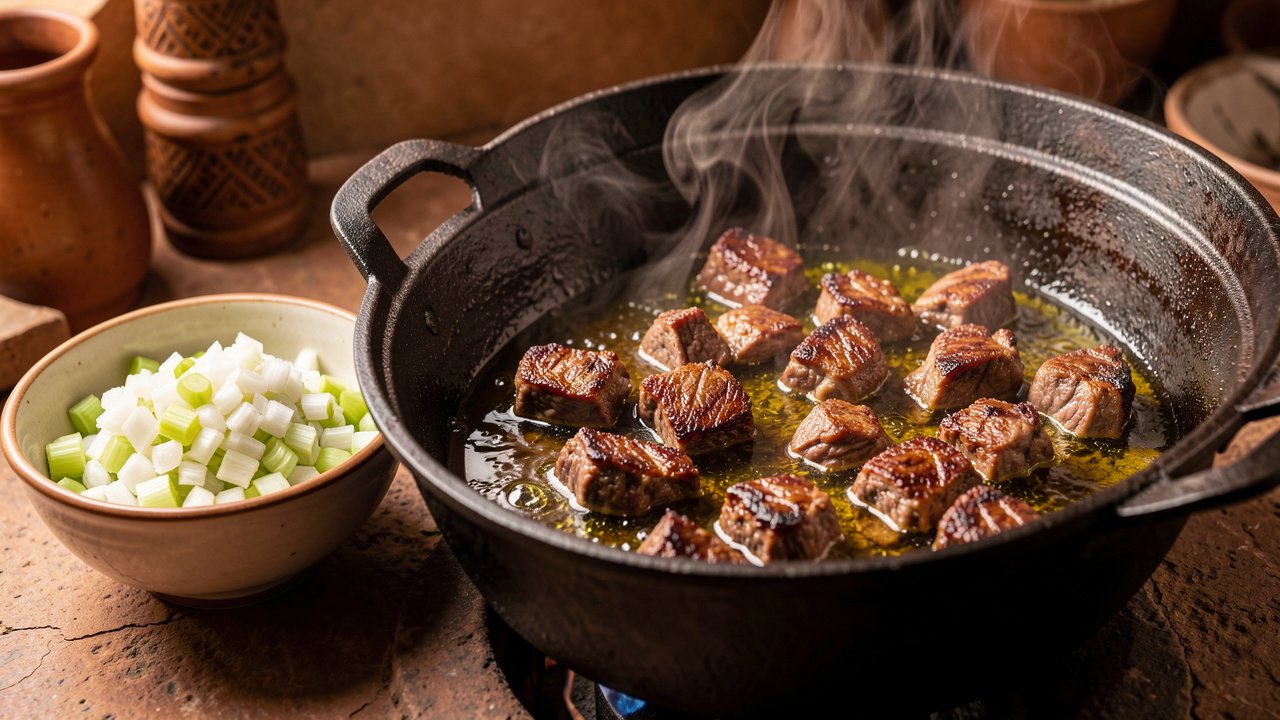
Heat the oil, plus the smen if you are using it, in a heavy pot over medium-high heat. Add the lamb in a single layer and leave it alone for two minutes before stirring, so it takes on colour. Keep turning until the pieces are browned on most sides and a sticky brown film has formed on the base of the pot, about 6 to 8 minutes. Do this in two batches if your pot is crowded.
Soften the Onion and Celery
Lower the heat to medium and add the chopped onion and celery to the pot with the meat. Cook for 5 to 6 minutes, scraping the base as the vegetables release their moisture, until the onion is translucent and the brown film has lifted into the mixture. Stir in the cinnamon, ground coriander, paprika and black pepper and let them toast for 30 seconds.
Build the Tomato Base
Stir in the tomato paste and cook it for a full minute, pressing it against the hot pot so it darkens. Add the grated tomatoes and the salt, then simmer for 8 to 10 minutes until the mixture thickens, deepens in colour and the oil begins to glisten at the edges. This is the backbone of the soup, so do not rush it.
Simmer with Chickpeas and Freekeh
Pour in the hot water or stock and bring the pot to a boil. Add the chickpeas, lower the heat to a bare simmer, cover partly, and cook for 30 minutes so the lamb starts to tenderise. Stir in the drained freekeh and simmer for a further 25 to 30 minutes, stirring every few minutes so the grains do not settle and catch on the base. The soup will visibly thicken during this stretch.
Food safety and doneness: Small pieces of lamb are safely cooked once they reach an internal temperature of 145F, but for this soup you want them well past that point. After roughly an hour of total simmering the meat should shred easily against the side of the spoon. If it still resists, add a splash of hot water and keep simmering; undercooked shoulder stays tough rather than becoming unsafe.
Season, Finish and Serve
Crumble the dried mint between your palms and stir it in, then taste and adjust the salt. The soup should be thick enough to coat the spoon but still pourable; loosen it with hot water if it has gone past that. Ladle into bowls, scatter over the fresh coriander, and serve with lemon wedges so everyone can squeeze their own. The lemon is not a garnish, it is the seasoning that pulls the whole bowl together.
Chef’s Tips From Real Kitchen Testing
Stir the pot every few minutes once the freekeh is in. The grains are heavy and sink fast, and a scorched layer on the base will flavour the entire batch.
Crumble dried mint between your palms rather than dropping it in whole. The friction releases the oils and you need less of it for a stronger aroma.
Season in two stages. Salt lightly with the tomatoes, then correct at the end once the freekeh has absorbed liquid, because the soup concentrates as it thickens.
Keep a kettle of hot water beside the pot for the whole simmer. Adjusting thickness with hot rather than cold water keeps the temperature steady and the grains cooking evenly.
Recipe Variations
Serving Suggestions
- Dates and a glass of water or milk to open the fast
- Warm khobz or flatbread for dipping
- Bourek, the crisp filled pastry rolls
- Extra lemon wedges and a bowl of fresh coriander
Nutrition Facts
| Nutrient | Amount per serving |
|---|---|
| Calories | 420 |
| Protein | 26 g |
| Carbohydrates | 42 g |
| Fat | 16 g |
| Saturated Fat | 5 g |
| Fiber | 9 g |
| Sugar | 6 g |
| Sodium | 780 mg |
Values are estimates per serving and vary with the exact ingredients and brands you use.
Make-Ahead Tips
Chorba frik is a natural make-ahead dish, which is exactly why it suits Ramadan cooking, when the pot often goes on hours before the fast breaks. Cook it up to the end of step 5, cool it, and refrigerate. Reheat gently and only then stir in the dried mint, fresh coriander and lemon, so the finishing flavours stay bright rather than muddy.
If you are cooking for a crowd across several nights, brown a double batch of the halal lamb and freeze half of the browned meat with its tomato base. That front-loads the slowest part of the recipe and turns the second batch into a 40-minute job.
Storage, Freezing & Reheating
Common Mistakes to Avoid
Troubleshooting
Soup gritty or sandy? The freekeh was not rinsed enough. There is no fix once it is cooked, so next time rinse in a sieve, rubbing the grains with your fingers, until the runoff is completely clear.
Too thick, almost like porridge? Stir in hot water a ladle at a time until it pours off the spoon again, then re-check the salt, because diluting always dulls the seasoning.
Tastes flat? Almost always salt first, lemon second. Add a good pinch of salt, stir, wait a minute, then squeeze in lemon and taste again before reaching for more spice.
Lamb still chewy? It needs more time, not more heat. Keep the pot at a lazy simmer and give it another 15 to 20 minutes with a splash of extra water.
Scorched taste? The base caught while the freekeh settled. Pour the soup into a clean pot without scraping the bottom, and stir more often on the next batch.
A Note on Algerian Cooking
Chorba is the general Algerian word for soup, and there are as many versions as there are regions, but chorba frik is the one bound most tightly to Ramadan. Through the month it is cooked nightly in homes from Algiers to Constantine, and its steam is part of the ritual of breaking the fast alongside dates and bourek. The rhythm matters as much as the recipe: a pot going since afternoon, the smell of cinnamon and tomato through the house, then everyone eating at once.
Frik itself is durum wheat harvested while still green and soft, then set alight so the straw burns away while the moist grain survives. The scorched husks are rubbed off and the kernels are cracked, which is where the smoky, grassy flavour comes from. It predates the region’s tomato by centuries, and the tomato base is a relatively modern addition that Algerian cooks folded in so completely that it now feels original.
Dried mint is the other quiet marker of the cuisine. It turns up in chorba, in tea and in salads, and Algerian cooks reach for it dried rather than fresh because the drying concentrates the flavour into something rounder and less sharp. Fresh coriander does the opposite job at the end, adding lift. If you want to explore more tomato-forward cooking in this spirit, browse our full collection of tomato recipes.
Frequently Asked Questions
More Tomato Recipes to Try
Last updated: September 23, 2026