
Chilean Recipes
Chilean Summer Bean, Squash and Corn Stew
This is peasant cooking at its most generous. A pot of porotos granados turns a few humble ingredients into something rich, thick, and deeply savory, and every Chilean kitchen has its own rhythm for making it. The trick I learned the hard way is patience with the squash: you want part of it to break down and thicken the broth into a velvety base, while the rest holds its shape in tender bites.
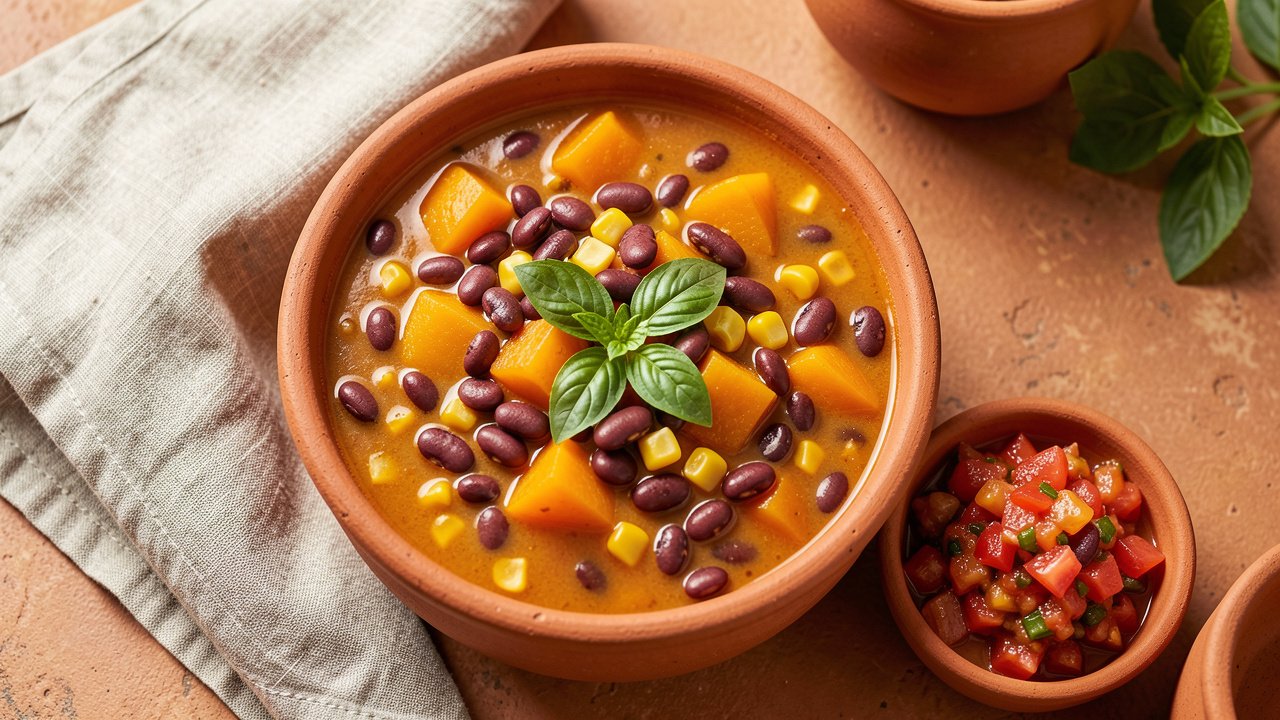
Why This Porotos Granados Works
Porotos granados is the taste of the Chilean harvest, and it works because it lets three summer ingredients carry the whole dish. Fresh cranberry beans bring a soft, buttery creaminess that dried beans can only approximate. Winter squash, known as zapallo, does double duty: some of it dissolves to thicken the broth, and the rest stays in tender chunks. Sweet corn and ripe tomatoes fill in brightness and body.
The seasoning is deliberately simple but never plain. Aji color, the Chilean sweet paprika that stains the oil a warm red, gives the stew its color and gentle, earthy depth. Ground cumin adds a savory backbone. Everything is built on a soft sofrito of onion and garlic cooked slowly so the base tastes mellow rather than sharp.
What makes this version reliable is timing the vegetables so nothing turns to mush by accident and nothing stays underdone. The beans go in early with room to soften, the squash follows in two stages, and the corn joins near the end so it keeps its sweet snap. The basil is stirred in off the heat, which keeps its fragrance fresh and green.
It is also forgiving and thrifty. You can build it around fresh beans in peak season or dried beans the rest of the year, stretch it with extra corn, or serve it fiery with a spoonful of pebre on top. Once you learn the method, it becomes a pot you can throw together from whatever the garden or market gives you.
Pro observation: The stew is ready when a spoon dragged across the pot leaves a brief trail before the broth flows back. That thickened, glossy body means enough squash has broken down to carry the flavor.
Ingredients
Kitchen Measurement Converter
Quickly convert between common cooking measurements without leaving the recipe. Pick a category, enter a value, and the result updates instantly.
Ingredient Notes & Substitutions
Cranberry Beans
Fresh cranberry or borlotti beans give the creamiest result and the most authentic flavor. Out of season, use 2 cups dried beans soaked overnight and pre-cooked until nearly tender before they join the pot.
Winter Squash
Chilean cooks use zapallo, a dense pumpkin-like squash. Butternut is the easiest stand-in and behaves the same way, partly dissolving to thicken the broth while the rest stays in soft chunks.
Aji Color
This is simply Chilean sweet paprika bloomed in oil. Regular sweet paprika works well. Add a pinch of smoked paprika if you want a little more depth, but keep it mild so it does not overpower the basil.
Corn and Basil
Fresh sweet corn, or choclo, is traditional and adds pops of sweetness. Frozen kernels work off-season. Fresh basil is essential and goes in at the very end so its fragrance stays bright and green.
Equipment
- Large heavy pot or Dutch oven
- Wooden spoon
- Sharp knife and board
- Vegetable peeler
- Measuring cups and spoons
- Ladle for serving
Before You Start
1. Sort the squash into two piles. Cut half into small cubes that will melt into the broth and half into larger chunks that will stay whole. This is the key to the stew’s texture.
2. Handle dried beans first. If you are using dried beans instead of fresh, soak them overnight and simmer until nearly tender before you begin, since they take far longer than fresh.
3. Cut the corn last. Slice kernels off fresh cobs just before they go in so they stay plump and sweet, and save a cob to simmer in the broth for extra flavor if you like.
Step-by-Step Instructions
Prep the Vegetables
Finely chop the onion and mince the garlic. Peel and cube the squash, keeping the small melting cubes and larger chunks separate. Chop the tomatoes, shell the fresh beans if needed, and cut the corn from the cobs. Chop the basil last and set it aside for the finish.
Build the Sofrito Base
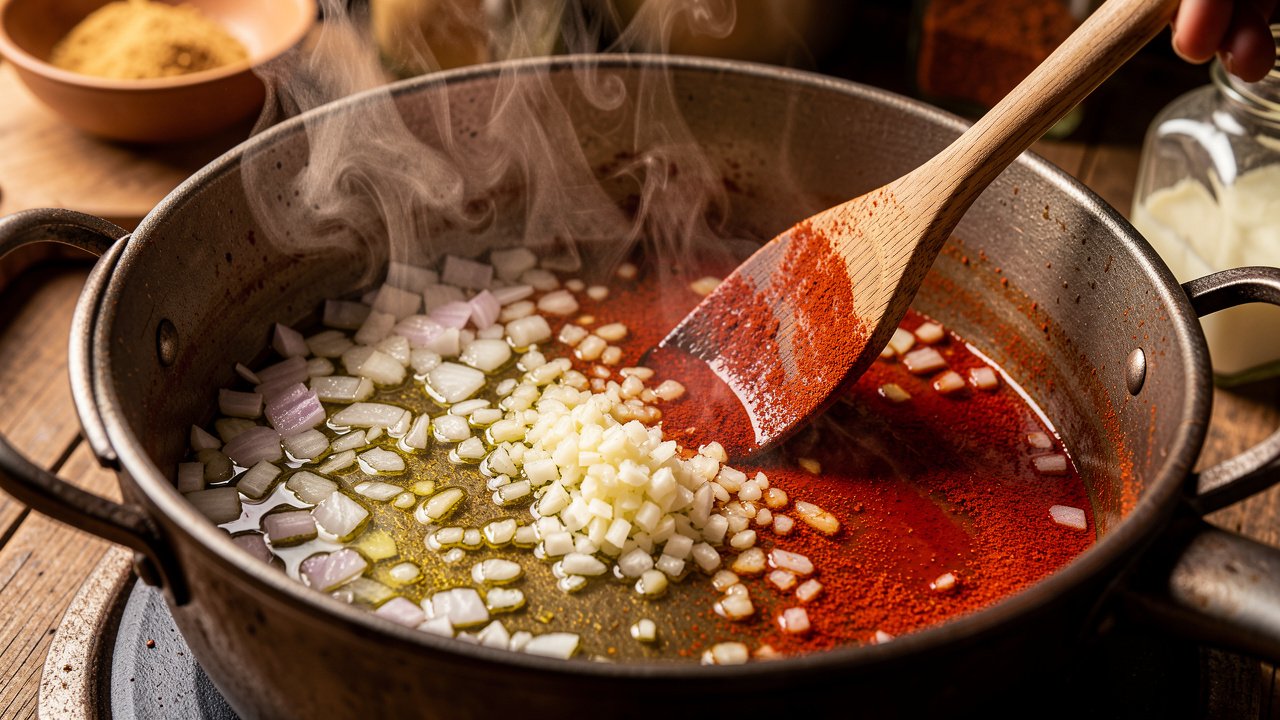
Heat the olive oil in a large pot over medium heat. Add the onion and cook 6 to 7 minutes until soft and translucent. Stir in the garlic, aji color, and cumin and cook for about 1 minute, just until the paprika stains the oil a warm red and everything smells fragrant. Keep the heat gentle so the paprika does not scorch and turn bitter.
Add the Tomatoes
Stir in the chopped tomatoes and the sugar, which balances their acidity. Cook 6 to 8 minutes, stirring now and then, until the tomatoes collapse into a soft, jammy sauce and most of their liquid has cooked off. This tomato base gives the stew its savory-sweet depth.
Simmer the Beans and Squash
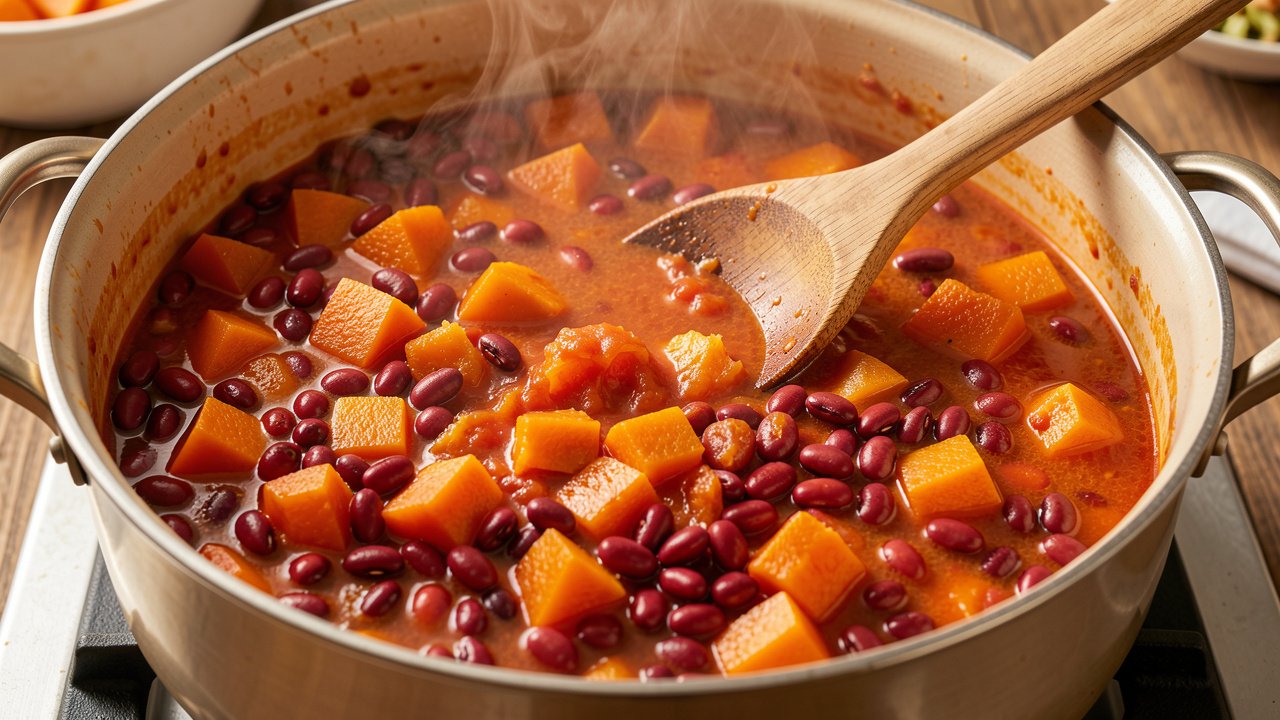
Add the fresh beans, all of the squash, the salt, and the broth. Bring it to a boil, then lower to a steady simmer, partly covered, for about 30 minutes. Stir occasionally and gently press the smaller squash cubes against the side of the pot so they break down and thicken the broth while the larger chunks stay tender.
Add the Corn
Once the beans are tender and the broth has thickened, stir in the corn kernels. Simmer another 8 to 10 minutes until the corn is sweet and just tender. Taste the broth and adjust with more salt and the black pepper. If the stew looks too thick, loosen it with a splash of hot broth or water.
Finish with Basil and Serve
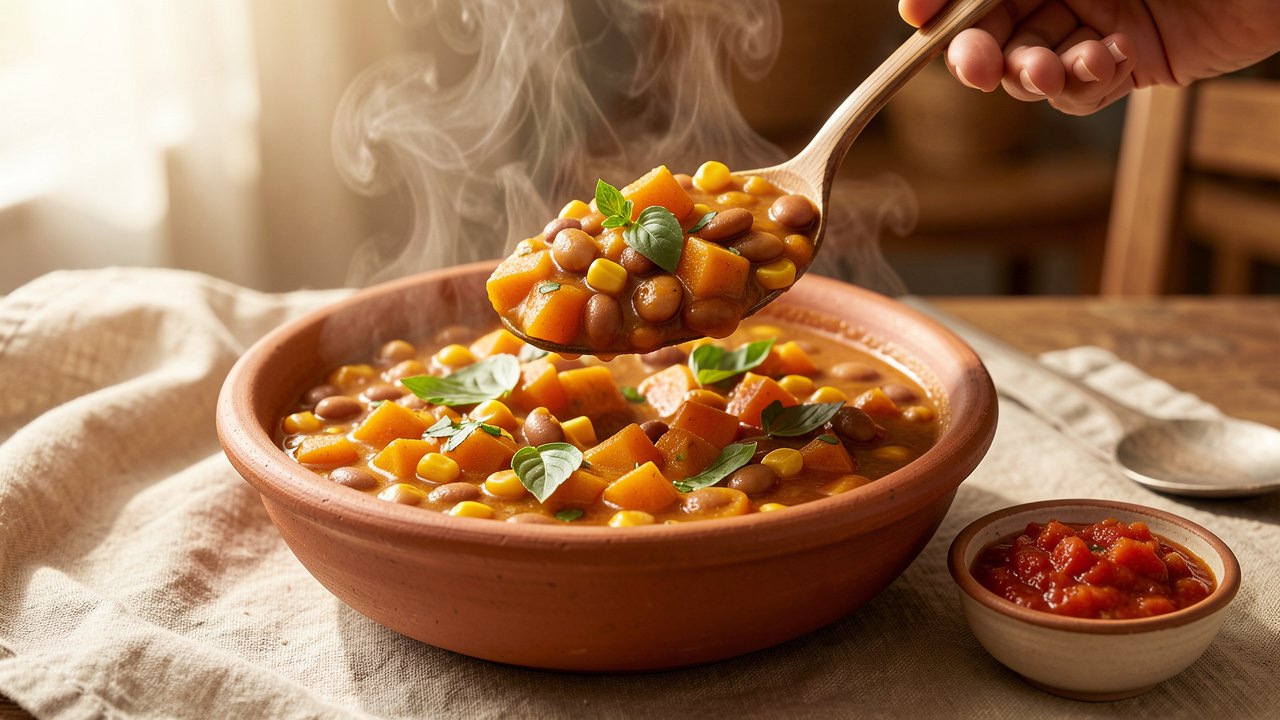
Turn off the heat and stir in the fresh chopped basil, letting the residual warmth release its fragrance. Ladle the stew into deep bowls and serve hot, with a spoonful of fresh tomato pebre on the side for those who want a bright, spicy lift. It is a full meal on its own or with crusty bread.
Chef’s Tips From Real Kitchen Testing
Split the squash into melters and keepers. Small cubes dissolve to thicken the broth while larger chunks give you tender bites, so you get body and texture in one pot.
Give the beans real time to soften. Fresh beans should be fully creamy before the corn goes in; a firm, starchy bean is the most common reason the stew disappoints.
Season in layers and taste at the end. Salt early with the broth, then adjust once the squash has thickened everything, since the flavors concentrate as the stew reduces.
Recipe Variations
Serving Suggestions
- A spoonful of fresh tomato pebre on top
- Warm crusty bread or a Chilean marraqueta roll
- A simple green salad with lemon dressing
- Extra fresh basil and a drizzle of olive oil
Nutrition Facts
| Nutrient | Amount per serving |
|---|---|
| Calories | 320 |
| Protein | 13 g |
| Carbohydrates | 58 g |
| Fat | 6 g |
| Saturated Fat | 1 g |
| Fiber | 13 g |
| Sugar | 10 g |
| Sodium | 600 mg |
Values are estimates per serving and vary with the exact ingredients and brands you use.
Make-Ahead Tips
Porotos granados is a wonderful make-ahead dish, since the flavors deepen and the broth thickens overnight in the fridge. Cook it a day early, cool, and refrigerate. Reheat gently on the stove and loosen with a splash of broth or water, because it sets up as it sits. Hold the fresh basil until just before serving so it stays vibrant.
Storage, Freezing & Reheating
Common Mistakes to Avoid
Troubleshooting
Stew too watery? Mash more of the cooked squash against the side of the pot and simmer uncovered a few minutes to reduce and thicken the broth.
Tastes flat? It usually needs more salt and a little extra aji color and cumin; a squeeze of lemon at the end also wakes everything up.
Beans still firm? Keep simmering with the lid ajar and add a splash of hot broth as needed; old dried beans in particular can take much longer to soften.
A Note on Chilean Cooking
Porotos granados belongs to the heart of the Chilean summer, when fresh cranberry beans, sweet corn, and zapallo squash all come into season at once. It is a harvest stew, cooked in big pots and eaten as a full meal, and its roots reach back to indigenous Mapuche cooking, where beans, squash, and corn were staples long before the seasoning of paprika and basil arrived. The finishing touch of fresh basil and a side of tangy tomato pebre are what make it unmistakably Chilean. If you love hearty, plant-forward bowls like this, explore more ideas in our collection of tomato recipes and try our comforting hearty tomato lentil soup.
Frequently Asked Questions
More Tomato Recipes to Try
Last updated: September 24, 2026