Romanian Recipes
Roasted Vegetable and Tomato Spread
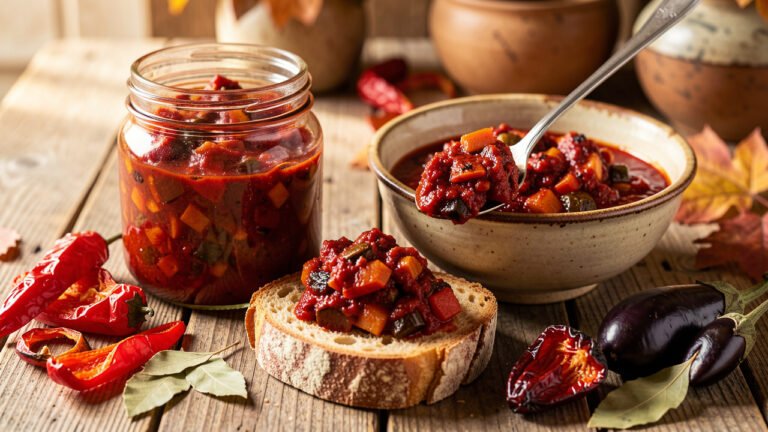
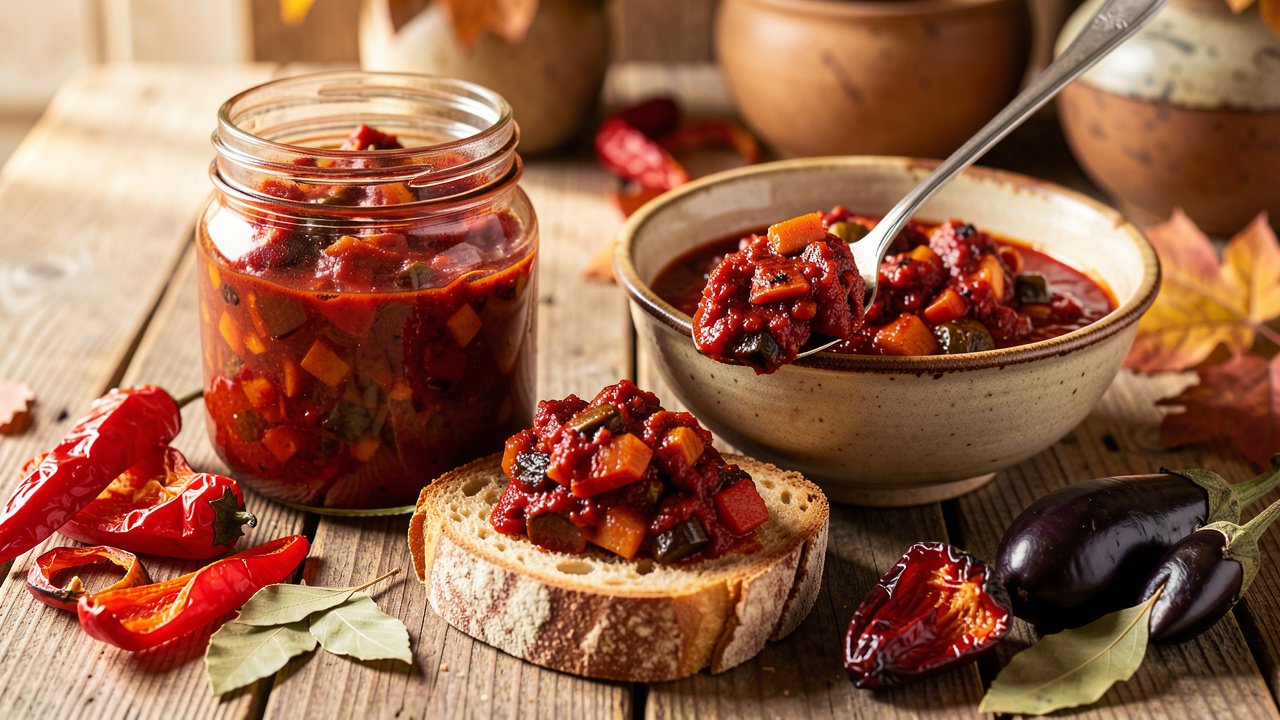
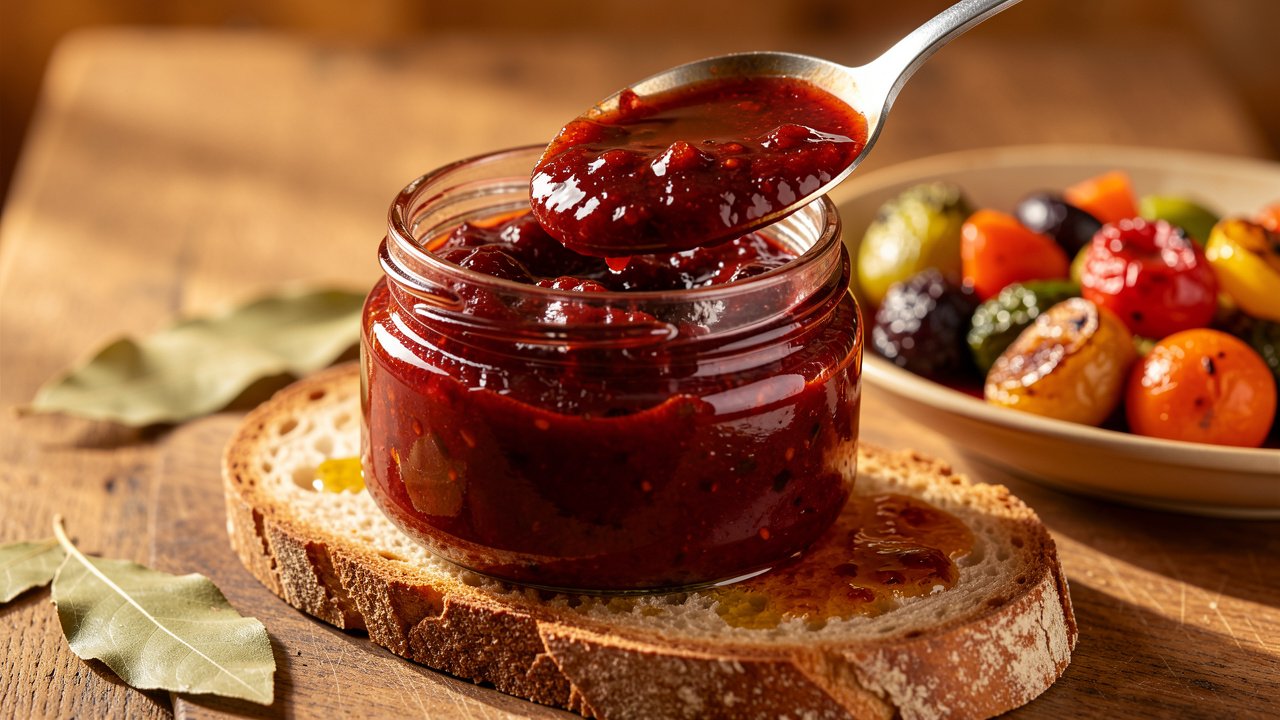
Zacusca is what a Romanian kitchen smells like in October. Peppers and eggplant char on the grill or under the broiler, onions soften low and slow, and a pot of tomato and vegetables burbles on the back of the stove for over an hour until it goes deep brick-red and glossy. The reward is a spread that tastes of roasted smoke and sweet tomato at once, thick enough to hold its shape on a slice of bread.
Why This Zacusca Works
Zacusca rests on one idea: char the vegetables first, then cook them down slowly. Roasting the eggplant and red peppers over an open flame or under a hot broiler until their skins blister is what gives the finished spread its signature smoky depth. Skip that step and you get a pleasant vegetable stew, not zacusca. The blackened skins slip off easily and leave behind soft, sweet flesh that carries a whisper of smoke into every jar.
The second pillar is patience. Once the roasted vegetables are chopped and joined by a generous amount of onion, tomato puree, and oil, the pot needs to simmer gently for well over an hour. During that time the liquid cooks off, the sugars in the tomato and pepper concentrate, and the color shifts from bright red to a deep, brooding brick. You are looking for the moment the spread is thick enough that a spoon dragged across the bottom leaves a clean trail.
Oil matters more than newcomers expect. Zacusca uses a fair amount of it, and that is deliberate. The oil carries flavor, keeps the spread from scorching during the long cook, and gives it the glossy, spreadable body that sets a good zacusca apart from a watery one. As it finishes, the oil rises and pools at the surface, which is exactly the sign you want.
Finally, it is a make-ahead dream. Zacusca tastes better a day or two after it is made, and it keeps for weeks refrigerated or months if you jar it properly. A single afternoon of work fills the shelf with autumn on toast.
Pro observation: The spread is done when you drag a spoon across the base of the pot and the trail holds for a second before the mixture flows back, with a thin layer of oil glinting on top. That is thick, jammy zacusca.
Ingredients
Kitchen Measurement Converter
Zacusca recipes travel between cups, grams, and milliliters, so use this converter to switch units without leaving the page. Pick a category, enter a value, and the result updates instantly.
Ingredient Notes & Substitutions
Red Bell Peppers
Meaty, sweet red peppers are the backbone. Romanian cooks often use long red kapia peppers, which are thin-skinned and extra sweet. Regular bell peppers work well too. Roast them until the skins are fully blistered and blackened for the deepest flavor.
Eggplant
Choose firm, glossy eggplant that feels heavy for its size. After charring, let the flesh drain in a colander so the spread does not turn watery. A little bitterness is normal and mellows during the long cook.
Tomato
Smooth tomato puree, sometimes labeled passata, gives a clean base, while a spoonful of concentrated tomato paste deepens the color and body. In late summer you can cook down fresh ripe tomatoes instead, though it takes longer to reduce.
Oil
A neutral sunflower oil is traditional and lets the roasted vegetables shine. Do not cut the amount too far, since the oil protects the spread from scorching and gives it the right glossy, spreadable texture.
Equipment
- Broiler, grill, or gas flame
- Large heavy pot or Dutch oven
- Colander for draining
- Sharp knife and board
- Wooden spoon
- Sterilized jars with lids
Before You Start
1. Set aside real time. Between roasting, peeling, and the long simmer, zacusca is an afternoon project. It is mostly hands-off once the pot is going, but it does not rush.
2. Roast in batches. Do not crowd the peppers and eggplant under the broiler. They need direct heat to blister, so give them room and turn them as they char.
3. Decide how you will store it. If you plan to jar zacusca for the shelf, sterilize your jars and lids before you start, and read the storage section below so the process is ready when the spread is done.
Step-by-Step Instructions
Roast the Peppers and Eggplant
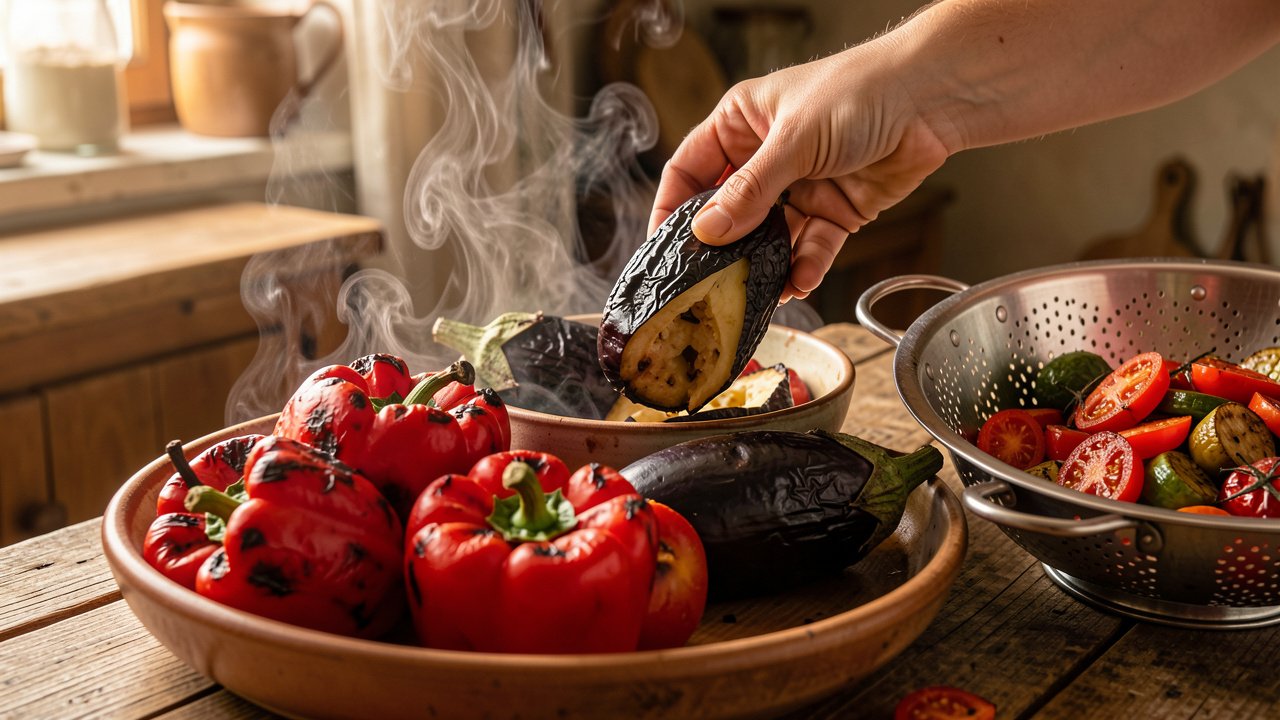
Set the peppers and whole eggplant under a hot broiler, over a grill, or directly over a gas flame. Turn them every few minutes until the skins are blackened and blistered all over, about 15 to 20 minutes. You want them fully charred and collapsing soft, not just lightly colored. This roasting step is the source of all the smoky depth in the finished spread.
Steam, Peel, and Drain
Transfer the charred vegetables to a bowl and cover it, or seal them in a bag, and let them steam for 15 minutes. The trapped heat loosens the skins. Peel off and discard the blackened skins, pull out the pepper seeds and eggplant stems, then set the flesh in a colander to drain for at least 15 minutes so excess liquid runs off.
Chop the Roasted Vegetables
Finely chop the drained pepper and eggplant flesh by hand for a rustic, textured spread, or pulse it briefly in a food processor for a smoother one. Do not fully puree it. Zacusca should keep a little body. Set the chopped vegetables aside while you start the onions.
Soften the Onions
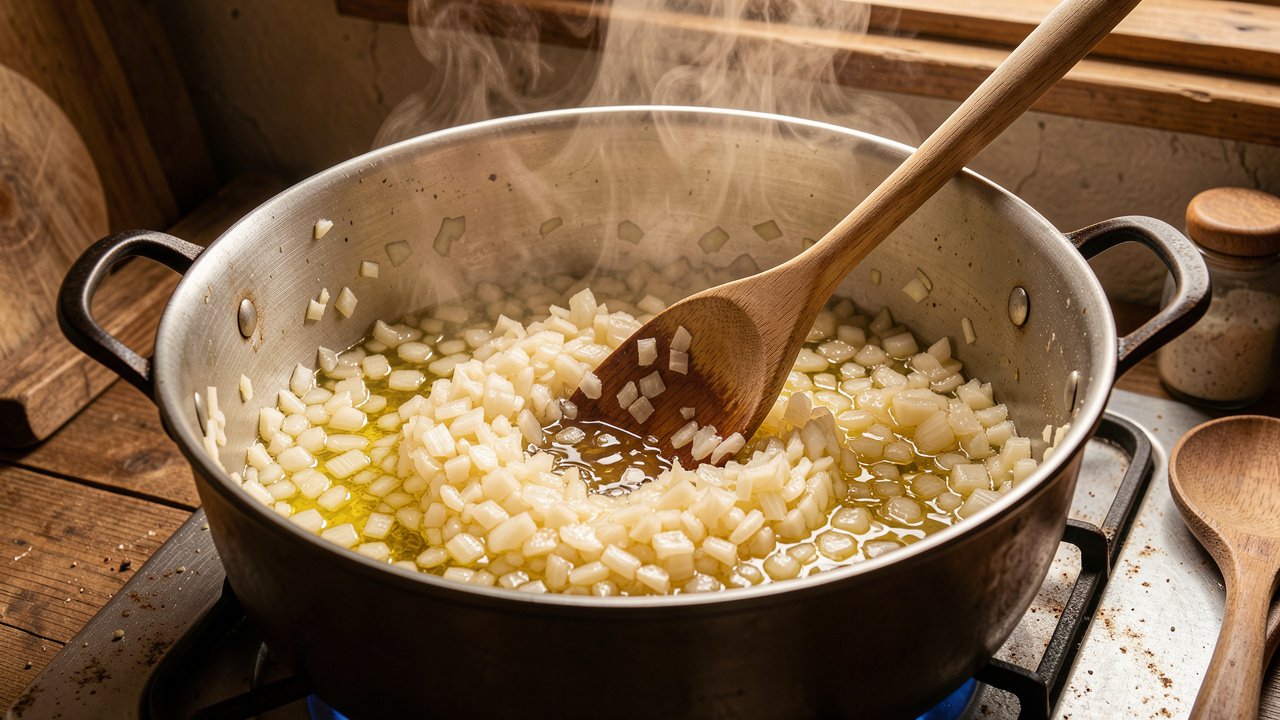
Warm the sunflower oil in a large heavy pot over medium-low heat. Add the finely chopped onions with a pinch of the salt and cook gently for 12 to 15 minutes, stirring often, until they are very soft, sweet, and pale gold. Do not rush this with high heat. Slow, patient onions are the sweet foundation of the spread.
Build the Spread and Simmer
Stir the chopped roasted vegetables into the onions, then add the tomato puree, tomato paste, bay leaves, peppercorns, sugar, and the rest of the salt. Bring it to a gentle bubble, then lower the heat right down. Simmer uncovered for 60 to 75 minutes, stirring every few minutes and scraping the bottom, until the mixture is very thick, dark, and jammy and the oil rises to the surface. Guard against scorching at the bottom of the pot.
Adjust, Rest, and Store
Fish out the bay leaves and taste. Adjust the salt and add a touch more sugar if the tomato tastes sharp. Let the zacusca cool a little; it thickens further as it sits. Spoon it into sterilized jars for canning, or into clean containers for the fridge or freezer. Serve it at room temperature on crusty bread.
Chef’s Tips From Real Kitchen Testing
Char the vegetables hard. Pale, under-roasted peppers and eggplant give a flat, stewy spread. You want real blistered, blackened skins for that smoky signature.
Drain the roasted flesh well. Excess water from the vegetables is the top reason zacusca stays thin and takes forever to reduce. A patient rest in the colander pays off.
Stir and scrape often near the end. As the spread thickens it wants to catch on the bottom of the pot, and one scorched patch flavors the whole batch.
Recipe Variations
Serving Suggestions
- Thick on crusty bread or toast
- Alongside grilled vegetables or beans
- With a soft cheese and fresh tomato
- Spooned over rice or polenta (mamaliga)
Nutrition Facts
| Nutrient | Amount per serving (about 1/4 cup) |
|---|---|
| Calories | 150 |
| Protein | 2 g |
| Carbohydrates | 11 g |
| Fat | 12 g |
| Saturated Fat | 1.5 g |
| Fiber | 3 g |
| Sugar | 6 g |
| Sodium | 340 mg |
Values are estimates per serving and vary with the exact ingredients and brands you use.
Make-Ahead Tips
Zacusca is built to be made ahead. In fact, the flavor improves after a day or two in the fridge as the smoke, tomato, and sweet onion settle together. Cook a full batch on a free afternoon, cool it completely, and portion it into jars or containers. Because it is naturally rich with oil and cooked down low in water, it keeps far longer than a fresh vegetable dish. Bring it back to room temperature before serving so the texture spreads easily.
Storage, Canning & Freezing
Canning safety: Follow a tested, up-to-date water-bath canning guide from a trusted food-preservation authority for the correct jar size and processing time in your area, since these depend on altitude and jar volume. Never use oven canning or lid-down jar inversion, which do not create a safe seal. If any lid has not sealed after 24 hours, or you are unsure, simply refrigerate or freeze that jar instead. When in doubt, throw it out.
Common Mistakes to Avoid
Troubleshooting
Spread too thin or runny? It needs more time. Keep simmering, uncovered, on low, stirring often, until the oil rises and a spoon leaves a clear trail across the bottom.
Tastes flat or dull? It usually wants salt and a little more roasted-pepper sweetness. A touch of tomato paste and a pinch of sugar can also lift it.
Scorched at the bottom? Stop stirring up the burnt layer, gently pour the good spread into a clean pot, and finish on lower heat. Do not scrape the scorched patch into the batch.
A Note on Romanian Cooking
Zacusca belongs to the great tradition of Romanian autumn preserving. When the markets fill with cheap, ripe peppers and eggplant, families gather to roast and cook big batches together, filling rows of jars that line the pantry shelf through winter. Each household guards its own version, some smokier, some sweeter, some studded with mushrooms or beans. It is comfort food and pantry insurance at once, a taste of the harvest saved for cold months. If you enjoy putting up tomatoes, our roundup of tomato recipes and this fresh tomato salsa share the same preserve-the-season spirit.
Frequently Asked Questions
More Tomato Recipes to Try
Last updated: September 23, 2026