Yemeni Recipes
Yemen’s Bubbling National Dish
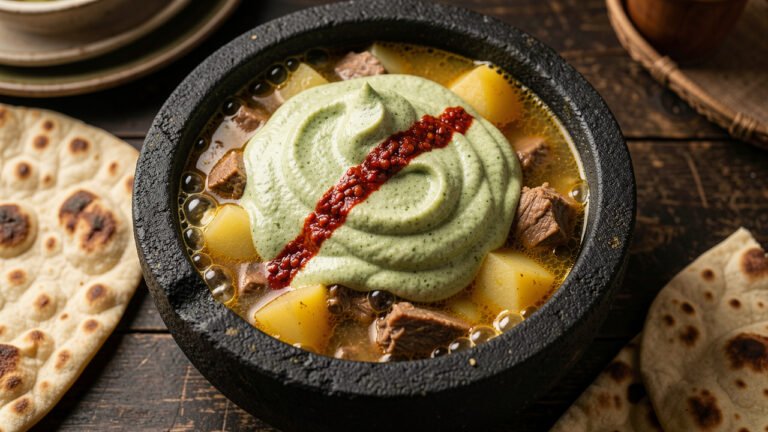
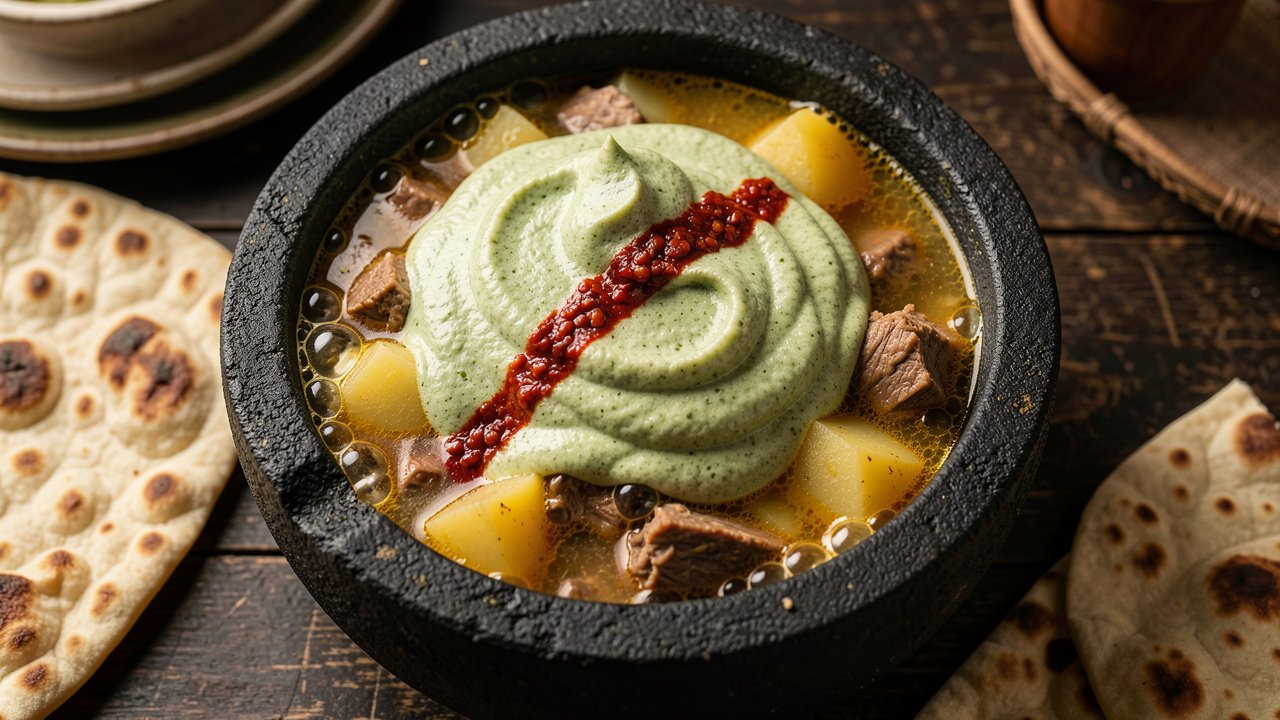
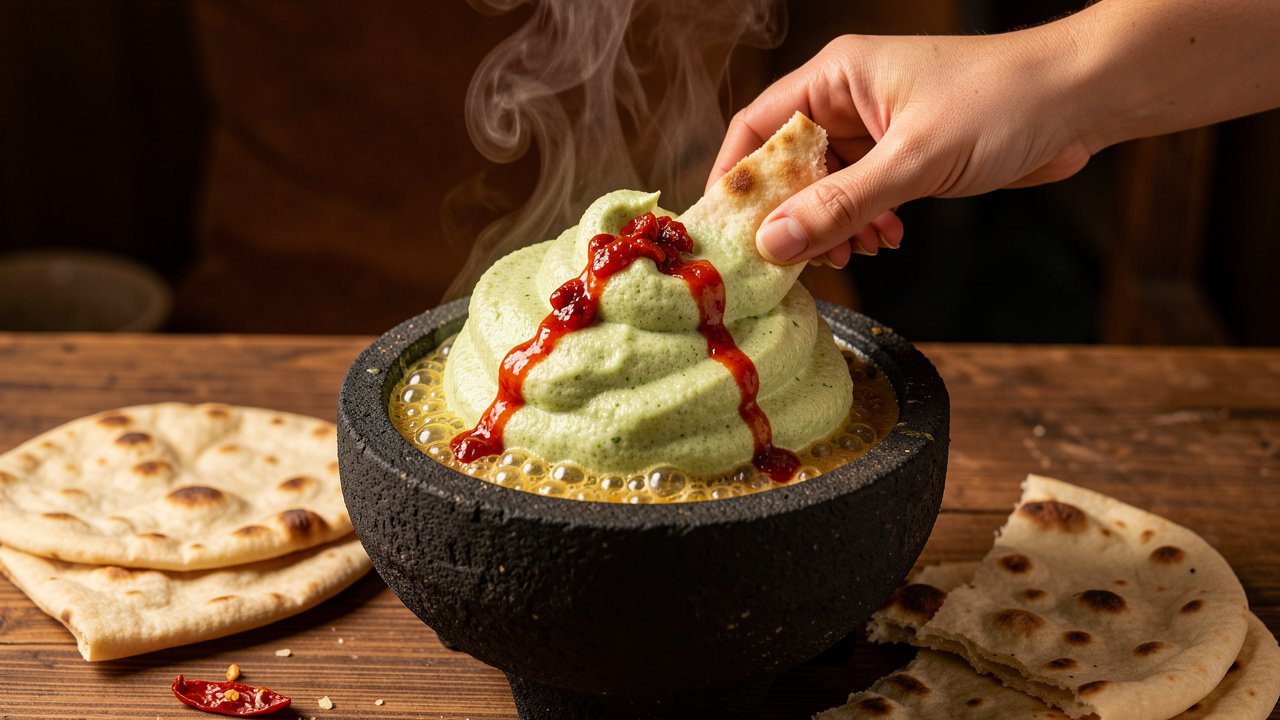
If you have ever sat around a communal Yemeni table, you know saltah does not just get served, it makes an entrance. The pot comes to the table still bubbling and hissing, crowned with a pale green cloud of whipped fenugreek and a red streak of chili relish. The first time I made it, I underestimated the fenugreek froth and skipped the long whip; the topping fell flat and the whole dish lost its signature drama.
Why This Saltah Works
Saltah is really three little recipes that meet in one bubbling pot: a slow maraq broth of halal lamb or beef, a fresh sahawiq relish, and the whipped hulba froth. Each one is simple on its own, but together they give you the layered heat, tang, and savory depth that make this Yemen’s most-loved dish. The magic is in keeping them separate until the last moment, then combining them at the table.
The maraq base is where patience pays off. Simmering the meat low and slow with onion, garlic, tomato, and hawaij builds a broth that tastes deep and beefy, not thin. Rushing it is the fastest way to a watery, one-note stew, so give the pot the time it wants.
The hulba, or whipped fenugreek, is the signature that turns a good stew into saltah. Soaked ground fenugreek is whisked with a little cold water until it grows into a pale, airy froth, almost like a savory meringue. It looks like a small kitchen trick, but it carries a gentle bitterness that balances the rich broth beautifully.
Finally, the sahawiq relish delivers the punch. This fresh blend of tomato, chili, cilantro, and garlic is stirred in to taste, so every diner controls their own heat. That built-in flexibility is exactly why saltah works so well for a shared table where some love fire and others do not.
Pro observation: The stew is ready for its toppings when the broth clings to the back of a spoon and the meat pulls apart with light pressure. If it still looks thin and pale, let it reduce a few more minutes before it goes to the table.
Ingredients
Kitchen Measurement Converter
Quickly convert between common cooking measurements without leaving the recipe. Pick a category, enter a value, and the result updates instantly.
Ingredient Notes & Substitutions
Halal Lamb or Beef
Use halal lamb or beef cut into bite-size cubes; shoulder or stewing cuts with a little marbling stay tender through the long simmer. Bone-in pieces add extra body to the broth if you have them.
Hawaij
Hawaij is the warm Yemeni spice blend of cumin, coriander, black pepper, turmeric, cardamom, and cloves. Buy it ready-made or grind your own. It is the backbone of the maraq flavor.
Fenugreek for Hulba
Use finely ground fenugreek seeds soaked in water, then whipped. Fresh grinding gives the best froth. The bitterness is intentional and mellows once it meets the hot broth.
Sahawiq Chilies
Green chilies give sahawiq its heat, so adjust the count to your taste. Ripe tomatoes, plenty of cilantro, and garlic round it out. Blend it fresh for the brightest, sharpest flavor.
Equipment
- Stone pot or heavy pot
- Small whisk or fork
- Blender or mortar
- Sharp knife and board
- Wooden spoon
- Ladle
Before You Start
1. Soak the fenugreek early. Ground fenugreek needs time in cold water to soften before it will whip, so start it soaking as soon as you begin the meat.
2. Make the sahawiq ahead. Blend the relish while the stew simmers so it has time to mingle. It keeps well and only improves after resting for half an hour.
3. Cut the meat evenly. Uniform cubes cook at the same rate, which means the whole pot turns tender together instead of some pieces staying tough.
Step-by-Step Instructions
Soak the Fenugreek
Put the ground fenugreek in a bowl and pour over the cold water. Stir once, then set it aside to soak for at least an hour while you build the stew. A dark, bitter liquid will settle on top; pour most of it off before whipping, as it carries the sharpest bitterness.
Brown the Meat
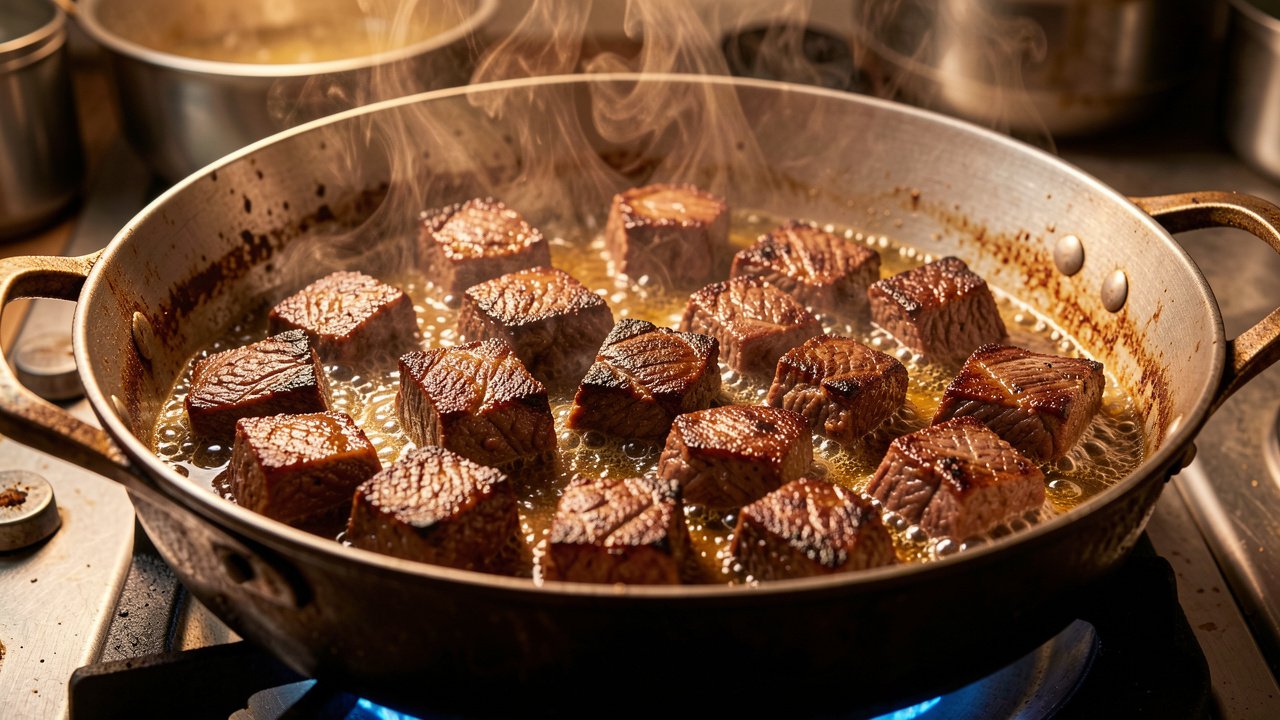
Heat the oil or ghee in a heavy pot over medium-high heat. Add the cubed halal lamb or beef in a single layer and let it sear undisturbed for 2 to 3 minutes before turning, until the pieces are browned on all sides. This first color is where the deep, savory flavor of the broth begins.
Build the Maraq Base
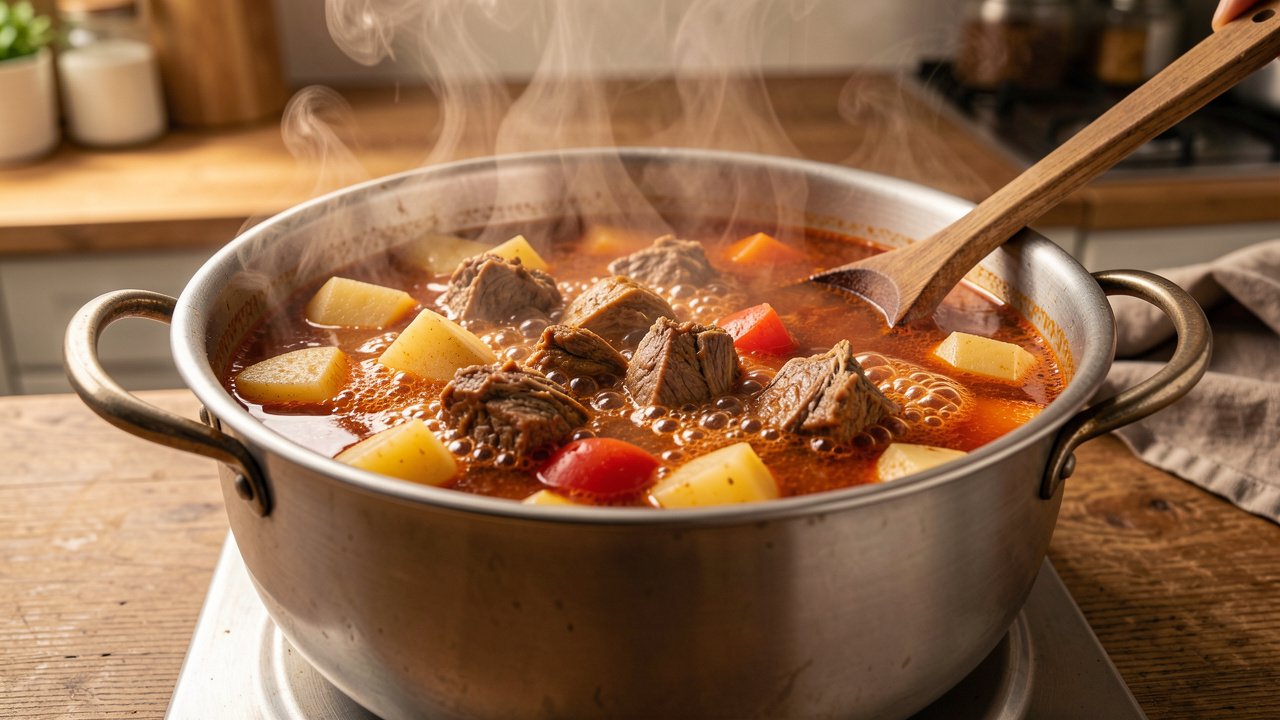
Add the chopped onion and cook 5 minutes until soft, then stir in the garlic and cook 1 minute more. Add the chopped tomatoes, tomato paste, and hawaij, and stir for 2 minutes so the spices bloom and the tomatoes start to break down into a fragrant, red-brown base around the meat.
Simmer Low and Slow
Pour in the water or broth and add the salt. Bring to a boil, then lower to a gentle simmer, cover, and cook 60 to 75 minutes until the meat is fork-tender. Add the diced potatoes in the last 20 minutes so they cook through without falling apart. Top up with a little hot water if the level drops too far.
Make the Sahawiq and Whip the Hulba
Blend the sahawiq tomato, green chilies, cilantro, garlic, and cumin with a pinch of salt into a coarse red relish, then set it aside. Now whip the soaked fenugreek: using a fork or small whisk, beat it hard for 3 to 5 minutes, adding a spoonful of cold water at a time, until it grows pale and foamy like a soft froth.
Assemble and Serve Bubbling
Make sure the stew is boiling hard so it will keep bubbling at the table. Spoon a generous layer of the whipped hulba froth over the surface, then drizzle the sahawiq relish across the top. Carry it straight to the table while it is still hissing and bubbling, with warm Yemeni flatbread for scooping.
Chef’s Tips From Real Kitchen Testing
Whip the hulba longer than you think you need to. A proper froth takes several minutes of hard beating; stop too soon and it stays liquid instead of forming that airy cloud.
Serve it truly bubbling. Saltah is meant to arrive at the table still boiling in the pot, so keep the heat high right up to the moment you carry it over.
Taste and build the sahawiq to your table. Start mild and add more chili, since it is much easier to spoon in extra heat than to pull it back out.
Recipe Variations
Serving Suggestions
- Warm malooga or khubz flatbread for scooping
- Plain white rice on the side
- Extra sahawiq relish in a small bowl
- Sweet mint tea to finish the meal
Nutrition Facts
| Nutrient | Amount per serving |
|---|---|
| Calories | 420 |
| Protein | 32 g |
| Carbohydrates | 24 g |
| Fat | 22 g |
| Saturated Fat | 8 g |
| Fiber | 5 g |
| Sugar | 6 g |
| Sodium | 780 mg |
Values are estimates per serving and vary with the exact ingredients and brands you use.
Make-Ahead Tips
The maraq base is a natural make-ahead, since the meat only grows more tender and the flavors deepen overnight in the fridge. Cook the stew a day ahead, cool, and refrigerate. Make the sahawiq up to two days early. Whip the hulba fresh on the day of serving, though, because the froth loses its lift once it sits. Reheat the stew to a hard bubble before adding the toppings so it reaches the table steaming.
Storage, Freezing & Reheating
Common Mistakes to Avoid
Troubleshooting
Hulba will not froth? The fenugreek needs more soaking time and harder whipping. Pour off the bitter top liquid, add a spoonful of cold water, and beat vigorously for several minutes.
Broth tastes thin? Let it simmer uncovered to reduce and concentrate, and check the salt and hawaij, which often need a touch more.
Too bitter from the fenugreek? Discard more of the dark soaking liquid before whipping and use a slightly lighter layer of froth on top.
A Note on Yemeni Cooking
Yemeni cooking leans on a handful of bold building blocks that show up again and again. Hawaij, the warm spice blend, seasons everything from soups to this stew, while hulba, the whipped fenugreek, is prized for the airy froth and gentle bitterness it lends to hearty dishes. Sahawiq, the fiery fresh relish of tomato, chili, cilantro, and garlic, sits on nearly every table so each person can dial up the heat. Meals are famously communal; saltah in particular is eaten straight from the shared bubbling pot, with everyone tearing pieces of flatbread to scoop from their own side. If you enjoy warming, spiced tomato bowls, our hearty tomato lentil soup shares the same comforting spirit, and you can browse more ideas in our full collection of tomato recipes.
Food safety note: Cook the halal lamb or beef until it is fork-tender and fully done, with no pink remaining in the center. For diced pieces this usually means a full simmer of at least an hour; use a thermometer if you are unsure and aim for an internal temperature of 160 F for ground or well-done stewing meat.
Frequently Asked Questions
More Tomato Recipes to Try
Last updated: September 23, 2026