Spanish Recipes
Cordoban Thick Cold Tomato Soup
Salmorejo is what happens when Cordoba takes the ripest summer tomatoes it can find and turns them into something closer to a dip than a soup. It is thick enough to coat the back of a spoon, rich from all that olive oil, and cool from the fridge. The first time I made it I under-blended it and got a rough, watery puree; the magic only appeared once I let the machine run long enough to whip the oil into a pale, mousse-like emulsion.
Why This Salmorejo Works
Salmorejo has one of the shortest ingredient lists in Spanish cooking, which means every choice matters. Ripe, sweet, deeply red tomatoes are the whole flavor, so the recipe rewards you for waiting until late summer or buying the reddest fruit you can find. The bread and the olive oil do the rest, turning thin tomato juice into something thick, creamy, and spoonable.
The single most important step is the emulsion. When you stream cold olive oil into the whirling tomato and bread base, the starch from the bread and the pulp from the tomatoes trap the oil into tiny droplets, exactly like making mayonnaise. That is what gives salmorejo its pale coral color and velvety body. Skip it, or add the oil too fast, and you get an orange puree with a slick of oil on top instead of a unified cream.
Stale bread is not a shortcut here; it is the structure. Day-old crustless white bread soaks up the tomato liquid and blends into a smooth paste that thickens the soup without any cooking, flour, or dairy. Fresh bread turns gummy, so a slightly dry loaf genuinely works better.
Because nothing is cooked, salmorejo comes together in one blender in about fifteen minutes of hands-on work. The only patience it asks for is the chill, and that time in the fridge is when the garlic mellows, the salt settles, and the flavors knit into a smooth, savory whole.
Pro observation: The base is properly emulsified when it lightens from tomato-red to a soft salmon-pink and holds a spoon-trail for a second before closing. That color shift is your signal, not the clock.
Ingredients
Kitchen Measurement Converter
Quickly convert between common cooking measurements without leaving the recipe. Pick a category, enter a value, and the result updates instantly.
Ingredient Notes & Substitutions
Tomatoes
Ripe, red, in-season tomatoes are non-negotiable, because they are the flavor. Pale, watery, or under-ripe tomatoes make a thin, sour soup no amount of blending can fix. Vine or plum tomatoes with real sweetness work best.
Bread
Use a day-old rustic white loaf with the crusts removed. Slightly dry, dense bread blends into a smooth paste and thickens the soup. Avoid soft sandwich bread, which can turn gummy, and skip whole grain, which muddies the color.
Sherry Vinegar
Sherry vinegar gives the authentic Andalusian tang and is fully halal, since it is a vinegar and contains no alcohol. Wine vinegar also works. Add it gradually, because a little brightens the tomatoes while too much overwhelms them.
Toppings
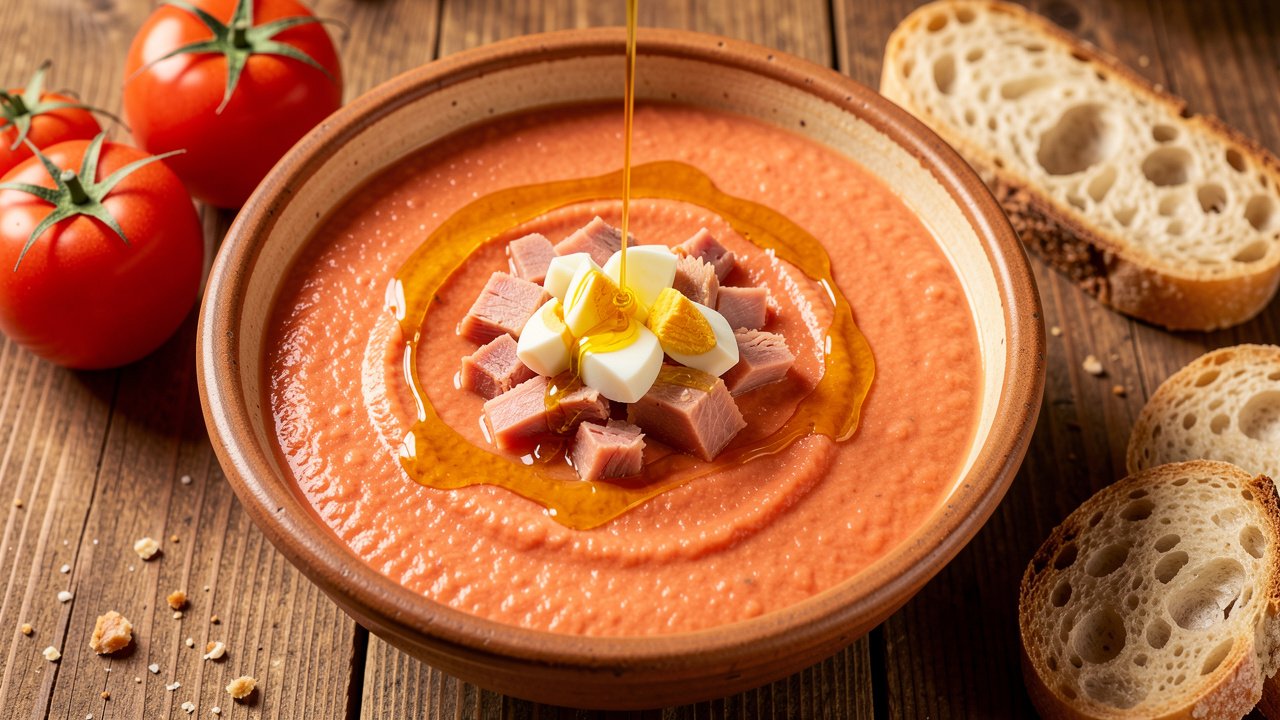
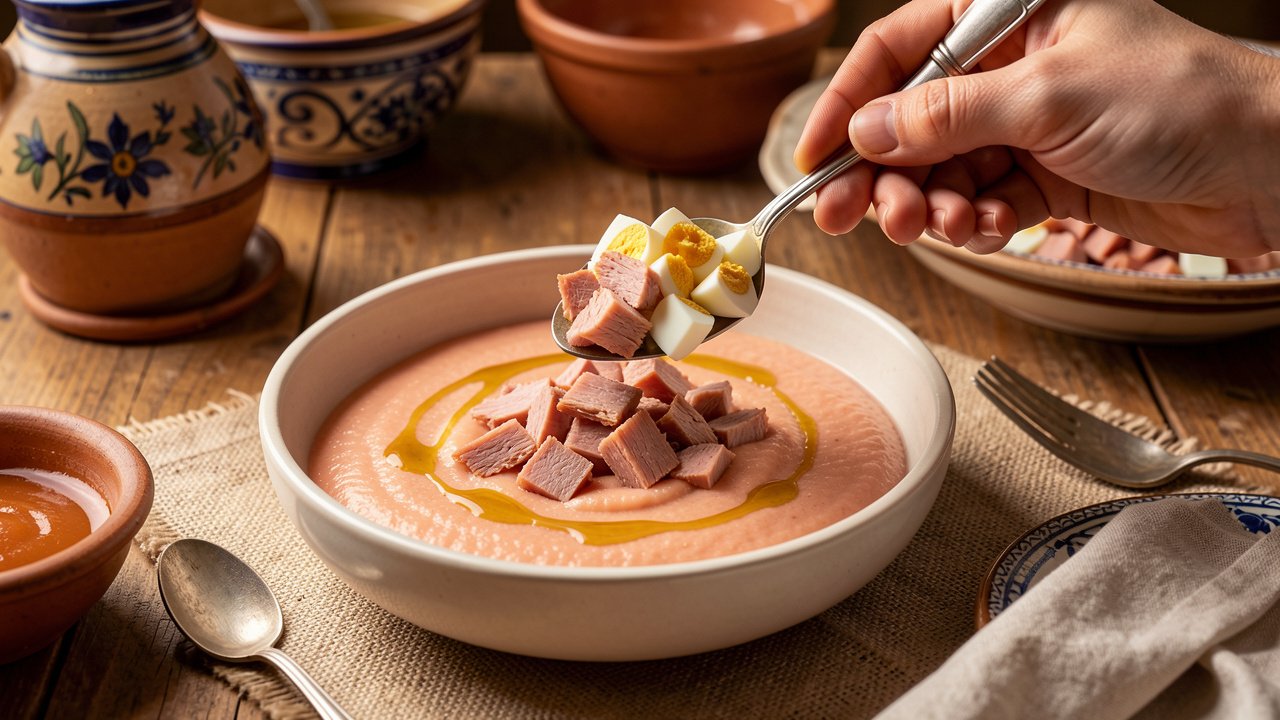
The classic garnish is chopped hard-boiled egg with diced cured meat. To keep this halal, we top with diced smoked turkey or crisp chickpeas instead, which give the same salty, savory contrast. Extra chopped egg alone is also lovely.
Equipment
- Blender or food processor
- Sharp knife and board
- Mixing bowl
- Fine sieve (optional)
- Measuring cup and spoons
- Small pot for eggs
Before You Start
1. Chill everything you can. Salmorejo is served cold, so cold tomatoes and cold olive oil mean less time waiting for the finished soup to chill down.
2. Dry your bread the day before. Leave the crustless bread out overnight, or dry it briefly in a low oven, so it soaks up the tomato rather than staying spongy.
3. Boil the eggs early. Hard-boil the eggs and cool them while you blend, so the topping is ready and set by the time the soup has chilled.
Step-by-Step Instructions
Prep and Soak the Bread
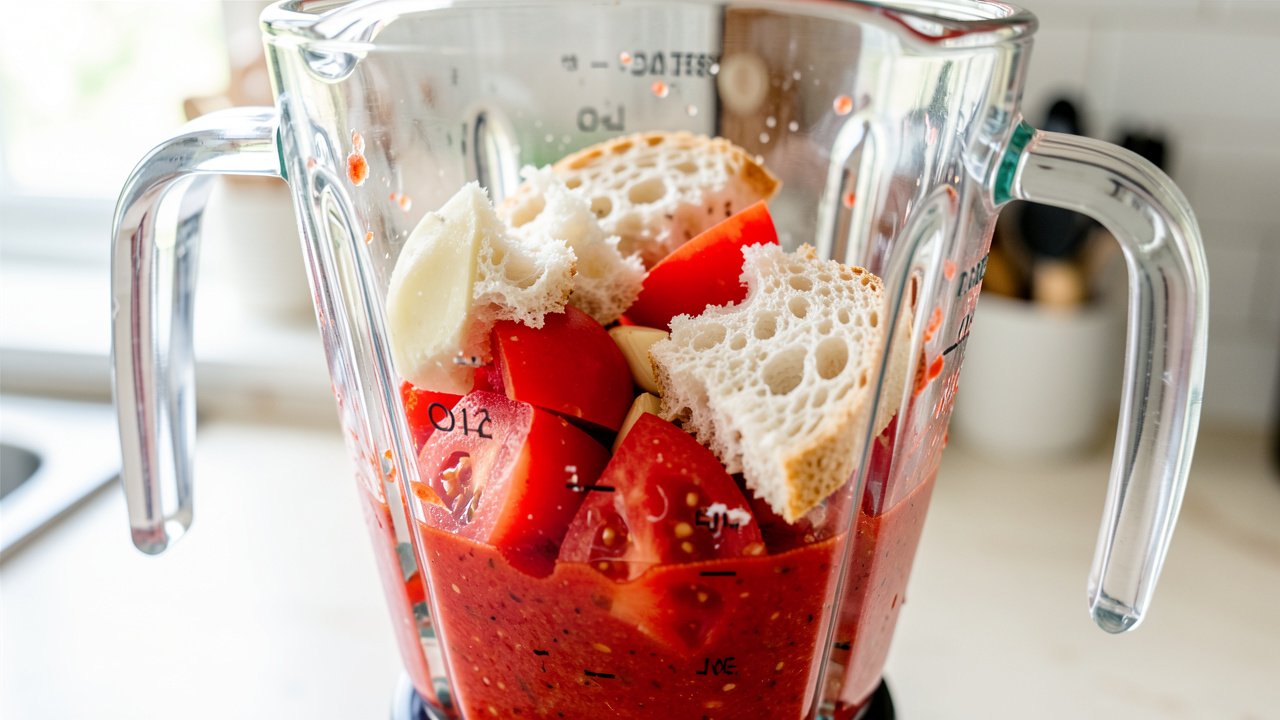
Core the tomatoes and cut them into rough chunks. Tear the crustless stale bread into pieces and drop them into the blender. Pour the tomato chunks on top and let everything sit for 5 minutes so the bread starts to soften in the tomato juice. There is no need to peel the tomatoes if you plan to strain the soup later.
Blend the Tomatoes and Garlic
Add the peeled garlic clove and the salt to the blender. Blend on high for a full minute until the tomatoes and bread break down into a thick, uniform puree with no visible chunks. It will look rough and tomato-red at this stage, which is exactly right before the oil goes in.
Add the Sherry Vinegar
Pour in the sherry vinegar and blend again for a few seconds to combine. Taste the base now; it should be savory and just barely tangy. This is the moment to adjust the salt or add a touch more vinegar, before the oil softens the flavors.
Emulsify the Olive Oil
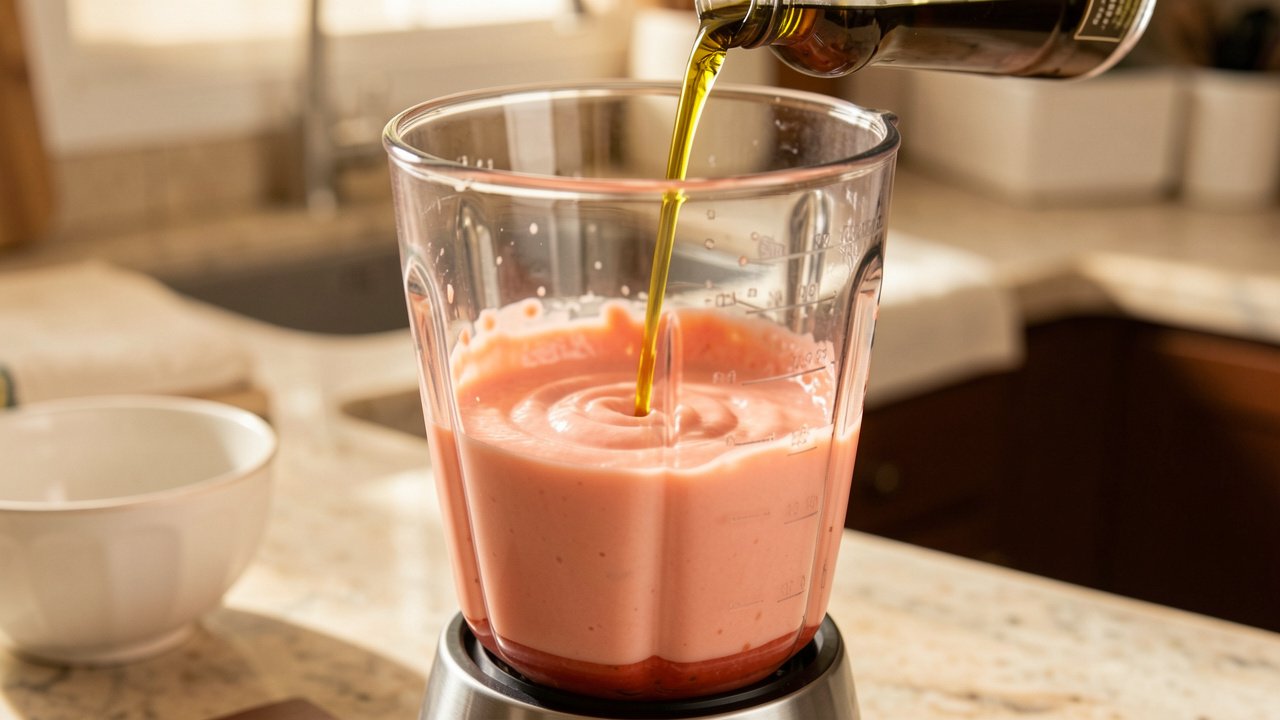
With the blender running on medium, remove the lid cap and pour the extra virgin olive oil in a slow, steady stream. Keep blending for about a minute after the last of the oil goes in. The soup will lighten from tomato-red to a pale coral or salmon color and turn thick, glossy, and creamy. That color change tells you the emulsion has formed.
Strain and Chill
For the silkiest texture, pass the soup through a fine sieve into a bowl, pressing with a spatula to leave any skins and seeds behind. This step is optional but is what gives restaurant salmorejo its flawless smoothness. Cover the bowl and chill for at least 2 hours, or until cold all the way through.
Top and Serve
Ladle the cold salmorejo into shallow bowls. Scatter the chopped hard-boiled egg and the diced smoked turkey over the top, then finish each bowl with a generous drizzle of extra virgin olive oil. Serve right away, while it is cold and the toppings are fresh.
Chef’s Tips From Real Kitchen Testing
Use the reddest, ripest tomatoes you can find. Salmorejo has nowhere to hide a bland tomato, and ripe fruit is the difference between good and unforgettable.
Stream the oil slowly with the blender already running. Dumping it in all at once breaks the emulsion and leaves an oily film instead of a creamy body.
Season after chilling as well as before. Cold dulls both salt and acid, so a final taste from the fridge often needs a pinch more salt or a drop more vinegar.
Recipe Variations
Serving Suggestions
- As a starter in small, shallow bowls
- Crusty bread for dipping into the thick soup
- Crisp chickpeas or extra egg on top
- A cold glass of sparkling water with lemon
Nutrition Facts
| Nutrient | Amount per serving |
|---|---|
| Calories | 320 |
| Protein | 9 g |
| Carbohydrates | 22 g |
| Fat | 23 g |
| Saturated Fat | 4 g |
| Fiber | 3 g |
| Sugar | 6 g |
| Sodium | 640 mg |
Values are estimates per serving and vary with the exact ingredients and brands you use.
Make-Ahead Tips
Salmorejo is a natural make-ahead dish, because it must chill before serving anyway and the garlic mellows nicely overnight. Blend and strain it up to a day in advance, then keep it covered in the fridge. Wait to add the egg, smoked turkey, and final oil drizzle until just before serving, so the toppings stay fresh and the surface stays smooth.
Storage, Freezing & Reheating
Common Mistakes to Avoid
Troubleshooting
Soup too thin? Blend in more soaked bread, a piece at a time, until it thickens to a spoonable cream.
Oily or broken texture? The emulsion split from adding oil too fast. Blend in a small piece of fresh bread to help it come back together.
Tastes flat? Cold mutes seasoning, so add a little more salt and a few drops of sherry vinegar and taste again.
A Note on Cordoban Cooking
Salmorejo belongs to Cordoba, in the heart of Andalusia, and it is often confused with its cousin gazpacho. The difference is real. Gazpacho is a thin, drinkable cold soup made with tomatoes plus cucumber, pepper, and onion, while salmorejo is thicker, richer, and pared back to just tomatoes, bread, garlic, vinegar, and a heavy pour of olive oil. That shorter list and the bigger share of bread and oil are what make salmorejo dense enough to eat with a spoon rather than sip. It is a dish built on great tomatoes and good olive oil, and if you like cold tomato dishes you may also enjoy our fresh tomato salsa, and you can browse more ideas in our full collection of tomato recipes.
Frequently Asked Questions
More Tomato Recipes to Try
Last updated: September 24, 2026