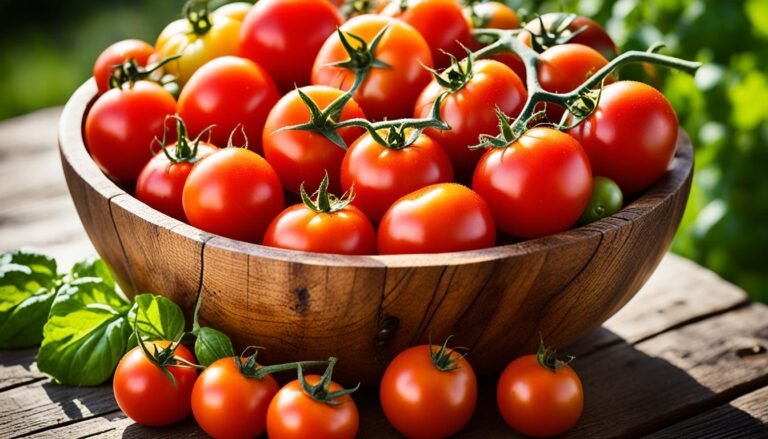
I often ask myself if I should buy organic tomatoes. Are they really better for us, or is it just a way to sell them? I’ll look into what science says. This will help us understand if the choice between organic and regular tomatoes really matters for our health and the planet.
Key Takeaways
- Organic tomatoes contain up to 55% higher levels of vitamin C compared to conventionally grown tomatoes.
- Organic tomatoes have higher phenolic content, providing more antioxidants and phytochemicals.
- Organic farming practices are more sustainable, with a lower environmental impact.
- The taste and nutrient content of organic tomatoes can vary, and they may not always be significantly healthier than conventional options.
- Choosing organic or conventional tomatoes ultimately comes down to personal preferences and priorities.
Introduction to Organic vs. Conventional Tomatoes
Tomatoes are grown everywhere and play a big role in the world economy. In 2019, the world made 1,808 million tons of tomatoes. China, India, and Turkey were the top three tomato makers. The choice between organic and conventional tomatoes is becoming more important as people look for healthier and more eco-friendly food choices.
Definition of Organic Tomatoes
Organic tomatoes are grown without synthetic pesticides and fertilizers. This type of farming uses only natural resources. It keeps the soil healthy and protects nature. Organic farming follows strict rules to make sure the food is truly organic.
Overview of Conventional Tomato Farming
Conventional tomato farming uses a lot of chemicals to grow tomatoes fast and big. These chemicals are not always good for people and the planet. They can even lead to health problems like cancer.
However, organic farming has its challenges. It’s harder to keep pests away and can cost more. Plus, it needs more space than the traditional way of farming.
More and more people are choosing organic. This includes buying organic tomatoes. The differences between the two types have gotten lots of attention. This is especially true for those who care about their health and the environment.
Nutritional Differences Between Organic and Conventional Tomatoes
Studies show organic tomatoes are better than conventional ones. They have more nutrients and antioxidants. This is because they grow without synthetic pesticides. So, they make more good stuff to fight off threats.
Vitamin and Mineral Content
Organic tomatoes have up to 57% more vitamin C than conventional types. They also have twice the flavonoids, which are strong antioxidants. These help protect our bodies from harm.
Antioxidant Levels
Organic tomatoes are richer in antioxidants. They have more lycopene, a powerful carotenoid. This means they might lower cancer and heart disease risks.
Presence of Pesticides and Chemicals
Conventional tomatoes use synthetic pesticides. These can be harmful because they leave residues. Organic tomatoes are free from these threats. They are a safer choice for those who care about health.
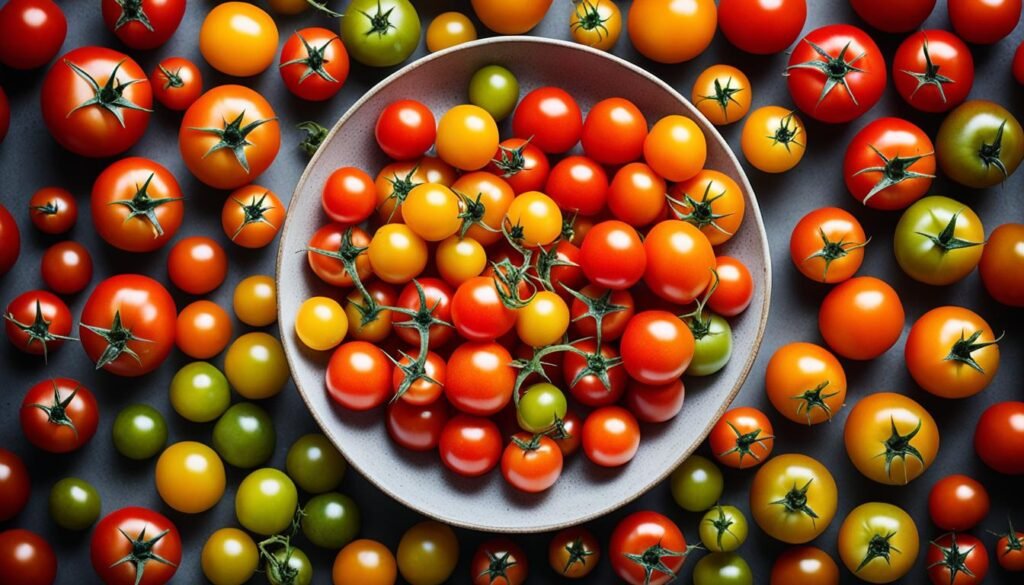
“Conforming to organic farming principles, practices should exclude the use of synthetic fertilizers, pesticides, growth hormones, and preservatives.”
The International Federation of Organic Agriculture Movements focuses on health, ecology, fairness, and care. These are the key parts of organic farming.
Health Benefits of Organic Tomatoes
Organic tomatoes bring better health benefits than regular ones. They don’t have synthetic pesticides and chemicals. This helps people lower their risk of health problems. They also have more nutrients and antioxidants, which can help avoid diseases like heart issues and cancer.
Reduced Chemical Exposure
Not using synthetic pesticides means organic tomatoes grow without harmful chemicals. Choosing organic tomatoes cuts down on pesticide exposure. This choice lets people know their food is safe from these bad substances.
Higher Nutrient Density
Organic tomatoes are packed with more nutrients than the usual ones. They have more vitamins, minerals, and antioxidants. This includes vitamin C, vitamin K, potassium, and lycopene. Such rich nutrients support better health and can prevent chronic diseases.
Enhanced Antioxidant Properties
Stress makes organic tomatoes produce more good-for-you compounds. This boosts their antioxidant power. These tomatoes avoid synthetic pesticides and fertilizers, so they have more special antioxidants. These can help reduce diseases like cancer and heart issues by fighting off stress and inflammation.
“Consuming organic tomatoes can significantly reduce your exposure to potentially harmful pesticides and chemicals, while also providing a nutrient-dense and antioxidant-rich source of produce for better overall health.”
Choosing organic tomatoes offers less pesticide risk, more nutrients, and better antioxidants. All this helps your health and lowers the chance of diseases.
Organic tomatoes are a great choice for a healthy diet. By focusing on nutrient-dense produce and less pesticide exposure, people can improve their health and wellbeing.
Environmental and Ethical Considerations
More and more, people care about how their food affects the planet and human rights. Organic farming practices focus on keeping farming sustainable. This helps the soil and everything living nearby stay healthy.
Sustainable Farming Practices
Organic farmers use natural ways to grow tomatoes. They rotate crops and add natural fertilizers to keep the soil rich. This is better for the earth than using chemicals, which can hurt the land.
Sustainable farming aims to use practices that don’t damage the land. This helps make sure they can keep growing tomatoes in the same place for many years.
Impact on Soil Health
Organic methods make the soil better by adding good microorganisms and improving nutrients in the soil. Studies show that using natural fertilizers grows better plants and food. This keeps farming sustainable. But, using too much synthetic stuff can harm the soil and its living creatures.
Ethical Treatment of Workers
Choosing organic tomatoes can also mean supporting fairer work conditions. The organic farming world cares about how workers are treated, especially in tomato farming. It fights against bad labor practices and for worker dignity. Organic agriculture works to be socially responsible and treat workers well.

“Organic farming practices not only benefit the environment but also support the well-being of the people who grow our food.”
When we buy organic tomatoes, we’re helping make food more sustainable and ethical. This supports the health of our planet and the farmers who grow our food.
Cost and Accessibility of Organic Tomatoes
People often wonder if they should buy organic or regular tomatoes. Organic ones usually cost more. The price gap comes from different factors. Studies show that organic farming helps the environment more. It uses 35.04% less harmful methods. The good practices and fair wages also raise the cost of growing organic tomatoes.
Price Comparison with Conventional Tomatoes
Organic tomatoes can be pricier, depending on where you live. Sometimes, the cost isn’t too different. But, in certain places, organic tomatoes are much more expensive. Research finds that some organic tomatoes in Barcelona had more healthy nutrients. This can make their higher price worth it.
Availability in Different Regions
Access to organic tomatoes affects their price too. Places with many organic farmers can offer cheaper tomatoes. Research says organic foods are healthier 60% of the time. This is a good reason for choosing organic.
Cost-Benefit Analysis for Consumers
Looking at organic tomato prices, think about their benefits. Organic farms are better for the planet. They lower the risk of pesticides and pollution in the water. Considering these points helps you decide if organic tomatoes are right for you.
“Organic produce generally has about 5-15% higher nutrient levels than conventionally grown produce.”
Organic tomatoes’ cost and availability may differ. But knowing their advantages can guide your choice. Think about the benefits for the planet and your health. This makes spending more on organic tomatoes a smart choice.
Common Misconceptions About Organic Tomatoes
Many people are confused about organic tomatoes. They often mix up facts and myths about them. It’s key to know the truth to buy and eat wisely.
Myth: Organic Means Pesticide-Free
Some think organic tomatoes have no pesticides. But, this isn’t quite true. Organic farmers use pesticides made from natural sources. This helps the environment and people’s health. Yet, these pesticides are still for keeping crops safe from bugs and diseases.
Myth: Organic Tomatoes Always Taste Better
There’s a myth that organic tomatoes taste better than others. The thing is, taste is really up to personal preference. Some people might like the taste of non-organic tomatoes more. The taste of a tomato depends on many things, like the type of tomato, how it’s grown, and what people like.
Myth: Organic Farming is Not as Efficient
Another wrong idea is that organic farming isn’t as good as regular farming. But, when done right, organic farming is very effective. Sometimes, organic farms may have lower harvests. But the benefits outshine this downside. For example, organic farming is kinder to the earth and keeps the soil healthy.

Knowing the facts and myths about organic tomatoes can help us all make smarter choices. We can choose what’s best for us, whether it’s organic or not.
Practical Tips for Choosing the Best Tomatoes
When you’re picking out tomatoes, remember a few key tips. Look for a label or certification to spot organic tomatoes. Also, check that they look naturally grown and have few blemishes. Storing tomatoes right, like at room temperature and not in the fridge, keep their taste and nutrients.
How to Identify Organic Tomatoes
Finding organic tomatoes is easy. Just look for a label from a recognized organic group. These labels mean the tomatoes grew without synthetic pesticides or fertilizers. Organic tomatoes might look a bit blemished. That’s because they don’t go through the same looks-check as other tomatoes.
Best Practices for Storing Tomatoes
Keeping tomatoes tasty and fresh requires the right storage. Don’t put them in the fridge, as it can make them mealy and less juicy. Instead, keep them at room temperature, away from the sun. This method keeps them ripe and tasty.
Cooking and Preparing Organic vs. Conventional Tomatoes
Cooking with both kinds of tomatoes can work well. Yet, there are small differences. Organics, because they have more nutrients and antioxidants, might keep their firmness and taste better when cooked. Regular tomatoes might be better for recipes like salads or sauces, adding a gentle, mellow flavor.
The best tomatoes for you depend on what you like and how you’ll use them. Understanding each type’s features and using the right care can unveil great flavors and health benefits.
| Characteristic | Organic Tomatoes | Conventional Tomatoes |
|---|---|---|
| Appearance | May have a more natural, slightly blemished look | Typically uniform in shape and color |
| Flavor | Robust and complex, with higher nutrient density | Milder flavor, better suited for certain dishes |
| Heat Tolerance | Hold up better to cooking and processing | May be more prone to breaking down during cooking |
| Storage | Best stored at room temperature | Also best stored at room temperature |
“Choosing the best tomatoes, whether organic or conventional, involves considering factors like freshness, ripeness, and personal preferences.”
Conclusion
The proof shows organic tomatoes are better for us and the planet than regular ones. Even though making them may be harder and cost more, the plus is big. They have more nutrients, fewer bad chemicals, and are grown better. Studies show they are rich in things that help our body. These include. They also have more vitamin C and valuable plant stuff.
Deciding between organic and regular tomatoes is up to what you care about, your money, and what’s available. Knowing the real facts about organic food can help us pick what’s best for our health and the world. Even though studies haven’t said organic tomatoes are better, picking organic helps our earth a lot.
The world wants more organic and non-GMO food. 80% of people who watch what they eat prefer non-GMO. And more than half put organic first. Thinking about what we buy can make our food system and planet better.
FAQ
What is the definition of organic tomatoes?
Organic tomatoes are grown naturally. Farmers use no synthetic pesticides, fertilizers, or chemicals. They aim to make the soil rich again and keep the environment healthy.
How do organic tomatoes differ from conventional tomatoes in terms of nutritional content?
Studies show organic tomatoes are much better for you. They have more vitamins, minerals, and antioxidants. For example, they can have 57% more vitamin C.
Also, they contain over twice the amount of flavonoids. These are good for your health.
What are the health benefits of consuming organic tomatoes?
Eating organic tomatoes has several health perks. It lowers the pesticides you eat. They are also more nutritious and full of antioxidants.
Adding organic tomatoes to your diet can boost your health. It might also lower the risk of certain diseases.
How are organic farming practices more environmentally sustainable compared to conventional methods?
Organic farming is kind to the earth. It makes the soil better using natural ways. It also helps plants and wildlife thrive. This way, it doesn’t harm the environment as much.
Are organic tomatoes always more expensive than conventional tomatoes?
Organic tomatoes might cost more because of how they’re grown. But, this price can be fair. It supports good farming and helps the planet. The price can change depending on where you live.
What are some common misconceptions about organic tomatoes?
Some think organic farming means no pesticides. They also believe organic tomatoes are always tastier. And some misunderstand that it’s not efficient.
These ideas can confuse people. But, learning more about organic farming can show its benefits.
How can consumers identify and properly store organic tomatoes?
To spot organic tomatoes, look for a special label or certification. Also, choose ones that look like they grew naturally and have few flaws.
For the best flavor and nutrients, keep organic tomatoes in a cool, dry place. Don’t put them in the fridge.
Source Links
- Organic Tomatoes vs. Conventional Tomatoes | Planet Natural
- Comparison of major nutrients and minerals between organic and conventional tomatoes. A review
- Comparison of major nutrients and minerals between organic and conventional tomatoes. A review
- Tomato Fruit Quality from Organic and Conventional Production
- The Difference Between Organic and Conventional Tomatoes
- Tomatoes 101: Nutrition Facts and Health Benefits
- 9 Science-based Health Benefits of Tomatoes | Organic Facts
- Smaller But Better? Organic Tomatoes May Pack More Nutritional Punch
- Is Eating Tomatoes Ethical & Sustainable? Here Are the Facts | Impactful Ninja
- Impacts of Environmental Factors and Nutrients Management on Tomato Grown under Controlled and Open Field Conditions
- The Environmental Impact of Tomatoes: From Farm to Table | Impactful Ninja
- Organic Versus Non-organic | St. Luke’s Health | St. Luke’s Health
- The Price of Organic Foods as a Limiting Factor of the European Green Deal: The Case of Tomatoes in Spain
- 6 Common Facts and Myths About Organic Food
- Is organic food worth the hype? 8 shocking truths about your fresh produce
- Tomato Myths & Facts
- Understanding and Choosing Tomatoes for the Home Garden — Portland Edible Gardens: Raised Garden Beds, Edible Landscaping, and Vegetable Garden Help in Portland, OR
- How to Pick Out Really Great Tomatoes
- The Complete Guide to Growing Organic Tomatoes • Gardenary
- Are organic tomatoes better for your health? | Nursing Times
- Organic tomatoes have more vitamin C