Costa Rican Recipes
Hearty Beef and Vegetable Soup
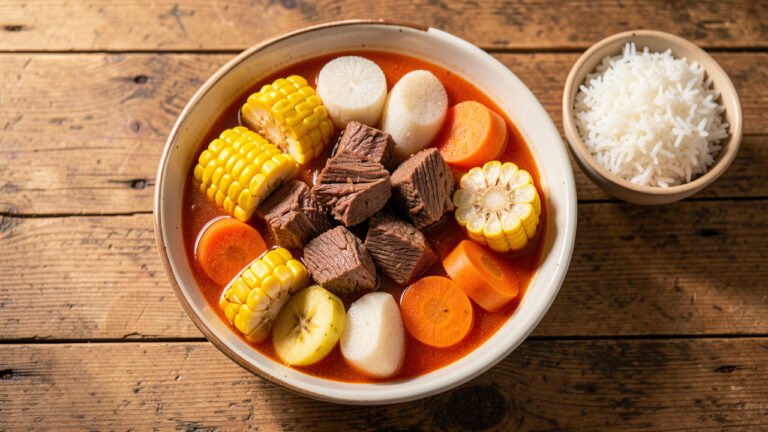
This is the kind of soup that fills a whole afternoon and then fills the table. In Costa Rica, olla de carne is Sunday food, the pot that stays on the stove while the family drifts in and out of the kitchen. The beef gives the broth its savory backbone, and the root vegetables give every spoonful something to sink your teeth into.
What surprised me the first time I made it is how little you actually do. You build a simple tomato broth, give the halal beef the time it needs, and add the vegetables in the right order.
Why This Olla de Carne Works
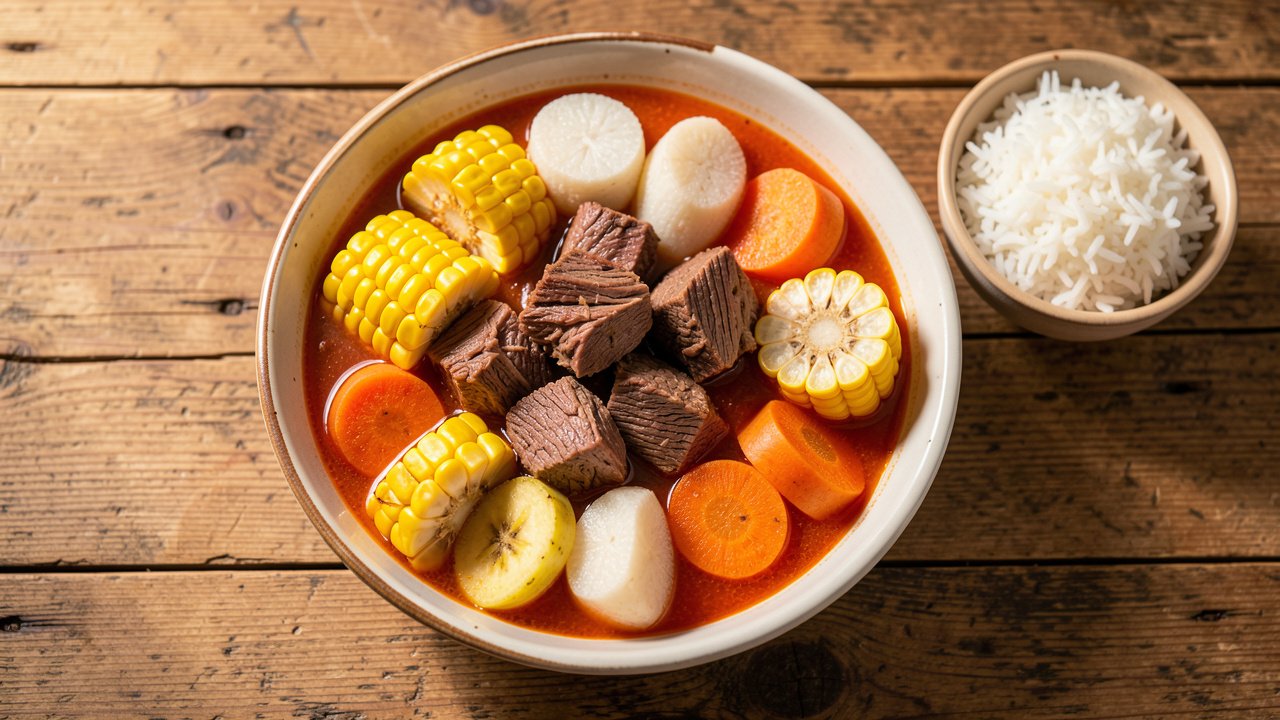
Olla de carne succeeds because it does two things patiently and in the right order. First it coaxes a rich, savory broth out of bone-in halal beef, and only then does it fold in a medley of root and starchy vegetables that each keep their own shape. The result tastes layered and generous from an honest, simple technique.
The broth is the foundation. Tomatoes, onion, garlic, and a big handful of cilantro dissolve into the simmering liquid and give it a gentle sweetness and savory depth that plain water never could. Because the beef cooks bone-in and slow, the broth turns silky and full-bodied on its own.
The vegetables are the personality. Yuca and potato go starchy, sweet potato and plantain bring mellow sweetness, chayote stays light and fresh, and corn on the cob makes the bowl feel generous. Adding them firmest first keeps everything intact instead of collapsing into a puree.
Pro observation: The broth is ready for the firm vegetables when the halal beef pulls apart easily with a fork but still holds in chunks. That tenderness means the collagen has melted into the broth.
Ingredients
Kitchen Measurement Converter
Quickly convert between common cooking measurements without leaving the recipe. Pick a category, enter a value, and the result updates instantly.
Ingredient Notes & Substitutions
Halal Beef
Bone-in cuts such as halal beef shank or short rib are ideal because the bone and connective tissue melt into the broth over a long simmer. Boneless stew chunks work too.
Tomatoes
Ripe red tomatoes give the broth its gentle sweetness and color. Out of season, one 14-ounce can of chopped tomatoes works well and is often more reliable.
Yuca and Roots
Yuca, or cassava, is worth seeking out for its dense, starchy bite. If you cannot find it, add extra potato and sweet potato. Peel it thickly and remove the woody core before cutting.
Chayote and Plantain
Chayote stays light and firm, while a ripe yellow plantain adds sweetness. Choose a plantain with plenty of black spots, and add it near the end so it does not fall apart.
Equipment
- Large stockpot or Dutch oven
- Sharp knife and board
- Vegetable peeler
- Ladle and slotted spoon
- Fine skimmer or spoon
- Measuring cups and spoons
Before You Start
1. Cut the beef into big chunks. Large pieces stay juicy through the long simmer, and the bones make a richer broth.
2. Peel and hold the roots in water. Yuca, potato, and sweet potato brown quickly once peeled, so keep the cut pieces in cold water.
3. Start the rice toward the end. Time the white rice to finish while the last vegetables cook.
Step-by-Step Instructions
Start the Beef
Put the halal beef chunks and bones in a large stockpot and cover with the water. Bring to a boil, then reduce to a steady simmer. As foam rises in the first few minutes, skim it off so the broth stays clean and clear.
Build the Tomato Broth
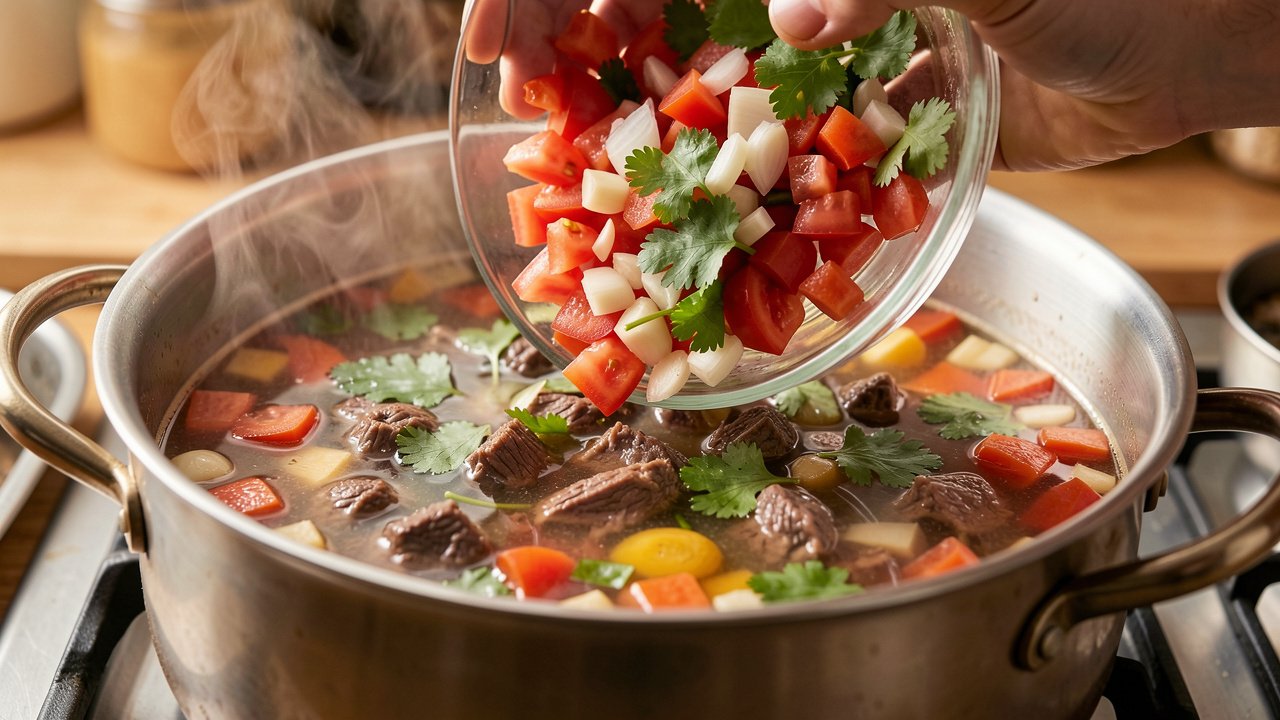
Add the chopped tomatoes, onion, garlic, sweet bell pepper, ground cumin, and half of the cilantro. Stir in the salt and let everything simmer together so the aromatics dissolve into the liquid and turn it into a savory, lightly sweet broth.
Simmer Until the Beef Is Tender
Cover the pot partially and let the beef simmer gently for about 1 hour and 30 minutes, topping up with hot water if the level drops too far. It is ready when fork-tender and pulling apart easily but still holding its shape in chunks. Do not rush this stage; the low, slow simmer is what makes the broth rich and the meat soft.
Add the Firm Vegetables
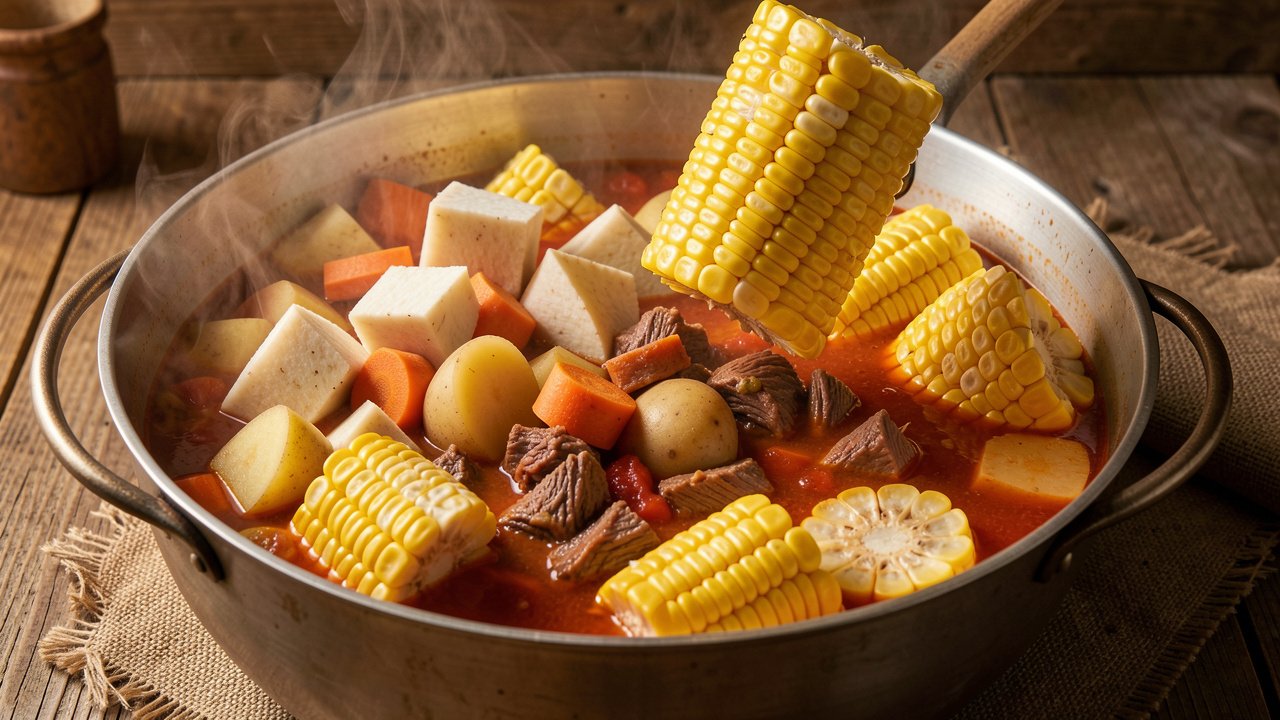
Now add the vegetables that take longest to cook: the yuca, carrots, potatoes, and corn on the cob rounds. Keep the pot at a gentle simmer and cook about 15 minutes. Adding them before the softer vegetables keeps everything from turning to mush.
Add the Softer Vegetables
Add the sweet potato, chayote, and plantain. Simmer another 12 to 15 minutes, until every vegetable is tender when pierced but not falling apart. The plantain turns soft and sweet, and the chayote keeps a little bite.
Finish and Serve
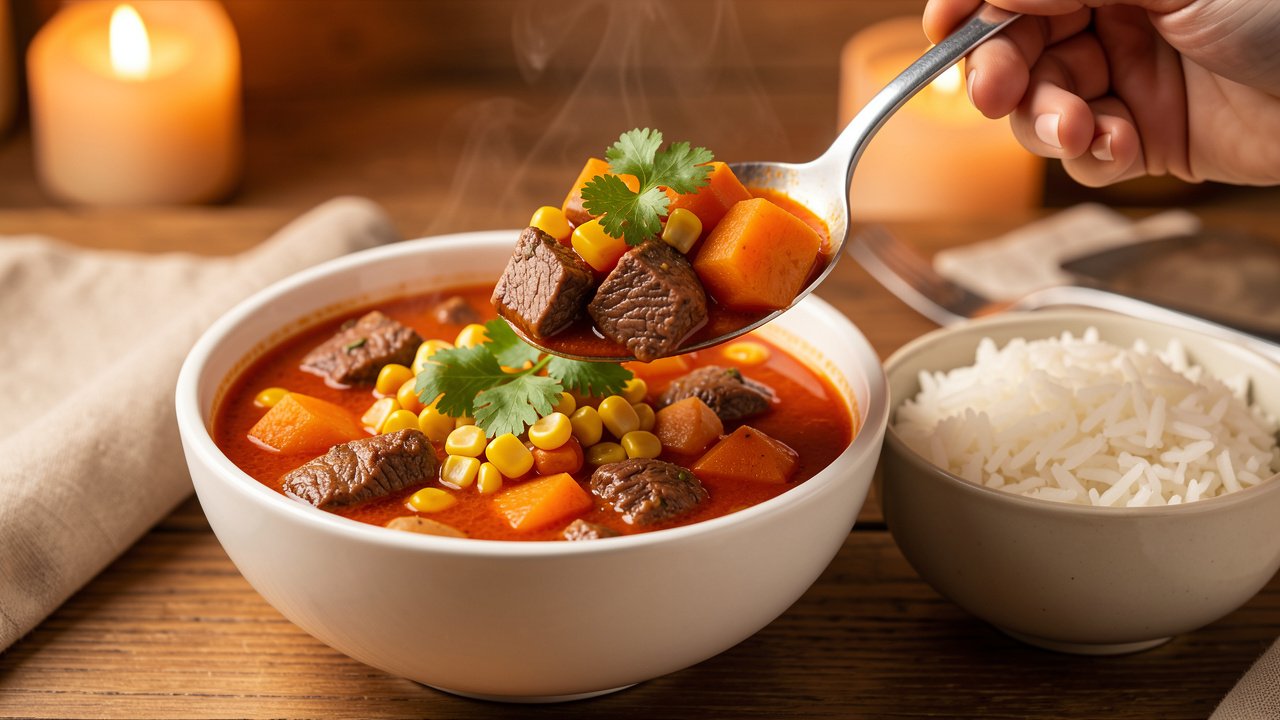
Stir in the remaining cilantro and taste the broth, adjusting the salt as needed. Ladle big pieces of beef and vegetables into deep bowls, then pour the hot broth over the top. Serve with white rice on the side so everyone can spoon rice into their soup, Costa Rican style.
Chef’s Tips From Real Kitchen Testing
Skim the broth in the first ten minutes. Removing the early foam keeps the finished soup clean and clear.
Cut the vegetables large. Big chunks hold their shape through the simmer and give olla de carne its signature rustic look and chunky texture.
Add the vegetables in stages by density, firmest first and softest last, so the pot finishes with everything tender at the same moment.
Recipe Variations
Serving Suggestions
- A bowl of fluffy white rice on the side
- Lime wedges to squeeze into the broth
- Fresh salsa or extra chopped cilantro
- Warm corn tortillas alongside
Nutrition Facts
| Nutrient | Amount per serving |
|---|---|
| Calories | 520 |
| Protein | 32 g |
| Carbohydrates | 55 g |
| Fat | 18 g |
| Saturated Fat | 6 g |
| Fiber | 7 g |
| Sugar | 10 g |
| Sodium | 780 mg |
Values are estimates per serving and vary with the exact cuts, vegetables, and brands you use. The rice served on the side is not included.
Make-Ahead Tips
Olla de carne is a wonderful make-ahead dish, because the broth deepens overnight as the flavors settle. Cook it a day ahead, cool, and refrigerate. When you reheat, warm it gently and add a splash of hot water if the broth has thickened, since the starchy vegetables keep drinking up liquid. Stir in fresh cilantro before serving.
Storage, Freezing & Reheating
Common Mistakes to Avoid
Troubleshooting
Beef still tough? It simply needs more time. Keep the pot at a low simmer and check again in 20 to 30 minutes; tough beef almost always means it has not cooked long enough.
Broth tastes flat? Add salt gradually and a little more chopped cilantro and tomato. A squeeze of lime brightens the bowl too.
Vegetables falling apart? They cooked too long or went in too early. Add the softer roots later, and pull the pot off the heat as soon as everything is knife-tender.
Food-safety note: Cook the halal beef until fully tender and no longer pink in the center, an internal temperature of at least 145 F, or higher for soft, pull-apart texture. Bring leftovers back to a rolling simmer before serving, and refrigerate the pot within two hours of cooking.
A Note on Costa Rican Cooking
Olla de carne, which simply means pot of meat, is one of Costa Rica’s most beloved dishes and a fixture of the Sunday family table. It is comfort food: a single big pot that feeds everyone, simmered slowly while the household gathers. It reflects the country’s farms, where root and starchy vegetables like yuca, sweet potato, chayote, plantain, and corn are everyday staples.
Part of what makes it special is the root-vegetable medley: each piece brings a different texture, so a single bowl travels from starchy to sweet to fresh in a few spoonfuls. Traditionally the clear, savory broth is sipped alongside the tender beef and vegetables, with white rice always within reach to spoon in.
If you love hearty, vegetable-forward bowls like this one, browse more ideas in our full collection of tomato recipes, or try the cozy, spiced hearty tomato lentil soup for another filling one-pot meal.
Frequently Asked Questions
More Tomato Recipes to Try
Last updated: September 23, 2026