Saudi Recipes
Saudi Spiced Rice with Chicken and Tomato
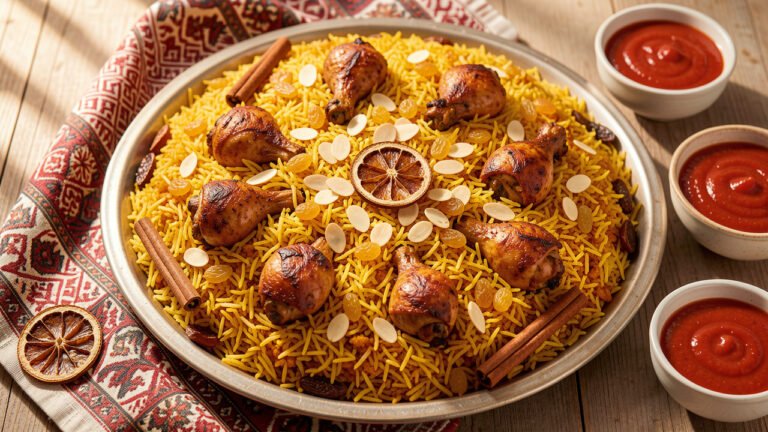
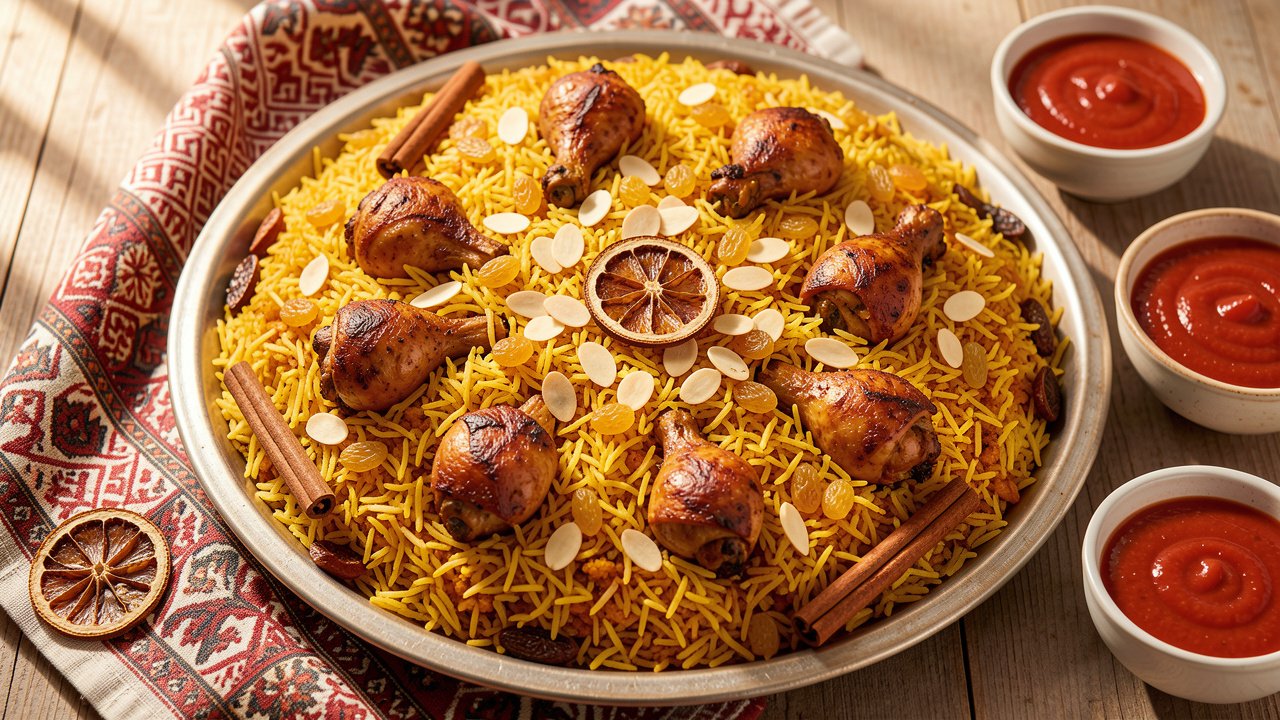
Kabsa is the dish that lands in the middle of the table when family gathers across the Arabian Peninsula, and once you taste it you understand why. It is a one-pot balance of spiced rice and tender halal chicken, tied together by a tomato broth that carries cardamom, cinnamon, cloves, and the sour perfume of dried lime. Every grain of rice tastes of the chicken it cooked with.
The magic is not a long list of hard-to-find ingredients; it is method. You build a real tomato base, coax flavor into it with the kabsa spice blend and loomi, then trust the rice to drink up that broth. Get the rice-to-broth ratio right and you are rewarded with fluffy, separate grains rather than a sticky mound.
Why This Chicken Kabsa Works
Kabsa is proof that a handful of pantry spices, treated with respect, can turn plain rice and chicken into something people remember. The kabsa spice blend, a Gulf cousin of baharat built on cinnamon, cloves, cardamom, cumin, coriander, and black pepper, gives the dish its warm backbone. The dried lime, called loomi, adds a fermented, citrus sourness you cannot fake with fresh juice.
The single most important move is building a proper tomato base before the rice ever touches the pot. Browning the halal chicken, softening the onion, and cooking the tomatoes and tomato paste down until they turn glossy and jammy creates the concentrated broth the rice will absorb. Skip that step and the rice tastes thin, no matter how much spice you add later.
The second secret is the rice-to-broth ratio. Basmati is a thirsty, long grain, and it needs a measured amount of liquid to swell into fluffy, separate strands. Too much and you get a mushy clump; too little and the grains stay hard in the middle. Measure carefully, then leave it alone to steam.
Finally, this is a generous, one-pot meal designed for sharing. It scales up gracefully, reheats well, and looks like a feast on the platter, which is exactly the role it plays in Saudi hospitality. Once you know the method, you can swap the halal chicken for halal lamb or bump up the heat without changing the shape of the dish.
Pro observation: The tomato base is ready for the rice when the oil starts to bead at the edges of the pot and the mixture smells rounded rather than sharp. That glossy sheen means the paste has cooked out its raw edge and the broth will taste deep.
Ingredients
Kitchen Measurement Converter
Quickly convert between common cooking measurements without leaving the recipe. Pick a category, enter a value, and the result updates instantly.
Ingredient Notes & Substitutions
Halal Chicken
Bone-in, skin-on pieces give the richest broth and stay juicy through the long simmer. You can use halal chicken or lamb here; if you prefer boneless, add it later and cook it more gently so it does not dry out.
Kabsa Spice Blend
A ready-made kabsa or baharat mix saves time, but a homemade blend of cinnamon, cloves, cardamom, cumin, coriander, black pepper, and nutmeg is brighter. Toast and grind whole spices for the deepest aroma.
Loomi (Dried Lime)
Loomi is the soul of kabsa. Pierce each one so its sour, smoky flavor seeps into the broth. If you cannot find it, a strip of lime zest plus a squeeze of juice at the end is a distant stand-in.
Tomatoes
Ripe fresh tomatoes plus tomato paste build the base. Out of season, one 14-ounce can of chopped tomatoes works well and is often more reliable than pale fresh ones. The paste is not optional; it deepens the color and body.
Equipment
- Large heavy pot with lid
- Fine-mesh sieve
- Sharp knife and board
- Small frying pan
- Measuring cups
- Slotted spoon
Before You Start
1. Rinse the rice well. Rinse the basmati in cool water until it runs clear, then let it drain. This washes off surface starch and is your first defense against gummy, sticky rice.
2. Measure the broth. Kabsa lives or dies by the rice-to-broth ratio, so measure the liquid rather than eyeballing it. Have it warm and ready before the rice goes in.
3. Pierce the loomi. Poke each dried lime a few times with a knife so its flavor can escape into the broth. Whole, unpierced limes barely give anything up.
Step-by-Step Instructions
Brown the Chicken
Heat the oil or ghee in a large heavy pot over medium-high heat. Pat the halal chicken pieces dry, then brown them in batches on both sides until deeply golden, about 4 minutes per side. You are not cooking them through yet, just building color and flavor. Remove the chicken to a plate and set aside.
Bloom the Spices and Onion
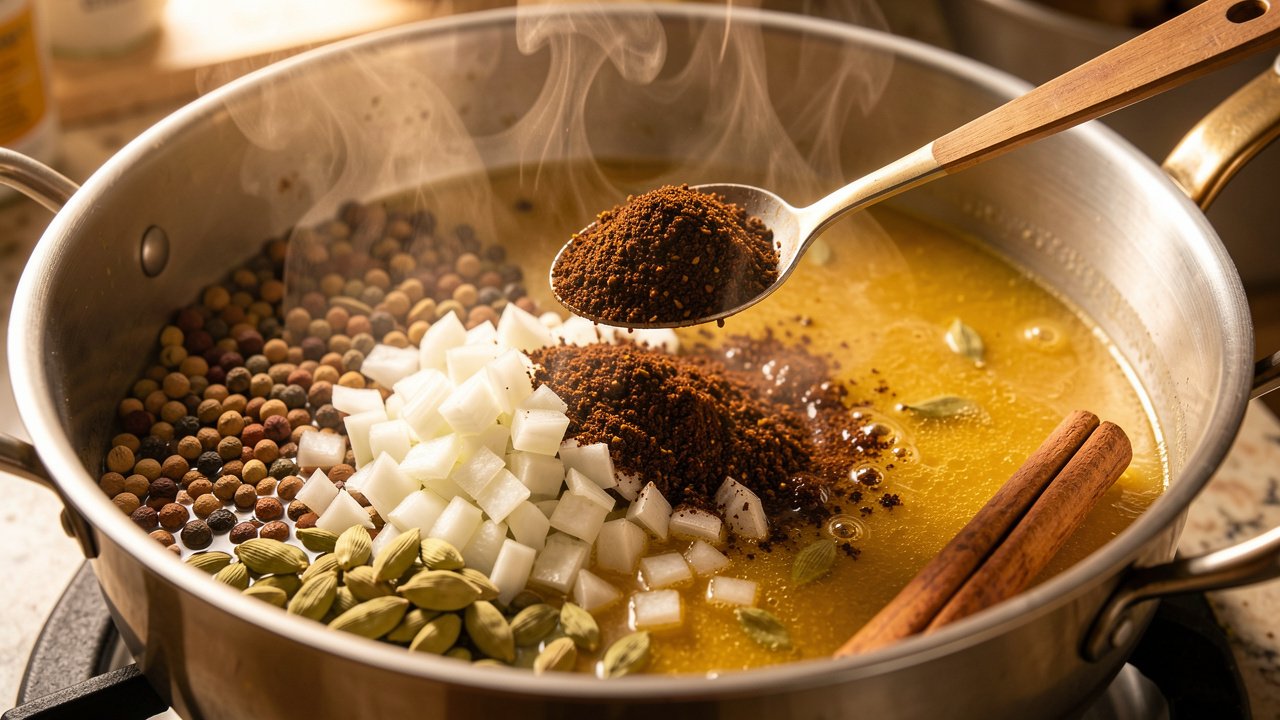
Lower the heat to medium. Add the cardamom pods, cinnamon stick, cloves, and bay leaves to the same pot and stir for 30 seconds until fragrant. Add the chopped onion and cook 6 to 7 minutes until soft and golden, then stir in the garlic, kabsa spice blend, turmeric, and black pepper. Cook 1 minute more so the spices bloom in the oil.
Build the Tomato Broth
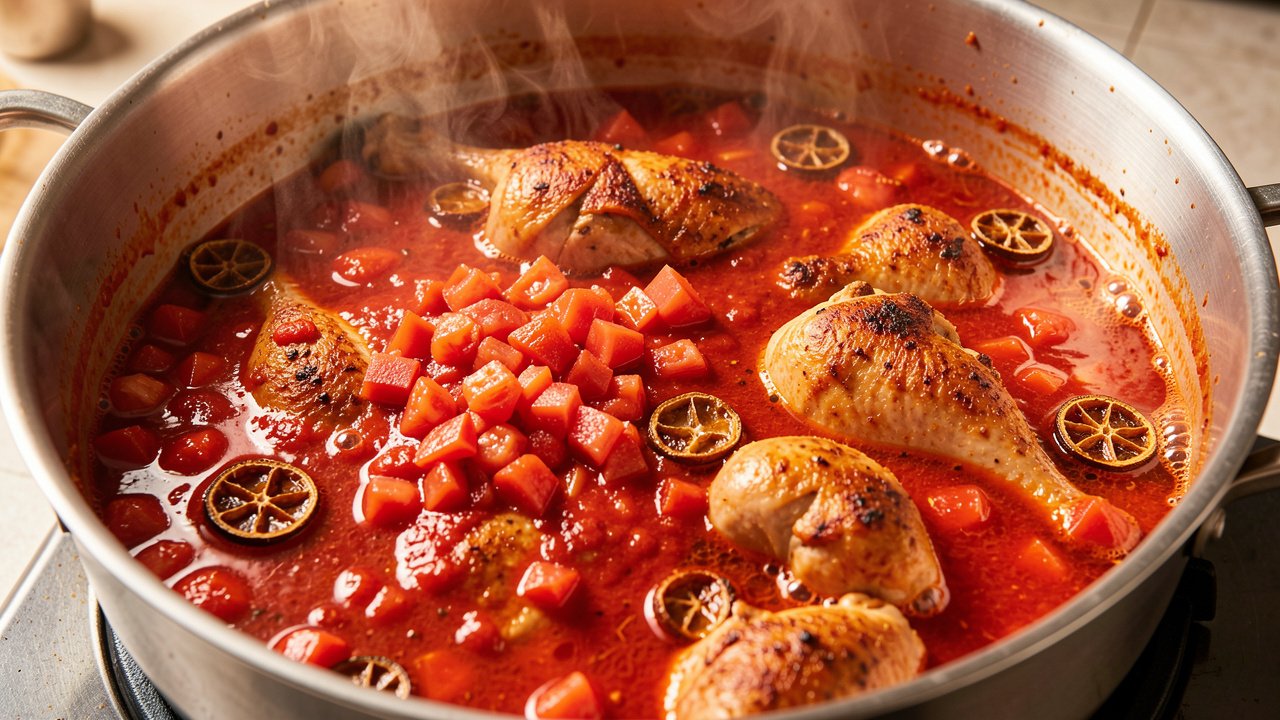
Stir in the chopped tomatoes and tomato paste and cook 8 to 10 minutes, stirring, until the tomatoes collapse and the mixture turns thick, glossy, and jammy with oil beading at the edges. Return the chicken to the pot, add the pierced loomi and salt, then pour in the warm broth. Bring to a boil, cover, and simmer 25 minutes until the chicken is tender and cooked through.
Cook the Rice in the Broth
Lift the chicken out and set it aside, keeping it warm. Taste the broth and adjust the salt; it should taste well seasoned, because the rice will absorb it. Stir the rinsed, drained basmati into the broth, make sure the liquid sits about half an inch above the rice, and bring it to a gentle boil. Cover tightly, drop the heat to low, and cook 15 minutes without lifting the lid.
Rest, Then Fry the Garnish
Turn off the heat and let the rice steam, still covered, for 10 minutes so the grains finish and firm up. Meanwhile, toast the slivered almonds in a dry or lightly oiled small pan until golden, then add the raisins for the last 30 seconds until they plump. Fluff the rice gently with a fork, teasing the grains apart rather than stirring.
Assemble the Platter
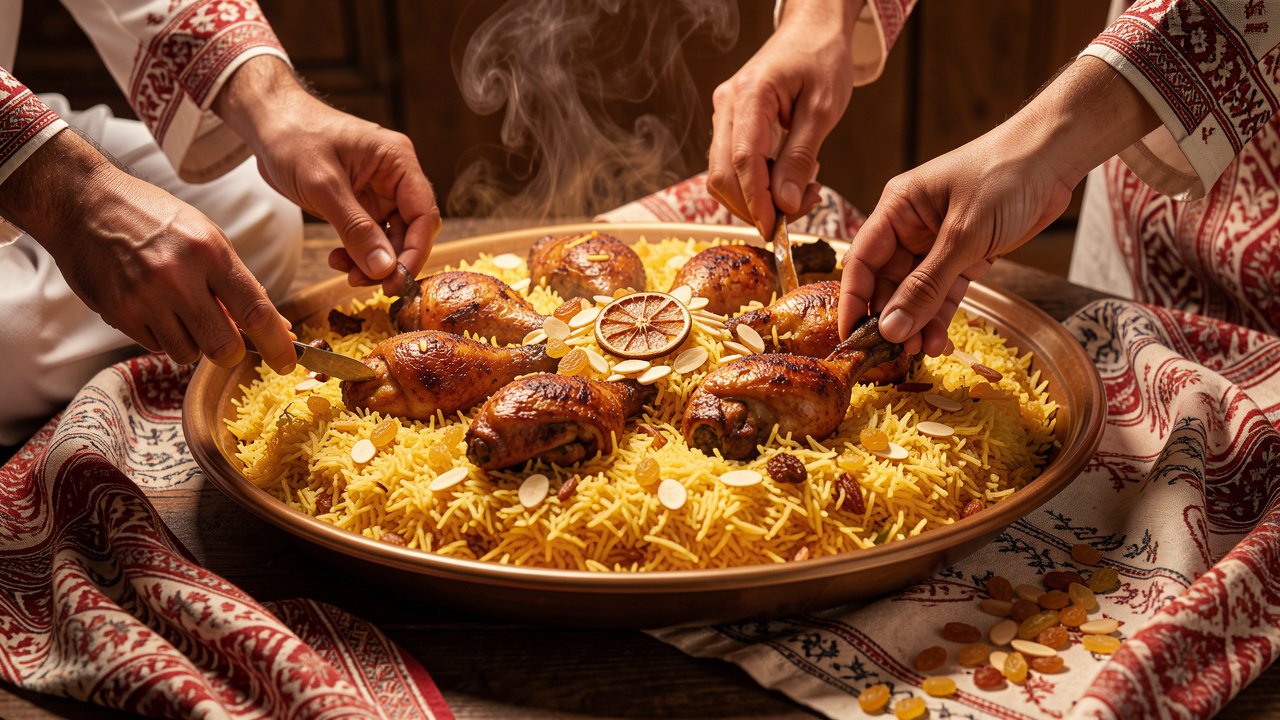
Mound the fragrant rice on a large serving platter and nestle the halal chicken pieces on top. Scatter the fried almonds and raisins over everything and shower with fresh cilantro or parsley. Serve hot, ideally with a bowl of fresh tomato and chili sauce (daqoos) on the side for spooning over each helping.
Chef’s Tips From Real Kitchen Testing
Do not lift the lid while the rice cooks or steams. Every peek lets out the trapped steam that cooks the grains evenly, and you cannot get it back.
Season the broth boldly before adding the rice. Bland broth means bland rice, since the grains only taste of what they absorb. Taste and adjust the salt at that stage.
Check the chicken with a thermometer. Halal chicken is safely cooked at an internal temperature of 165F (74C) at the thickest part, away from the bone.
Recipe Variations
Serving Suggestions
- Daqoos, a fresh tomato and chili sauce
- A crisp salad of tomato, cucumber, and onion
- Plain yogurt or a cooling cucumber salad
- Lemon wedges and extra fresh herbs
Nutrition Facts
| Nutrient | Amount per serving |
|---|---|
| Calories | 620 |
| Protein | 35 g |
| Carbohydrates | 62 g |
| Fat | 24 g |
| Saturated Fat | 6 g |
| Fiber | 4 g |
| Sugar | 6 g |
| Sodium | 780 mg |
Values are estimates per serving and vary with the exact ingredients and brands you use.
Make-Ahead Tips
You can build the spiced tomato broth and cook the chicken a day ahead, then cool and refrigerate both together. When you are ready to serve, bring the broth back to a simmer, lift out the chicken, and cook the rinsed rice fresh in that broth. Cooking the rice to order keeps the grains at their fluffiest, and the make-ahead broth actually tastes deeper for the overnight rest. Fry the nuts and raisins just before serving so they stay crisp.
Storage, Freezing & Reheating
Common Mistakes to Avoid
Troubleshooting
Rice came out mushy? There was too much broth, or the lid was lifted and the rice steamed unevenly. Next time reduce the liquid slightly and keep the pot sealed.
Rice still hard in the middle? It ran out of liquid or heat too soon. Sprinkle over a few tablespoons of warm broth, cover, and steam on low for another 5 to 8 minutes.
Broth tastes flat? It likely needs more salt and a pierced loomi or two. Season the broth boldly before the rice goes in, because the grains dull the seasoning as they cook.
A Note on Saudi Cooking
Kabsa sits at the heart of Saudi and wider Gulf hospitality, where a shared platter of spiced rice and meat is how families and guests are welcomed to the table. The kabsa spice blend and the loomi, or black lime, are the flavors that mark it out from the many rice dishes of the region, giving it warmth and a distinctive sour depth. Everyone gathers around one platter, and the cook is judged on whether every grain of rice tastes of the broth it cooked in. If you enjoy tomato-driven comfort food, browse more of our tomato recipes, or try the cozy warmth of our hearty tomato lentil soup.
Frequently Asked Questions
More Tomato Recipes to Try
Last updated: September 23, 2026