Senegalese Recipes
Senegal’s National Dish (Ceebu Jen)
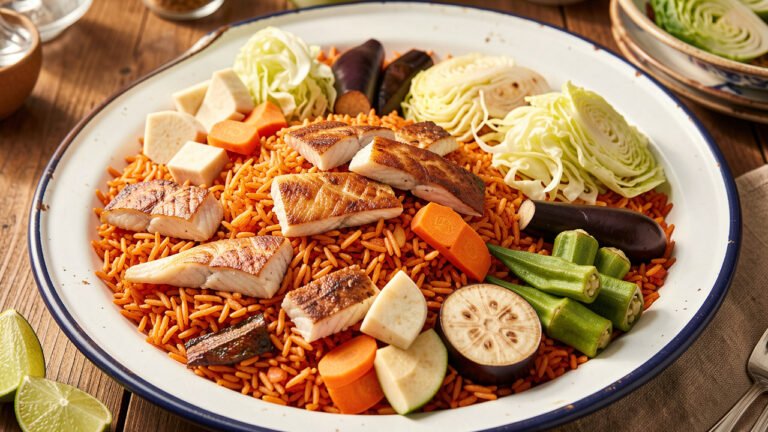
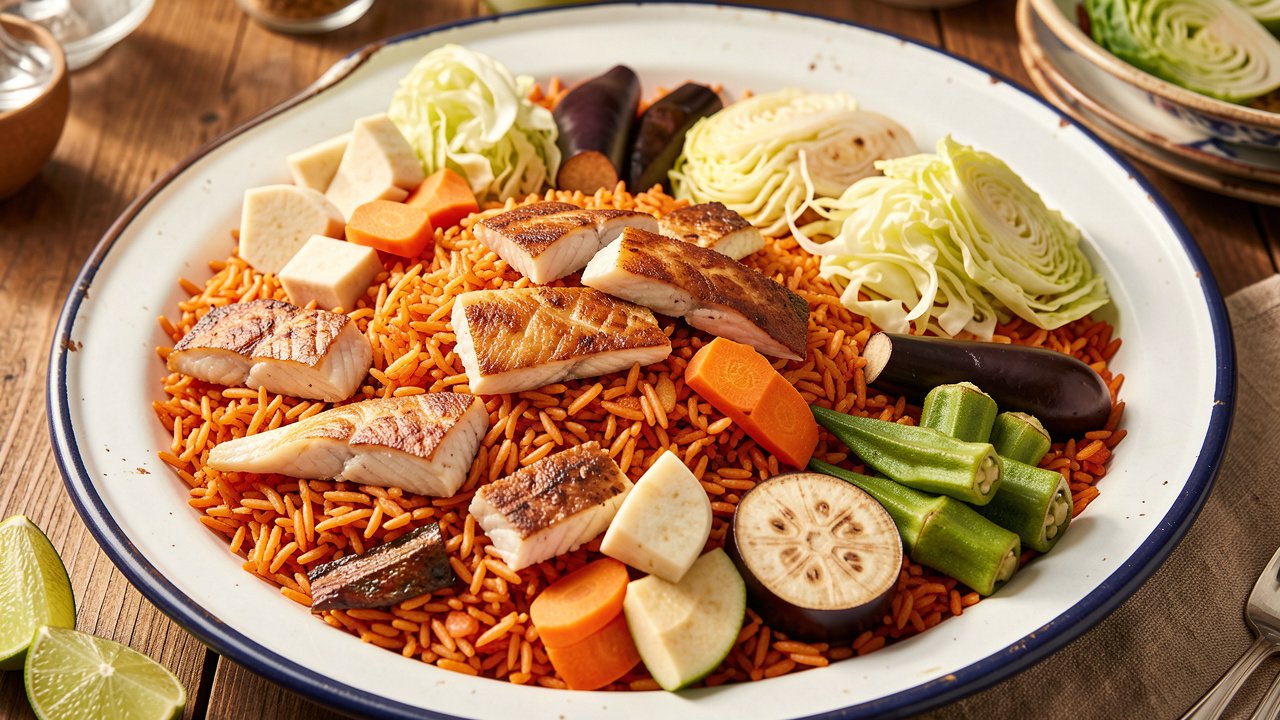
If Senegal has one dish that tells its whole story on a single platter, this is it. Thieboudienne (pronounced cheb-oo-jen, and written ceebu jen in Wolof) means simply rice and fish, but that plain name hides a deep, layered pot of tomato, herbs, and vegetables that families gather around from one shared dish. It is generous, unhurried cooking.
The magic is in building flavor in stages. You stuff the fish with a green herb paste, brown it hard, and then use that same oil to build a tomato base so rich it stains the rice a deep red-orange. Every vegetable takes a turn in the broth, and finally the rice cooks in all of it. Do it right and the bottom of the pot forms a toasted crust the cooks fight over.
Why This Thieboudienne Works
Thieboudienne is a study in patience, and every step earns its place. The rof, a bright paste of parsley, garlic, and chili, is pushed into slits in the fish so the seasoning is not just on the surface but all the way through. Browning that stuffed fish hard leaves behind fond and flavored oil that becomes the soul of the tomato base.
The tomato paste is the second secret. You fry it in the oil until it darkens and turns almost brick-red, which cooks out the raw sharpness and builds that deep, savory color the dish is famous for. Skip this and the broth tastes thin and acidic instead of round and rich.
Cooking the vegetables and then the rice directly in the fish-and-tomato broth means nothing is bland. The broken rice drinks up all that flavor as it steams, and because it is left undisturbed at the end, the bottom toasts into xoon, the caramelized crust that is the reward for cooking it low and slow.
It is also a flexible framework. The vegetables shift with the season and the market, the fish can be whatever firm halal white variety looks freshest, and the heat is entirely in your hands. Once you understand the order of operations, you can cook it for a weeknight or a crowd.
Pro observation: The tomato base is ready for liquid when the paste has darkened to a deep rust color and the oil around it glistens. That color is your promise of a rich, red pot of rice.
Ingredients
Kitchen Measurement Converter
Quickly convert between common cooking measurements without leaving the recipe. Pick a category, enter a value, and the result updates instantly.
Ingredient Notes & Substitutions
The Fish
Use a firm halal white fish that holds together in a simmering broth, such as grouper, snapper, or thick cod steaks. Ask for it cut into thick, bone-in cross sections if you can, since the bones add flavor to the broth. Avoid thin, delicate fillets that fall apart.
The Rice
Broken rice is traditional and prized because its short fragments absorb the broth evenly and steam into a soft, cohesive bed. If you cannot find it, use a good long-grain rice, rinsed well, and be a little gentler with the liquid.
The Vegetables
Carrot, cassava, cabbage, eggplant, and okra are classic, but this is a market dish. Swap in sweet potato, turnip, or squash based on what is fresh. Add the dense roots first and the softer vegetables later so nothing turns to mush.
Rof and Tamarind
Rof is the green herb paste of parsley, garlic, and chili that stuffs the fish. Tamarind adds the gentle sour note that balances the rich tomato base. If you have no tamarind, a good squeeze of fresh lime at the end does a similar job.
Equipment
- Large heavy pot or Dutch oven
- Sharp knife and board
- Mortar and pestle or blender
- Slotted spoon
- Fine sieve for rinsing rice
- Instant-read thermometer
Before You Start
1. Rinse the rice well. Rinse the broken rice in cool water until it runs almost clear, then let it drain. This removes surface starch so the finished grains stay distinct instead of gluey.
2. Prep every vegetable first. The pot moves quickly once it is going, so peel and cut the carrots, cassava, cabbage, eggplant, and okra before you light the stove.
3. Make the rof ahead. Pound or blend the parsley, garlic, and chili into a coarse paste so it is ready to stuff into the fish the moment you start.
Step-by-Step Instructions
Make the Rof and Stuff the Fish
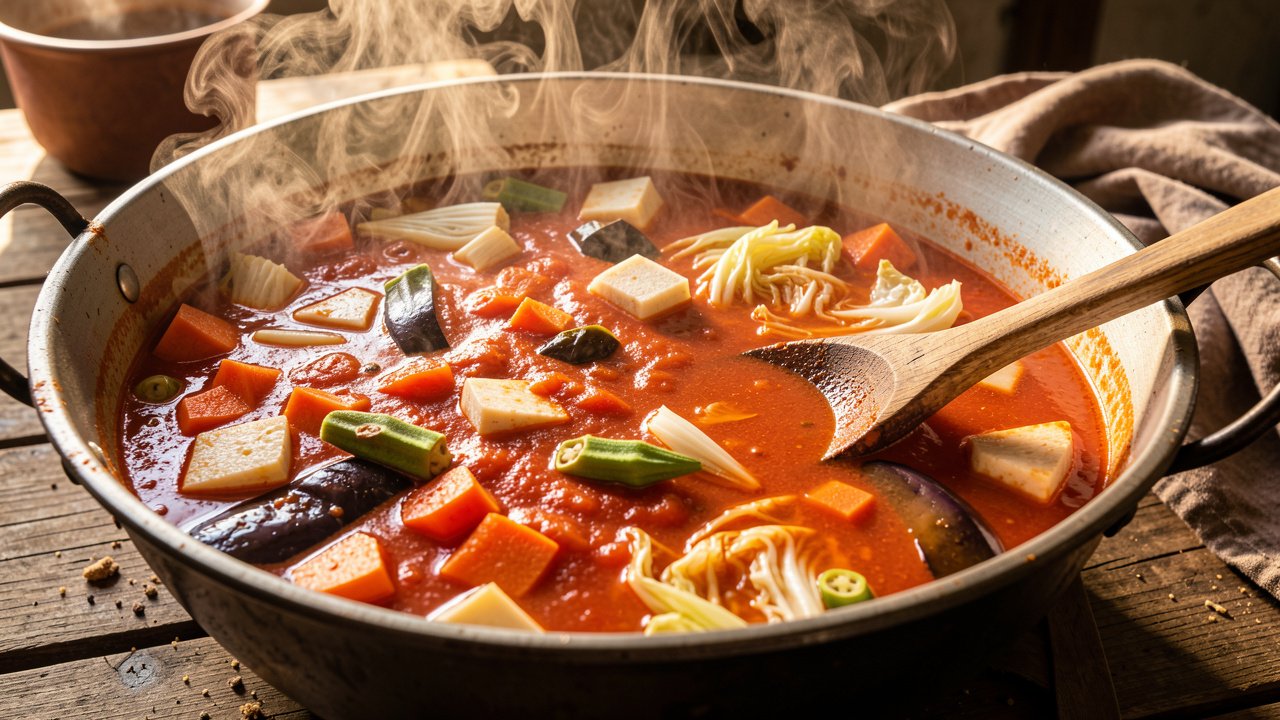
Pound the parsley, garlic, and about half the scotch bonnet with a pinch of salt into a coarse green paste. Cut two or three deep slits into each piece of fish and press the rof firmly into the pockets. Season the outside with salt and pepper and let it sit while the oil heats.
Brown the Stuffed Fish
Heat the oil in a large pot over medium-high heat. Lay in the fish and brown it for 3 to 4 minutes per side, until a deep golden crust forms. It does not need to cook through here; you only want color and flavor. Lift the fish out and set it aside on a plate.
Build the Tomato Base
Lower the heat to medium and add the chopped onions to the same flavored oil. Cook 6 to 8 minutes until soft and golden. Stir in the tomato paste and fry it for 4 to 5 minutes, stirring often, until it darkens to a deep rust color. Add the chopped fresh tomatoes and the rest of the chili and cook until they collapse.
Simmer the Vegetables in the Broth
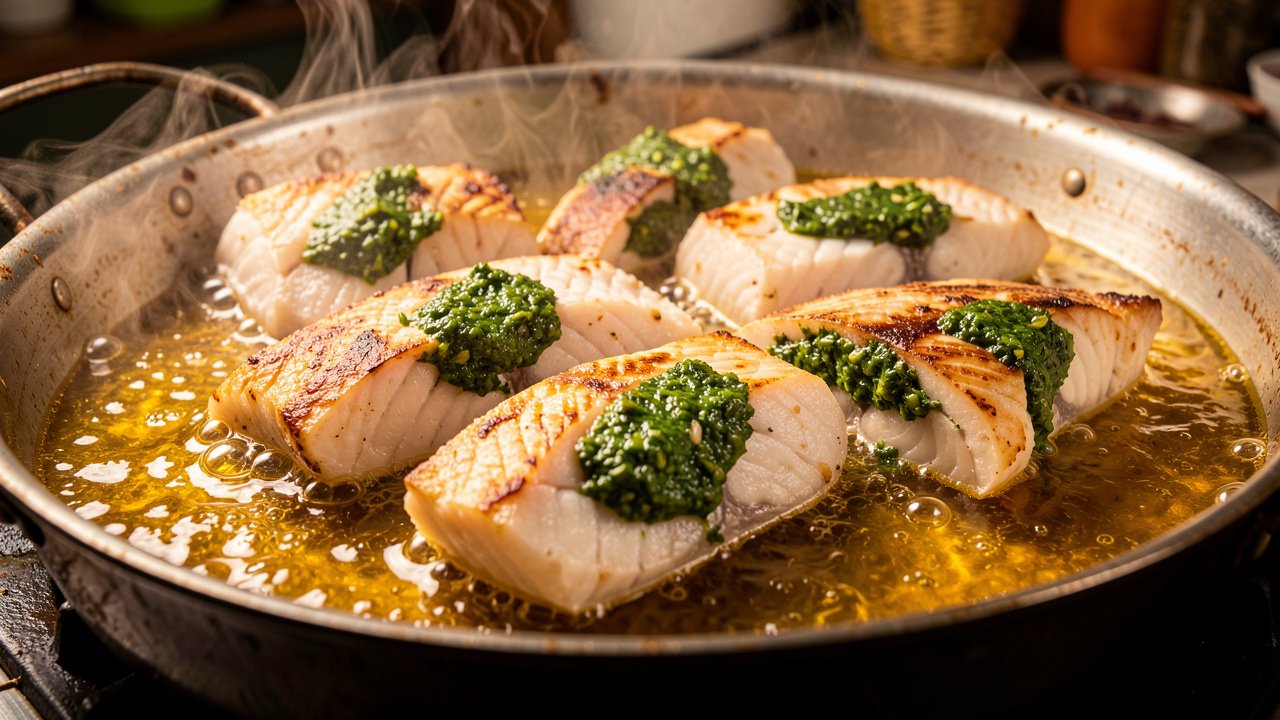
Pour in the stock and bring it to a lively simmer. Add the carrots and cassava first and cook 10 minutes, then add the cabbage, eggplant, and okra. Season with the salt and pepper and simmer 12 to 15 minutes, until the vegetables are just tender. Lift each vegetable out as it is done and keep them warm.
Finish the Fish, Then Reserve the Broth
Slide the browned fish back into the simmering broth and cook gently for 8 to 10 minutes, until it turns opaque and flakes easily at its thickest point. Lift it out carefully and keep it warm with the vegetables. Stir the tamarind into the broth and taste for salt. Measure the broth: you want about twice the volume of your rinsed rice.
Food safety: Cook the fish until it reaches an internal temperature of 145 F (63 C) and the flesh is opaque and flakes cleanly. If a thick piece is still translucent in the center, give it a few more minutes in the broth before serving.
Cook the Broken Rice in the Broth
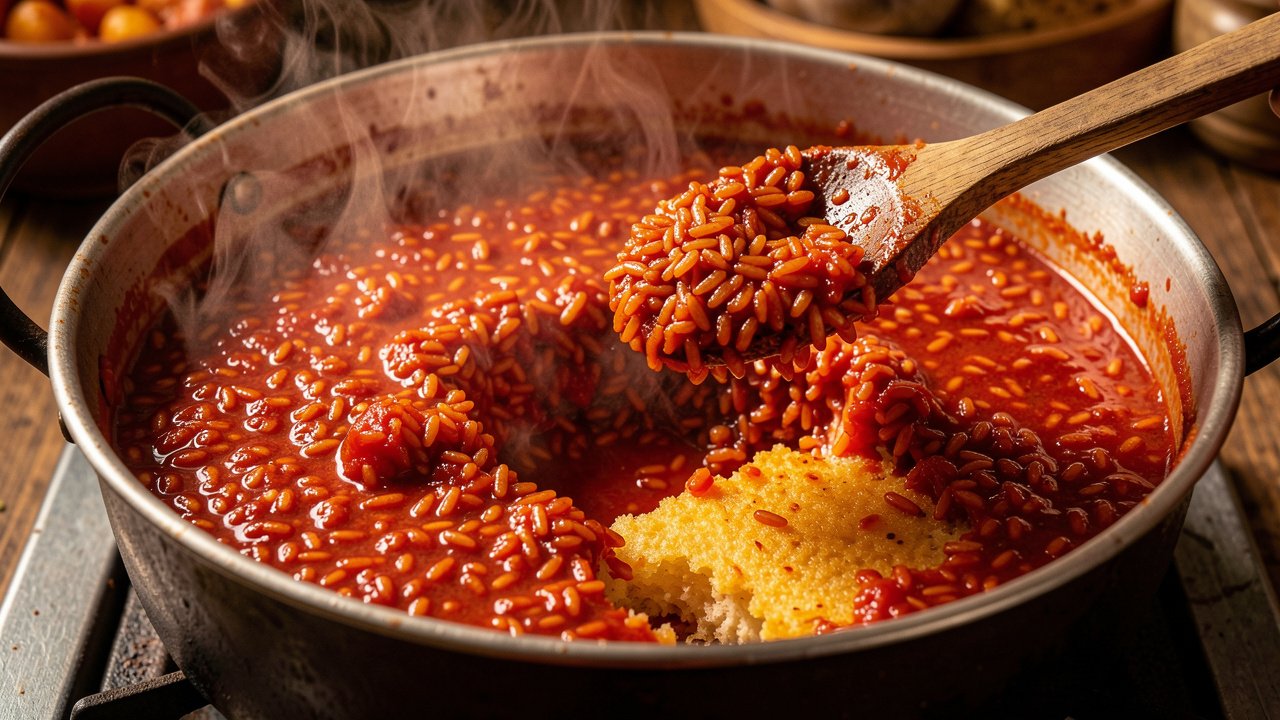
Stir the drained rice into the seasoned red broth. Bring it to a boil, then reduce to low, cover, and steam for 20 to 25 minutes without stirring, until the rice is tender and has drunk up the liquid. The grains should turn a rich red-orange as they absorb the tomato broth.
Build the Crust and Serve
For the traditional xoon, uncover the pot for the last few minutes and raise the heat briefly so the bottom layer toasts into a golden crust. Spoon the red rice onto a large platter, arrange the fish and vegetables on top, and scatter over any crunchy crust. Serve with lime wedges and eat from the shared dish.
Chef’s Tips From Real Kitchen Testing
Fry the tomato paste until it darkens before adding liquid. That extra few minutes is what turns a thin, sharp broth into a deep, savory red one.
Pull each vegetable out as it turns tender rather than boiling them all together. Cassava and carrot need longer than cabbage and okra, and this keeps every piece perfect.
Measure your broth against the rice. Roughly two parts broth to one part rinsed rice gives tender grains with enough left to toast a crust at the bottom.
Recipe Variations
Serving Suggestions
- Lime wedges to squeeze over the rice
- A fiery scotch bonnet relish on the side
- Extra broth in a small bowl to spoon over
- Fresh mint tea to finish the meal
Nutrition Facts
| Nutrient | Amount per serving |
|---|---|
| Calories | 560 |
| Protein | 32 g |
| Carbohydrates | 68 g |
| Fat | 18 g |
| Saturated Fat | 3 g |
| Fiber | 6 g |
| Sugar | 9 g |
| Sodium | 780 mg |
Values are estimates per serving and vary with the exact ingredients and brands you use.
Make-Ahead Tips
The rof paste and all the vegetable prep can be done a day ahead and kept covered in the fridge, which turns cooking day into mostly assembly. The broth itself deepens with a short rest, so you can even brown the fish and build the tomato base an hour before your guests arrive, then finish the vegetables and rice just before serving so the grains stay fresh and the crust stays crisp.
Storage, Freezing & Reheating
Common Mistakes to Avoid
Troubleshooting
Rice turned out mushy? There was too much liquid or it was stirred while steaming. Next time measure the broth against the rice and leave the lid on and the spoon out.
Broth tastes flat? It usually needs salt and a little more tamarind or lime to lift the tomato and bring the vegetables forward.
No crust at the bottom? Uncover the pot for the last few minutes and raise the heat briefly so the base can toast into the prized xoon.
A Note on Senegalese Cooking
Thieboudienne, or ceebu jen, is credited to the coastal city of Saint-Louis and is woven into daily life across Senegal, where lunch is the main meal and families eat together from one wide platter. The rof herb stuffing, the slow-built tomato broth, and the toasted rice crust called xoon are the hallmarks that tell you a cook has taken their time. It is comfort food and celebration food at once. If you love deep, tomato-rich one-pot meals, our hearty tomato lentil soup shares the same slow, warming spirit.
Frequently Asked Questions
More Tomato Recipes to Try
Last updated: September 23, 2026