Sudanese Recipes
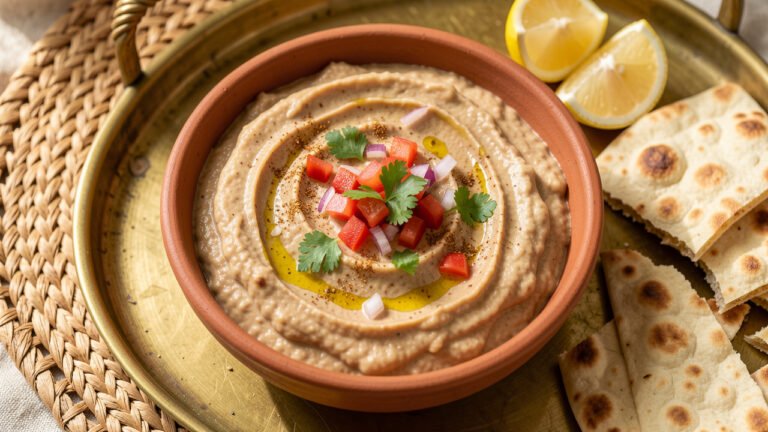
Creamy Sudanese Eggplant and Tomato Salad
The first time I made salata aswad I treated it like baba ganoush and stopped at the mashed eggplant. It was fine, but flat. It only came alive once I mixed the peanut dressing separately, thinned it with water and lemon, and folded raw tomato through at the end so there were cool, juicy bits in every creamy spoonful.
That contrast is the point. Sudanese cooks call the peanut dressing dakwa, and it turns fried eggplant into something rich and nutty with no dairy at all.
Why This Salata Aswad Works
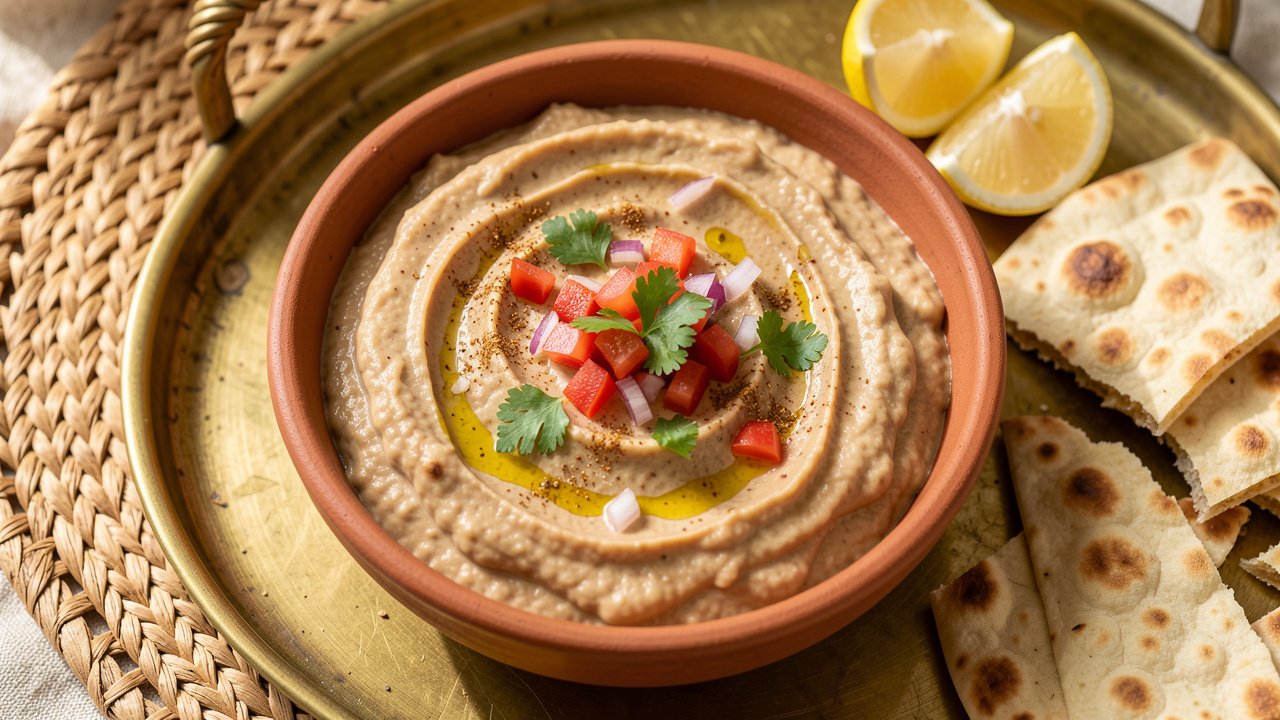
Most eggplant salads ask the eggplant to carry the dish. Salata aswad does not. The eggplant is the soft body, but the flavor comes from dakwa, the peanut dressing whisked separately and added only once it is loose and pourable. That order matters most.
Salting the eggplant first decides whether your salad is creamy or oily. Twenty minutes with salt draws out water and collapses the spongy cell structure, so the cubes brown quickly instead of drinking up the pan.
Folding the raw tomato, onion, and chili in at the end keeps their juice and crunch intact. Cook them and you get a stew; fold them through cold and you get creamy, nutty eggplant with bright cool pockets running through it.
Pro observation: The dressing is right when a spoon dragged through it leaves a trail that closes back over in about two seconds. Thicker and it will not coat the eggplant; thinner and the salad weeps on the plate.
Ingredients
Peanut allergy note: Peanut butter is the defining ingredient here, and there is no honest way to make salata aswad without it. If you are cooking for anyone with a peanut allergy, label the bowl clearly and give it its own serving spoon, or make a different eggplant salad. Tahini gives a similar texture but makes a sesame salad, and sesame is a common allergen too.
Kitchen Measurement Converter
Convert between common cooking measurements without leaving the recipe. Pick a category, enter a value, and the result updates instantly.
Ingredient Notes & Substitutions
Eggplant
Choose firm, glossy eggplants that feel heavy for their size. Light, hollow-feeling ones are older and hold more bitter seeds. Two medium globe eggplants, roughly two pounds together, serve six.
Peanut Butter
Smooth, unsweetened natural peanut butter is closest to Sudanese dakwa. Avoid anything with added sugar or palm oil, which makes the dressing cloying. Crunchy works, but the salad loses its silkiness.
Tomatoes
Use ripe, firm tomatoes with dense flesh so they do not water down the dressing. Roma or plum types are ideal. Scoop out the seed jelly before chopping and dice the flesh small.
Lemon and Garlic
Fresh lemon juice only; bottled tastes dull against the peanut. Crush the garlic to a paste with a pinch of salt rather than mincing it, so it dissolves instead of leaving raw, hot bites.
Equipment
- Colander for salting
- Wide frying pan or skillet
- Slotted spoon
- Mixing bowl and fork
- Small whisk
- Sharp knife and board
Before You Start
1. Salt the eggplant first. It needs twenty minutes in a colander, so start here and use the wait to chop the tomato, onion, and chili.
2. Have warm water ready. Cold water makes peanut butter clump stubbornly. A mug of warm tap water beside the bowl gets the dressing together fast.
3. Let the pan get properly hot. Eggplant dropped into lukewarm oil soaks it up instead of searing. Wait for a faint shimmer before the first cube goes in.
Step-by-Step Instructions
Salt and Drain the Eggplant
Trim the eggplants and cut them into three-quarter-inch cubes, skin on. Toss with the salting salt in a colander set over a bowl and leave 20 minutes. Beads of water will appear on the surface. Press gently with a clean towel and pat dry, but do not rinse.
Fry the Eggplant Until Golden
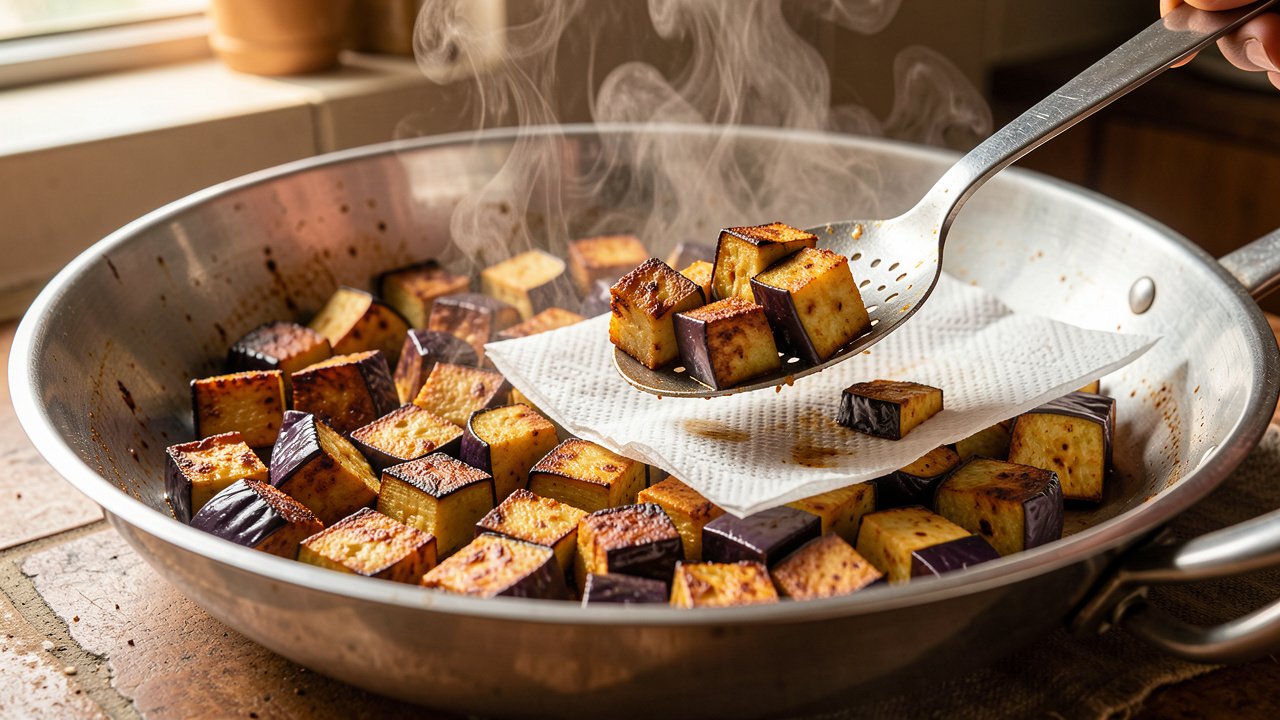
Heat the oil in a wide pan over medium-high heat until it shimmers. Add the eggplant in a single layer, in two batches if the pan is crowded, and fry 8 to 10 minutes, turning occasionally, until deep golden and soft. Lift the cubes onto paper towels to drain while hot.
Whisk the Dakwa Dressing
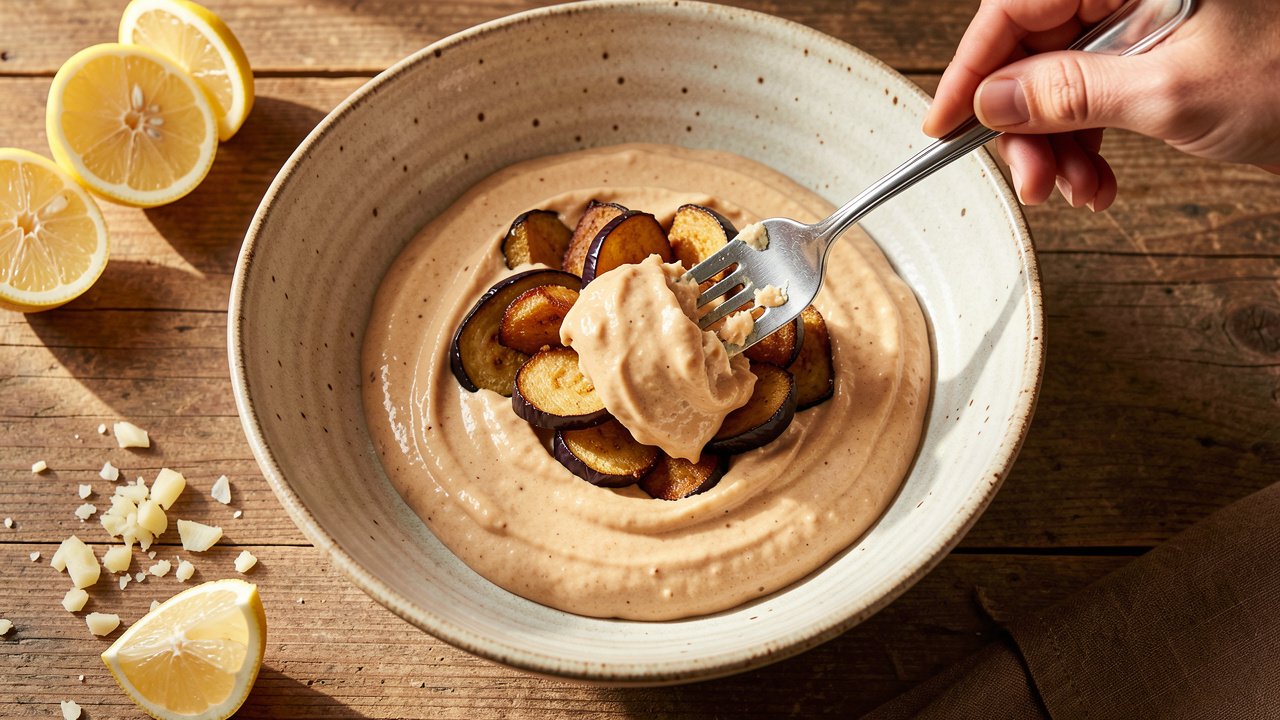
Put the peanut butter, lemon juice, crushed garlic, fine salt, and half the cumin in a bowl. Whisk in the warm water a tablespoon at a time. It tightens into a stiff paste at first; keep going and it loosens to the consistency of pouring yogurt. Taste now: it should be assertively lemony and salty, because the eggplant will mellow it.
Mash the Eggplant Into the Dressing
Add the warm drained eggplant and mash it into the dressing with a fork. Aim for a rough, spoonable texture with a few pieces left rather than a puree; the lumps are what make it a salad. Warm eggplant absorbs the dressing far better than cold. Cool 10 minutes.
Fold In Tomato, Onion, and Chili
Once the mixture is no longer hot, fold in the chopped tomato, red onion, and green chili with a spatula, using a gentle lifting motion rather than stirring so the tomato stays whole. Add the remaining cumin and the black pepper as you go.
Rest, Season, and Serve
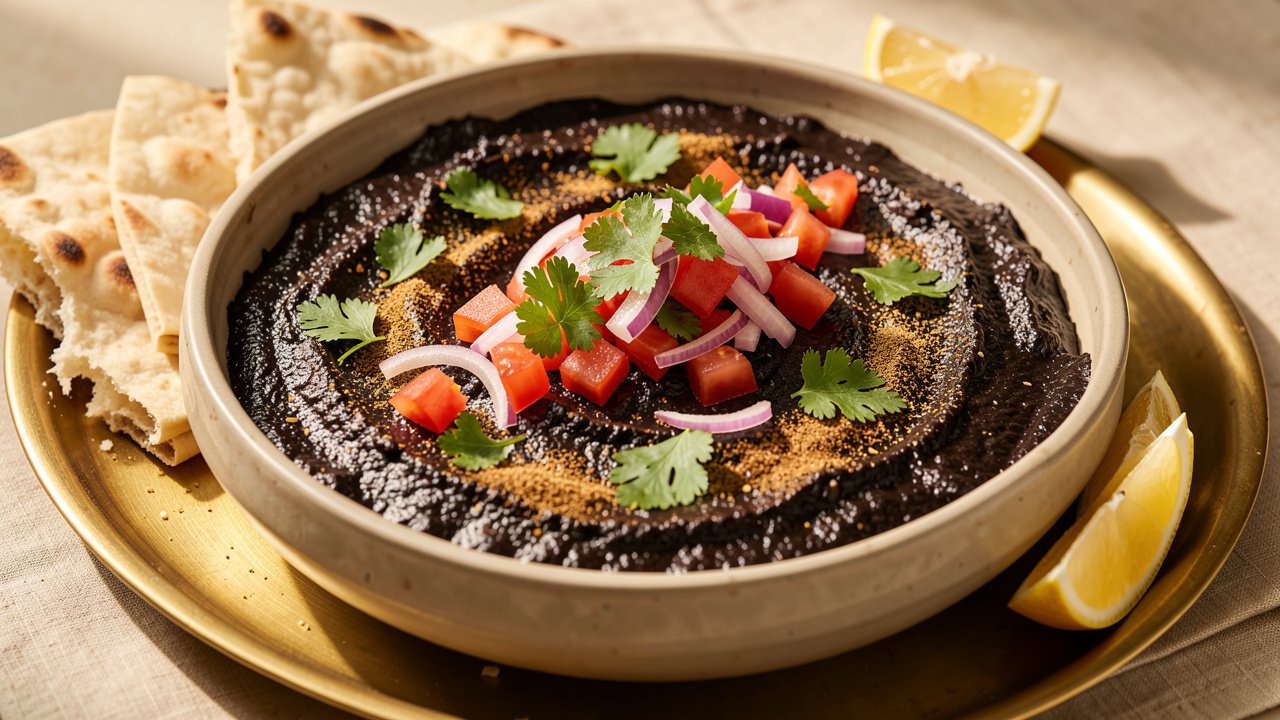
Let the salad sit 10 minutes, then taste and correct with more salt or a final squeeze of lemon. Spread it in a shallow dish, make a few swoops with the back of a spoon, and scatter the cilantro over the top. Serve at room temperature with warm flatbread.
Chef’s Tips From Real Kitchen Testing
Mash the eggplant while it is warm. Cold eggplant sits on top of the dressing instead of absorbing it.
Season the dressing louder than feels right. Tasted alone it should be a touch too sharp and salty; two pounds of eggplant flattens it fast.
Reserve a spoonful of tomato and cilantro for the top. Folded-in tomato loses its color against the dressing.
Recipe Variations
Serving Suggestions
- Warm flatbread or kisra for scooping
- As one dish on a wider salatat spread
- Alongside grilled vegetables or beans
- With lemon wedges and extra green chili
Nutrition Facts
| Nutrient | Amount per serving |
|---|---|
| Calories | 270 |
| Protein | 7 g |
| Carbohydrates | 14 g |
| Fat | 22 g |
| Saturated Fat | 4 g |
| Fiber | 6 g |
| Sugar | 7 g |
| Sodium | 380 mg |
Values are estimates and vary with how much frying oil the eggplant absorbs and which peanut butter you use.
Make-Ahead Tips
Salata aswad makes ahead well, with one adjustment. Fry the eggplant, whisk the dakwa, and mash the two together a day early, then refrigerate that base covered. Hold back the tomato, onion, chili, and cilantro until an hour before serving; tomato left overnight gives up its water and turns the bowl loose and pink.
Take the base out 30 to 40 minutes ahead, since cold peanut dressing sets firm. Stir in warm water if it feels tight, then fold in the fresh vegetables.
Storage, Freezing & Reheating
Common Mistakes to Avoid
Troubleshooting
Flat and heavy? Short on acid and salt. Add lemon half a tablespoon at a time, then a pinch of salt, tasting between each until the peanut lifts.
Dressing seized into a stiff ball? Normal. Keep whisking in small amounts of warm water; it passes through the stiff stage and turns smooth.
Watery pool at the bottom? The tomatoes were too juicy or sat too long. Seed them next time and drain the liquid before folding it back together.
Bitter aftertaste? Older, seedy eggplant is the usual culprit. Extra lemon and a pinch of sugar mask mild bitterness.
Too spicy? Stir in another spoonful of peanut butter loosened with water; fat dulls chili heat better than more eggplant does.
A Note on Sudanese Cooking
Peanuts are one of Sudan’s major crops, and dakwa, the ground peanut paste made from them, runs through the country’s cooking the way tahini does further north. It thickens stews, dresses cucumbers, and here turns a few eggplants into something substantial. The name salata aswad means black salad, after the dark skin.
The dish makes most sense in the way Sudanese meals are served. Several salatat arrive at once on a shared tray, and everyone eats with bread from the middle rather than from individual plates. Salata aswad is the rich one on that tray, balanced by something sharp beside it. If you like chopped tomato dishes built on the same contrast, our fresh tomato salsa follows a similar instinct, and our tomato recipes have more ideas.
Frequently Asked Questions
More Tomato Recipes to Try
Last updated: September 23, 2026