Italian Recipes
Fish in Crazy Water Broth
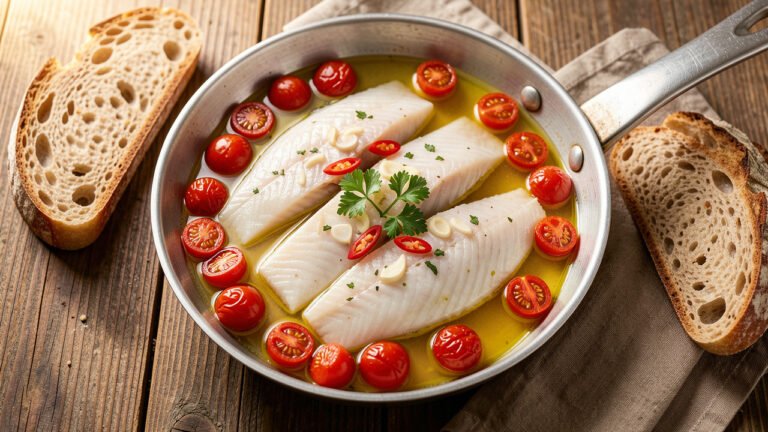
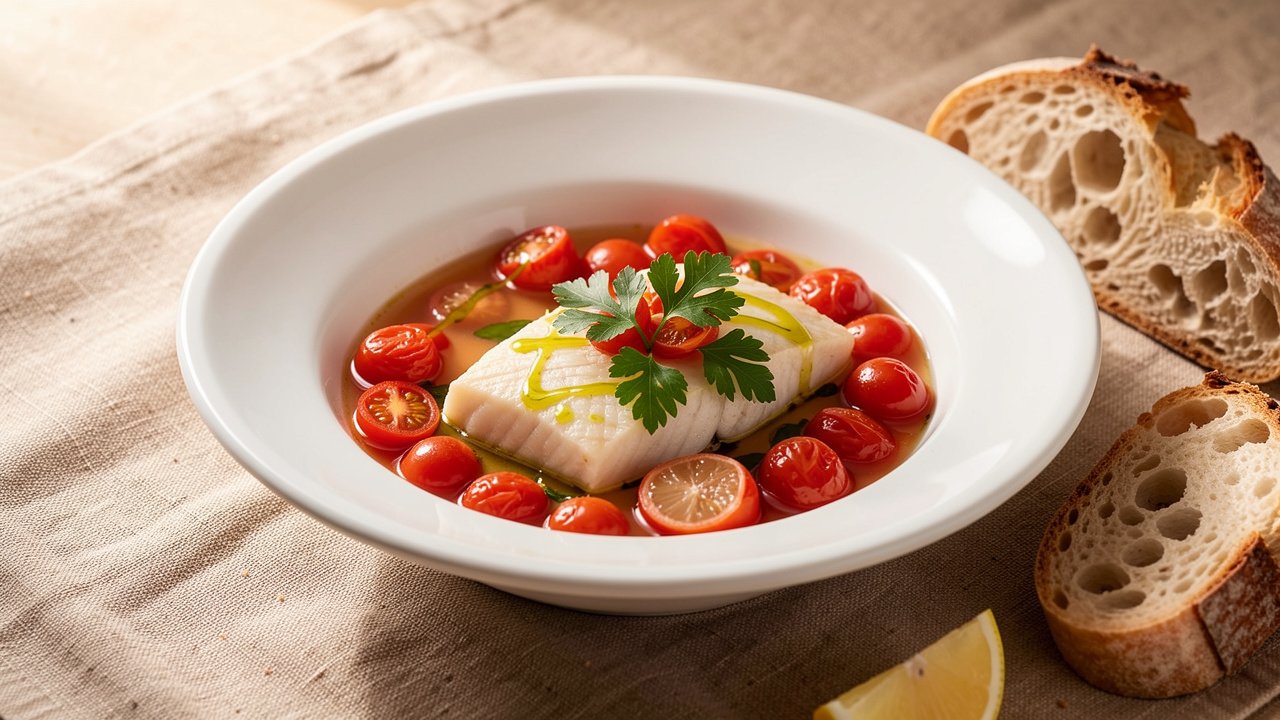
Acqua pazza is proof that the best coastal cooking is almost embarrassingly simple. A handful of cherry tomatoes, a little garlic, good olive oil, and plain water become a fragrant broth that poaches white fish into something silky and clean-tasting. There is nowhere to hide, so every ingredient has to earn its place, and that is exactly what makes it feel special.
I used to overthink this dish, reaching for stock cubes and reduction until the broth was heavy and muddy. The moment I trusted the water and let the tomatoes and fish do the talking, it clicked. Restraint is the whole recipe.
Why This Acqua Pazza Works
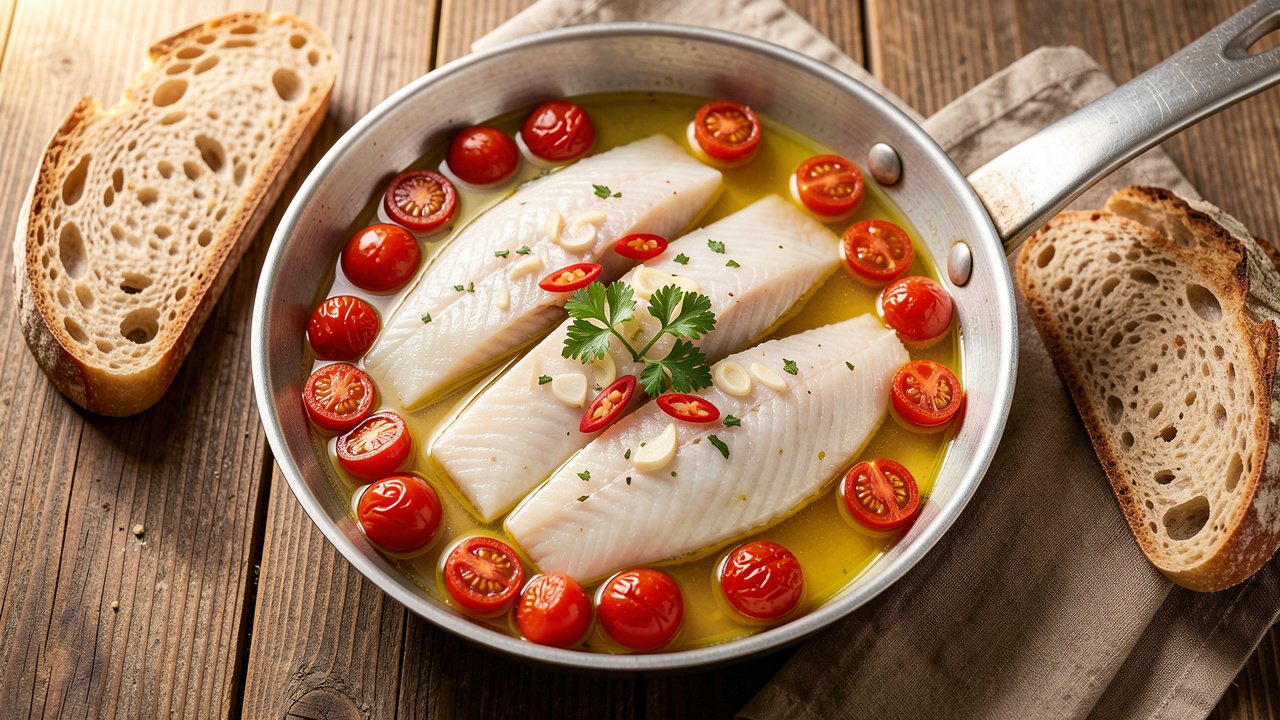
Acqua pazza works because it does so little. The broth is meant to be light and loose, closer to a fragrant poaching liquid than a sauce, so the sweetness of cherry tomatoes and the clean flavor of the fish stay front and center. Nothing is reduced to a paste, nothing is thickened, and that airy quality is the whole point.
The single most important idea is gentle poaching. The fish never fries and never boils; it slips into a barely-simmering broth and cooks through in minutes, staying moist and just-set. Treat the liquid like a warm bath rather than a fast boil and the fillets reward you with flakes that hold together.
Building a quick base matters too. A short sizzle of garlic and chili in olive oil, then a few minutes of cherry tomatoes softening and releasing their juice, gives the water something to become. Add water and a splash of fish stock, let it come alive for a couple of minutes, and suddenly plain water tastes like the sea.
It is also forgiving and flexible. Sea bass, bream, cod, or any firm white fish work beautifully, and a handful of clams turns it into a fuller coastal feast. Once you understand the rhythm, you can cook it with whatever the fishmonger has that day.
Pro observation: The broth is ready for the fish when the cherry tomatoes have slumped and burst and the liquid has turned faintly orange and glossy from the olive oil. That is when it tastes bright rather than watery.
Ingredients
Kitchen Measurement Converter
Quickly convert between common cooking measurements without leaving the recipe. Pick a category, enter a value, and the result updates instantly.
Ingredient Notes & Substitutions
The Fish
Firm white fish is ideal: sea bass, sea bream, or cod all hold their shape in the broth. Use skin-on fillets or a small whole fish for the most flavor. Buy the freshest halal fish you can and keep it cold until it goes into the pan.
Cherry Tomatoes
Sweet cherry or datterini tomatoes give the broth its gentle sweetness and color. Halve them so they burst quickly. Out of season, a handful of good canned cherry tomatoes works and is often more reliable than pale fresh ones.
The Crazy Water
Plain water is traditional and correct here; it keeps the broth light. A small splash of fish stock adds depth without heaviness. Leave out any spirits entirely: a squeeze of lemon at the end brings all the brightness you need.
Garlic, Chili & Parsley
Sliced garlic and a little fresh red chili build the aromatic base, while parsley is stirred in at the end for freshness. Good extra-virgin olive oil ties it together, so use a bottle you would happily drizzle raw.
Equipment
- Wide, shallow pan or skillet
- Lid for the pan
- Fish spatula or slotted spoon
- Sharp knife and board
- Measuring spoons and cup
- Ladle for the broth
Before You Start
1. Pat the fish dry. Blot the fillets with paper towel and season them lightly just before cooking so they slide cleanly into the broth and stay intact.
2. Purge the clams if using. Soak clams in cold salted water for about 20 minutes so they release grit, then discard any that stay open when tapped.
3. Warm the bread. Slice and toast the crusty bread while the broth builds, because soaking up the crazy water is half the pleasure of this dish.
Step-by-Step Instructions
Prep the Aromatics
Slice the garlic thin and the fresh chili into rings. Halve the cherry tomatoes and roughly chop the parsley, keeping stems and leaves separate if you like. Pat the fish fillets dry and season them lightly with salt and black pepper so they are ready to go in.
Sizzle the Garlic and Chili
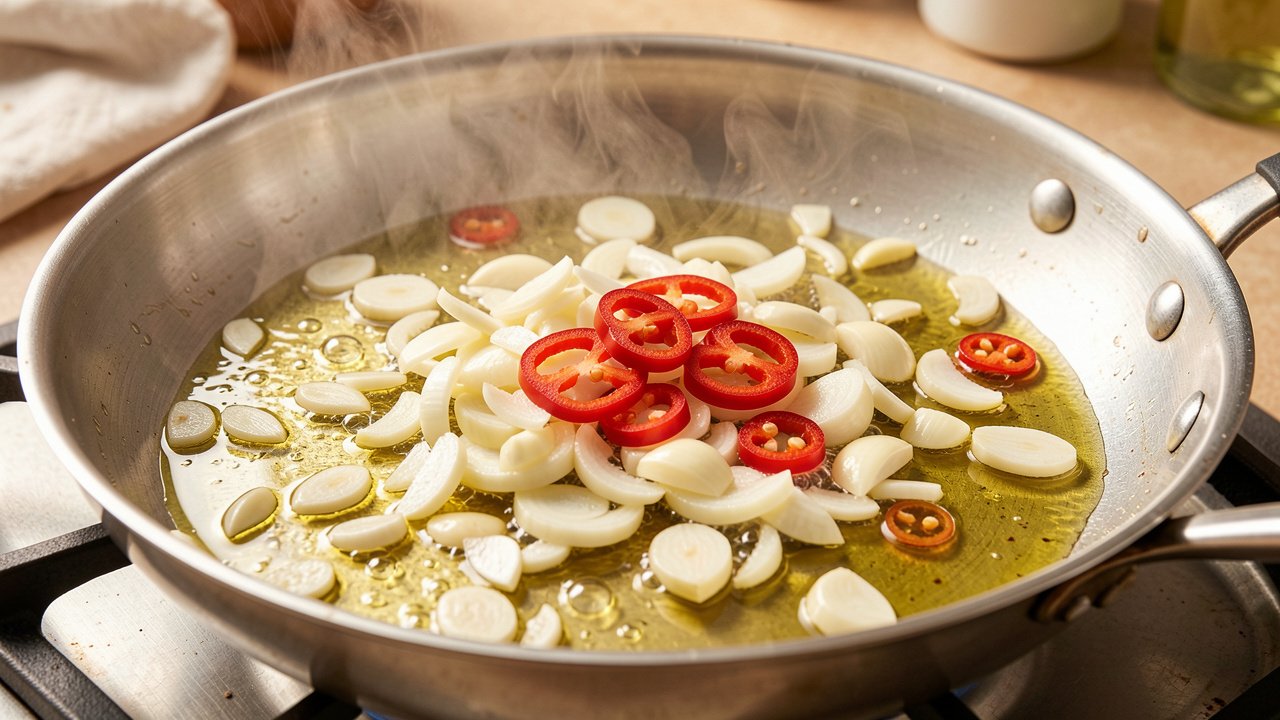
Warm the olive oil in a wide, shallow pan over medium heat. Add the sliced garlic and chili and cook gently for about 1 minute, just until fragrant and pale gold. Do not let the garlic brown or turn bitter; you want it soft and sweet, perfuming the oil.
Soften the Tomatoes
Add the halved cherry tomatoes and a pinch of salt. Cook for 4 to 5 minutes, pressing a few with the back of a spoon, until they slump, burst, and release their juices. This is where the broth gets its color and sweetness, so give the tomatoes time to break down before adding liquid.
Make the Crazy Water
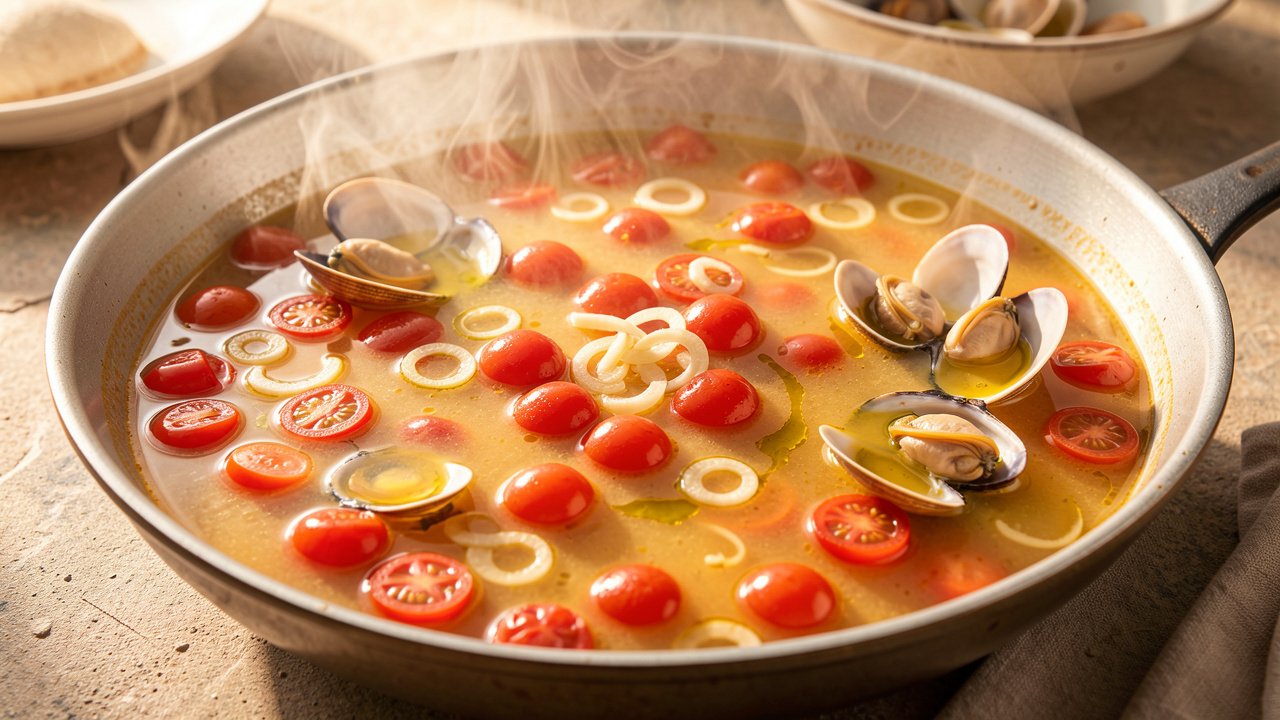
Pour in the water and fish stock and bring to a gentle simmer. Let the broth bubble softly for 3 to 4 minutes so the flavors meld and it tastes bright rather than raw. Taste and adjust the salt now, while the liquid is easy to season. If using clams, add them here and cover until they open.
Poach the Fish
Lower the heat so the broth is barely simmering, then slide the fish fillets in skin-side down, spooning a little liquid over the top. Cover and poach gently for 6 to 8 minutes, depending on thickness, until the flesh turns opaque and flakes easily. Do not stir or flip roughly, or the fillets can break apart.
Finish and Serve
Turn off the heat and add a squeeze of lemon juice and most of the parsley, swirling gently to combine. Taste the broth one last time for salt. Ladle the fish and plenty of crazy water into shallow bowls, scatter the remaining parsley, drizzle with olive oil, and serve straight away with warm crusty bread.
Chef’s Tips From Real Kitchen Testing
Keep the broth at a bare simmer once the fish goes in. A lazy shimmer on the surface, not a rolling boil, is what keeps the fillets tender and whole.
Season the broth before the fish, not after. It is far easier to balance the salt in the liquid than to fix it once the delicate fish is poaching in it.
Save the parsley and lemon for the very end. Adding them off the heat keeps the herb fresh and the broth bright instead of dull and cooked.
Recipe Variations
Serving Suggestions
- Thick slices of warm, crusty bread for the broth
- A simple green salad dressed with lemon and olive oil
- Boiled or steamed potatoes to soak up extra liquid
- A drizzle of good extra-virgin olive oil and lemon wedges
Nutrition Facts
| Nutrient | Amount per serving |
|---|---|
| Calories | 310 |
| Protein | 34 g |
| Carbohydrates | 9 g |
| Fat | 15 g |
| Saturated Fat | 2.5 g |
| Fiber | 2 g |
| Sugar | 4 g |
| Sodium | 640 mg |
Values are estimates per serving and vary with the exact ingredients and brands you use.
Make-Ahead Tips
Acqua pazza is best cooked fresh, because the poached fish is at its finest straight from the pan. You can, however, prep ahead: slice the garlic and chili, halve the tomatoes, and chop the parsley a few hours in advance, then keep everything covered in the fridge. You can even build the tomato broth up to the point before the fish goes in, cool it, and refrigerate for a day. Reheat the broth gently, bring it to a bare simmer, and only then add the fish so it stays tender.
Storage, Freezing & Reheating
Common Mistakes to Avoid
Troubleshooting
Broth tastes watery? The tomatoes probably needed longer to break down, or the liquid needs salt and a squeeze of lemon to lift it. Let it simmer a couple more minutes before the fish goes in.
Fish falling apart? The heat was too high or it was moved too much. Poach at a bare simmer and lift the fillets gently with a fish spatula.
Fish tastes bland? Season the fillets lightly before poaching and make sure the broth itself is well salted, since the fish takes on the flavor of the crazy water around it.
A Note on Neapolitan Cooking
Acqua pazza, literally “crazy water,” comes from the cucina povera tradition of Naples and the Amalfi coast, where fishermen cooked their catch simply on the boat or at home with little more than seawater, olive oil, and whatever tomatoes and herbs were on hand. The story goes that the “crazy” name nods to that improvised, humble broth made from almost nothing, yet it turns out fragrant and satisfying. It is the same spirit of restraint and respect for good ingredients that runs through so much southern Italian cooking. If you love tomato-forward dishes, our full collection of tomato recipes is full of that same easy, seasonal energy.
Frequently Asked Questions
More Tomato Recipes to Try
Last updated: September 23, 2026