Italian Recipes
Slow-Stirred Cornmeal, Set Firm, Baked Under Summer Tomatoes
Last updated: September 23, 2026
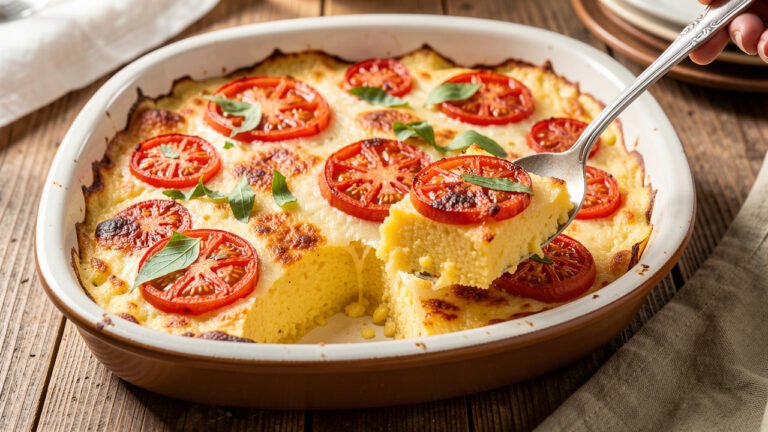
Polenta is a starch, and starch does not care how busy you are. It needs time and liquid and steady heat to swell and turn creamy, and almost every bad polenta I have eaten was simply hurried. Get that one thing right and the rest of this dish is easy.
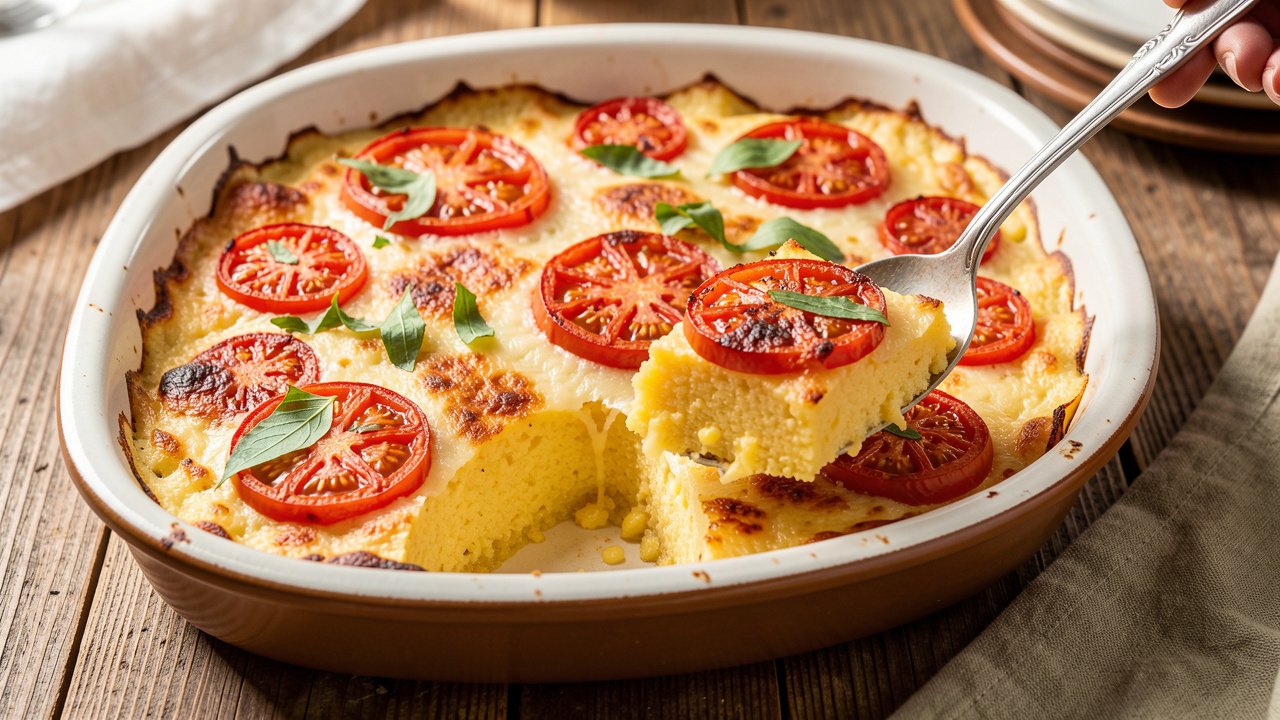
The tomatoes stay out of the pot on purpose. They go on top, over polenta that has already cooked and set, and then the whole tray bakes until the parmesan browns. You get soft corn underneath and blistered, concentrated tomato above.
Why Baked Polenta with Fresh Tomatoes Works
Cornmeal is mostly starch granules locked in a hard grain. Hot liquid and time make those granules swell and burst, which is called gelatinizing, and that is the whole reason polenta turns from gritty sand into something creamy.
Everything people hate about polenta comes from cutting that process short. Lumps, chalkiness, a sandy bite between the teeth: all of it means the starch never finished the job.
Baking it in a second stage plays to a different strength. Once the polenta is cold and firm, it holds its shape under a wet topping, so the tomatoes can release their juice and roast down without turning the whole dish to mush.
Parmesan pulls the two halves together. It is salty and full of glutamate, which makes the corn taste less like plain porridge and gives the tomatoes something savory to lean against.
The one rule: polenta is a starch that must gelatinize slowly. Every classic failure in this dish, from lumps to grit to soup, traces back to rushing that.
Ingredients
Kitchen Measurement Converter
Quickly convert between common cooking measurements without leaving the recipe. Pick a category, enter a value, and the result updates instantly.
Ingredient Notes and Substitutions
Coarse Cornmeal
Look for stone-ground cornmeal with visible specks, not fine yellow dust. Coarse grain takes 30 to 40 minutes but gives you real corn flavor and a texture that sets firm enough to slice.
Quick-Cooking Polenta
It is precooked and dried, so it thickens in about 5 minutes. Being honest: it works, but it tastes flat and slightly cardboard-like next to the coarse grind. Use it when you are short on time, not when you want this dish at its best.
Fresh Tomatoes
Plum or Roma tomatoes have thicker walls and less jelly, which suits a bake. Big beefsteaks work if you are willing to seed them carefully, and cherry tomatoes need only halving.
Parmesan and the Rind
Buy a wedge and grate it yourself; pre-shredded cheese is coated in starch and browns unevenly. Save the rind, because it is free savory depth in the polenta pot.
Cooking Liquid
Water makes clean, corn-forward polenta. Swapping in a third of the liquid for light vegetable stock adds background savor without covering the corn.
Butter and Olive Oil
Butter stirred into the finished polenta keeps it tender once chilled. Olive oil goes on the tomatoes, where it helps them roast rather than steam.
Equipment
- Heavy pot, 4 quart
- Balloon whisk
- Wooden spoon
- 9 by 13 inch baking dish
- Rimmed sheet pan
- Box grater
- Sharp knife and board
- Colander
- Offset spatula
Before You Start
1. Plan around the chill. The polenta needs at least an hour in the fridge to firm up, so start it in the morning or the night before you want to bake.
2. Seed and salt the tomatoes early. They need 20 to 30 minutes in a colander to shed water, and that can happen while the polenta cooks.
3. Weigh the cornmeal if you can. Cup measures of coarse grain vary a lot, and the liquid ratio is the one number you do not want to guess at.
Step-by-Step Instructions
Seed and Drain the Tomatoes
Halve the tomatoes and scoop or squeeze out the seeds and the watery jelly around them. Cut the halves into thick wedges, toss with 1 teaspoon of salt, and leave them in a colander over a bowl for 20 to 30 minutes.
Fresh tomatoes are mostly water, and that water has to go somewhere. Draining it now is the difference between a bake that browns and one that sits in a puddle.
Rain the Cornmeal into the Liquid
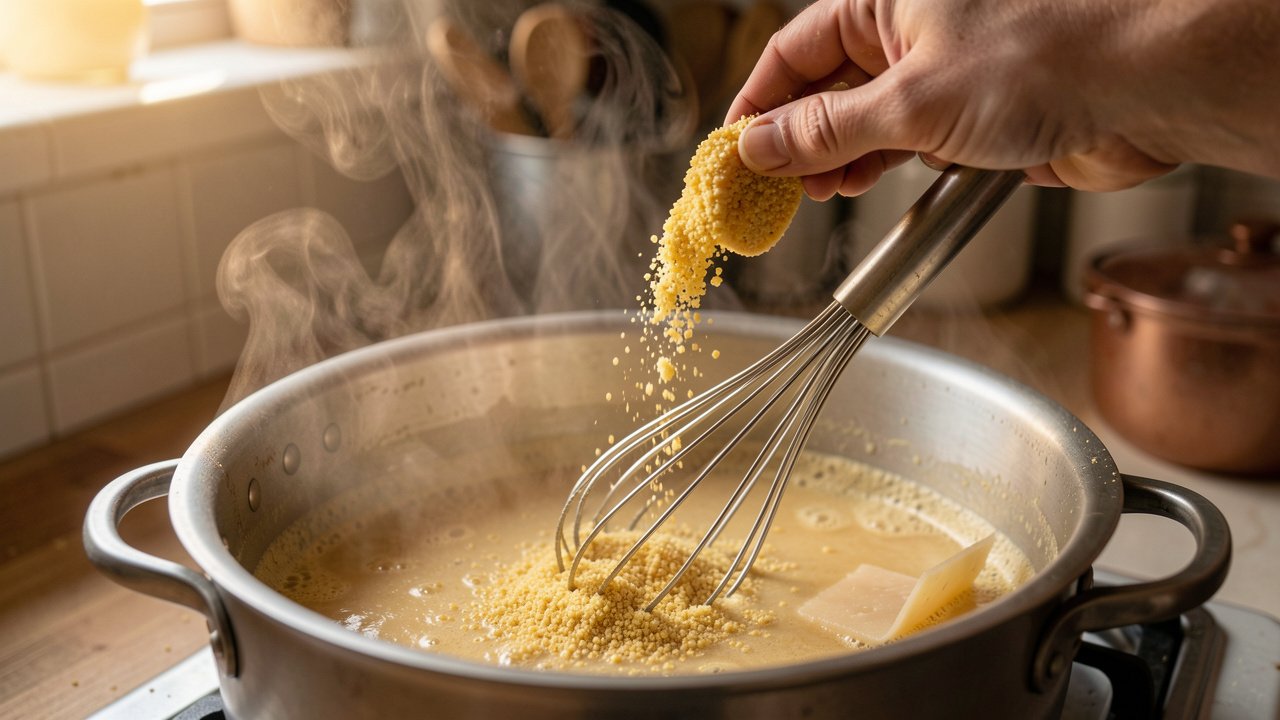
Bring the water, stock, and salt to a bare simmer with the parmesan rind in the pot. Now the important part: hold the cornmeal in one hand and let it fall in a thin, steady stream while you whisk hard with the other. This takes about a minute.
Dumping the grain in all at once is the number one polenta failure. The outside of the clump gelatinizes instantly and seals the dry center inside, and those lumps never come out no matter how long you stir.
Cook It Low for 30 to 40 Minutes
Drop the heat until the surface only burps a bubble every few seconds. Stir with a wooden spoon every 4 or 5 minutes, scraping the bottom and corners where it likes to catch.
It is done when a taste no longer feels chalky against the roof of your mouth and the mass pulls away from the pan side as you drag the spoon through. Time is a guide; that texture test is the real answer.
Finish, Spread, and Chill Until Firm
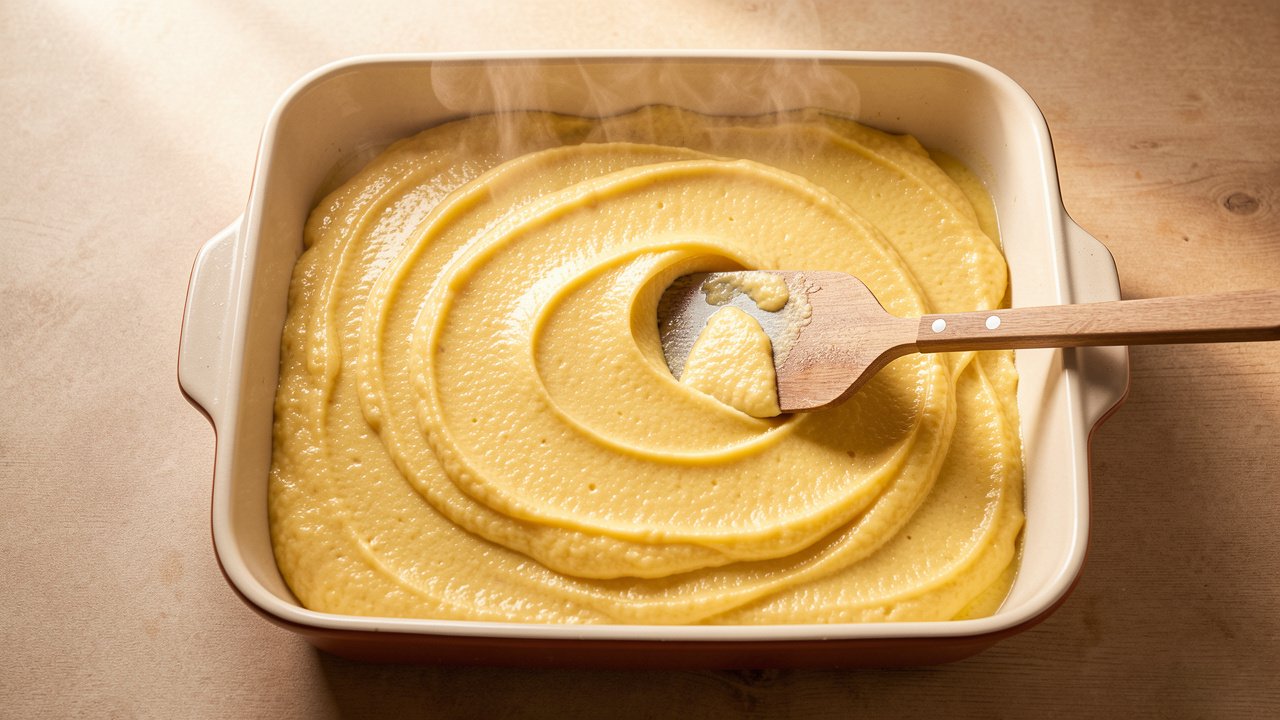
Fish out the rind. Beat in the butter, the black pepper, and 1/2 cup of the grated parmesan, then spread the polenta into a lightly oiled 9 by 13 inch dish with an offset spatula.
Here is the part that scares people: in the pot it looks far too loose, like thick soup. Leave it. It sets like concrete as it cools, and cooks who thicken it in the pot end up with cement they cannot spread.
Cover and refrigerate at least 1 hour, until it is firm enough to press without leaving a dent.
Top with the Drained Tomatoes
Heat the oven to 425 F. Pat the drained tomato wedges dry, toss them with the olive oil and the sliced garlic, and lay them over the cold polenta in a single overlapping layer.
Notice what does not happen here: the tomatoes never went into the pot. Their acid slows starch granules from softening, so cooking them with the cornmeal would leave you fighting grit for an hour.
Bake Uncovered, Then Add the Parmesan
Bake uncovered for 20 minutes. No foil, no lid: you want the steam to leave the dish so the tomato edges blister and the polenta top dries into a light crust.
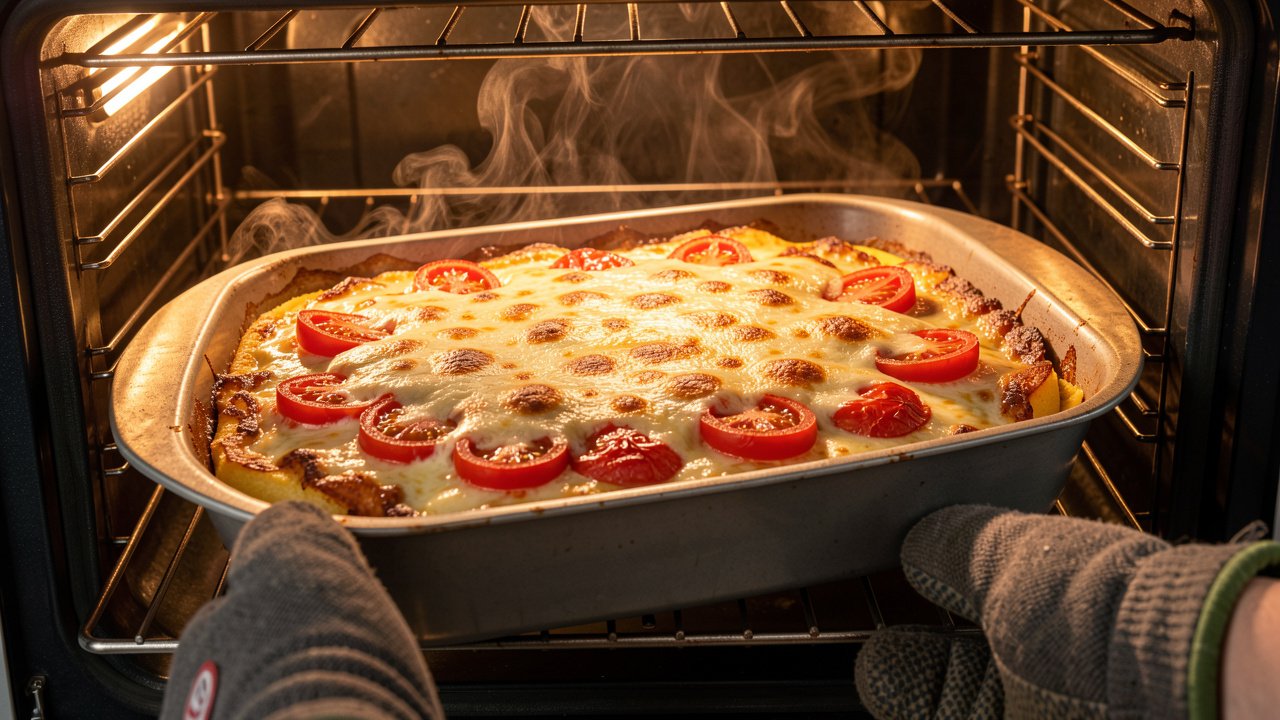
Scatter the remaining 1 cup of parmesan over the top and bake 10 minutes more, until it is browned in patches. Cheese added at the start would be leathery and bitter by now.
Rest 10 Minutes Before Cutting
Let the dish sit on a rack for 10 minutes. Straight from the oven the polenta is soft and slumps when you cut it, and the tomato juices are still loose.
Ten minutes lets the starch tighten and the juices settle, so a spatula lifts a clean square. Tear basil over the top just before serving.
Chef’s Tips for Better Baked Polenta
Use a heavy pot with a thick base. Thin pans scorch the cornmeal at the bottom long before the grain in the middle has softened, and burnt corn taste travels through the whole batch.
Keep a kettle of hot water nearby. If the polenta stiffens before the grain is tender, add hot water a splash at a time; cold water shocks the pot and stalls the cooking.
Salt the cooking liquid, not the finished polenta. Grain absorbs seasoning while it swells, and salt stirred in at the end just sits on the surface tasting sharp.
Save the tomato juice you drained off. Reduce it in a small pan to a few spoonfuls of syrup and drizzle it over the baked dish for concentrated tomato flavor with none of the water.
Fresh Tomato Polenta Variations
Serving Suggestions
- A sharp green salad with lemon to cut the cheese
- Roasted or grilled sausage alongside
- Sauteed greens such as chard or kale
- Crusty bread for the juices in the dish
- A chilled pomegranate or tart cherry spritzer
- Leftover squares fried in olive oil for breakfast
Nutrition Facts
Values are estimates per serving of one sixth of the dish and vary with your cornmeal, cheese, and how much salt drains away with the tomatoes.
Make-Ahead Tips
This recipe is built for making ahead, because the chilling step is not optional anyway. Cook and spread the polenta up to 3 days early, cover the dish tightly, and keep it cold until you want to bake.
Do not top it in advance. Salted tomatoes sitting on cold polenta will keep leaking, and by the next day the surface is waterlogged and will not crisp.
Storage, Freezing and Reheating
Common Mistakes to Avoid
Troubleshooting
Lumps in the pot? Push them against the side with the spoon and mash, or use an immersion blender for a few seconds. Neither fully fixes it, which is why the raining-in step matters so much.
Still gritty after 40 minutes? It needs more liquid and more time, not more heat. Add hot water and keep it barely simmering until the chalkiness goes.
Polenta will not set? Either the ratio was too wet or the grain was too fine. Give it longer in the fridge; if it is still soft, serve it as a spoonable bake rather than fighting it.
Watery pool under the tomatoes? They were not drained long enough. Tip the dish and spoon the liquid off, then run it under the broiler for 2 minutes.
Where Polenta Comes From
Polenta is northern Italian peasant food, and it predates corn. Before maize arrived from the Americas, the same slow-stirred porridge was made from millet, spelt, or chestnut flour, cooked over a fire in a copper pot for an hour or more.
That history explains the technique. It was never meant to be fast, and the versions that taste best are still the ones that take their time. If you like tomatoes handled with the same patience, our fresh tomato sauce without sugar works the same way.
Frequently Asked Questions
More Tomato Recipes to Try
Culinary Reviewer: Ghazala Shakeel