Italian Recipes
Crisp Outside, Creamy Inside
Last updated: September 23, 2026
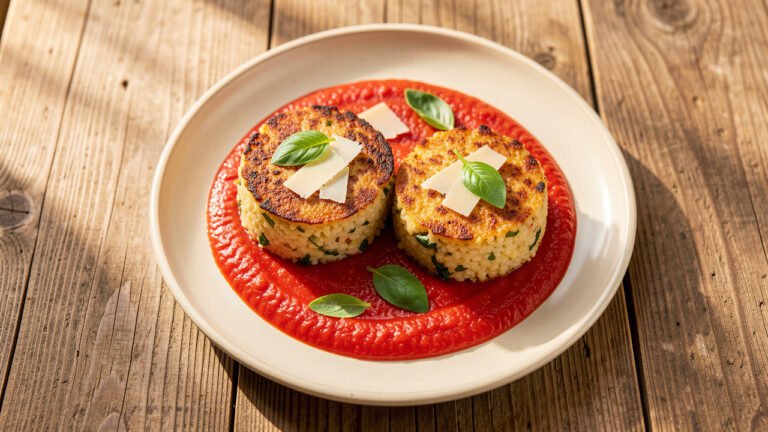
This is what leftover risotto was born to become: arancini’s flatter, easier cousin, with no deep fryer and no rolling, just a hot pan and ten minutes of patience. My first batch fell apart because the risotto was barely cool. I have never made that mistake twice.
Why Risotto Cakes with Tomato Basil Puree Work
Let me be honest up front: this is a brilliant use of leftovers and a poor use of a special trip. With cold risotto already in the fridge, you are thirty minutes from one of the best things you can put on a plate. Without it, this is a two-day project.
The reason is starch. Arborio and carnaroli are loaded with amylopectin, the branched starch that leaches out during stirring and makes risotto creamy in the first place. As the risotto chills, that starch retrogrades: the loose molecules reorganize and lock together, and the mass sets firm enough to slice. Warm risotto has none of that structure. It slumps.
So the cakes are not a hack laid on top of risotto. They are what risotto becomes given a night in the cold, and the dish exists because Italian cooks noticed that yesterday’s rice behaved nothing like today’s.
The puree is the counterweight. A risotto cake is rich, salty, and starchy, and it needs acid the way a fried egg needs pepper. Quick-cooked tomato blended smooth with raw basil brings brightness without adding a second heavy element.
Pro observation: Press a spoon into the chilled risotto before you commit. A clean dent that holds its edge means you are ready. A dent that fills back in means more time in the fridge, and no amount of egg or breadcrumbs will fix it.
Ingredients
Kitchen Measurement Converter
Convert between common cooking measurements without leaving the recipe. Pick a category, enter a value, and the result updates instantly.
Ingredient Notes & Substitutions
The Risotto
It must be cold and made with arborio or carnaroli. Long-grain rices lack the sticky amylopectin that sets the cakes. Plain, mushroom, or Parmesan risotto all work; chop any big chunks small first.
Egg and Cheese
One egg per four cups of risotto is enough; more makes the inside spongy rather than creamy. Parmesan adds salt and a little binding protein, so taste before adding more salt.
Breadcrumbs
Fine dry breadcrumbs go on the outside only, never mixed into the risotto. Panko gives a coarser, craggier crust and browns faster, so watch it. Gluten-free crumbs work without any other change.
Tomatoes and Basil
Ripe fresh tomatoes give the sweetest puree in summer. Out of season, a 14-ounce can of whole peeled tomatoes beats a pale fresh one every time. The basil must be fresh, and it goes in raw, off the heat.
Equipment
- Sheet pan for chilling
- Large nonstick or cast-iron skillet
- Blender or immersion blender
- Fine-mesh sieve
- Wide fish spatula
- Shallow bowl for crumbs
Before You Start
1. Chill the risotto properly. Not optional. If you made risotto specially for this, spread it thin on a sheet pan the moment it leaves the stove so it cools fast, then refrigerate at least 4 hours, ideally overnight. A deep container cools slowly and the middle stays soft.
2. Make the puree first. It holds well warm, and you want your full attention on the pan once the cakes go in.
3. Build in a second chill. After shaping and coating, the cakes go back in the fridge for 20 minutes. It sounds fussy. It is the difference between eight neat cakes and a scramble.
Step-by-Step Instructions
Check the Risotto
Take the risotto out and look at it. It should be one solid, sliceable mass, cold all the way through, not a soft mound. Break it up with a fork into a large bowl. Chop any large vegetable or mushroom pieces to pea size, because big chunks create weak seams that split in the pan.
Cook the Tomatoes for the Puree
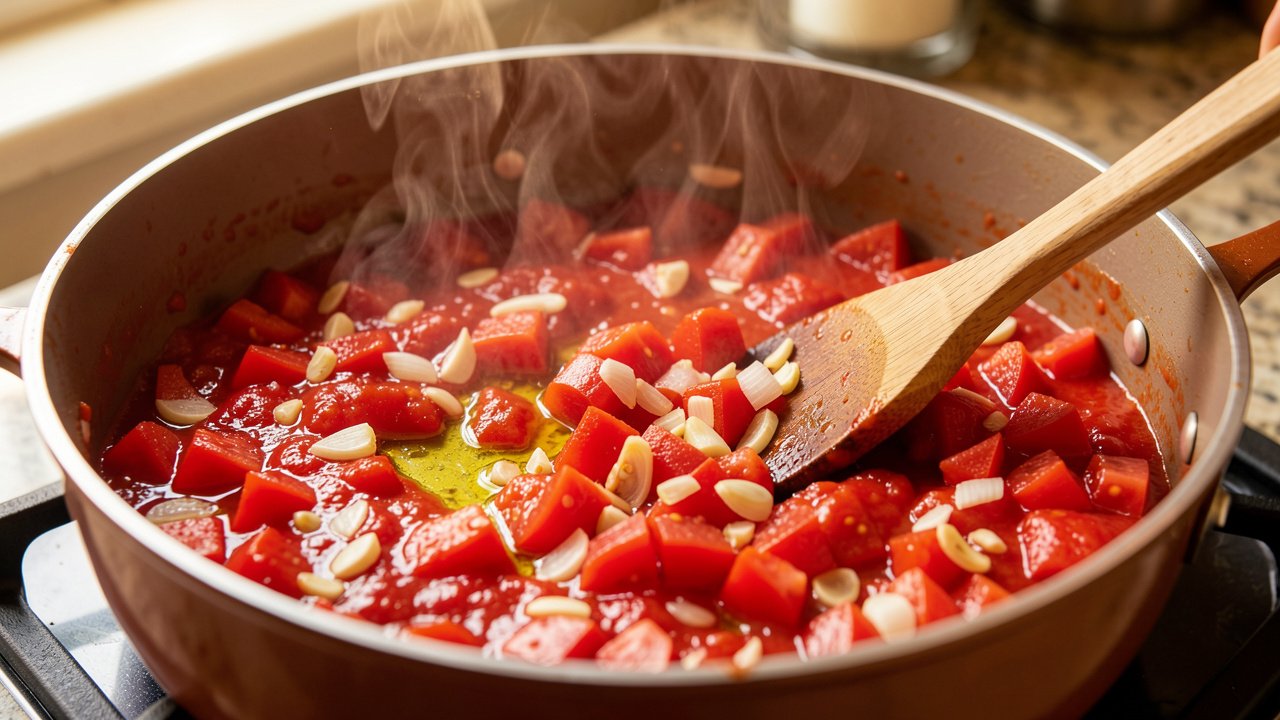
Warm 2 tablespoons of olive oil in a saucepan over medium heat. Cook the shallot 3 minutes until translucent, then add the garlic for 30 seconds, just until you smell it. Add the tomatoes, salt, and sugar. Simmer 12 to 15 minutes, uncovered, until the tomatoes collapse and the liquid reduces by a third. It should coat a spoon, not run off it.
Blend In the Basil Off the Heat
Pull the pan off the burner and let it lose its steam for two minutes. Add the basil and vinegar, then blend until smooth. This is the step people get wrong: basil cooked in hot sauce turns black and bitter within a minute, and the fresh perfume of raw basil is the entire point. For a restaurant-smooth finish, push the puree through a fine-mesh sieve. Taste, and keep it warm.
Bind and Shape the Cakes
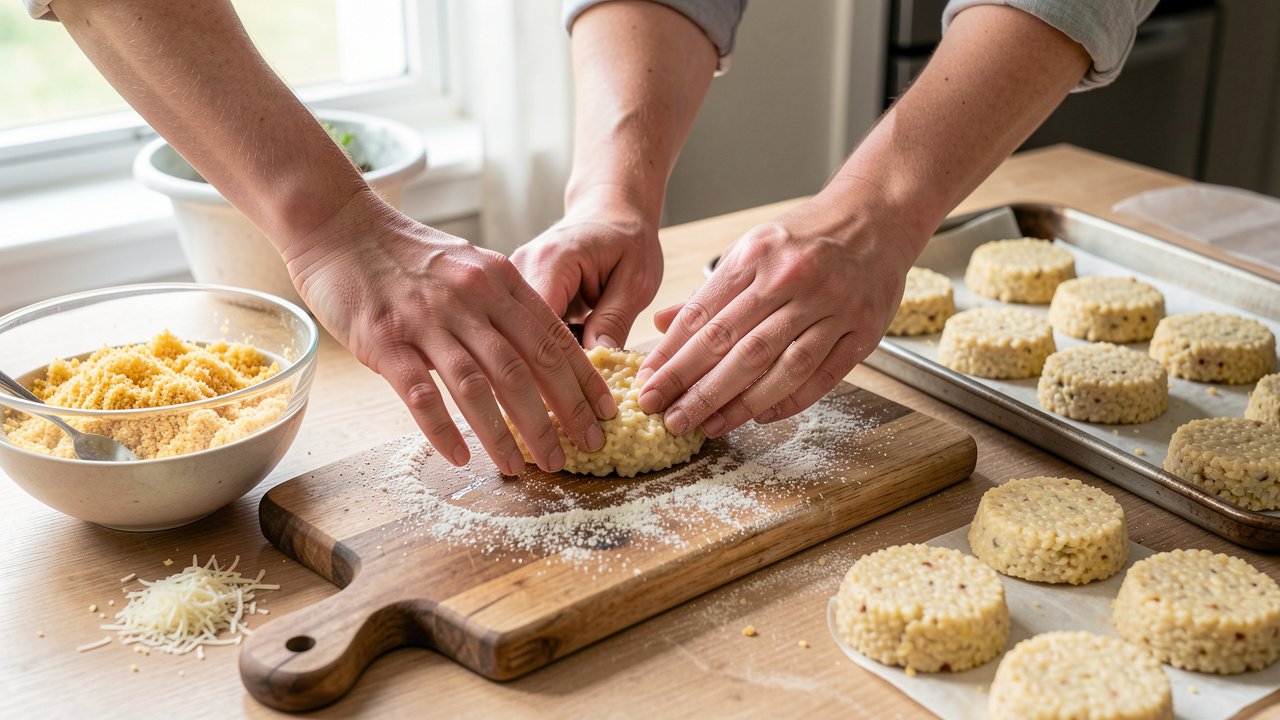
Beat the egg into the cold risotto with the Parmesan and black pepper. Mix just until it comes together; overworking makes the cakes dense. Divide into 8 portions and press each into a patty about 3 inches across and three-quarters of an inch thick. Firm the edges with your palm, because cracks are where cakes break.
Coat and Chill Again
Spread the breadcrumbs in a shallow bowl and press each cake into them, covering top, bottom, and sides. Set them on a plate and refrigerate 20 minutes. Two things happen: the cakes firm up again after warm hands, and the surface dries out. A dry surface browns. A damp one steams.
Fry the Crust and Leave Them Alone
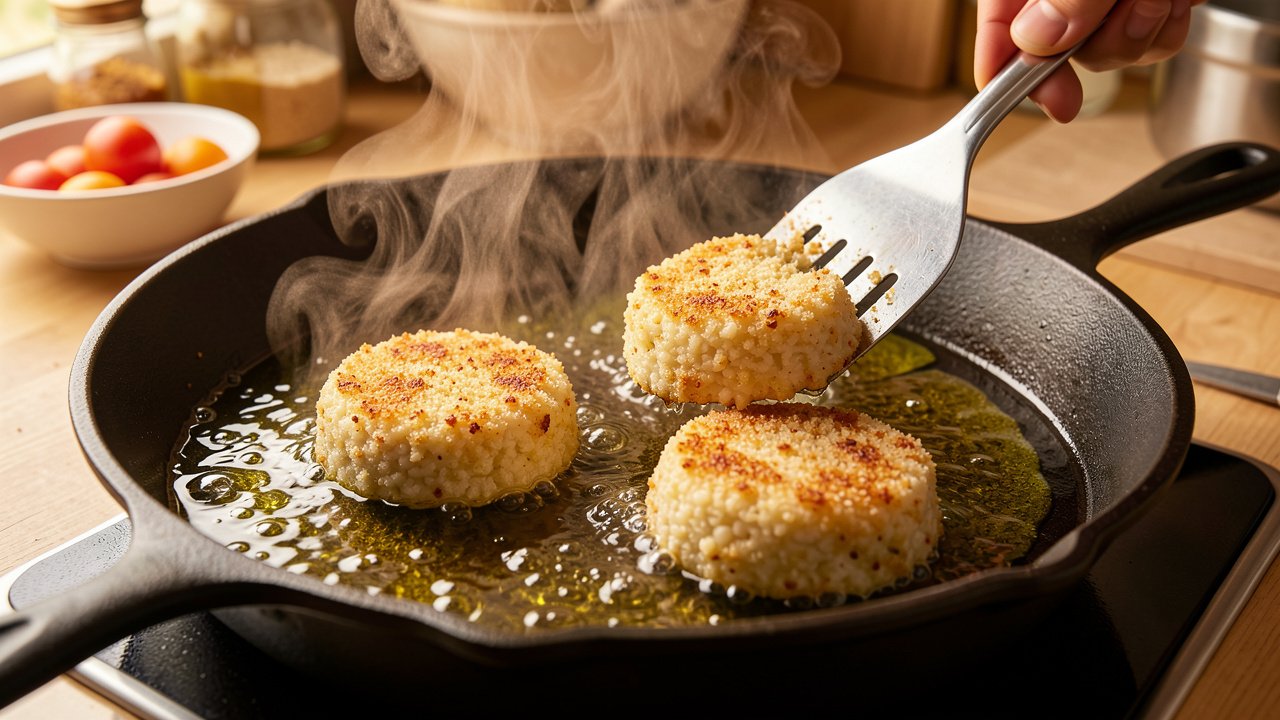
Heat 4 tablespoons of olive oil in a large skillet over medium-high heat until it shimmers and a stray breadcrumb sizzles on contact. Lay the cakes in with space between them, and then do nothing. Do not nudge them, peek underneath, or slide the pan. Let the crust set 3 to 4 minutes until the edges look deep gold, then flip once and give the second side 3 minutes. Poking is the most common reason cakes fall apart. Work in two batches rather than crowding.
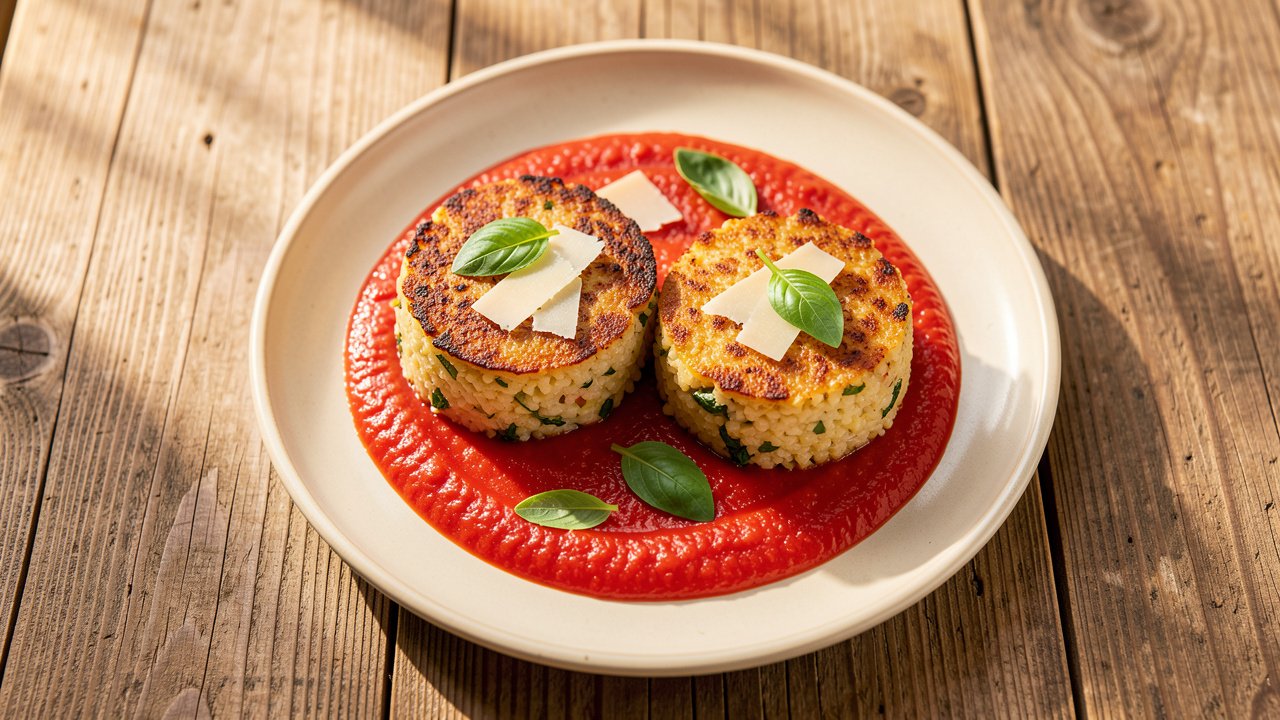
To serve, spoon a shallow pool of warm puree onto each plate and set two cakes on top. Never ladle sauce over the cakes; it erases the crisp shell in under a minute. Finish with torn basil and shaved Parmesan.
Chef’s Tips From Real Kitchen Testing
Use more oil than feels comfortable. A dry pan gives pale patches and sticking; a film of hot oil gives an even, all-over crust. This is shallow frying, not sauteing.
A fish spatula slides under a cake far more cleanly than a thick plastic turner. If you only own the thick one, angle it in from the side rather than pushing straight down.
Salt the puree harder than you think it needs. Under a rich, salty cake, a timid sauce disappears against Parmesan and fried breadcrumbs.
Recipe Variations
Serving Suggestions
- A sharp arugula salad with lemon and olive oil
- Two cakes as a main, one as a starter
- Shaved Parmesan and torn basil at the table
- A crisp sparkling lemon water
The salad matters more than it sounds. Something raw, green, and acidic resets your palate between bites and keeps a rich dish from wearing you down. Our tomato mozzarella salad works well alongside.
Nutrition Facts
Values are estimates for two cakes plus puree, and vary widely with how the original risotto was made and how much oil the cakes absorb.
Make-Ahead Tips
This dish is make-ahead by design, since it starts with risotto cooked the day before. You can push it further: shape and coat the cakes up to 24 hours ahead and keep them uncovered on a plate in the fridge. The extra time only helps, because the surface dries more and browns better.
The puree can be made three days ahead, but hold the basil: cook and blend the tomato base, refrigerate, then reheat and blend in fresh basil before serving. Fry the cakes at the last minute; they are best in the first five minutes off the heat.
Storage, Freezing & Reheating
Common Mistakes to Avoid
Troubleshooting
Cakes falling apart in the pan? Almost always the risotto was not cold enough, or you moved them too early. Get the rest back in the fridge for 30 minutes and leave the next batch alone a full 4 minutes.
Crust pale and greasy? The oil was not hot enough, so the cakes absorbed it instead of searing. Heat the pan until a breadcrumb sizzles immediately, and do not crowd it.
Puree thin and watery? It did not reduce long enough. Simmer a few more minutes after blending, then add the basil after that second reduction.
Inside not hot? The cakes are too thick. Three-quarters of an inch heats through in the time the crust takes; thicker than an inch gives a cold center under a burnt shell.
Where This Dish Comes From
Northern Italian cooks have revived leftover risotto for as long as they have made it, and the family is bigger than most people realize. Roman suppli are rice croquettes with a mozzarella heart; Sicilian arancini are breaded, deep-fried spheres. The pan-fried cake is the plainest of the group, the one you make on a Tuesday without heating a pot of oil.
Pairing it with tomato puree is a modern, restaurant-driven move, but it earns its place by cutting fat and starch with acid. The same logic drives our tomato basil pasta, and for a puree base with no added sweetness, our fresh tomato sauce without sugar is a good start.