Middle Eastern Recipes
Floral, Not Soapy
Last updated: September 23, 2026
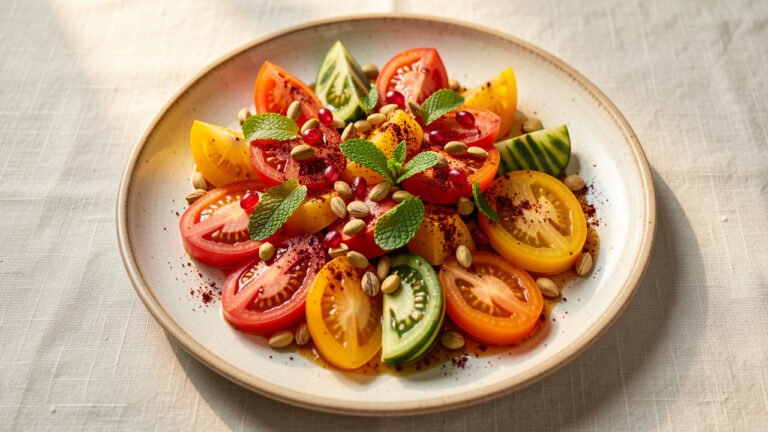
Rose water is the whole point of this salad, and it is also the thing most likely to ruin it. The gap between lovely and inedible is roughly half a teaspoon. I have made this salad both ways, and the bad version genuinely tastes like a bar of hand soap dissolved in tomato juice. The good version is one of the best things I put on a summer table.
Why This Tomato Salad with Rose Water Dressing Works
Rose water is not a seasoning you add for flavor so much as an aroma you add for memory. It works here because tomatoes already carry a faint floral note under all that acid, and a small amount of rose pulls that note forward instead of covering it up. Get the dose right and people taste the tomatoes more clearly, not less.
The dressing is built as a four-way balance. Rose water brings floral, lemon brings acid, honey brings just enough sweet to keep the lemon from biting, and olive oil carries all of it and softens the edges. Pull out the honey and the rose reads as perfume. Pull out the oil and the rose sits on your tongue in a thin, sharp layer. They need each other.
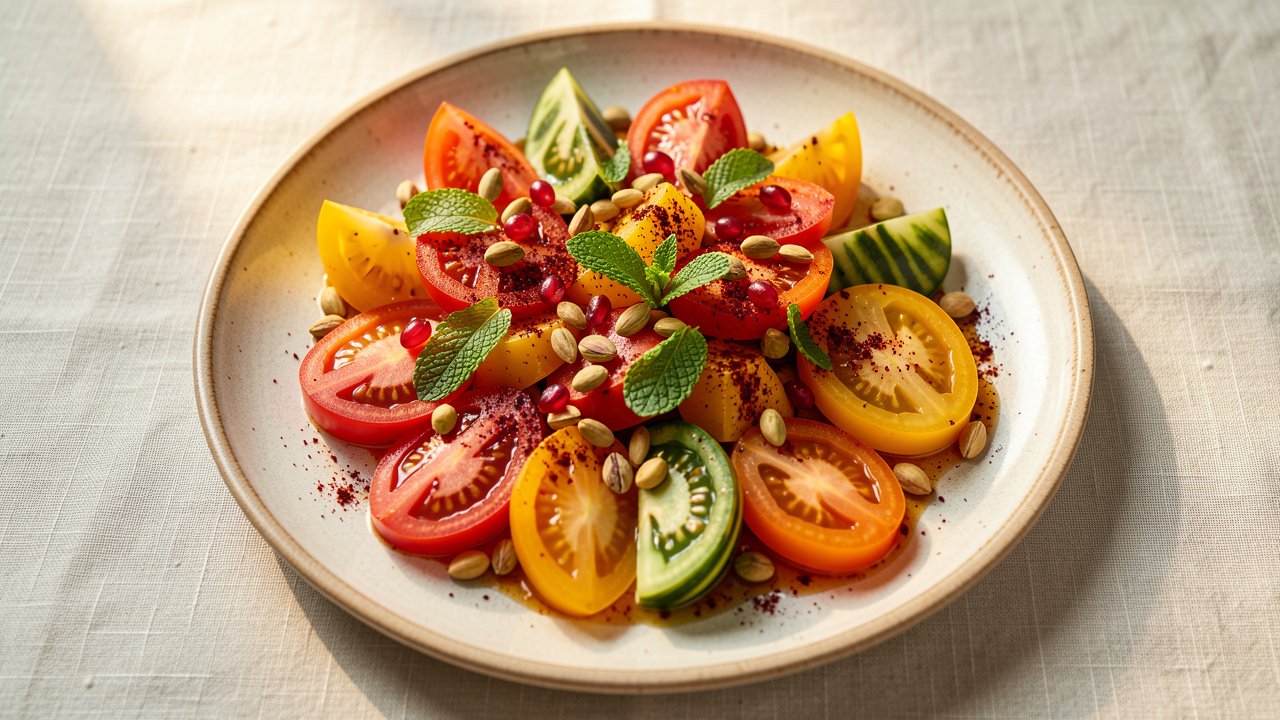
Mixing tomato colors and sizes is not only about the photograph. Yellow and orange tomatoes are usually lower in acid and taste sweeter, deep red ones taste more savory, and green-striped varieties stay tart and firm. Cutting them into different shapes means every forkful hits a slightly different point on the sweet-sour scale, which keeps a simple bowl interesting to the last bite.
The rule that matters most: a quarter teaspoon of rose water perfumes a salad for four. A full teaspoon makes it taste like potpourri. Start below what you think you need and add drop by drop.
Ingredients
Kitchen Measurement Converter
Quickly convert between common cooking measurements without leaving the recipe. Pick a category, enter a value, and the result updates instantly.
Ingredient Notes & Substitutions
Rose Water
Buy culinary or food-grade rose water, sold in tall bottles at Middle Eastern and South Asian groceries. Cosmetic rose water from a pharmacy is not food and often contains glycerin or preservatives. Brand strength varies enormously, so treat the quarter teaspoon here as a starting point and taste before you commit.
Tomatoes
Use at least three colors and two sizes: large slicers for meat, cherry or grape tomatoes for pops of sweetness. Peak-season fruit matters more than variety names. Pale winter tomatoes have nothing for the rose to lift.
Sumac
Sumac adds a dry, lemony tartness and a red dusting that looks striking against yellow tomatoes. If you cannot find it, add an extra teaspoon of lemon juice, but expect to lose the color contrast.
Pistachios and Honey
Raw shelled pistachios stay green and taste sweeter than roasted salted ones. Any mild honey works; strong buckwheat honey will fight the rose. Swap in maple syrup to make the salad vegan.
Equipment
- Sharp serrated knife
- Wide shallow platter
- Small whisk or fork
- Measuring spoons
- Small jar or bowl
- Cutting board
Before You Start
1. Take the tomatoes off the fridge shelf. Cold ruins tomato texture and mutes aroma, and aroma is the entire point of a perfumed salad. Let them sit on the counter for at least half an hour.
2. Make the dressing first. It needs a few minutes for the rose water to bloom into the oil and lemon, and you want time to taste and adjust before the tomatoes are cut.
3. Do not salt anything yet. Salted tomatoes weep fast. Cut and salt them at the last possible moment so their juice stays inside them and not in the bottom of the bowl.
Step-by-Step Instructions
Bring the Tomatoes to Cool Room Temperature
Take the tomatoes out of the fridge, or off the counter if that is where they live, and let them sit until they are cool to the touch but not cold. Around 60 to 65 degrees is the sweet spot. Fridge-cold tomatoes turn mealy, and cold air holds aroma down.
Whisk the Rose Water Dressing
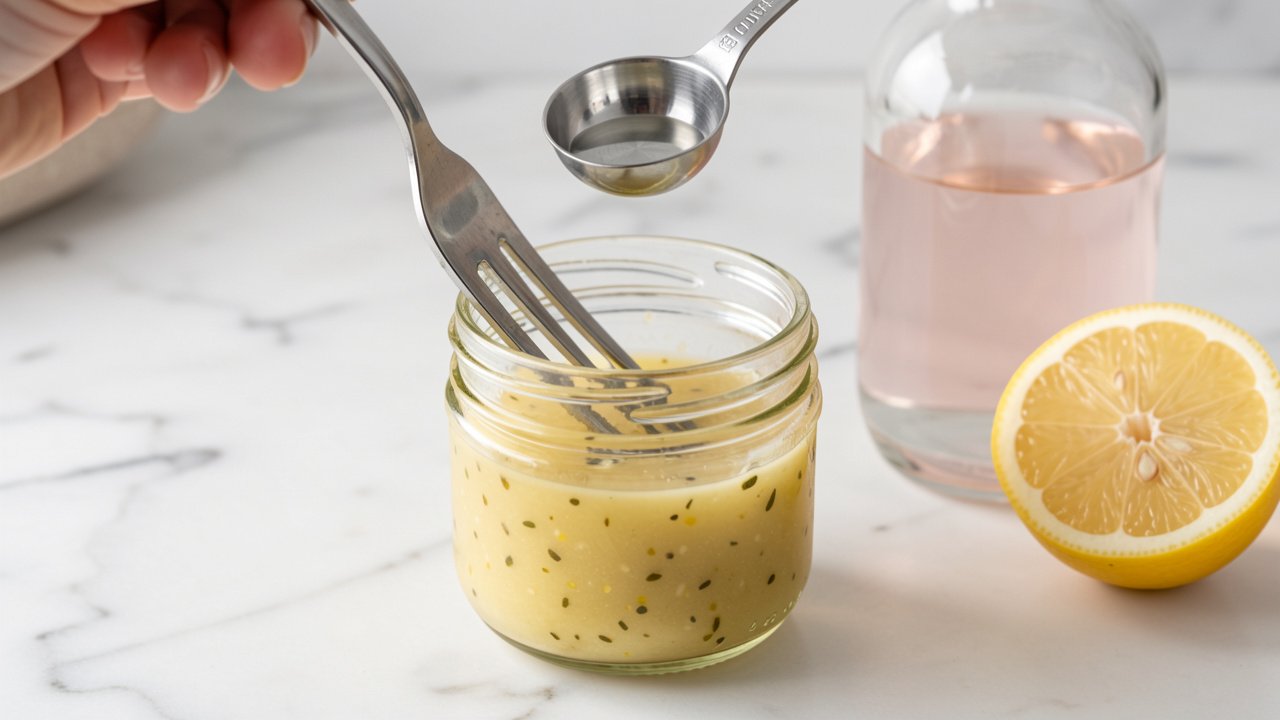
In a small jar, whisk the lemon juice, honey, sumac, and black pepper until the honey dissolves. Add the rose water now, into the dressing, never onto the tomatoes. Start with a scant quarter teaspoon. Whisk in the olive oil in a slow stream until it thickens slightly and turns cloudy. Smell it: you should catch rose faintly behind the lemon, not in front of it. If you catch nothing, add rose water two drops at a time and smell again.
Prep the Cucumber, Onion, and Herbs
Slice the cucumbers into thick half-moons so they stay crunchy. Shave the red onion as thin as you can and rinse it under cold water for ten seconds to knock back the raw bite, then pat it dry. Tear the mint by hand rather than chopping it; a knife bruises the leaves and turns the cut edges black within minutes.
Cut and Salt the Tomatoes at the Last Minute
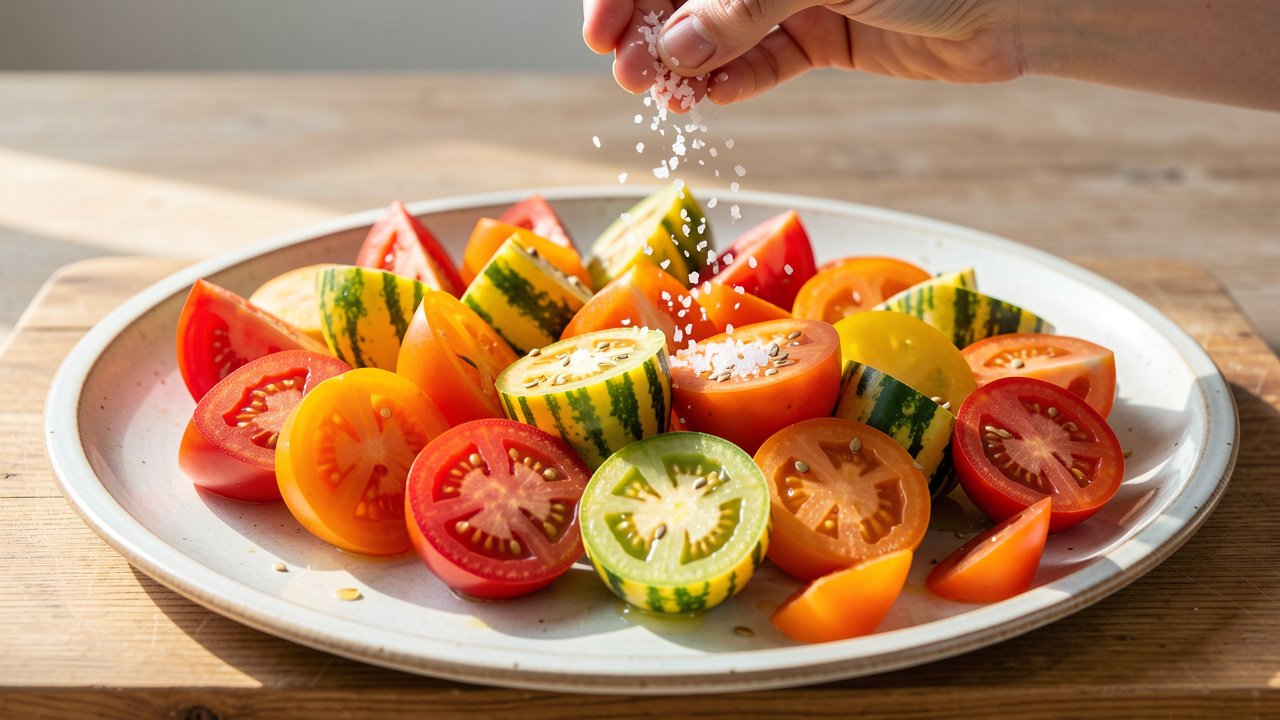
Cut the large tomatoes into thick wedges and rounds, halve the small ones, and pile them onto a wide platter. Now sprinkle the salt over them and start counting: within two or three minutes you will see beads of juice forming on the cut faces. That is your window. Salting earlier means the tomatoes shed liquid that thins the dressing into a watery puddle.
Dress and Toss Gently
Scatter the cucumber and onion over the tomatoes, then shake the dressing hard one more time and pour about two thirds of it over the platter. Toss with your hands, lifting from underneath rather than stirring, so the tomato wedges keep their shape. Taste a piece. It should read tomato first, lemon second, rose third. If the rose has gone quiet, add the rest of the dressing rather than more rose water.
Garnish and Rest Ten Minutes
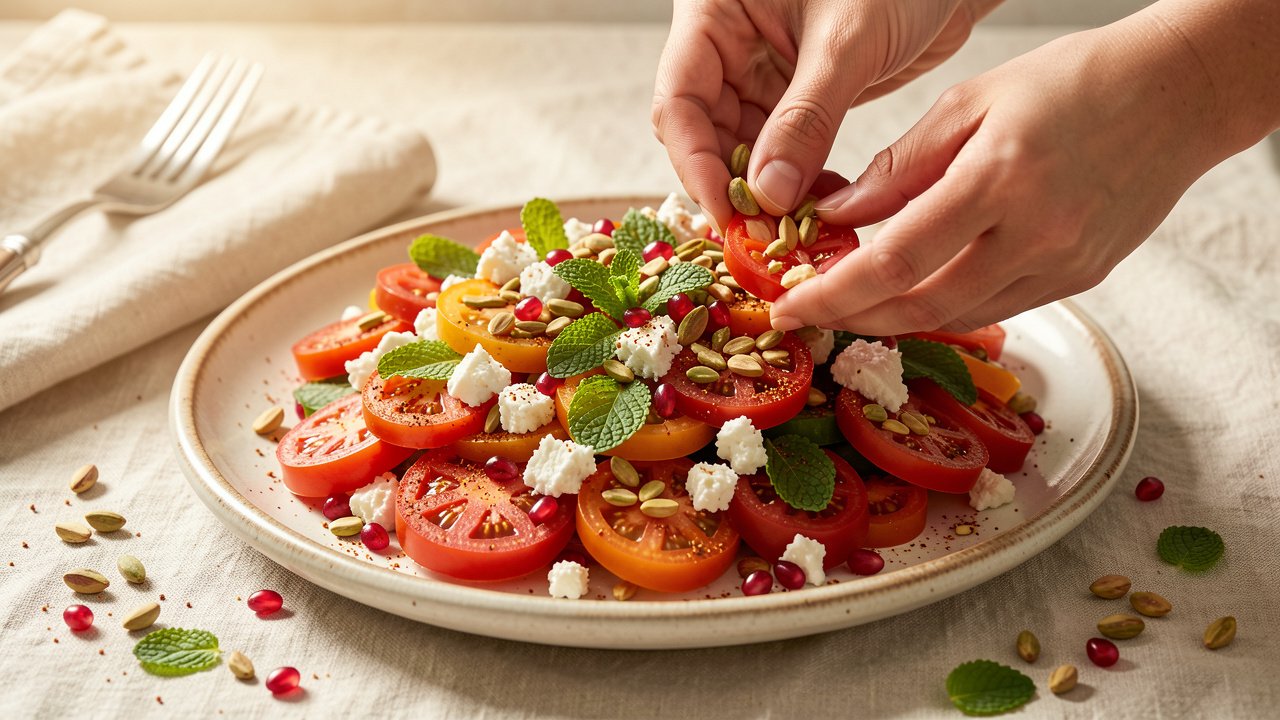
Scatter the mint, pistachios, pomegranate seeds, and feta over the top, then dust with a little more sumac. Let the platter sit for ten minutes at room temperature so the flavors settle and the rose blooms. Serve it cool but never chilled, straight from the counter.
Chef’s Tips From Real Kitchen Testing
Calibrate your bottle before you cook. Stir two drops of your rose water into a tablespoon of water and smell it. Some brands are so concentrated that a quarter teaspoon is already too much, and finding that out over the sink beats finding it out over the salad.
Use a serrated knife on tomatoes. A straight blade crushes the shoulders and pushes out seeds and juice you wanted to keep on the plate.
Dress in two pours instead of one. Two thirds first, taste, then the rest. It is the only reliable way to hit the rose-to-acid balance across tomatoes that vary in juiciness.
Recipe Variations
Serving Suggestions
- Warm flatbread or lavash for the dressing
- Grilled lamb, chicken, or halloumi
- Herbed rice or a lemony bulgur pilaf
- Labneh drizzled with olive oil
Nutrition Facts
Values are estimates per serving with feta included, and vary with tomato size and how much dressing stays on the plate.
Make-Ahead Tips
The dressing is the only part worth making ahead, and it actually improves with a few hours in a sealed jar; the rose settles into the oil and stops shouting. Make it up to two days early and keep it in the fridge, then let it come back to room temperature and shake it hard before use.
Everything else waits. You can wash the herbs and shave the onion an hour ahead, but cut the tomatoes and salt them only when guests are already at the table. There is no version of this salad that survives being assembled in advance.
Storage, Freezing & Reheating
Common Mistakes to Avoid
Troubleshooting
Tastes like soap? You overshot the rose. Cut in more untreated tomatoes and cucumber to dilute, add lemon and a pinch of salt, and lean harder on the sumac and mint. Fat helps too, so extra feta or a spoon of labneh will bury some of it.
Cannot taste the rose at all? Do not dump more into the bowl. Whisk two more drops into a fresh spoonful of oil and lemon, then drizzle that over the top.
Watery bottom? The tomatoes sat salted too long. Tilt the platter, spoon off the liquid, and refresh with a little more dressing.
Dressing tastes harsh? The honey is under-dissolved or missing. Whisk it into the lemon before the oil goes in.
A Note on Rose Water in Middle Eastern Cooking
Rose water has been distilled across Persia and the wider Middle East for more than a thousand years, first as medicine and perfume, later as a kitchen staple used in everything from rice pudding to sherbet. Cooks there use it with real restraint, in drops rather than spoons, which is exactly the habit worth borrowing.
The partners in this salad are the traditional ones: cucumber for water and crunch, sumac for tart red dust, pistachio for fat and bite, mint for coolness, pomegranate for sweet-sour pops, and feta for salt. None of them compete with rose. Each one gives it something to lean against. If you like tomato salads built on this kind of restraint, the classic tomato mozzarella salad and our briny tomato and artichoke salad with capers work the same way.