
Did you know that automated tomato picking systems can now operate up to five times faster than traditional methods without damaging crops? This breakthrough in agricultural technology is transforming the way we approach farming. By combining cutting-edge vision systems with advanced robotics, these innovations are setting new standards for efficiency and precision.
Large farms and greenhouses are already reaping the benefits. For instance, companies like DENSO and institutions such as the University of Guelph have tested these systems, showcasing their ability to reduce labour needs and speed up harvest times. This not only saves time but also ensures that crops are handled with care, maintaining their quality.
As the demand for sustainable and efficient farming practices grows, these robotic solutions are becoming indispensable. They offer a glimpse into a future where technology and agriculture work hand in hand to meet global food needs. Stay tuned as we delve deeper into the technical aspects and advantages of these systems in the sections ahead.
Key Takeaways
- Automated systems can harvest up to five times faster than manual methods.
- Advanced vision systems ensure crops remain undamaged during the process.
- Large farms and greenhouses are already adopting this technology.
- Real-world tests by DENSO and the University of Guelph validate its efficiency.
- These innovations reduce labour needs and improve harvest times.
Overview of Automated Tomato Picking Robots
Modern agriculture is embracing technology like never before. Automated tomato picking robots are at the forefront of this transformation. These advanced systems combine precision and efficiency to revolutionise farming practices.
Understanding the Technology Behind It
At the core of these robots is sensor-based image recognition. This technology allows the system to identify ripe produce with remarkable accuracy. For instance, models like the GR-100 and Artemy use advanced imaging to ensure only the best crops are picked.
Automatic lane change and crate replacement further enhance their functionality. These features ensure a seamless operation, minimising downtime and maximising productivity.
Benefits for Your Farming Operations
These robots offer numerous advantages. They handle crops gently, reducing damage and maintaining quality. Their efficiency can significantly cut down on labour costs and time.
Integration with greenhouse operations is another key benefit. These systems streamline production, ensuring a continuous harvest process. Crate management also plays a vital role, enabling smooth transitions between picking and storage.
| Feature | Benefit |
|---|---|
| Sensor-based imaging | Accurate identification of ripe produce |
| Automatic lane change | Seamless operation and reduced downtime |
| Crate management | Efficient handling and storage of crops |
Operational improvements are evident in their robustness and reliability. These systems are designed to withstand the demands of agricultural use, ensuring long-term performance.
How AI tomato harvesting robots Enhance Your Harvest
Precision and efficiency are now at the heart of modern farming practices. With the introduction of advanced tools, the way crops are collected has evolved significantly. These innovations ensure that every step of the process is optimised for maximum output and minimal waste.
Vision and Detection Systems
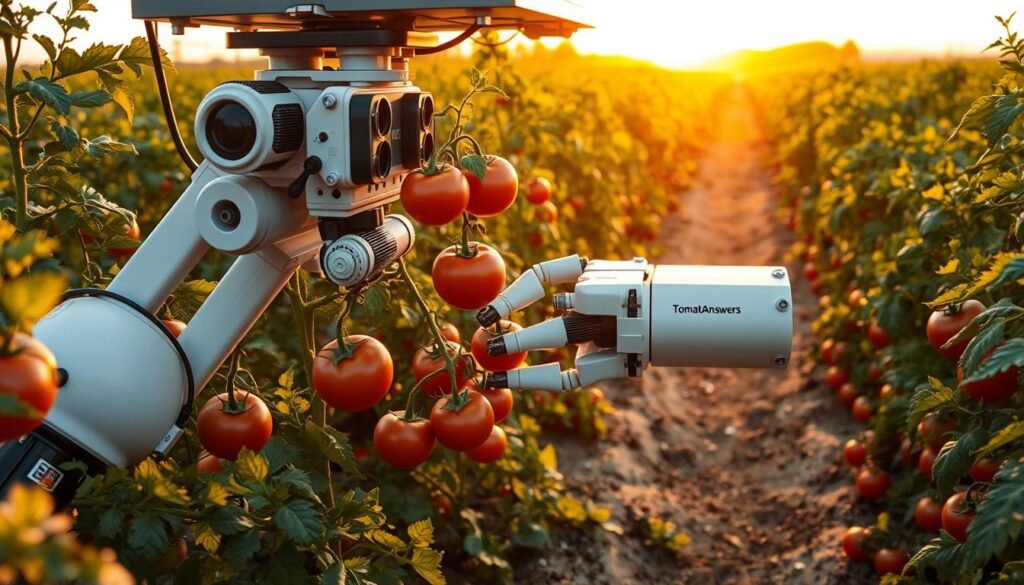
At the core of these advancements are sophisticated vision systems. These tools use deep learning to identify ripe produce with remarkable accuracy. For instance, systems like GIGAS can categorise fruit maturity into four stages, ensuring only the best crops are selected.
Advanced detection algorithms further enhance this process. They minimise damage to plants, maintaining the quality of the yield. This level of precision not only improves the harvest but also reduces the time required per collection compared to manual methods.
Boosting Efficiency and Tackling Labour Shortages
One of the most significant benefits of these systems is their ability to address the ongoing shortage of agricultural labour. By automating repetitive tasks, they reduce the reliance on human workers, allowing farms to operate more efficiently.
For example, experiments with autonomous systems have shown a success rate of 86.67%, with an average harvest time of just 32.46 seconds per truss. This level of efficiency is unmatched by traditional methods, making these tools indispensable for modern farming.
| Feature | Benefit |
|---|---|
| Vision systems | Accurate identification of ripe produce |
| Detection algorithms | Minimised damage to plants |
| Automation | Reduced labour dependency |
These advancements are just the beginning. As technology continues to evolve, even more sophisticated features are on the horizon, promising to further revolutionise the agricultural landscape.
Advanced Features in Tomato Harvesting Technology
The latest advancements in agricultural technology are setting new benchmarks for efficiency. These innovations are designed to streamline operations, reduce manual effort, and ensure the highest quality of produce. Let’s explore some of the standout features that make these systems indispensable for modern farms.

Automatic Lane Change and Obstacle Recognition
One of the most impressive features is the automatic lane change capability. This allows the system to navigate smoothly around obstacles, ensuring uninterrupted operation. Advanced image recognition plays a crucial role here, identifying potential disruptions and adjusting the path accordingly.
The fully automated process minimises downtime, allowing for continuous harvesting. This not only saves time but also reduces the risk of crop damage, ensuring that produce remains in pristine condition.
Self-Disinfecting Scissors and Safety Measures
Another groundbreaking innovation is the self-disinfecting cutting mechanism. This feature promotes plant health by preventing the spread of diseases. It also enhances operator safety, reducing the need for manual handling of tools.
Strict safety measures are built into the technology, ensuring that both crops and workers are protected. These advancements make the system not only efficient but also reliable and secure for long-term use.
Innovative Robotics and Crate Management Systems
The integration of advanced robotics in agriculture is reshaping how growers manage their operations. These systems are designed to handle tasks with precision, ensuring efficiency and reducing physical strain. One standout feature is the robotic arm, which gently manoeuvres to collect produce at the perfect angle.

For growers, these innovations simplify heavy lifting and crate management. The process of transferring full crates onto a trolley is seamless, allowing for rapid replacement. This not only speeds up operations but also ensures that even delicate produce like cherry varieties remain intact.
Seamless Crate Transfer and Replacement Processes
The system’s ability to automatically replace full crates is a game-changer. A specially designed trolley ensures smooth transitions, minimising downtime. This feature is particularly beneficial for large-scale operations, where efficiency is crucial.
Here are some key advantages:
- Reduced physical strain for workers.
- Improved operational speed and reliability.
- Enhanced handling of delicate produce.
These advancements in crate management not only boost productivity but also ensure that the entire process is streamlined. By mechanising repetitive tasks, growers can focus on other critical aspects of their operations.
Implementing Automated Harvest Solutions in Your Greenhouse
Greenhouse operations are evolving with the adoption of cutting-edge technology. Automated harvest solutions are transforming how growers manage their agriculture systems, offering efficiency and precision like never before. These innovations are designed to integrate seamlessly with existing setups, ensuring minimal disruption while maximising productivity.

Integration with Existing Agricultural Systems
Retrofitting your greenhouse with automated solutions is simpler than you might think. Most systems are designed to work alongside legacy infrastructure, requiring only minor adjustments. This compatibility ensures that your current system remains functional while enhancing its capabilities.
One of the standout benefits is the reduction in manual labour. By automating repetitive tasks, growers can focus on strategic aspects of their operations. This not only saves time but also optimises production schedules, ensuring a consistent output of high-quality product.
Cost savings are another significant advantage. Automated systems reduce labour expenses and minimise waste, leading to a healthier bottom line. Additionally, the precision of these solutions ensures that crops are handled with care, maintaining their quality from harvest to market.
For those considering a robotic harvesting system, the investment is a forward-thinking move. It not only addresses current challenges but also prepares your operation for future demands in modern agriculture.
A Glimpse into the Future of Robotic Harvesting
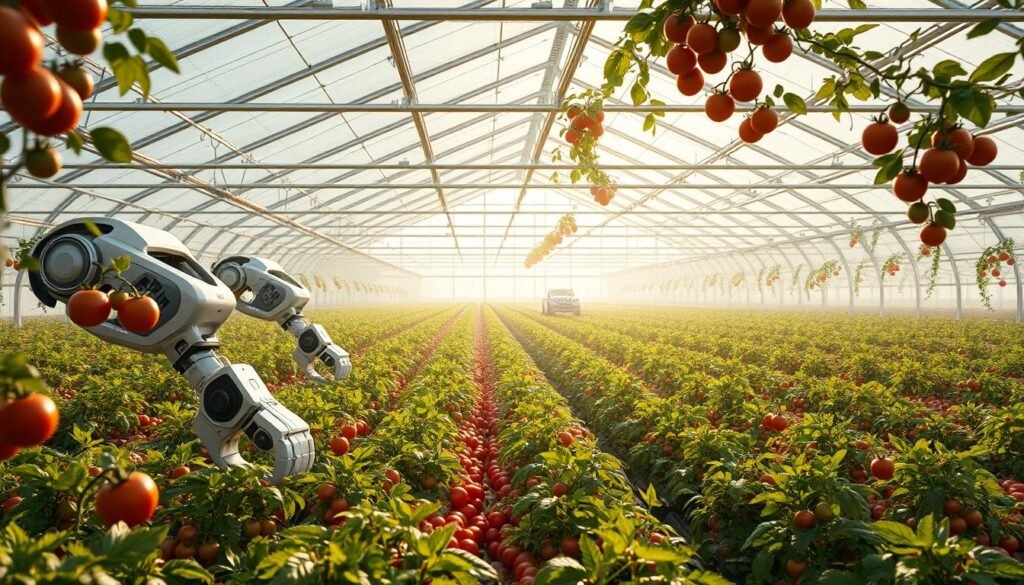
The agricultural landscape is on the brink of a technological revolution, with robotic harvesting leading the charge. As the demand for sustainable and efficient farming grows, innovations in this field are accelerating. From enhanced detection systems to smarter robotic arms, the future promises even greater precision and scalability.
Emerging Trends and Industry Insights
One of the most exciting trends is the integration of advanced image analytics. These systems are becoming smarter, allowing for more accurate identification of ripe produce. For example, improvements in change management are enabling smoother transitions between tasks, reducing downtime and boosting efficiency.
Another key development is the refinement of robotic arms. These tools are now more dexterous, capable of handling delicate crops without damage. This not only improves the quality of the harvest but also reduces waste, making the process more sustainable.
Ongoing Research and Development Advances
Universities and industry leaders are investing heavily in R&D to push the boundaries of what’s possible. Researchers at the University of Guelph, for instance, are exploring ways to enhance detection capabilities, ensuring that robots can adapt to varying crop conditions.
Innovations like these are not just theoretical. Companies like Nature Fresh Farms’ robotic solutions are already demonstrating the practical benefits of these advancements. Their systems are designed to handle large-scale operations, proving that these technologies are ready for real-world application.
As these technologies evolve, their potential for global scalability becomes clear. From small greenhouses to vast agricultural fields, robotic harvesting is set to transform the way we grow and collect food.
Conclusion
Advanced technology is transforming the way crops are managed, offering solutions that are faster, more efficient, and less labour-intensive. Systems like the GR-100 and Artemy showcase how innovation can significantly reduce time and costs while maintaining crop quality. These robotics solutions are designed to integrate seamlessly into greenhouse operations, ensuring smooth transitions and minimal disruption.
Features such as automatic lane changes, self-disinfecting tools, and flexible crate management set these systems apart. They not only enhance productivity but also address the growing shortageof skilled labour in agriculture. By automating repetitive tasks, growers can focus on strategic aspects of their operations, improving overall efficiency.
Ongoing research, like that at the University of Guelph, continues to push the boundaries of what’s possible. These advancements promise even greater precision and scalability in the future. Embracing these intelligent solutions now ensures your operations remain competitive and sustainable in a rapidly evolving industry.
For more insights into the latest advancements, explore this study on crop maturity recognition systems.
FAQ
How do automated tomato picking robots work?
These robots use advanced vision systems to detect ripe produce. They then employ robotic arms with precision tools to pick the fruit gently and place it into crates, ensuring minimal damage.
What are the benefits of using these robots in farming?
They significantly reduce labour costs, increase efficiency, and operate around the clock. This helps address labour shortages and ensures a consistent harvest quality.
Can these robots handle different types of tomatoes?
Yes, they are designed to work with various varieties, including cherry tomatoes. The system adapts to different sizes and shapes for a seamless process.
Are these robots safe to use in greenhouses?
Absolutely. They come with safety features like obstacle recognition and self-disinfecting scissors to prevent contamination and ensure smooth operation.
How do these robots manage crate handling?
They feature a crate management system that automatically transfers and replaces crates, reducing manual intervention and improving workflow efficiency.
Can they integrate with existing agricultural systems?
Yes, they are designed to integrate seamlessly with your current setup, making the transition to automation straightforward and hassle-free.
What advancements are expected in the future?
Ongoing research focuses on enhancing vision systems, improving speed, and expanding capabilities to handle more crops, paving the way for fully automated horticulture.
Source Links
- Advancements In Tomato-Picking Robots Using YOLOv5 Detection System
- The Economic Impacts of AI-Enabled Precision Agriculture and boosting Productivity and…
- "Within a large company, you want to automate as many things as possible"
- Frontiers | CTDA: An accurate and efficient cherry tomato detection algorithm in complex environments
- Advancements In Tomato-Picking Robots Using YOLOv5 Detection System
- robotics Articles, Stories & News | AgriTechTomorrow
- AHPPEBot: Autonomous Robot for Tomato Harvesting based on Phenotyping and Pose Estimation *Work done during an internship at Beijing AIForce Technology. This work is supported by the National Natural Science Foundation of China (No. 62371013), Beijing AIForce Technology, the Beijing Natural Science
- DENSO Harvesting Robots | DENSO
- Four Growers Secures $9M in Series A Round for AI-Powered Crop Harvesting Robots | Global AgInvesting
- Harvesting Robot
- Robot Tomato Farmers Could Help Solve Israel’s Agricultural Crisis – metomotion
- Inaho Inc: Robots Pioneering Agritech AI Revolution – Venture Kites
- Design of tomato picking robot detection and localization system based on deep learning neural networks algorithm of Yolov5 – Scientific Reports
- Classification of Tomato Harvest Timing Using an AI Camera and Analysis Based on Experimental Results
- AI-ML Applications in Agriculture and Food Processing
- Technological Advances in Smart and Sustainable Agriculture: The Role of Internet of Things, Artificial Intelligence, Big Data Analysis, Machine Learning & Deep Learning
- Luxury Maldives Resort Achieves Prestigious Green Globe Gold Certification
- Compliant Motion Planning Integrating Human Skill for Robotic Arm Collecting Tomato Bunch Based on Improved DDPG
- Transforming Pest Management with Artificial Intelligence Technologies: The Future of Crop Protection – Journal of Crop Health