Caribbean Recipes
The National Dish of Barbados
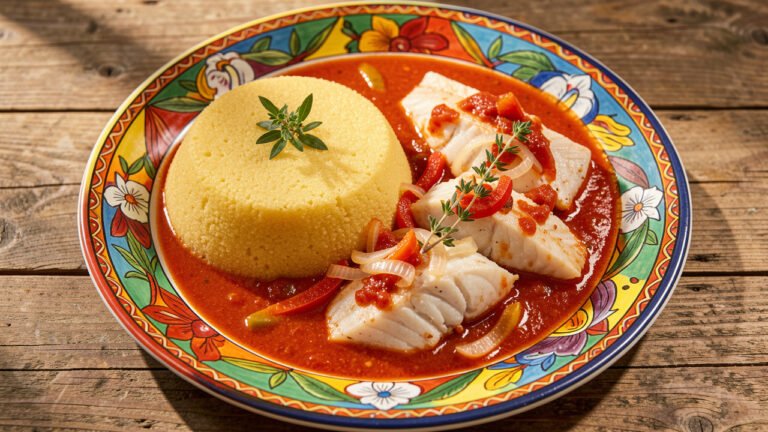
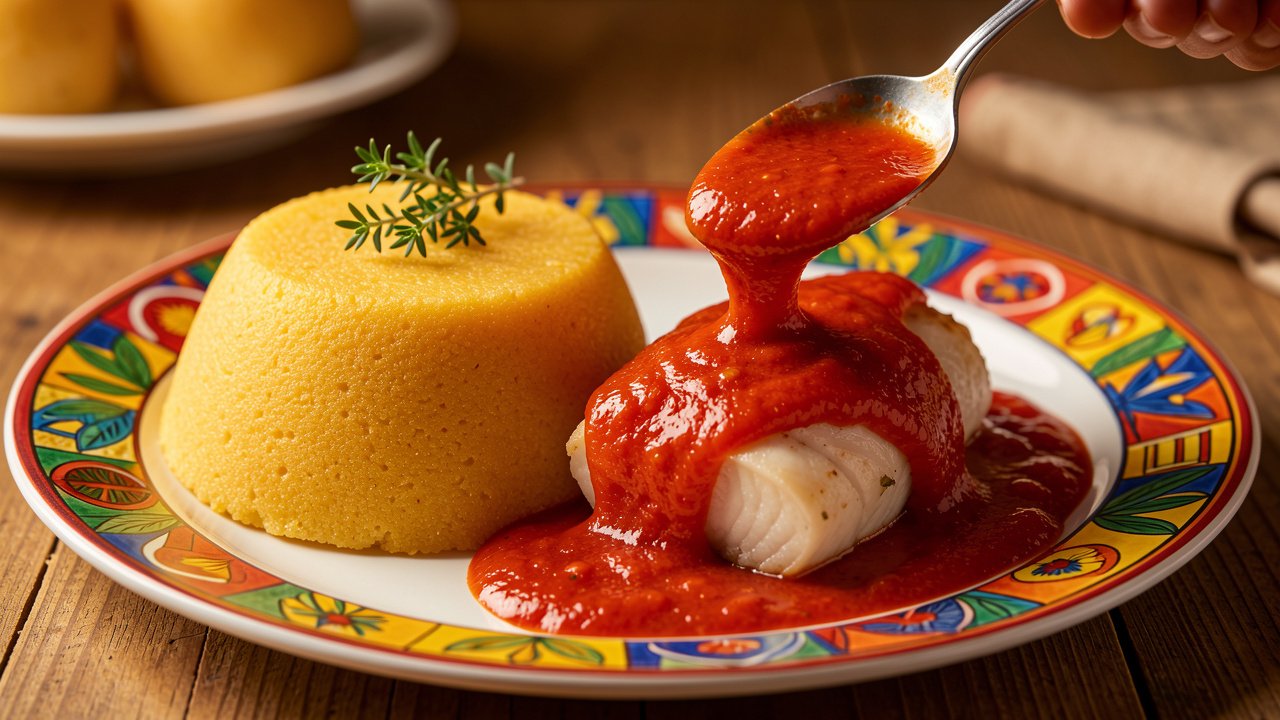
If you want to taste Barbados in one plate, this is it. A soft golden mound of cou-cou sits beside tender steamed fish, and a glossy red tomato gravy is spooned generously over both. It is humble, filling, and deeply satisfying, and every Bajan cook has their own small tweak to it.
The trick that took me a few tries to learn is that cou-cou is all about the stirring. Rush the cornmeal in and you get lumps; take your time and turn it steadily, and you get that signature smooth, almost polenta-like body. The okra does quiet but important work here, giving the cou-cou its silky texture and gentle bind.
Why This Cou-Cou and Fish Works
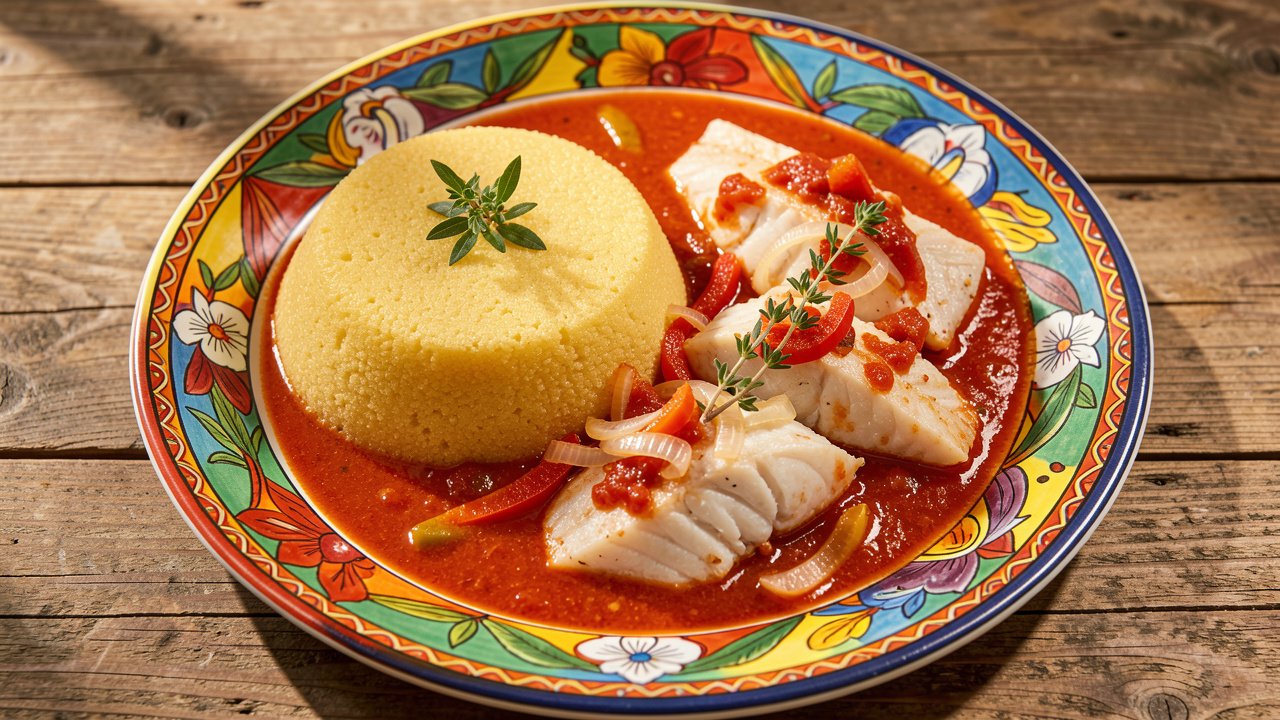
This dish works because each half plays a clear role. The cou-cou is mild, soft, and a little sweet from the cornmeal, so it is the perfect quiet base. The fish gravy is bright, savory, and full of tomato and green seasoning, so it carries all the punch. Spoon one over the other and you get balance in every bite.
The okra is the secret behind good cou-cou. As it simmers, it releases a natural silkiness that keeps the cornmeal smooth and easy to turn, and it stops the finished mound from feeling stiff or dry. Skip it and you have plain cornmeal porridge; include it and you have real Bajan cou-cou.
On the fish side, steaming rather than frying keeps the fillets moist and lets them soak up the gravy. A halal white fish like snapper or mahi holds its shape well, and a quick lime and green-seasoning marinade seasons it through before it hits the pot.
Best of all, the method is forgiving once you find the rhythm. Get the gravy simmering, then give the cou-cou your full attention for its few minutes of steady stirring, and both finish hot together.
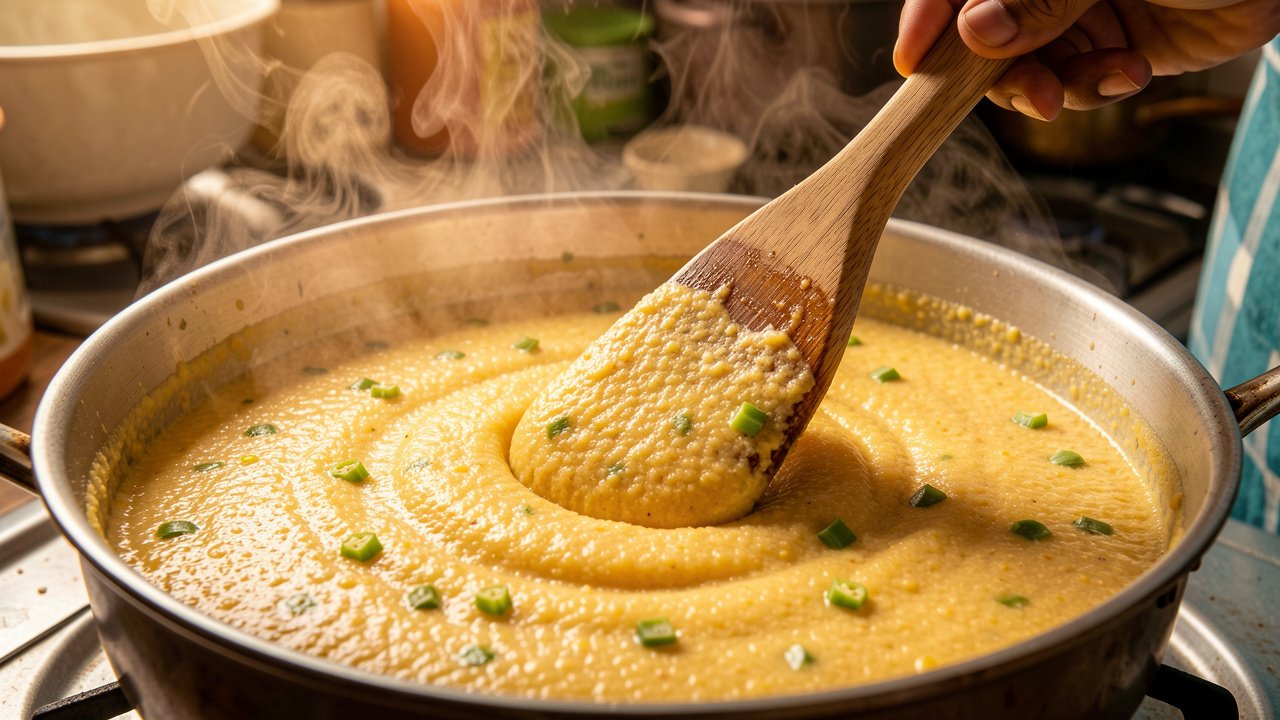
Pro observation: Cou-cou is done when it pulls cleanly away from the sides of the pot as you stir and holds a shape on the spoon. If it still slumps and sticks, it needs another minute or two of turning over low heat.
Ingredients
Kitchen Measurement Converter
Cornmeal and okra are easy to eyeball once you know the ratios. Use this quick converter to switch between cups, grams, and milliliters without leaving the recipe. Pick a category, enter a value, and the result updates instantly.
Ingredient Notes & Substitutions
Cornmeal
Use fine yellow cornmeal for a smooth cou-cou. Medium grind works too but gives a little more texture. Avoid coarse polenta grits, which stay gritty and take much longer to soften.
Okra
Fresh young okra is best; slice it thin so it melts into the cornmeal. Frozen sliced okra works well out of season. The okra is what makes cou-cou silky, so do not leave it out.
Halal Fish
Flying fish is traditional in Barbados, but any firm halal white fish such as snapper, mahi, or cod works beautifully. Choose fillets that hold together so they stay intact in the gravy.
Bajan Green Seasoning
This herb blend of thyme, parsley, scallion, garlic, and sweet pepper is the soul of the gravy. Use store-bought or blend your own. A mix of fresh thyme and chopped scallion is a quick stand-in.
Equipment
- Heavy medium pot for cou-cou
- Cou-cou stick or sturdy wooden spoon
- Wide lidded pan for the fish
- Sharp knife and board
- Measuring cups and spoons
- Mixing bowl for the fish
Before You Start
1. Season the fish first. Rub the fillets with lime juice and a spoon of green seasoning and let them sit while you cook, so they take on flavor before steaming.
2. Pre-mix the cornmeal. Whisk the cornmeal with about one cup of the measured water into a smooth, lump-free slurry before it goes into the pot. This is the single best way to avoid lumpy cou-cou.
3. Have your stick ready. Cou-cou needs constant turning, so keep the cou-cou stick or a strong wooden spoon in hand once the cornmeal goes in.
Step-by-Step Instructions
Season the Fish
Rinse the fish fillets, pat them dry, and rub them all over with the lime juice and one tablespoon of the green seasoning, plus a little salt and black pepper. Set them aside to marinate for at least 15 minutes while you start the gravy and the cou-cou water.
Simmer the Okra
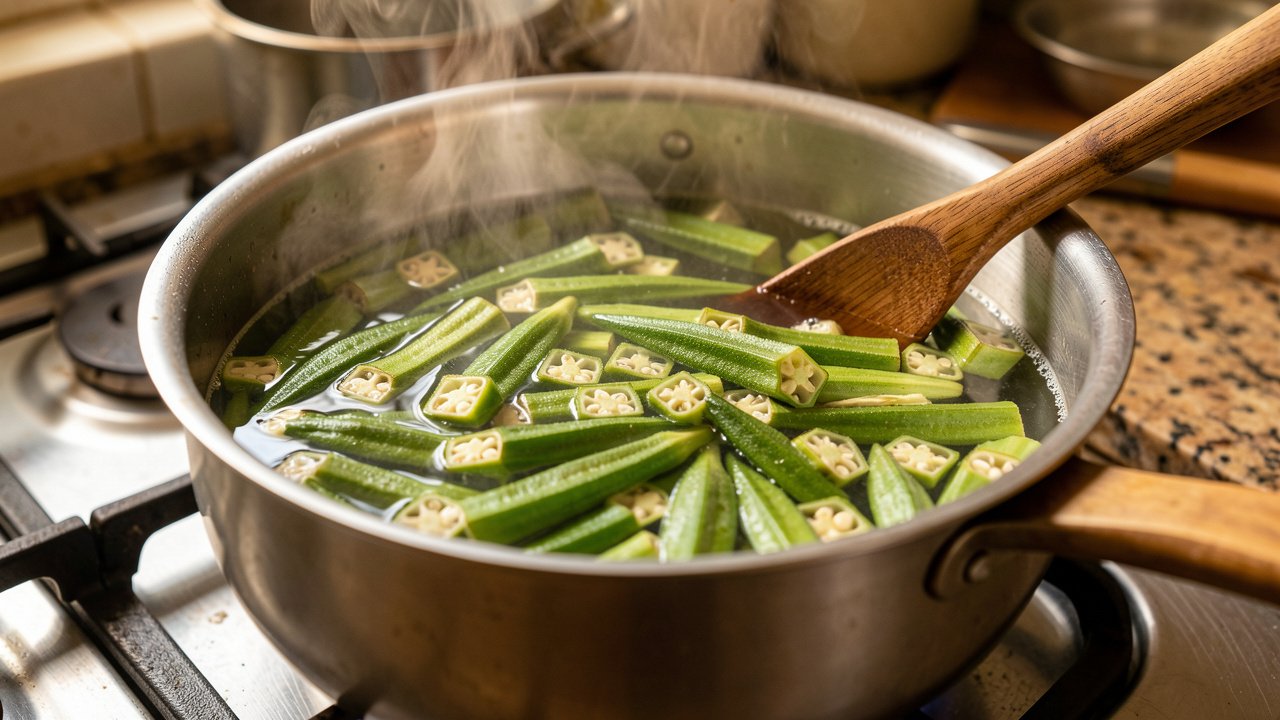
Bring the 4 cups of water to a boil in a heavy pot with the teaspoon of salt. Add the sliced okra and simmer for about 8 to 10 minutes until very tender and slightly slippery. Scoop out and reserve a cup of the okra water, then keep the pot on low heat.
Build the Tomato Gravy
In a wide pan, heat the cooking oil over medium heat and soften the sliced onion for 3 to 4 minutes. Stir in the garlic, sweet pepper, and fresh thyme and cook 1 minute more. Add the chopped tomatoes, tomato paste, and the remaining green seasoning, then cook 6 to 8 minutes until the tomatoes collapse into a thick, glossy sauce.
Turn the Cou-Cou
Whisk the cornmeal with one cup of cold water into a smooth slurry, then pour it into the pot of okra and reserved water over low heat. Stir constantly with the cou-cou stick, adding splashes of the reserved okra water as needed, for about 8 to 10 minutes until the mixture is thick, smooth, and pulls away from the sides. Beat in the butter, then cover off the heat.
Steam the Fish
Nestle the seasoned fish fillets into the simmering tomato gravy and pour in the cup of water or fish broth. Cover and steam gently for 8 to 10 minutes, spooning gravy over the fish once or twice, until the fillets are opaque and flake easily with a fork. Do not stir hard, or the fish will break apart.
Shape and Serve
Wet a small bowl with water, pack in a portion of hot cou-cou, then turn it out onto each plate as a smooth mound. Lay a piece of fish alongside and spoon plenty of the tomato gravy over both. Serve right away while everything is hot.
Chef’s Tips From Real Kitchen Testing
Always add the cornmeal as a wet slurry, never dry from the bag. A smooth slurry poured into the hot okra water is the surest way to keep cou-cou lump-free.
Keep the heat low and keep turning. Cou-cou scorches fast on high heat, and steady stirring is what gives it that smooth, glossy body.
Let the fish steam undisturbed. Spoon gravy over it instead of stirring, so the fillets stay whole and tender rather than shredding into the sauce.
Recipe Variations
Serving Suggestions
- Extra tomato gravy spooned over the top
- Steamed callaloo or sauteed greens
- A wedge of fresh lime for squeezing
- Sliced avocado when in season
Nutrition Facts
| Nutrient | Amount per serving |
|---|---|
| Calories | 430 |
| Protein | 34 g |
| Carbohydrates | 38 g |
| Fat | 15 g |
| Saturated Fat | 5 g |
| Fiber | 4 g |
| Sugar | 6 g |
| Sodium | 720 mg |
Values are estimates per serving and vary with the exact fish, cornmeal, and brands you use.
Make-Ahead Tips
The tomato gravy is very make-ahead friendly and even tastes better the next day, so cook it fully, cool it, and keep it in the fridge for a day or two. Cou-cou is best made fresh because it firms up as it cools. If you must make it ahead, reheat it with a splash of water and beat it smooth again over low heat.
Storage, Freezing & Reheating
Common Mistakes to Avoid
Troubleshooting
Cou-cou came out lumpy? The cornmeal went in too dry or too fast. Beat hard with the stick and add a splash of hot water; next time start from a smooth slurry.
Cou-cou too stiff or dry? It needs more liquid. Work in reserved okra water a little at a time over low heat until it softens and turns smooth again.
Gravy tastes flat? It usually wants more salt and a little more green seasoning or thyme. A squeeze of lime at the end also lifts the whole dish.
A Note on Barbadian Cooking
Cou-cou carries deep West African roots, arriving in the Caribbean through the same cornmeal-and-okra tradition found in dishes like fungi and coo-coo across the islands. In Barbados it became a Friday and Saturday staple, and pairing it with fish grew into the national dish. The tool that makes it possible is the cou-cou stick, a flat wooden paddle used to turn the thickening cornmeal without lumps. Bajan seasoning, a fresh green herb blend, gives the fish gravy its unmistakable island flavor. For more tomato-forward ideas, browse our full collection of tomato recipes or add a bright side of fresh tomato salsa to round out the plate.
Frequently Asked Questions
More Tomato Recipes to Try
Last updated: September 23, 2026