Cypriot Recipes
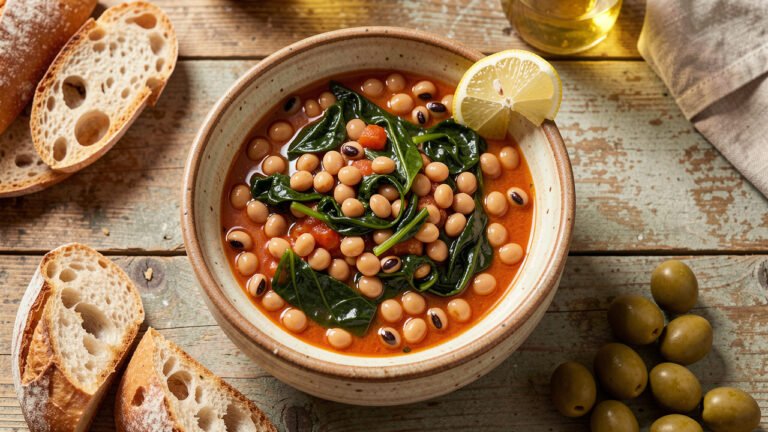
Black-Eyed Peas with Chard and Tomato
This is the kind of dish that lives in the back pocket of nearly every Cypriot cook: humble, cheap, and deeply satisfying. Black-eyed peas go soft and creamy, the chard melts down into the pot, and the tomato and olive oil pull everything together into something that tastes far richer than its short ingredient list suggests. The lemon at the finish is what makes it sing.
I learned the hard way that timing matters here. The first time I made it, I salted the peas too early and squeezed the lemon in while they were still simmering, and they stubbornly stayed firm for another half hour. Add both at the right moment and the peas turn silky and the flavor lifts.
Why This Louvi me Lahana Works
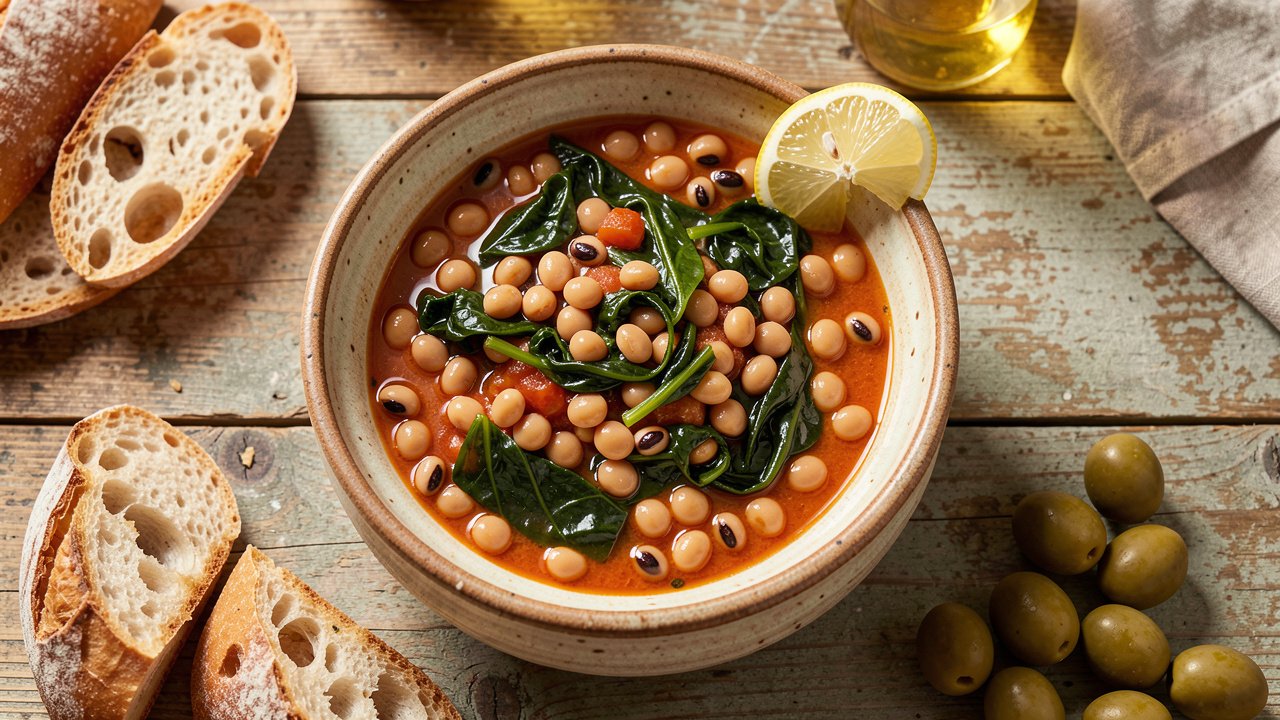
Cypriot cooking has a genius for turning a few pantry staples into a full, nourishing meal, and louvi is a perfect example. Black-eyed peas do not need overnight soaking, so this comes together on a weeknight without much forward planning. They cook up creamy on the inside while holding their shape, which gives the dish real body.
The greens are the second half of the story. Swiss chard wilts down into the pot and lends an earthy, mineral note that keeps the whole thing from tasting flat. The tomato brings gentle acidity and color, while a generous pour of olive oil carries all of it and gives the sauce its signature Mediterranean gloss.
What ties it together is the finish. A squeeze of lemon added off the heat, along with the salt held back until the peas are soft, wakes everything up. That last-minute brightness is not a garnish; it is the difference between a pleasant bowl of peas and the dish Cypriots come back to again and again.
It is also endlessly forgiving and thrifty. You can stretch it with a handful of rice, swap the chard for spinach, or lean into extra tomato for a saucier version. Once you know the rhythm, you can build a warm, wholesome dinner out of whatever greens are in the fridge.
Pro observation: The peas are ready for salt and lemon when you can crush one against the side of the pot with almost no pressure. Salting before that point sets the skins and keeps them firm.
Ingredients
Kitchen Measurement Converter
Quickly convert between common cooking measurements without leaving the recipe. Pick a category, enter a value, and the result updates instantly.
Ingredient Notes & Substitutions
Black-Eyed Peas
Dried black-eyed peas cook quickly and do not need overnight soaking. If you are short on time, two 15-ounce cans, drained and rinsed, work well; add them near the end since they are already tender.
Swiss Chard
Chard is traditional, and both leaves and tender stems go in. Spinach is the easiest swap, though it wilts faster, so add it later. Kale also works if you give it a few extra minutes.
Olive Oil
Use a good extra virgin olive oil and do not be shy with it, since it carries the flavor of the whole dish. Cypriots often add an extra drizzle raw over each bowl at the table.
Tomatoes and Lemon
Grated ripe tomatoes give a fresh, light sauce; a small can of chopped tomatoes works out of season. Fresh lemon juice at the end is essential and cannot really be swapped for anything else.
Equipment
- Large pot or Dutch oven
- Colander or sieve
- Wooden spoon
- Sharp knife and board
- Box grater
- Citrus juicer or fork
Before You Start
1. Rinse and sort the peas. Tip the dried black-eyed peas into a colander, rinse, and pick out any small stones or shriveled ones before they go in the pot.
2. Wash the chard well. Greens often hide grit. Rinse the leaves and stems thoroughly, then chop the stems small and the leaves into wide ribbons.
3. Hold the salt and lemon. Keep both aside until the peas are fully tender. Adding them early is the most common reason the beans stay hard.
Step-by-Step Instructions
Parboil the Black-Eyed Peas
Rinse the black-eyed peas and add them to a large pot with plenty of unsalted water. Bring to a boil, cook for about 5 minutes, then drain and discard that first water. This quick blanch softens their skins, keeps the dish from foaming, and gives you a cleaner, gentler flavor.
Build the Olive Oil and Onion Base
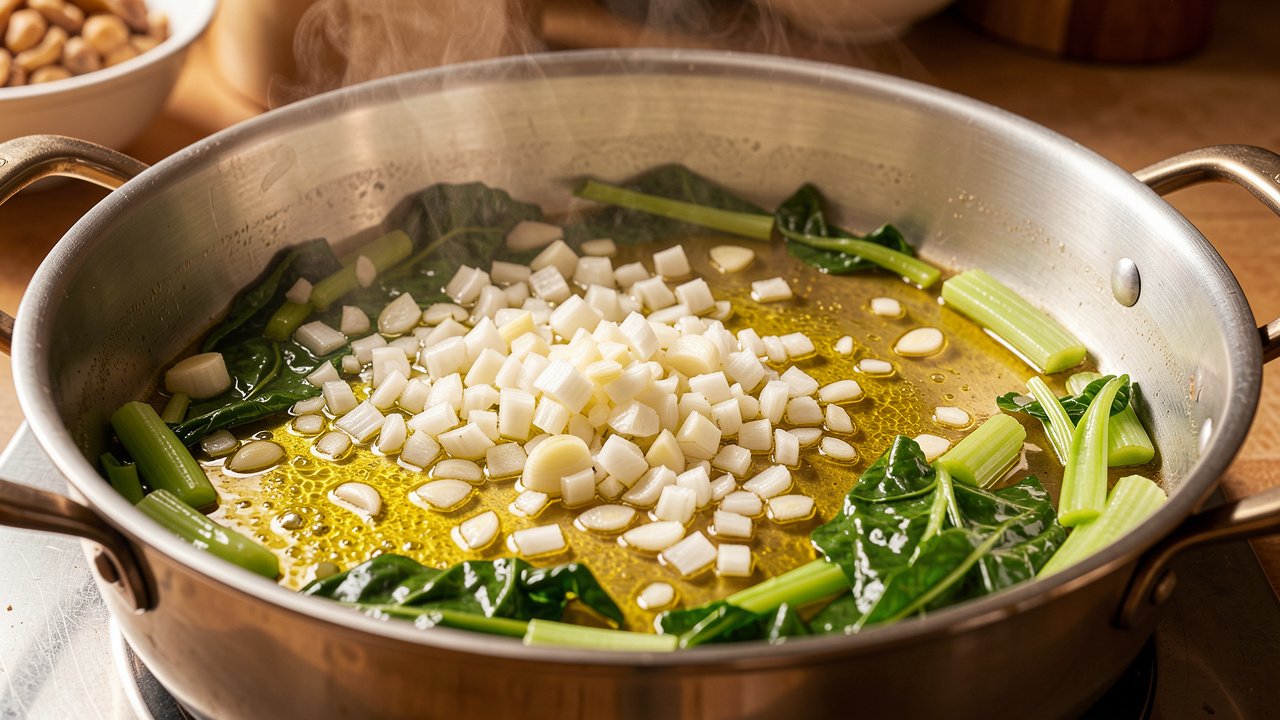
Wipe out the pot and warm the olive oil over medium heat. Add the chopped onion and cook 5 to 6 minutes until soft and translucent, then stir in the sliced garlic and the chard stems and cook another 2 minutes until fragrant. This slow start in generous oil is the flavor foundation of the whole dish.
Add Tomato and Simmer the Peas
Stir in the grated tomatoes and the tomato paste and let them cook down for 2 to 3 minutes until slightly thickened and darker in color. Return the drained peas to the pot with the bay leaf and the water, bring to a boil, then lower to a steady simmer. Cook uncovered, or partly covered, for 30 to 35 minutes until the peas are tender.
Wilt in the Chard
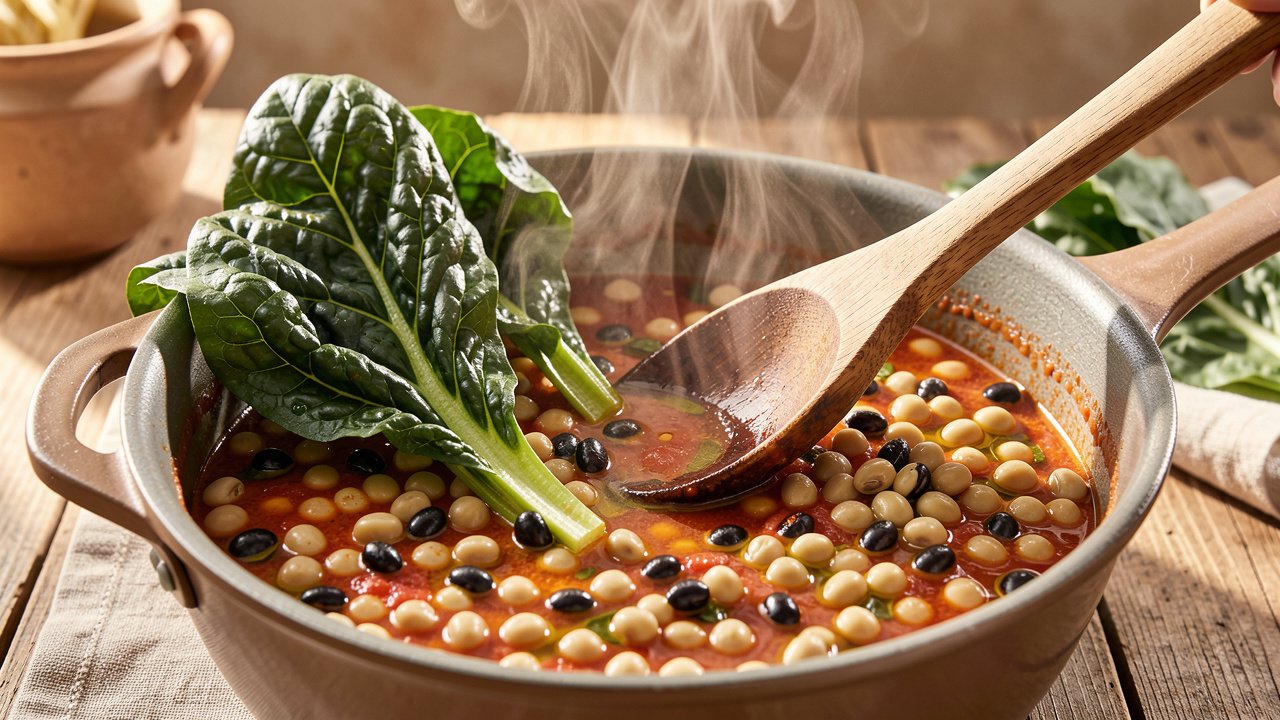
When the peas are nearly soft, stir in the chard leaves in handfuls, letting each batch wilt down before adding the next. Simmer 5 to 7 minutes more until the greens are silky and the liquid has reduced into a light, glossy sauce that just coats the peas. Add a splash of water if it gets too dry.
Season at the End
Only now, once the peas crush easily, stir in the salt, black pepper, and the optional pinch of sugar if the tomatoes taste sharp. Taste and adjust. Seasoning at this stage keeps the beans creamy rather than firm, and lets you judge the balance with the greens already in the pot.
Finish with Lemon and Rest
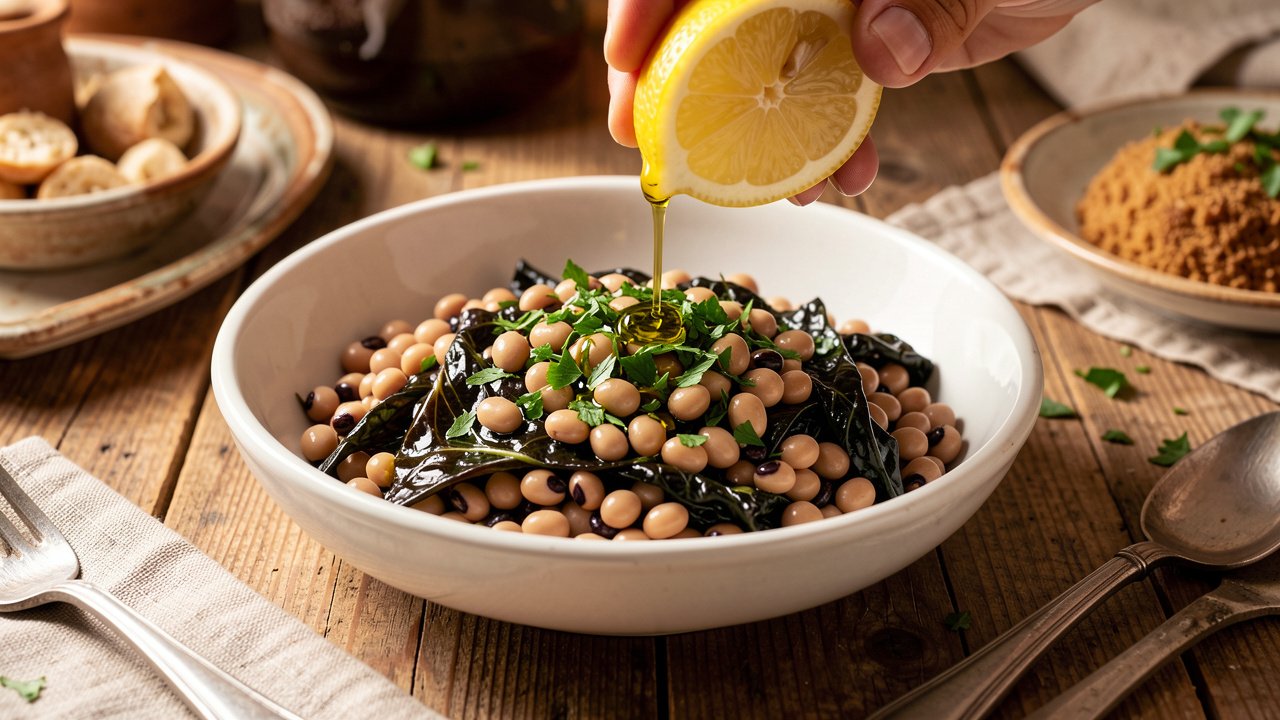
Take the pot off the heat and stir in the fresh lemon juice and most of the chopped parsley. Let the louvi rest for 10 minutes so the flavors settle and the sauce thickens slightly. Serve warm or at room temperature with a final drizzle of olive oil, a scatter of parsley, and lemon wedges on the side.
Chef’s Tips From Real Kitchen Testing
Hold the salt until the peas are soft. Salt firms up the skins early on and can leave the beans stubborn no matter how long they cook.
Add the lemon off the heat. Boiling it dulls the fresh, bright flavor, and cooking it into the pot can make the peas taste tight and chalky.
Be generous with olive oil, and save a little to pour over raw at the table. That final drizzle is a very Cypriot touch and lifts the whole bowl.
Recipe Variations
Serving Suggestions
- Crusty village bread to mop the sauce
- A bowl of cracked green olives
- Extra lemon wedges and a raw drizzle of olive oil
- A wedge of feta and sliced cucumber on the side
Nutrition Facts
| Nutrient | Amount per serving |
|---|---|
| Calories | 250 |
| Protein | 9 g |
| Carbohydrates | 26 g |
| Fat | 13 g |
| Saturated Fat | 2 g |
| Fiber | 8 g |
| Sugar | 4 g |
| Sodium | 410 mg |
Values are estimates per serving and vary with the exact ingredients and brands you use.
Make-Ahead Tips
Louvi is a natural make-ahead dish, and many Cypriots would tell you it is even better the next day. Cook it a day in advance, cool, and refrigerate. The flavors deepen overnight and the sauce sets into the peas. Reheat gently, loosen with a splash of water if needed, and add a fresh squeeze of lemon and a drizzle of olive oil just before serving to bring back the brightness.
Storage, Freezing & Reheating
Common Mistakes to Avoid
Troubleshooting
Peas still firm? They likely met salt or lemon too soon, or the batch was old. Keep simmering in plain water and only season once they are tender.
Dish too watery? Simmer uncovered to reduce, or mash a spoonful of peas against the side of the pot to thicken the sauce naturally.
Tastes flat? It almost always needs more lemon, a little more salt, and a raw drizzle of good olive oil to wake it up.
A Note on Cypriot Cooking
Louvi me lahana sits right at the heart of everyday Cypriot food: unfussy, plant-forward, and built around what the garden and pantry offer. Dishes like this, known broadly as ladera, or foods cooked in olive oil, are the backbone of home cooking across the island, especially during fasting periods and warm months when lighter, room-temperature meals are welcome. Olive oil and lemon are the twin signatures, and black-eyed peas turn up again and again across the eastern Mediterranean for their quick cooking and gentle, creamy texture. If you enjoy simple, tomato-brightened bowls like this, our hearty tomato lentil soup shares the same wholesome, everyday spirit, and you will find plenty more ideas in our full collection of tomato recipes.
Frequently Asked Questions
More Tomato Recipes to Try
Last updated: September 23, 2026