Fijian Recipes
Fresh Coconut-Lime Cured Fish Salad
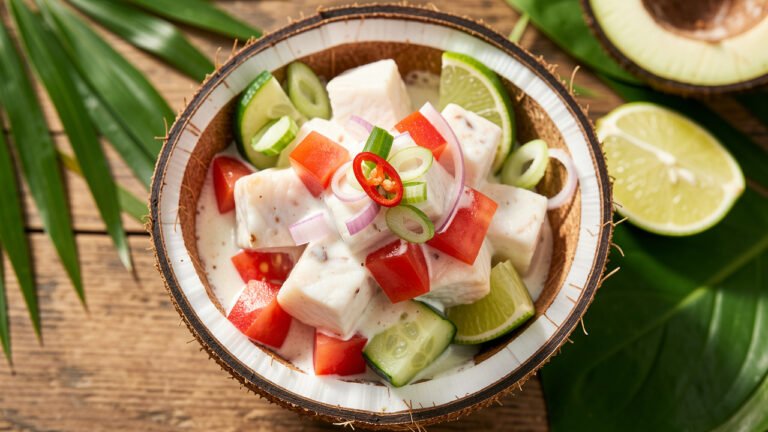
Kokoda tastes like the tropics in a bowl: cool, bright, creamy, and clean. The lime and lemon firm the fish and give it a citrus snap, the coconut cream rounds everything into silk, and the tomato, cucumber, and red onion keep every bite fresh and crunchy. It is the dish Fijians reach for on a hot day, and once you taste it you understand why.
What surprised me most the first time I made it was how little “cooking” is involved and how much the details matter instead. Fresh fish and a firm, watchful hand on the citrus are the whole game. Get those right and the rest is just chopping and folding.
Why This Kokoda Works
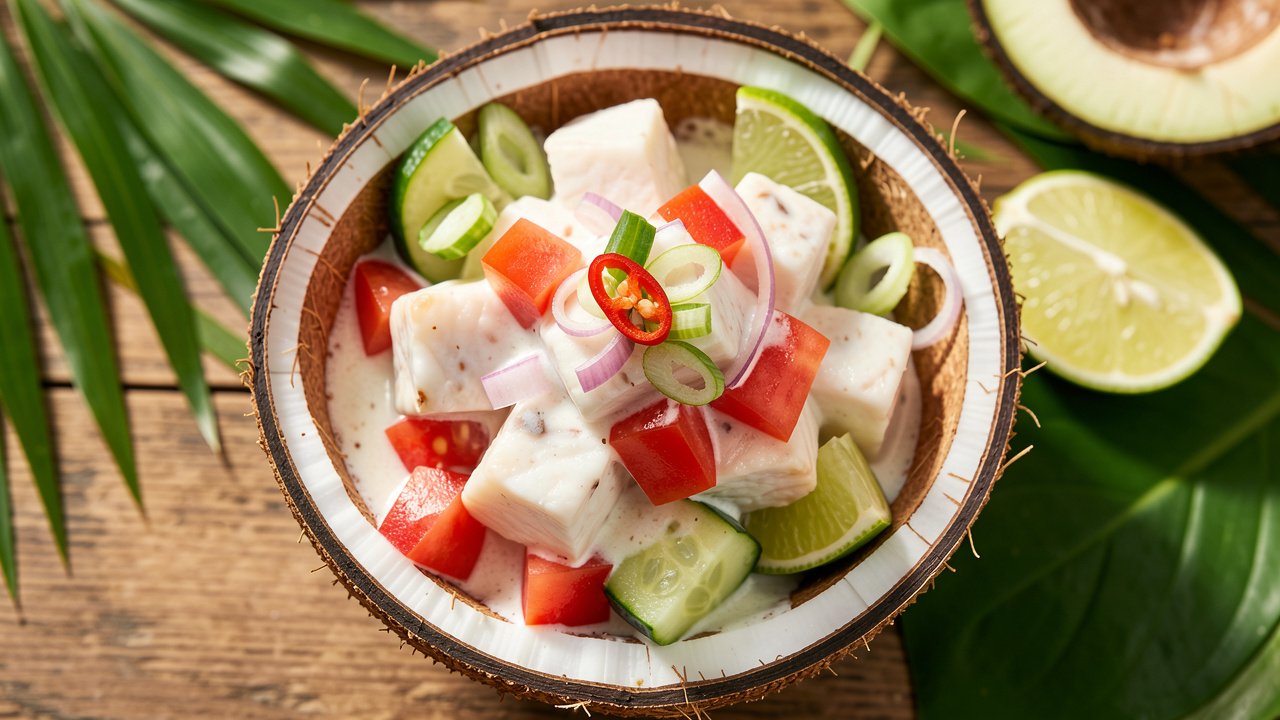
Kokoda succeeds on balance rather than technique. There is no heat to hide behind, so each element has to earn its place: bright citrus, rich coconut, sweet-tart tomato, cool cucumber, and a whisper of chili. When they are in tune, the bowl tastes clean and layered at the same time.
The single most important choice is the fish. Because acid, not fire, firms the flesh, you want fish so fresh it smells of nothing but clean sea. Firm white varieties like mahi-mahi or snapper hold their shape as the citrus works, staying tender instead of turning to mush.
The second secret is timing the cure. Fresh lime and lemon juice turn the fish opaque and pleasantly firm in under an hour. Leave it too long and the acid keeps going, tightening the flesh until it feels chalky and dry. You are watching for a change in color and texture, not a clock alone.
Coconut cream is what lifts kokoda from a simple ceviche-style salad into something distinctly Pacific. Folded in at the end, it softens the citrus edge, coats every cube, and carries the aromatics of chili and spring onion across the whole dish. Draining the fish well before it goes in keeps that coconut sauce lush instead of watery.
Pro observation: The fish is ready when a cube looks opaque all the way through with no glassy center, and it feels firm but still springs back when pressed. That is your cue to drain and dress, not a minute later.
Ingredients
Kitchen Measurement Converter
Quickly convert between common cooking measurements without leaving the recipe. Pick a category, enter a value, and the result updates instantly.
Ingredient Notes & Substitutions
The Fish
Use very fresh, firm white fish such as mahi-mahi, snapper, or walu. Sushi-grade fish from a trusted fishmonger is ideal because it is handled for raw eating. If in doubt about freshness, cook the fish instead.
Citrus
Fresh lime is traditional, and a little lemon rounds out the acidity. Always squeeze it fresh, since bottled juice tastes flat and its acidity is less reliable for curing the fish evenly.
Coconut Cream
Thick coconut cream gives the richest result. Full-fat coconut milk works too but is looser. Chill the can first, then scoop the firm cream from the top for extra body.
Tomato and Vegetables
Ripe, firm tomatoes add sweet-tart color and juice. Seed the tomatoes and cucumber so the finished bowl stays creamy rather than watery, and dice everything small for balanced bites.
Equipment
- Sharp knife
- Cutting board
- Glass or ceramic bowl
- Fine sieve or colander
- Citrus juicer
- Serving coconut shells or bowls
Before You Start
1. Buy the fish the same day. Kokoda is only as good as its fish. Choose the freshest firm white fish you can, keep it on ice on the way home, and use it right away.
2. Chill everything. Cold bowls, cold coconut cream, and a cold refrigerator keep the fish safe while it cures. Never leave it out at room temperature.
3. Use non-reactive bowls. Glass or ceramic will not react with the acid. Metal bowls can leave a tinny taste in the citrus marinade.
Step-by-Step Instructions
Cube the Fresh Fish
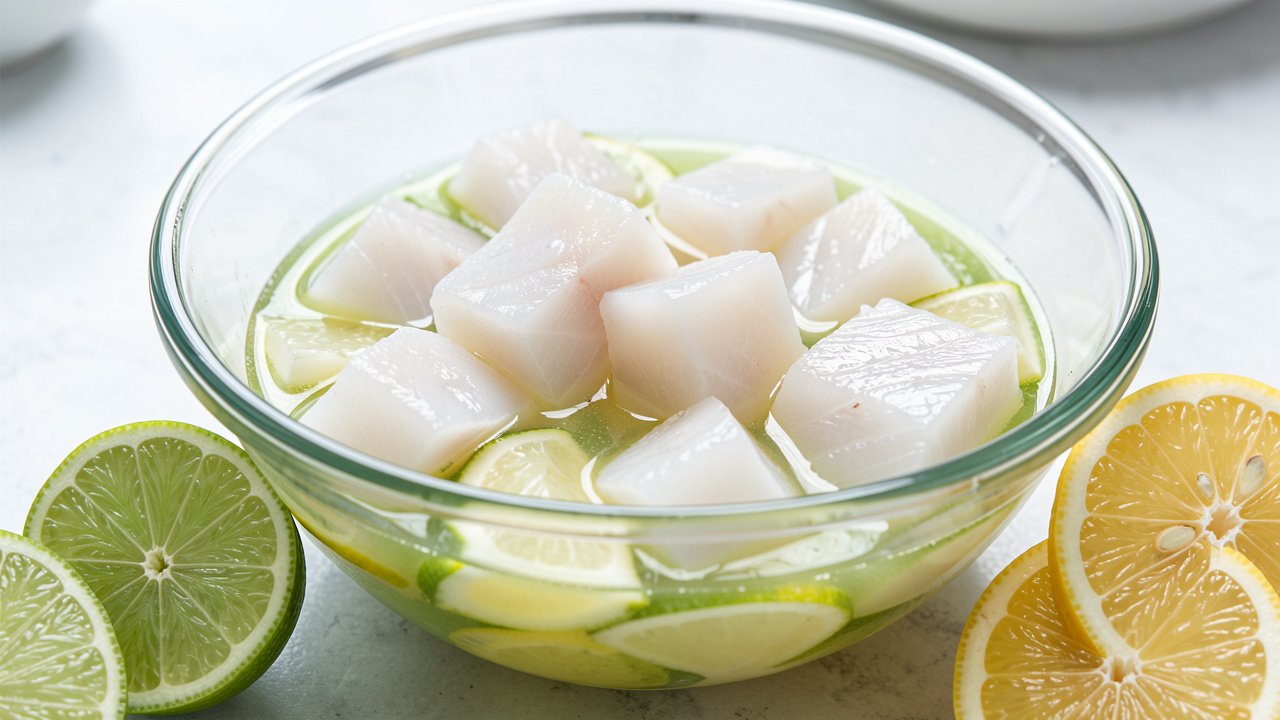
Pat the fish dry and check that it looks glossy and smells clean. Trim away any skin, bones, or dark bloodline, then cut the fillets into even half-inch cubes so they cure at the same rate. Drop the cubes into a chilled glass or ceramic bowl.
Cure in Lime and Lemon
Pour the fresh lime and lemon juice over the fish until the cubes are fully submerged. Stir gently, cover, and refrigerate for 30 to 45 minutes. Stir once halfway so every side meets the acid. The fish is ready when it turns opaque and firm all the way through, with no glassy center.
Drain the Fish Well
Tip the cured fish into a fine sieve and let the citrus juice drain away completely, pressing very gently. Discard the spent marinade. Draining well is what keeps the finished kokoda creamy instead of thin and watery, so give it a full minute or two.
Fold in Coconut Cream and Vegetables
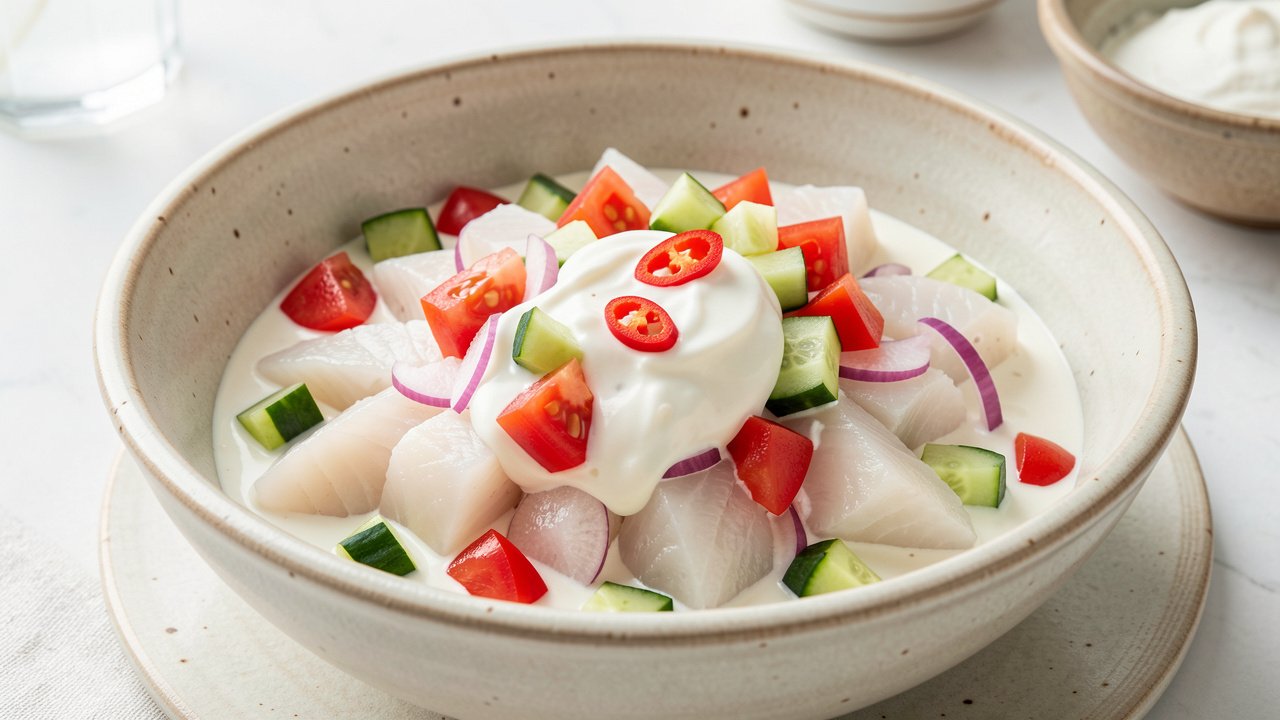
Return the drained fish to a clean chilled bowl. Add the diced tomato, cucumber, red onion, minced chili, and spring onion, then pour over the coconut cream. Fold everything together gently so the cubes stay intact and each one gets a coat of coconut and a scatter of vegetables.
Season and Chill
Season with sea salt and black pepper, then taste and adjust. Cover and return the bowl to the refrigerator for at least 15 minutes so the flavors settle and the dish is thoroughly cold. Kokoda should always be served well chilled, never lukewarm.
Garnish and Serve
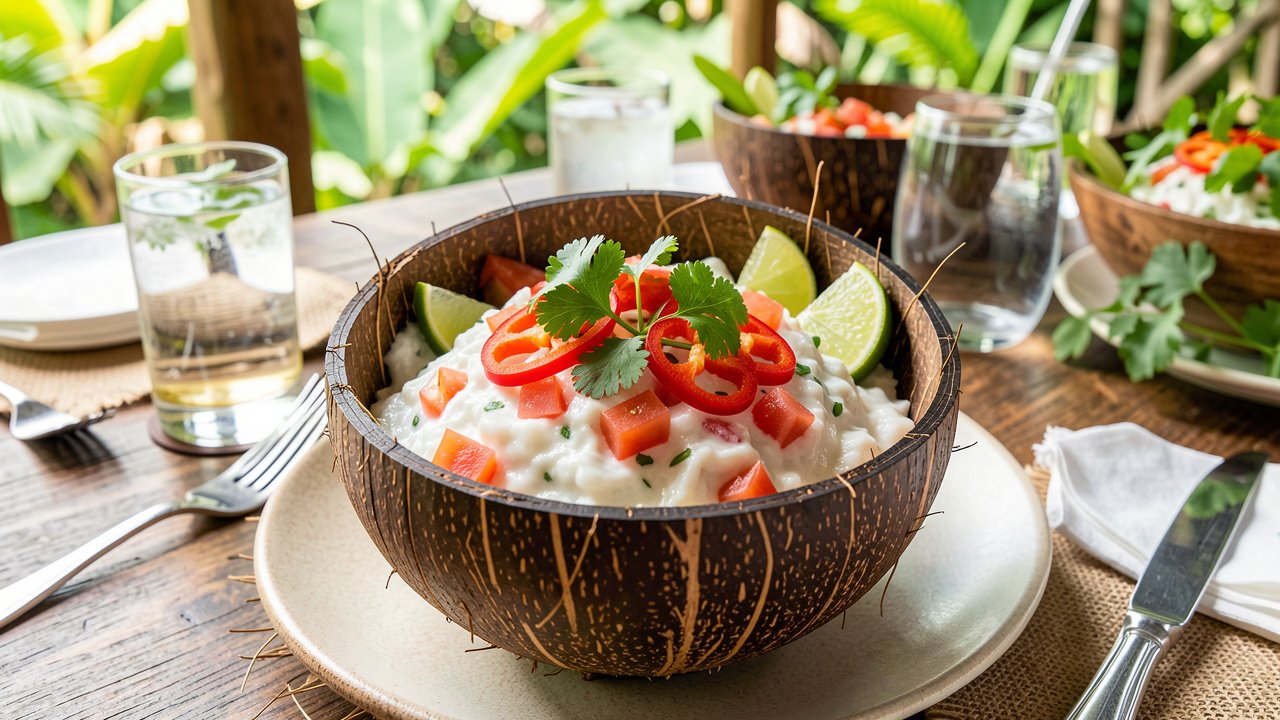
Spoon the kokoda into chilled coconut shells or small bowls. Scatter the chopped fresh coriander over the top and add lime wedges and an extra ring of chili for those who like more heat. Serve straight away while it is cold and bright.
Chef’s Tips From Real Kitchen Testing
Buy fish the same day you make kokoda and keep it iced. Freshness is the whole recipe, and no seasoning can rescue fish that is even slightly past its best.
Watch the cure by eye. Pull the fish the moment it turns opaque and firm; a few extra minutes in the acid can tip it from tender to tough and chalky.
Seed and drain everything. Draining the fish and seeding the tomato and cucumber are what keep the coconut sauce thick and glossy rather than pooling with liquid.
Recipe Variations
Serving Suggestions
- Chilled in a coconut shell as a starter
- Over steamed rice for a light main
- With cassava, taro, or breadfruit on the side
- Extra lime wedges and fresh coriander to finish
Nutrition Facts
| Nutrient | Amount per serving |
|---|---|
| Calories | 290 |
| Protein | 28 g |
| Carbohydrates | 9 g |
| Fat | 17 g |
| Saturated Fat | 13 g |
| Fiber | 2 g |
| Sugar | 5 g |
| Sodium | 560 mg |
Values are estimates per serving and vary with the exact ingredients and brands you use.
Make-Ahead Tips
Kokoda is best made close to serving, but you can get ahead on the parts that keep. Dice the tomato, cucumber, red onion, and chili a few hours early and store them cold and covered. You can even cure the fish and drain it, then hold it chilled. Fold in the coconut cream only in the last 30 minutes so the dish stays fresh, creamy, and at its brightest.
Storage & Food-Safety Window
Common Mistakes to Avoid
Troubleshooting
Fish still glassy in the middle? The cubes were too big or the marinating time too short. Cut smaller next time, and give it a few more minutes until fully opaque.
Texture gone tough and chalky? It cured too long. Pull the fish as soon as it turns opaque and firm, then drain and dress right away.
Bowl looks watery? Drain the fish more thoroughly and seed the tomato and cucumber. Add a little extra thick coconut cream to bring the sauce back together.
A Note on Fijian Cooking
Fijian food is built around the sea, the coconut, and the earth oven. Coconut in every form, from grated flesh to pressed cream, threads through savory and sweet dishes alike, and acid-cured fish salads appear across the Pacific under many names, from Samoa to Tahiti. Kokoda is Fiji’s own version, prized for how it turns the day’s catch into something cool and celebratory without a flame.
The counterpoint to that freshness is the lovo, a traditional feast where meat, fish, and root vegetables are wrapped in leaves and slow-cooked over hot stones buried in the ground. A Fijian table often sets the smoky richness of the lovo beside the bright, citrusy lift of kokoda, a pairing of fire and freshness. If you love that same fresh, tangy tomato energy, our fresh tomato salsa plays in a similar key.
Frequently Asked Questions
More Tomato Recipes to Try
Last updated: September 23, 2026