Ecuadorian Recipes
Ecuador’s Beloved Fish and Tomato Soup
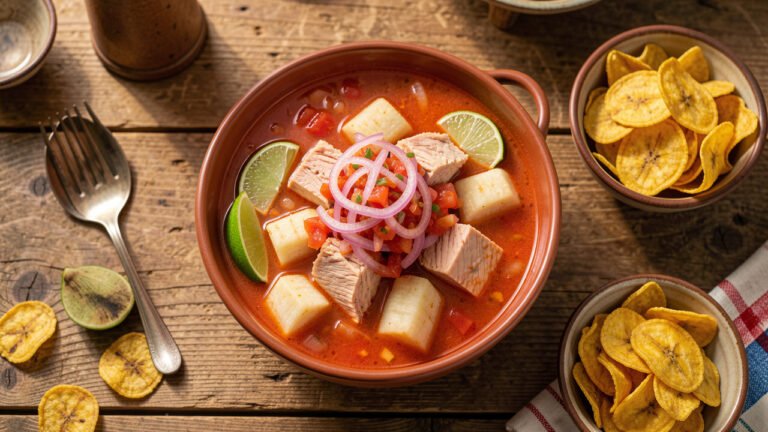
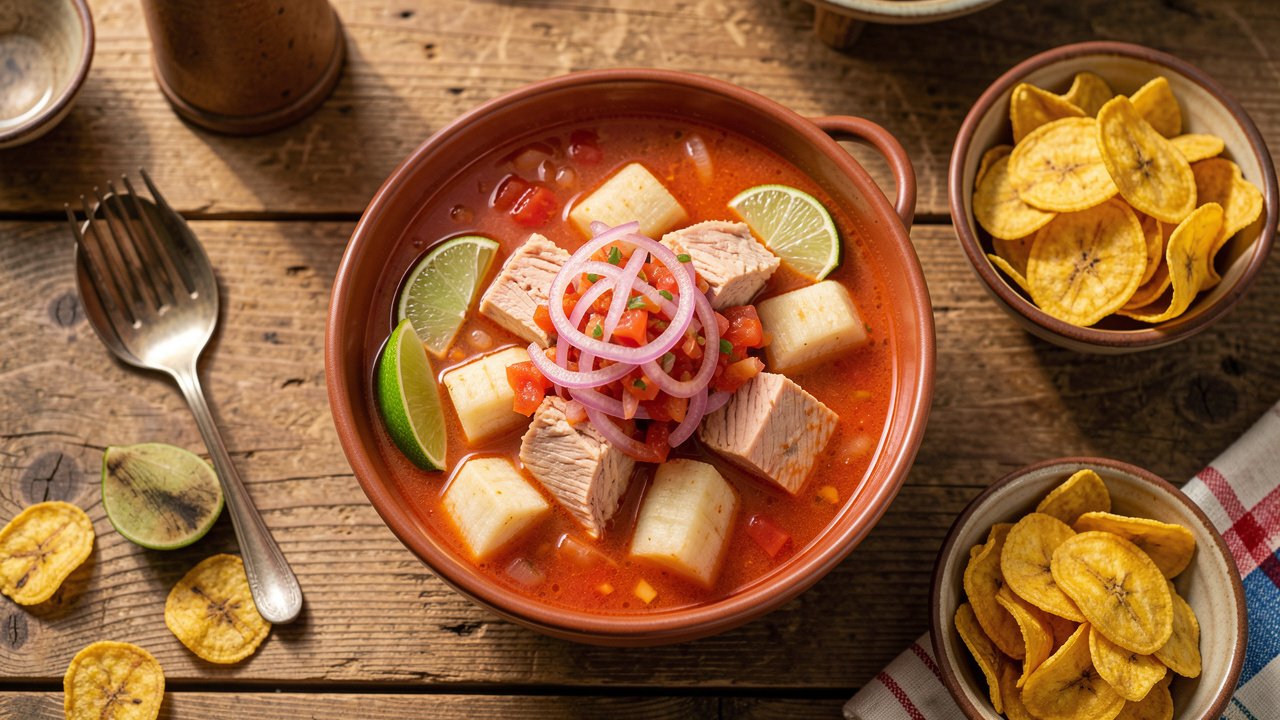
If there is one bowl that captures the Ecuadorian coast, it is encebollado. It is savory, restorative, and just sour enough to make you sit up straighter after the first spoonful. The broth is light but deeply flavored, the yuca is soft and satisfying, and the curtido on top gives every bite a fresh, tangy lift.
I learned quickly that this soup is all about balance and timing. The first time I made it, I let the tuna simmer far too long and it turned dry and stringy. Poach it gently, treat the yuca with a little patience, and pile on that pickled onion, and you get a bowl that tastes like it came straight from a market stall in Guayaquil.
Why This Encebollado Works
Encebollado rests on a handful of humble ingredients, yet the result tastes layered and complete. The secret is that each element is treated on its own terms. The broth is built first from tomatoes, onion, and cumin, so it carries real depth before the fish ever touches it. Then the tuna is poached gently in that broth, staying tender and moist instead of turning tough.
The yuca is what sets this soup apart from a simple fish stew. Boiled until it is fork-soft and just starting to feel creamy inside, it soaks up the broth and gives every spoonful body and comfort. Cook it right and it practically melts; cook it wrong and it either stays woody or falls apart into mush, so it earns a little attention.
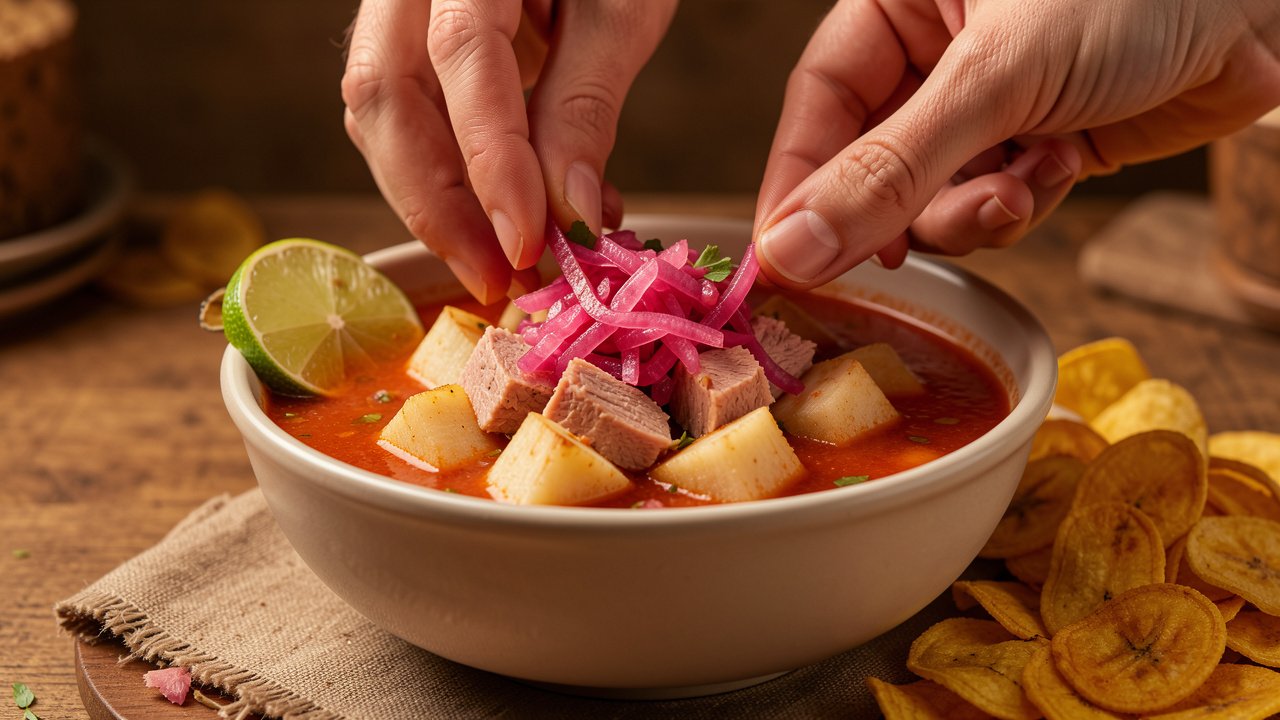
The curtido on top is the finishing stroke. Thin slices of red onion and tomato, quickly cured with lime and salt, cut through the richness with a clean, tangy brightness. That contrast between the warm, savory broth and the cool, sharp curtido is exactly why so many people crave this bowl.
It is also naturally halal, gluten-free, and endlessly welcoming to different fish. Once you understand the method, you can build the same soup around albacore, other firm tuna, or a sturdy white fish and always land somewhere delicious. That flexibility is why encebollado is a fixture of coastal Ecuadorian kitchens.
Pro observation: Reserve a ladle of the tomato-onion broth before the fish goes in and use it to loosen the finished soup at the table. It keeps the bowl brothy and lets everyone adjust the consistency to taste.
Ingredients
Kitchen Measurement Converter
Quickly convert between common cooking measurements without leaving the recipe. Pick a category, enter a value, and the result updates instantly.
Ingredient Notes & Substitutions
The Fish
Albacore is the traditional choice, prized for its meaty texture that holds up in the broth. Any firm tuna works, and a sturdy white fish like halal cod or mahi-mahi is a fine stand-in. Look for thick, fresh cuts so the pieces stay in generous chunks.
Yuca (Cassava)
Fresh yuca has a waxy brown skin and firm white flesh; frozen yuca is often easier and already peeled. Either way, remove the tough central fiber after cooking. Boil in salted water until fork-tender but still holding its shape.
Tomatoes
Ripe, red tomatoes are the backbone of the broth, lending color and a gentle sweet-tartness. Out of season, a can of good chopped tomatoes gives a reliable base. Blend a portion for a smoother broth if you prefer.
Curtido and Lime
The pickled onion and tomato curtido needs sharp red onion and plenty of fresh lime juice. Soak the sliced onion briefly to soften its bite. Do not skip the lime; that acidity is the signature of a proper encebollado.
Equipment
- Large soup pot
- Second pot for yuca
- Sharp knife and board
- Slotted spoon
- Mixing bowl for curtido
- Ladle
Before You Start
1. Slice the curtido onion early. Cut the red onion thin and let it soak in lime and salt while you cook. The longer it sits, the mellower and more flavorful it becomes.
2. Peel the yuca fully. Fresh cassava has a thick skin and a pinkish inner layer under it; remove both, then cut into thick logs so the pieces stay intact while they boil.
3. Cut the fish into big chunks. Large pieces poach more gently and are harder to overcook, so you keep that tender, flaky texture that defines a good bowl.
Step-by-Step Instructions
Start the Curtido
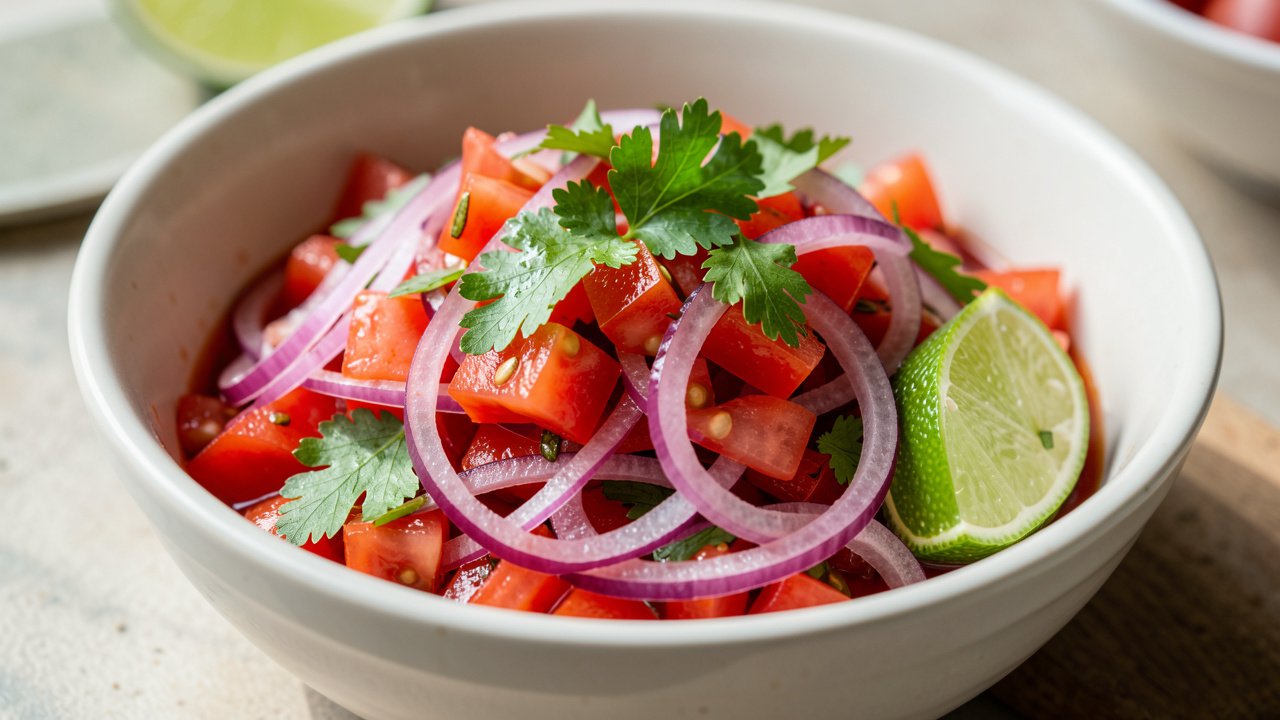
Slice one red onion into thin half-moons and place it in a bowl. Add half of the lime juice, a good pinch of salt, and a handful of chopped tomato. Toss well and set it aside to cure at room temperature while you make the soup, stirring once or twice. It will soften and turn bright and tangy.
Build the Tomato-Onion Broth
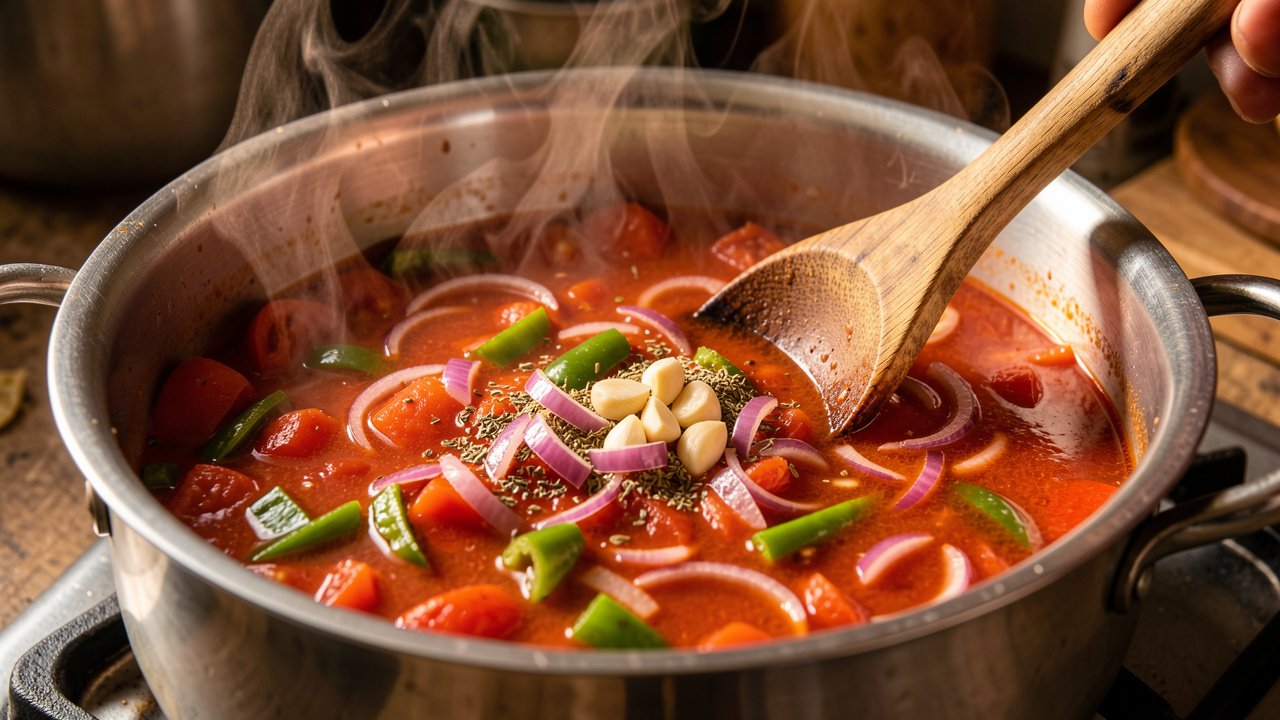
Heat the oil in a large pot over medium heat. Add the second red onion, the green bell pepper, and the garlic, and cook 5 minutes until soft. Stir in the chopped tomatoes, ground cumin, and salt, and cook another 5 minutes until the tomatoes slump. Pour in the water, bring to a simmer, and let it bubble gently for 15 minutes so the flavors deepen.
Boil the Yuca
While the broth simmers, place the peeled yuca logs in a separate pot, cover with salted water, and bring to a boil. Cook 20 to 25 minutes until fork-tender but still holding together. Drain, let it cool slightly, then pull out and discard the tough fibrous core from each piece and cut the yuca into bite-size chunks.
Finish the Curtido
Give the curing onion and tomato a final toss and taste it. It should be sharp, bright, and just a little salty. Stir in a little chopped cilantro and a splash more lime if it needs more zing. Set it aside; this will crown each bowl at the end.
Poach the Fish Gently
Lower the heat under the broth so it is barely simmering. Slide in the chunks of tuna and poach them gently for 6 to 8 minutes, just until the fish turns opaque and flakes easily. Do not let the pot boil hard or the fish will toughen. Lift the fish out with a slotted spoon, then flake it into large pieces and return it to the pot off the heat.
Assemble and Serve
Divide the yuca chunks among four bowls and ladle the hot fish broth over the top. Crown each bowl with a generous spoonful of curtido, scatter with fresh cilantro, and add a wedge of lime. Serve right away with a dish of chifles on the side for crunch, letting everyone squeeze lime and crumble chips in to taste.
Chef’s Tips From Real Kitchen Testing
Poach, do not boil, the fish. Keep the broth at the gentlest simmer and pull the tuna the moment it turns opaque so it stays tender and never dries out.
Cure the curtido early. Even 20 minutes in lime and salt tames the raw onion bite and builds the tangy flavor that makes the whole bowl sing.
Always remove the woody core from the yuca after boiling. That stringy central fiber never softens and is unpleasant to bite into.
Recipe Variations
Serving Suggestions
- A dish of chifles (plantain chips) for crunch
- Popcorn or toasted corn nuts on the side
- Extra lime wedges and a bottle of aji hot sauce
- Steamed white rice for a heartier meal
Nutrition Facts
| Nutrient | Amount per serving |
|---|---|
| Calories | 340 |
| Protein | 32 g |
| Carbohydrates | 38 g |
| Fat | 7 g |
| Saturated Fat | 1.5 g |
| Fiber | 4 g |
| Sugar | 6 g |
| Sodium | 720 mg |
Values are estimates per serving and vary with the exact ingredients and brands you use.
Make-Ahead Tips
Encebollado is well suited to prepping ahead. Make the tomato-onion broth and boil the yuca a day in advance, then store them separately in the fridge. Keep the curtido in its own container so it stays crisp and bright. When you are ready to eat, reheat the broth, poach the fish fresh, and assemble; the fish only takes minutes and tastes best just-cooked.
Storage, Freezing & Reheating
Common Mistakes to Avoid
Troubleshooting
Broth tastes flat? It usually needs salt and a squeeze of lime. A pinch more cumin stirred in near the end can also wake it back up.
Fish turned tough? The pot was too hot. Next time keep it at a bare simmer and lift the tuna out as soon as it flakes.
Yuca still hard in the center? Keep boiling in salted water and test often; fresh cassava can take longer than you expect to turn tender.
A Note on Ecuadorian Cooking
Along Ecuador’s Pacific coast, encebollado is far more than a soup; it is a ritual. It is famously eaten in the morning as a warming, restorative cure after a long night, sold from bustling stalls and neighborhood spots where regulars have their favorite cook. The name comes from cebolla, the Spanish word for onion, a nod to the mound of tangy curtido that tops every bowl. That lime-cured red onion, the tender yuca, and the crisp chifles alongside are what make it unmistakably Ecuadorian. If you enjoy bright, tomato-forward bowls from around the world, our creamy Indian tomato soup shares the same comforting spirit, and you can browse more ideas in our full collection of tomato recipes.
Frequently Asked Questions
More Tomato Recipes to Try
Last updated: September 23, 2026