Pakistani Recipes
Everyday Potato and Tomato Curry
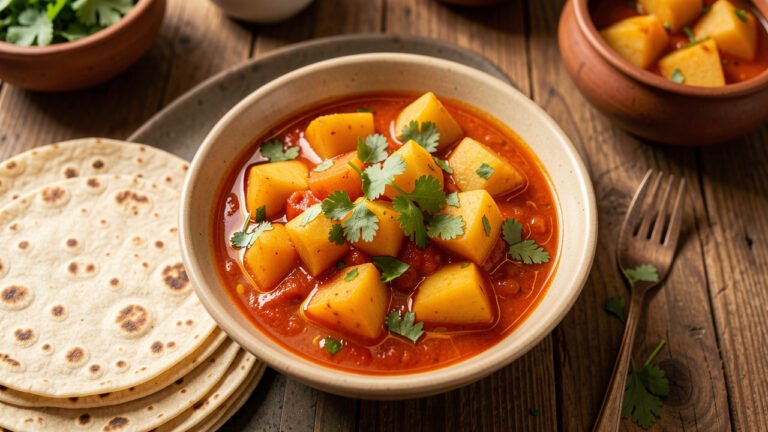
This is the kind of curry that shows up on a weeknight table without any fuss, the one a Pakistani home cook can make with eyes half closed. Potatoes and tomatoes are almost always in the kitchen, the spice list is short, and the whole thing simmers away in one pot while you roll out roti. It is humble food, but done right it is deeply satisfying.
The trick that took me a while to learn is patience with the masala. The first time I rushed it, I dumped the tomatoes in and moved straight to the potatoes, and the gravy tasted raw and sharp. Give the masala time to bhuno, or fry down, until the oil glistens at the edges, and the same handful of ingredients turns rich and rounded.
Why This Aloo Tamatar Works
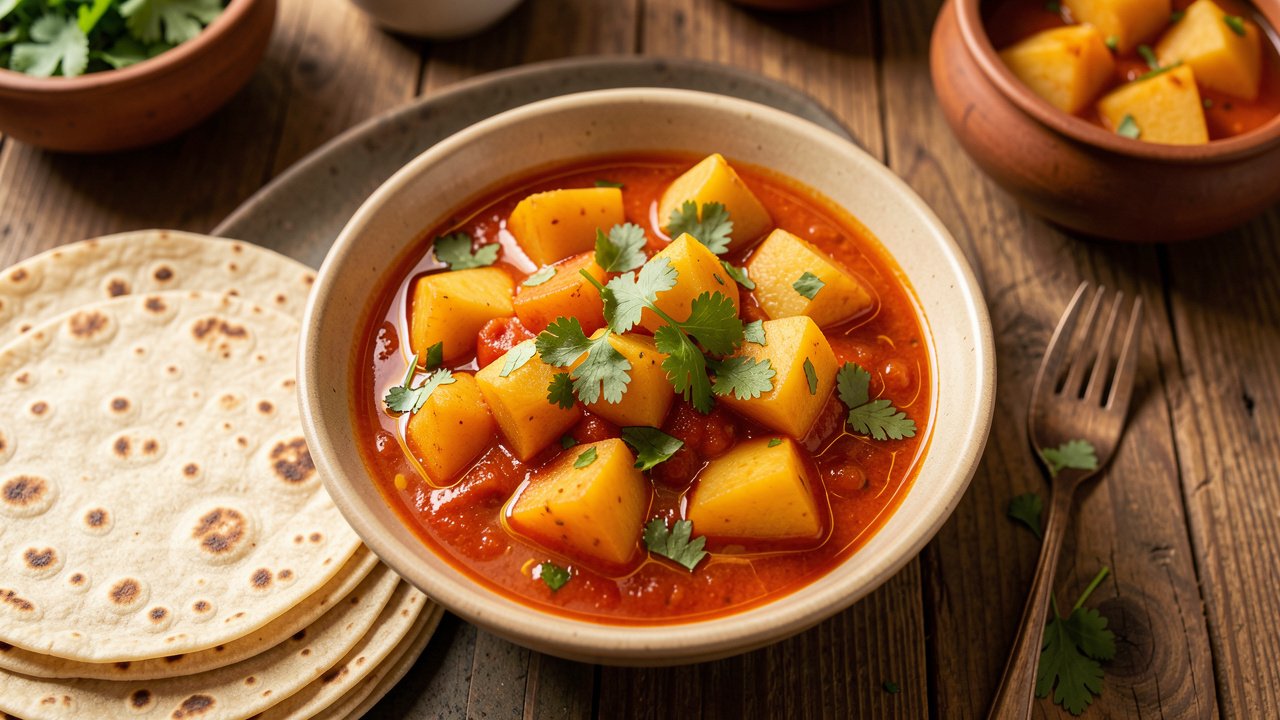
Aloo tamatar leans on the natural friendship between potatoes and tomatoes. The potatoes are mild and starchy and soak up whatever surrounds them, while the tomatoes bring the tang and body that turn plain spice into a proper gravy. You do not need cream, nuts, or a long list of pastes to make it taste like something you would want a second helping of.
The single most important step is bhuno-ing the masala. Frying the onion, ginger-garlic, and ground spices with the tomatoes until the mixture darkens and the oil separates is what removes the raw, sharp edge and builds that homey depth. Skip it and the curry tastes thin; give it a few extra minutes and it tastes like a grandmother made it.
Getting the potatoes right is the other quiet secret. Cut them into even chunks so they cook at the same rate, and let them simmer gently in the masala and water until they are just tender and starting to give at the edges. A little of that starch slips into the gravy and thickens it naturally, so the sauce clings instead of running.
It is also endlessly forgiving and cheap to make. The same base happily takes peas for aloo matar, cooks down into a dry sukhi version for lunchboxes, or turns fiery with an extra spoon of chili for people who like heat. Once the method is in your hands, it becomes a weekly habit rather than a recipe you look up.
Pro observation: The masala is ready for the potatoes when the oil starts to separate and pool at the edges of the pan and the tomato smell turns sweet instead of sharp. That glossy sheen is your signal that the raw edge is gone.
Ingredients
Kitchen Measurement Converter
Quickly convert between common cooking measurements without leaving the recipe. Pick a category, enter a value, and the result updates instantly.
Ingredient Notes & Substitutions
Potatoes
Waxy or all-purpose potatoes hold their shape best in the gravy. Cut them into even 1-inch cubes so they cook at the same rate. Very starchy potatoes work too, but they soften faster, so watch them closely near the end.
Tomatoes
Ripe, red tomatoes give the tangy, jammy base. Out of season, one 14-ounce can of chopped tomatoes is often more reliable than pale fresh ones. A spoon of tomato paste deepens the color if your tomatoes are weak.
Whole Spices
Cumin seeds bloomed in hot oil are the aromatic backbone. If you like, add a small pinch of asafoetida (hing) with them for that classic sabzi aroma. Keep them moving so they toast rather than burn.
Fat
A neutral cooking oil keeps this fully plant-based. If you are not cooking vegan, ghee gives a richer, more traditional flavor. Either way, use enough that the masala can fry properly and the oil can separate.
Equipment
- Heavy pot or karahi
- Wooden spoon
- Sharp knife and board
- Peeler
- Measuring spoons
- Small bowl for spices
Before You Start
1. Cube the potatoes evenly. Peel and cut them into uniform 1-inch pieces, then keep them in a bowl of water so they do not brown while you prep the masala.
2. Measure the ground spices first. Turmeric, coriander, chili powder, and garam masala go in quickly one after another, so have them ready in a small bowl by the stove.
3. Warm the water. Adding warm rather than cold water keeps the simmer going and helps the potatoes cook evenly without cooling the masala down.
Step-by-Step Instructions
Prep and Temper the Cumin
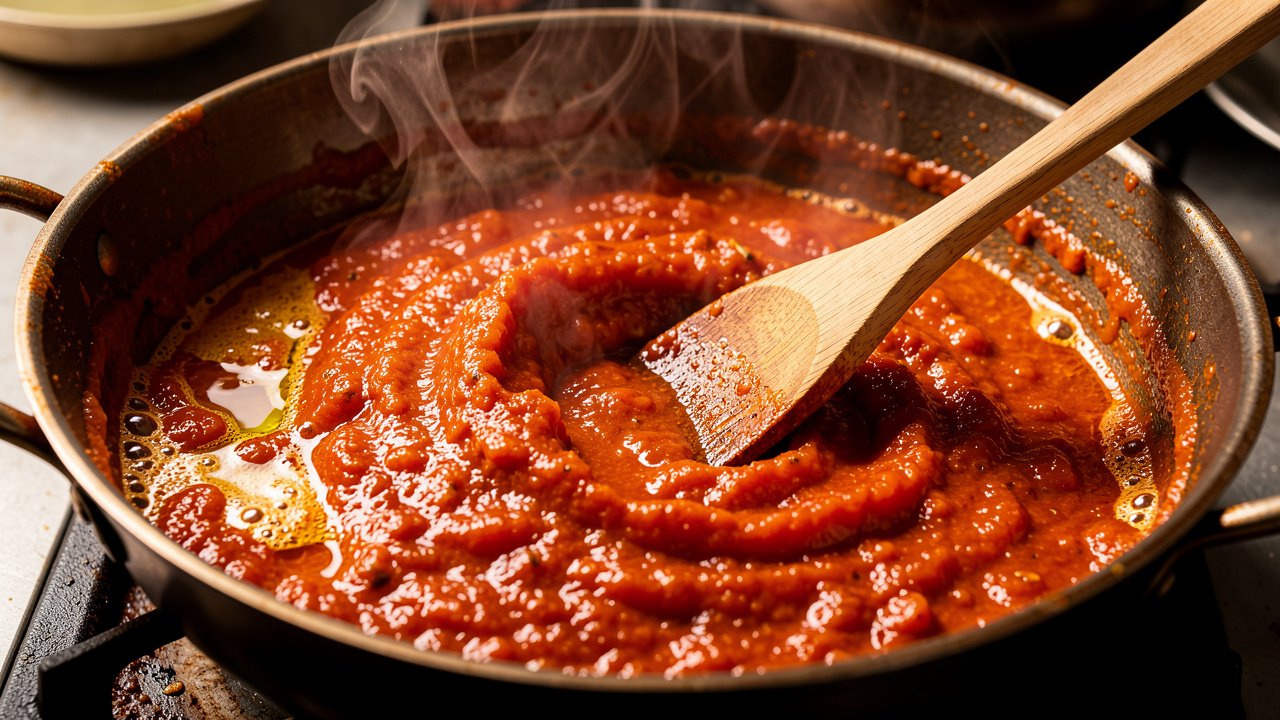
Peel and cube the potatoes, chop the onion, and chop the tomatoes. Heat the oil in a heavy pot over medium heat, then add the cumin seeds and let them sizzle for about 20 seconds until fragrant and lightly darkened. Keep them moving so they toast rather than scorch.
Soften the Onion
Add the chopped onion and the slit green chilies to the tempered oil. Cook 5 to 6 minutes, stirring now and then, until the onion turns soft and golden at the edges. Stir in the ginger-garlic paste and cook 1 minute more, until the raw smell lifts and the mixture smells sweet and fragrant.
Add Tomatoes and Ground Spices
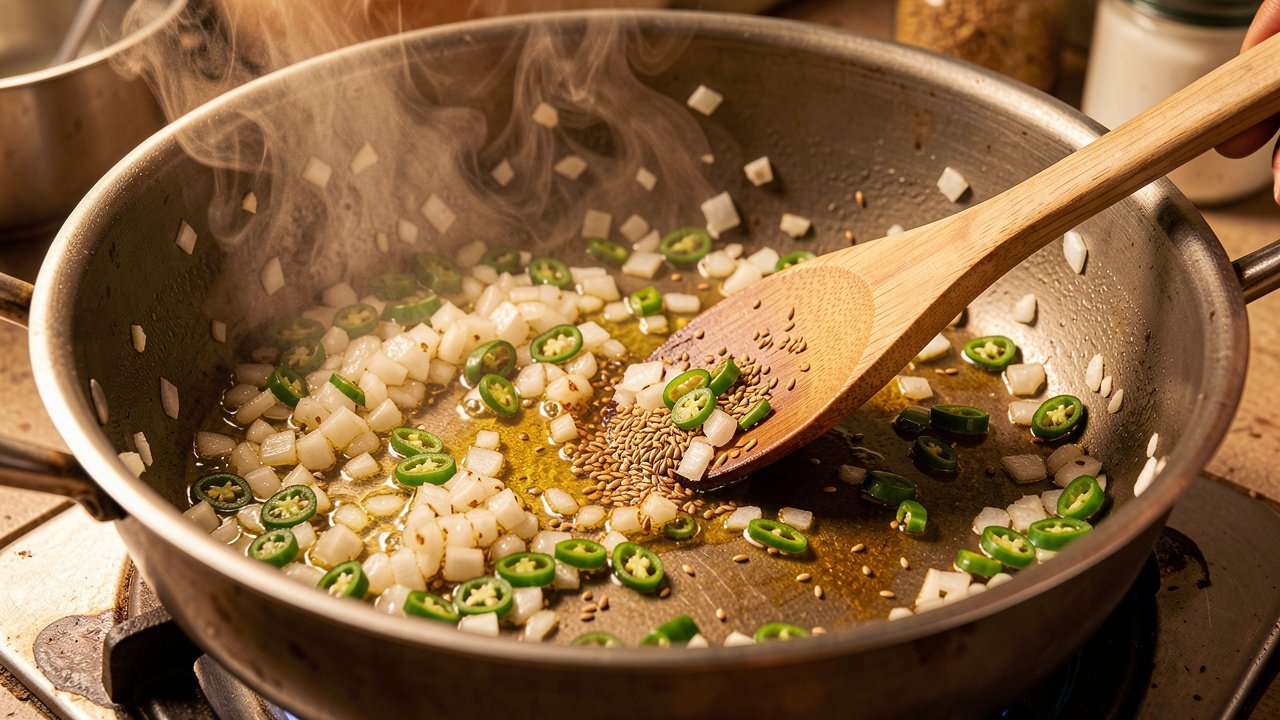
Add the chopped tomatoes along with the turmeric, coriander, red chili powder, and salt. Stir well and cook 8 to 10 minutes, mashing the tomatoes with the back of the spoon, until they collapse into a thick, jammy masala. This is the bhuno stage, so do not rush it.
Bhuno the Masala
Keep frying the masala over medium heat for another 3 to 4 minutes until it darkens and the oil starts to separate and glisten at the edges of the pot. Splash in a tablespoon of water if it catches. When the masala looks glossy and smells sweet rather than sharp, it is ready for the potatoes.
Add the Potatoes and Simmer
Drain the potato cubes and add them to the masala. Stir for a minute so every piece is coated, then pour in the warm water. Bring it to a gentle boil, cover, and lower the heat. Simmer 18 to 22 minutes, stirring once or twice, until the potatoes are tender and a knife slides in easily.
Finish and Serve
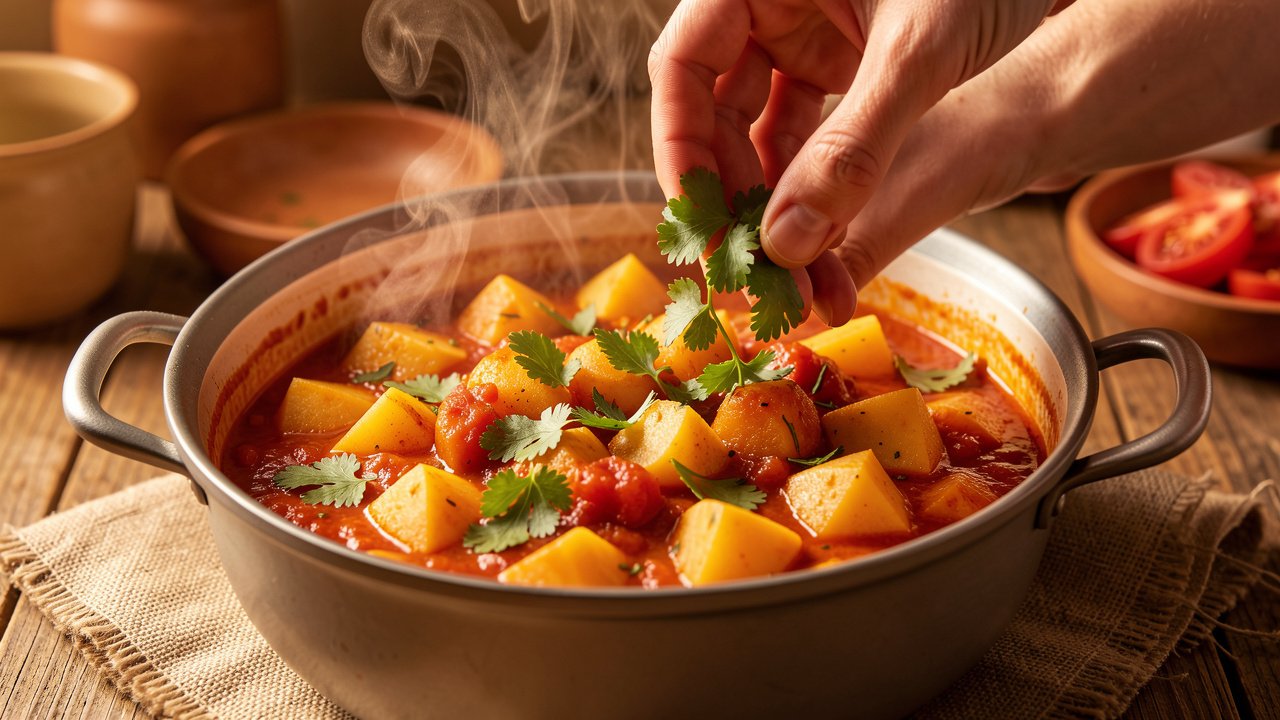
Uncover and check the gravy. For a looser curry, add a splash more water; for a thicker one, mash a few potato pieces against the side and simmer a couple of minutes to reduce. Stir in the garam masala, taste for salt, then scatter the fresh cilantro over the top. Serve hot with roti, puri, or steamed rice.
Chef’s Tips From Real Kitchen Testing
Do not shortcut the bhuno stage. Fry the tomato masala until the oil separates and the color deepens; that is the difference between a raw-tasting gravy and a homey one.
Cut the potatoes evenly and add them only after the masala is done. Uneven pieces cook at different rates, leaving some mushy while others stay hard in the center.
Control the gravy with water at the end. Mash a couple of potato chunks to thicken, or loosen with warm water for a soupier sabzi that soaks into roti.
Recipe Variations
Serving Suggestions
- Warm roti, chapati, or flaky puri
- Steamed basmati rice or cumin rice
- A side of plain yogurt or raita
- Sliced onions, green chilies, and lemon wedges
Nutrition Facts
| Nutrient | Amount per serving |
|---|---|
| Calories | 190 |
| Protein | 4 g |
| Carbohydrates | 28 g |
| Fat | 8 g |
| Saturated Fat | 1 g |
| Fiber | 4 g |
| Sugar | 5 g |
| Sodium | 590 mg |
Values are estimates per serving and vary with the exact ingredients and brands you use.
Make-Ahead Tips
Aloo tamatar is a great make-ahead dish, because the potatoes keep drinking in the masala and the flavor deepens overnight in the fridge. Cook it a day ahead, cool, and refrigerate. Reheat gently on the stove and stir in a splash of water to loosen it, since the gravy thickens as it sits and the potatoes absorb liquid. Add fresh cilantro just before serving so it stays bright.
Storage, Freezing & Reheating
Common Mistakes to Avoid
Troubleshooting
Gravy tastes raw or sharp? The masala was not fried long enough. Let it cook down further until the color deepens and the oil separates before adding the potatoes.
Potatoes falling apart? They simmered too hard or too long. Next time keep the heat gentle and start checking for doneness around the 18-minute mark.
Curry too thin or too thick? For thin gravy, mash a few potato pieces and simmer a couple of minutes to reduce. For thick gravy, stir in warm water a splash at a time until it loosens.
A Note on Pakistani Home Cooking
Aloo tamatar is everyday sabzi in the truest sense, the kind of dish that anchors ordinary meals across Pakistan and North India rather than showing up at feasts. It is cheap, quick, and made from things already in the kitchen, so it appears on the table again and again without anyone tiring of it. Scooped up with roti or a puffed puri, it is also a favorite breakfast and a classic travel food, packed for long journeys because it keeps well and needs no reheating to taste good. If you enjoy warmly spiced tomato bowls, our creamy Indian tomato soup shares the same comforting spirit, and you can browse more ideas on our tomato recipes hub.
Frequently Asked Questions
More Tomato Recipes to Try
Last updated: September 23, 2026