West African Recipes
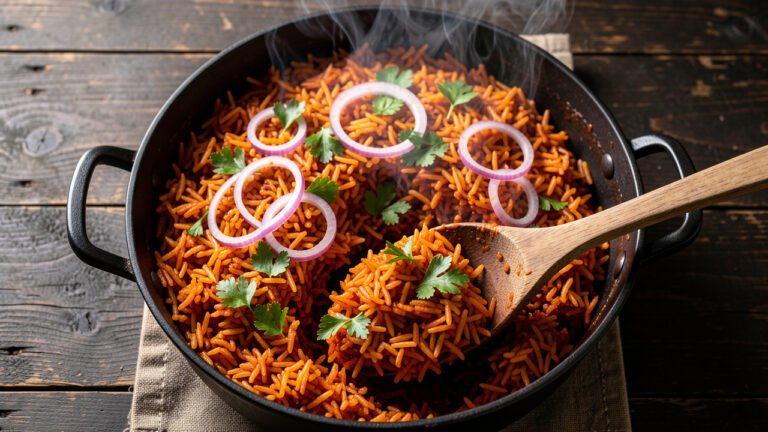
Smoky One-Pot Party Jollof
Jollof rice is the dish that starts friendly arguments across West Africa, and for good reason. Every grain carries the flavor of the blended tomato and pepper base, so the rice itself tastes of the sauce rather than sitting in it. Done right, it is smoky, savory, and just a little fiery, with a color somewhere between deep orange and brick red.
The trick I learned after a few flat, pale batches is patience with the base. If you rush the blended tomato and pepper down before it goes jammy and the oil rises, the rice ends up watery and sour instead of rich. Cook the base properly and the rest almost takes care of itself.
Why This Jollof Rice Works
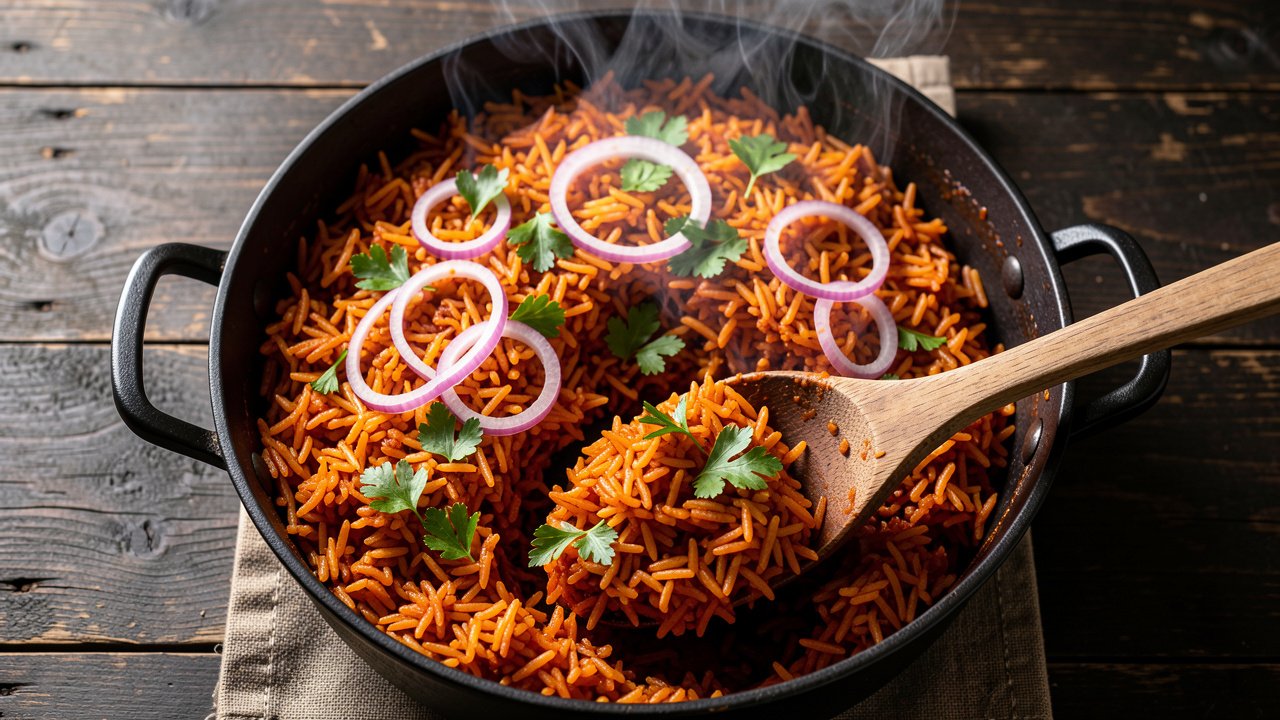
Jollof is built on one big idea: the rice should taste of the sauce all the way through, not just wear it as a coating. That happens because the parboiled rice cooks directly in a reduced blend of tomatoes, red bell pepper, Scotch bonnet, and onion, so every grain drinks up the seasoned base as it steams. The bell pepper adds body and a mellow sweetness, the tomatoes bring the tang, and the Scotch bonnet delivers a bright, fruity heat.
The single most important step is frying the blended base down in oil until it turns from thin and raw to thick, glossy, and a shade darker. This stage cooks off the sour, watery edge of raw tomato and concentrates the flavor. Skip it, and no amount of seasoning later will fix a pale, tangy pot.
Parboiled long-grain rice is the other quiet secret. Its firmer grain holds its shape through a long simmer without turning to mush, which is exactly what you want when the rice has to cook in liquid that is thicker than plain water. It is far more forgiving than soft white rice for this job.
Finally, party jollof earns its smoky signature from the bottom of the pot. Once most of the liquid is absorbed, you let the heat build gently so a thin layer catches at the base, releasing a toasty aroma that perfumes the whole pot. It is the flavor everyone fights over at the party, and it comes free with a little patience.
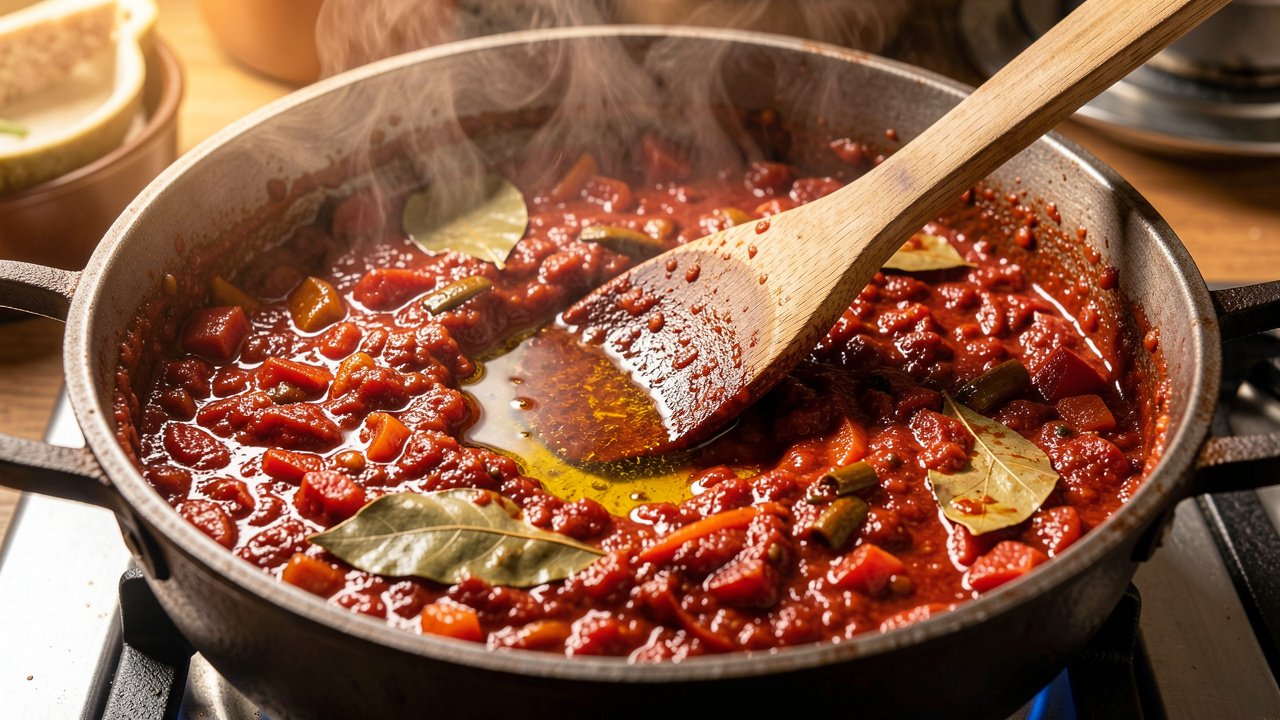
Pro observation: The blended base is ready for the rice when it has reduced by about a third, turned a deeper brick-red, and the oil starts to pool and shine at the edges. That sheen means the raw tomato taste has cooked out.
Ingredients
Kitchen Measurement Converter
Quickly convert between common cooking measurements without leaving the recipe. Pick a category, enter a value, and the result updates instantly.
Ingredient Notes & Substitutions
The Rice
Long-grain parboiled rice is the gold standard for jollof because it holds its shape through a long simmer. Rinse it until the water runs clear to wash off surface starch so the grains stay separate rather than clumping.
The Blended Base
Fresh tomatoes plus red bell pepper give color and body without too much acidity. The bell pepper, sometimes called tatashe, is not optional in a proper jollof; it is what keeps the sauce sweet and glossy rather than sharp.
Scotch Bonnet
Scotch bonnet brings the signature fruity heat. Use half a pepper for mild, a whole one for a real West African kick. A habanero is the closest easy swap if you cannot find it.
Stock and Seasoning
Chicken stock builds a savory backbone. Use vegetable stock to keep it fully plant-based. Crumbled seasoning cubes are traditional; if you skip them, add extra salt and a pinch more curry powder to compensate.
Equipment
- Heavy pot with tight lid
- Blender or food processor
- Wooden spoon
- Sharp knife and board
- Fine mesh sieve
- Foil or parchment
Before You Start
1. Blend the base first. Puree the tomatoes, red bell pepper, Scotch bonnet, and one onion until smooth, then set it aside so it is ready when the oil is hot.
2. Rinse and parboil the rice. Rinse the parboiled rice well, and if you like, give it a quick 5-minute parboil and drain. This washes off extra starch so the grains cook up separate.
3. Warm your stock. Adding warm chicken stock keeps the pot at temperature and helps the rice cook evenly from the start.
Step-by-Step Instructions
Blend the Pepper Base
Roughly chop the tomatoes, red bell peppers, Scotch bonnet, and one onion, then blend until completely smooth. If using bone-in chicken, season it with salt, thyme, and a little curry powder and brown or bake it now, saving any juices to enrich the stock.
Fry the Aromatics and Paste
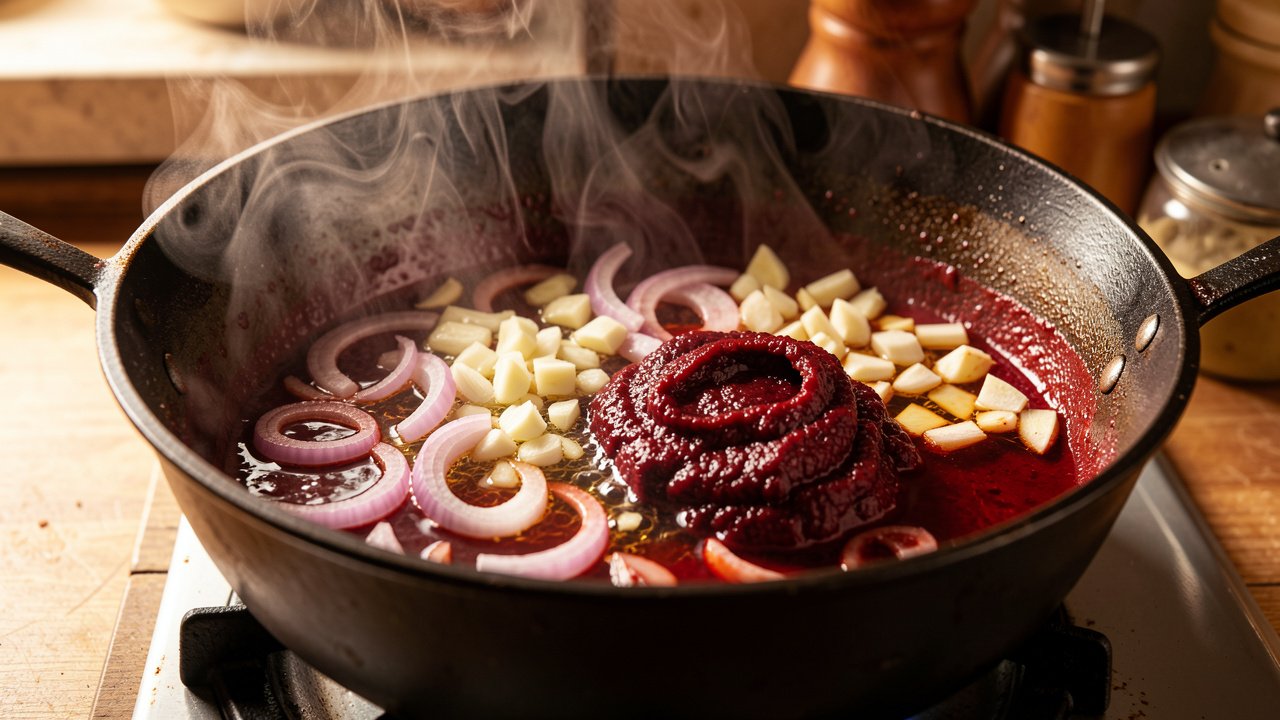
Heat the vegetable oil in a heavy pot over medium heat. Slice the second onion and fry until soft, then add the minced garlic and grated ginger and cook 1 minute until fragrant. Stir in the tomato paste and fry for 3 to 4 minutes until it darkens and smells rich rather than raw.
Cook Down the Blended Base
Pour in the blended tomato and pepper mixture. Add the curry powder, thyme, and bay leaves. Let it fry and reduce over medium heat for 12 to 15 minutes, stirring often, until it thickens, darkens to a deep brick-red, and the oil rises to the surface. This is the flavor foundation, so do not rush it.
Add Stock and Rice
Pour in the warm chicken stock, the crumbled seasoning cubes, and salt, and stir. Taste the liquid now and adjust; it should taste well seasoned, a touch salty, because the rice will absorb it. Add the rinsed parboiled rice and stir once so every grain is coated and submerged in the red liquid.
Cover and Simmer
Lay a sheet of foil or parchment over the pot, then set the lid on top to trap the steam. Lower the heat to the gentlest simmer and cook 25 to 30 minutes. Resist stirring, which makes the rice sticky; instead, if it looks dry before the rice is done, sprinkle over a little more warm stock and re-cover.
Build the Smoky Bottom and Serve
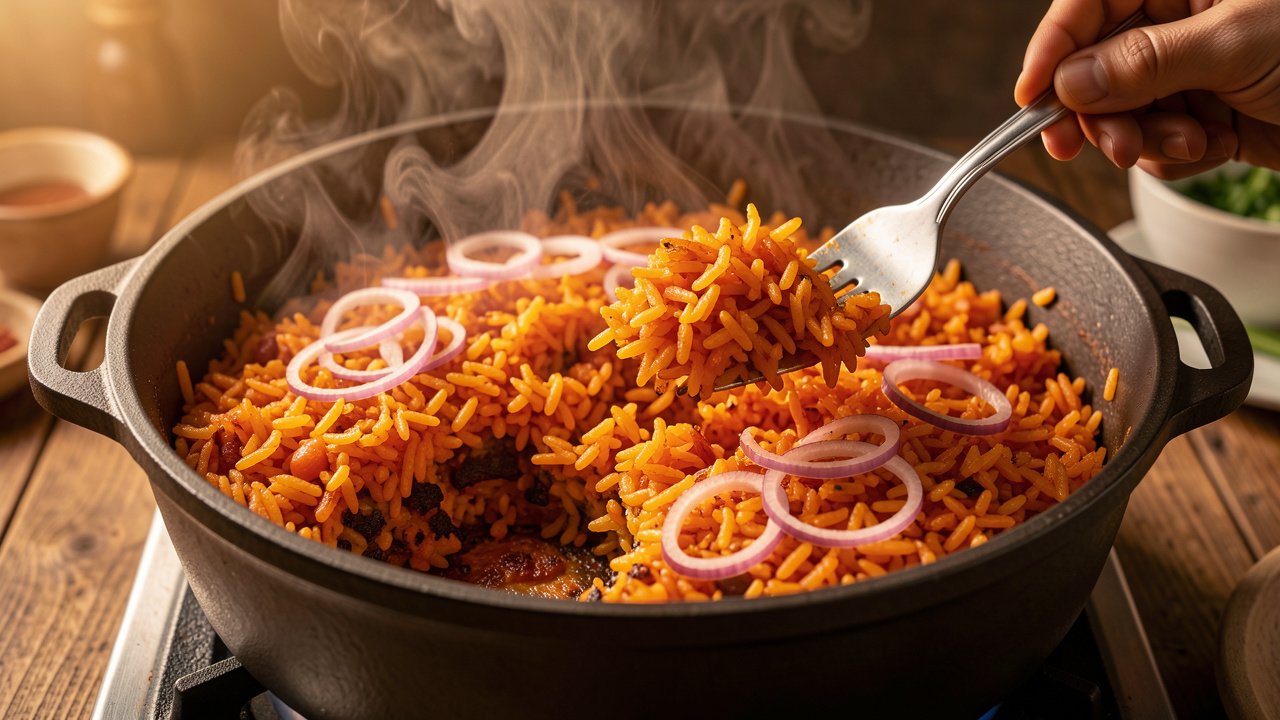
When the rice is tender and the liquid is absorbed, raise the heat for the last 2 to 3 minutes so a thin layer catches at the bottom of the pot, giving party jollof its smoky aroma. Watch and smell closely so it toasts but does not burn. Remove the bay leaves, fluff with a fork, and serve hot.
Chef’s Tips From Real Kitchen Testing
Reduce the blended base further than feels necessary. A watery base is the number one reason jollof turns out pale, sour, and mushy instead of deep and dry.
Season the cooking liquid boldly before the rice goes in. Rice absorbs a lot of salt and flavor, so under-seasoned stock means bland rice you cannot fix later.
For the smoky bottom, trust your nose over the clock. The moment you smell toasted, nutty rice, cut the heat so the layer stays smoky rather than scorched.
Recipe Variations
Serving Suggestions
- Fried sweet plantain (dodo) on the side
- Roast or grilled chicken and coleslaw
- Moin moin or a simple garden salad
- Sliced red onion and a wedge of lime
Nutrition Facts
| Nutrient | Amount per serving |
|---|---|
| Calories | 410 |
| Protein | 8 g |
| Carbohydrates | 68 g |
| Fat | 12 g |
| Saturated Fat | 2 g |
| Fiber | 4 g |
| Sugar | 7 g |
| Sodium | 720 mg |
Values are estimates per serving for the vegetarian version and vary with the exact ingredients and brands you use.
Make-Ahead Tips
The blended pepper base can be made up to 3 days ahead and refrigerated, or frozen for up to 3 months, which turns jollof into a quick weeknight cook. You can even fry the base down and store that stage. The finished rice also reheats beautifully, and many say jollof tastes even better the next day once the flavors settle.
Storage, Freezing & Reheating
Common Mistakes to Avoid
Troubleshooting
Rice still hard but liquid gone? Sprinkle over a little warm stock or water, cover tightly, and steam on low a few more minutes. Do not stir it.
Jollof tastes sour or raw? The base was not fried down long enough. Next time, reduce it further until it darkens and the oil rises.
Rice turned mushy? Too much liquid or too much stirring. Use less stock next time and leave the pot alone while it simmers.
A Note on Jollof Rice
Jollof rice traces back to the Wolof people of the Senegambia region, and today nearly every West African country has a proud version of its own. The friendly rivalry between Nigerian and Ghanaian jollof is legendary, spilling across social media every year, with each side certain their pot reigns supreme. Senegalese thieboudienne, the fish-and-rice dish often called the mother of jollof, rounds out the family. Whichever camp you join, the soul of the dish is the same: rice cooked in a rich, smoky tomato and pepper base. If you love spiced tomato cooking, our hearty tomato lentil soup and creamy Indian tomato soup share the same warming, tomato-forward spirit.
Frequently Asked Questions
More Tomato Recipes to Try
Last updated: September 23, 2026