
Vegetarian Recipes
Zucchini Fritters with Mozzarella and Tomato Crisp, Never Soggy
Last updated: July 17, 2026
Three of the four main ingredients here are soaking wet. Zucchini, fresh mozzarella, and tomato all carry more water than you think, and every one of them wants to ruin your fritter. That is why this dish fails so often, and it is also why it is easy once you know the one thing that matters: get the water out first.
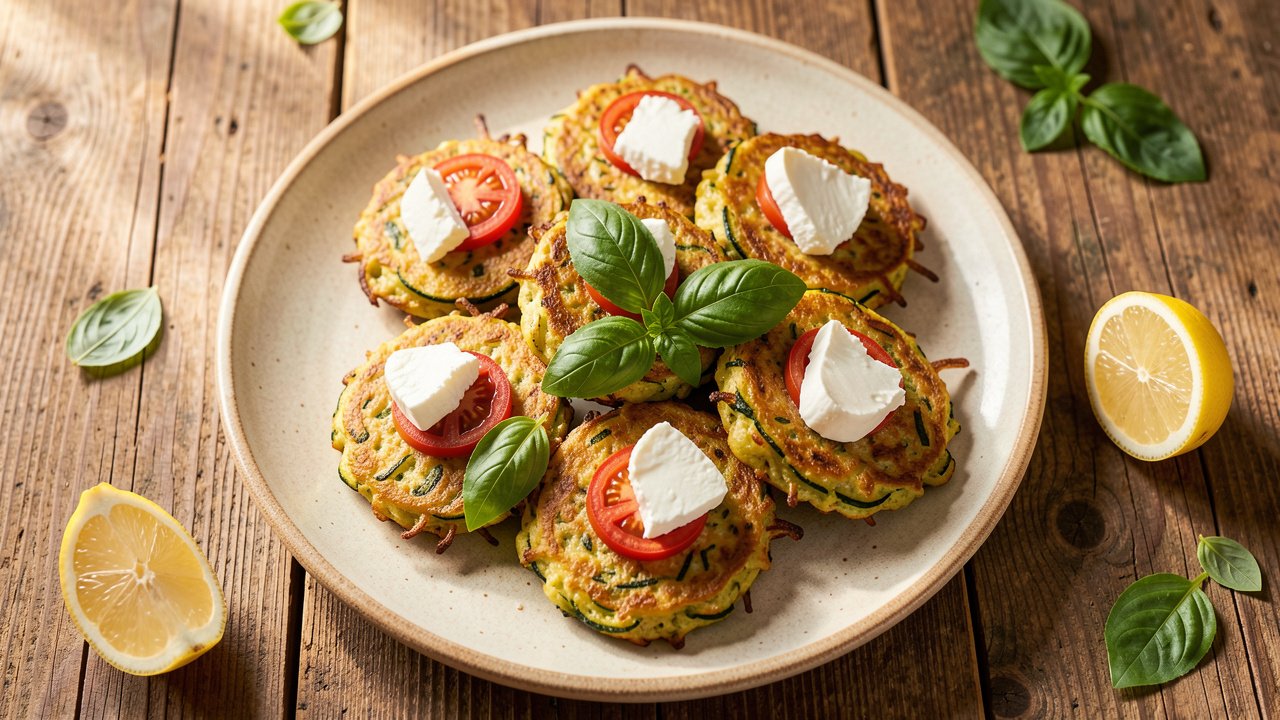
Why These Zucchini Fritters Work
Zucchini is roughly 95 percent water. That is not a fun fact, it is the whole problem. If that water stays in the shreds, it leaks out the moment the batter hits the pan, and your fritter steams itself into a limp, pale disc instead of frying. It will taste like wet bread. This is the number one failure, and it happens to almost everyone the first time.
So we take the water out on purpose. Grate the zucchini, toss it with salt, and let it sit. Salt pulls moisture out through osmosis, drawing it from inside the cells to the surface where you can physically remove it. The salt does not evaporate the water for you. It just moves it somewhere you can reach.
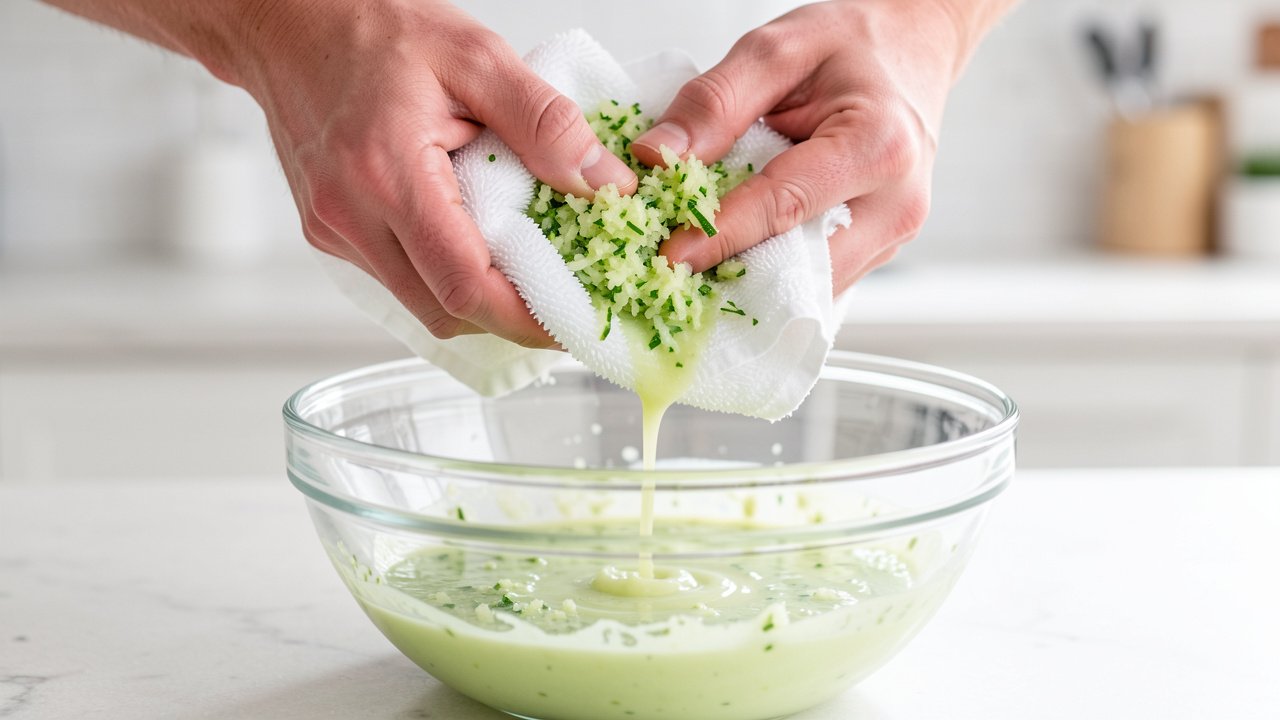
Then you squeeze, and this is where people go soft. A pound of grated zucchini can give up close to a cup of liquid. Wring it in a clean towel until nothing more runs out, then rest a second and wring again, because more will come. The amount is genuinely shocking the first time you see it in the bowl.
Here is the part that ties it together. The wetter your zucchini, the more flour you need to hold the batter together. More flour means a heavier, doughier fritter. So squeezing hard is not just about crispness, it lets you use less binder, and less binder is what makes the fritter light. Those two things are the same move.
Pro observation: Squeezing does not squeeze out the flavor. Water carries almost no taste, so removing it concentrates what is left. Squeezed zucchini tastes more like zucchini, not less.
Ingredients
Kitchen Measurement Converter
Quickly convert between common cooking measurements without leaving the recipe. Pick a category, enter a value, and the result updates instantly.
Ingredient Notes & Substitutions
Zucchini
Pick small to medium zucchini, firm and heavy for their size. Big ones are seedier and even wetter. Grate on the large holes of a box grater; the fine holes turn it to mush that will not squeeze cleanly.
Fresh Mozzarella
Buy it in a ball packed in liquid, not the low-moisture shredded kind. Drain it, then pat it dry on paper towel. It goes on top after frying, never into the batter.
Tomato
A firm, ripe Roma or vine tomato holds its shape best. Cut out the seeds and the jelly around them, since that is where nearly all the loose water sits. Salt and drain the slices before serving.
Flour and Egg
All-purpose flour and one egg are all the binder you need if the zucchini is properly squeezed. Chickpea flour works and adds a nutty note. Add binder by the spoonful, never by guesswork.
Equipment
- Box grater
- Clean kitchen towel or cheesecloth
- Colander and large bowl
- Heavy skillet or cast iron
- Wire cooling rack
- Thin metal spatula
Before You Start
1. Salt the zucchini first, then do everything else. It needs 15 to 30 minutes sitting in salt. Use that window to slice the tomato, drain the mozzarella, and clear a spot for the cooling rack.
2. Set up the rack now, not later. Fritters come out of the pan fast and they must not land on paper towel. A rack over a sheet pan, ready before you fry, saves the crust you just worked for.
3. Mix the batter only when the pan is nearly hot. The moment egg and flour meet the zucchini, the clock starts. Batter that sits will weep and loosen.
Step-by-Step Instructions
Grate and Salt the Zucchini
Trim the zucchini and grate it on the large holes of a box grater, skin and all. The skin holds color and structure, so do not peel it. Pile the shreds into a colander set over a bowl, sprinkle on the salt, and toss with your hands so every strand gets some. Let it sit 15 to 30 minutes. Within a few minutes you will see beads of water gathering on the shreds and dripping through. That is the salt working.
Squeeze It Harder Than You Think
Dump the zucchini into the center of a clean kitchen towel or a doubled square of cheesecloth. Gather the corners, twist, and squeeze over the sink with real force. Liquid should run out in a stream, not a drip. Keep twisting until nothing more comes out, then stop, let the shreds relax for ten seconds, re-twist, and squeeze again. A pound of zucchini can give up close to a cup of water. What is left should feel dry, springy, and fluffy when you break it apart, not cold and slick.
Prep the Toppings While the Pan Heats
Slice the tomato about a quarter inch thick, scrape out the seeds and the watery jelly, lay the slices on paper towel, and salt them lightly. Tear or slice the mozzarella, then blot it dry. Both will keep releasing liquid while they sit, which is exactly why they are staying off the fritter until the very end.
Mix the Batter, Sparingly
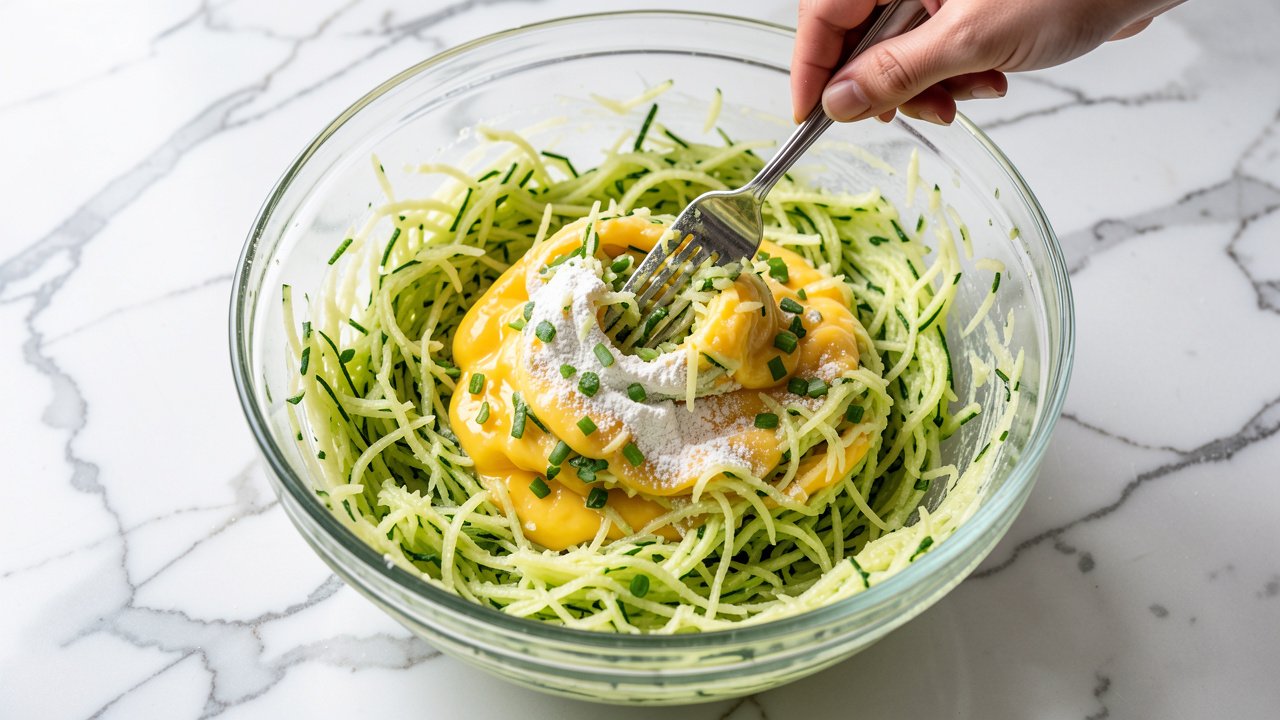
Put the squeezed zucchini in a dry bowl and fluff it apart with your fingers. Add the egg, the garlic, the scallions, the black pepper, and about half the flour. Fold it together, then add flour a spoonful at a time only until the mixture just holds its shape when you press a small mound in your palm. It should look like seasoned zucchini barely glued together, not like pancake batter. If you can see loose flour, stop; if a mound slumps apart, add one more spoonful. Taste a pinch for salt, remembering the zucchini is already salted.
Fry Them Hot and Thin
Pour a generous film of oil into a heavy skillet, about an eighth of an inch deep, and set it over medium-high. Wait for it to shimmer; a shred of zucchini dropped in should sizzle immediately. Drop in mounds of about two tablespoons and press each one flat with the back of the spatula, roughly a third of an inch thick, so the center cooks before the outside burns. Fry three or four at a time, no more. Crowding the pan crashes the oil temperature, and cool oil soaks in instead of searing, which is how fritters turn greasy. Leave them alone for 3 to 4 minutes until the edges are deep golden and the crust has set. Flip once and give the second side 2 to 3 minutes.
Drain on a Rack, Then Top and Serve
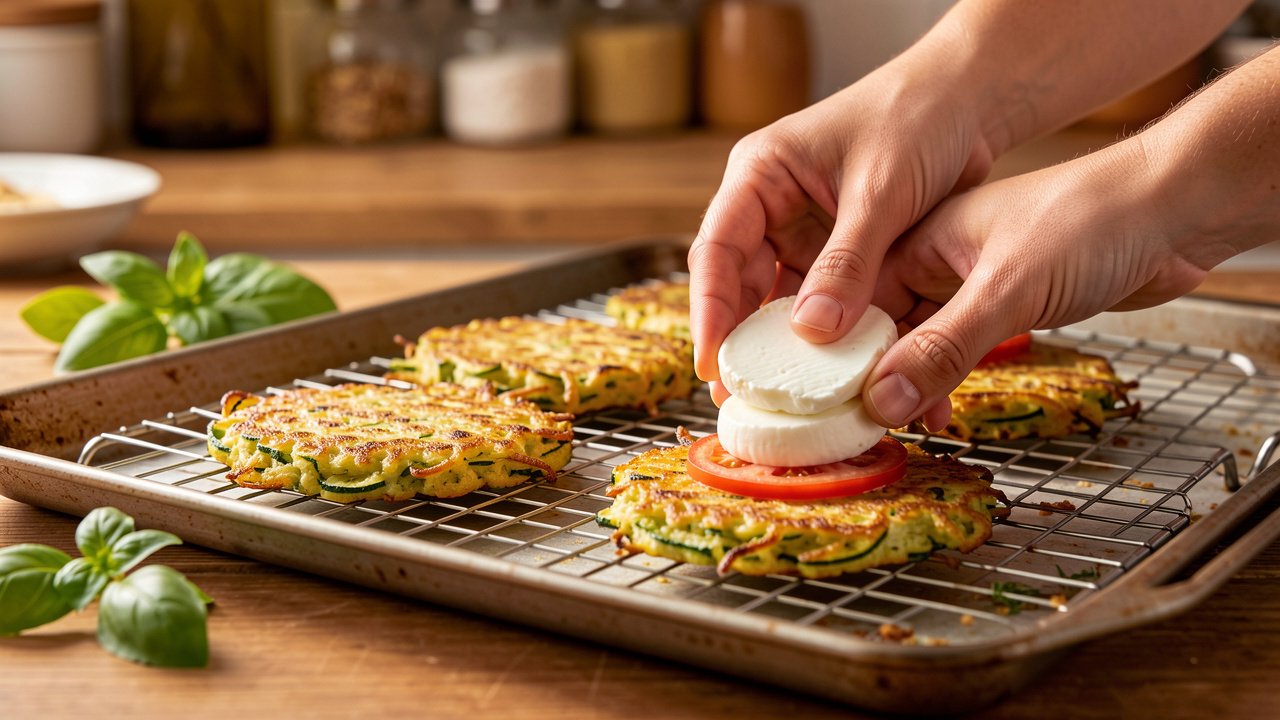
Move the finished fritters straight to a wire rack, never to paper towel. Paper traps steam under the fritter and the bottom you just crisped goes soft within a minute. On the rack, air circulates and the crust holds. Top each hot fritter with a piece of drained mozzarella, a slice of the salted tomato, a basil leaf, and a few grains of flaky salt. Serve right away, while the mozzarella is just starting to soften from the heat underneath.
Chef’s Tips From Real Kitchen Testing
Save the squeezed-out zucchini liquid if you like. Let it settle and a pale starch sinks to the bottom; the green water above is decent in a soup or a pan sauce. Nothing wasted.
Fry one test fritter before committing the batch. It tells you in four minutes whether your binder is right and your oil is hot enough, and it costs you two tablespoons of batter to find out.
If the batter loosens while you work through the batch, that is late-arriving water. Tip off any liquid pooling in the bowl rather than reaching for more flour, which would only make the last fritters heavier than the first.
Recipe Variations
Serving Suggestions
- A squeeze of lemon and flaky salt, nothing else
- Garlicky yogurt or sour cream for dipping
- A green salad and crusty bread for a light dinner
- Poached eggs on top for weekend brunch
Nutrition Facts
Values are estimates for three fritters with toppings, and vary with how much frying oil the fritters absorb.
Make-Ahead Tips
Honest answer: these are a within-minutes food. The crust starts giving way to the moisture still inside the fritter almost immediately, and nothing brings it fully back. Plan to fry them right before you eat.
What you can do ahead is the slow part. Grate, salt, and squeeze the zucchini up to a day early and keep it covered in the fridge; it will throw off a little more liquid overnight, which you simply pour off. Slice and drain the tomato and mozzarella a few hours ahead. Then the mixing and frying is a ten-minute job.
Storage, Freezing & Reheating
Common Mistakes to Avoid
Troubleshooting
Fritters falling apart in the pan? Either the zucchini was too wet or there is not quite enough binder. Tip off any liquid in the bowl, add one spoonful of flour, and press the next one thinner.
Heavy and doughy instead of light? Too much flour, which almost always traces back to compensating for wet zucchini. Squeeze harder next time and you will need less.
Pale and limp, no crust? The oil was not hot enough, or too many fritters went in at once. Let the oil recover between batches until it shimmers again.
Burnt outside, raw middle? The fritter is too thick or the heat is too high. Press them thinner and drop the burner to a true medium-high.
Where the Dish Comes From
Fried vegetable cakes turn up all around the Mediterranean and the Middle East, from Greek kolokithokeftedes to Turkish mucver, usually born from the same summer problem: too much zucchini, all at once. The mozzarella and tomato finish is the Italian caprese idea layered on top, which is why the combination tastes familiar even though the format is not traditional. If you like that pairing, our tomato mozzarella salad is the no-frying version, and the tomato basil pasta works the same flavors into dinner.
Frequently Asked Questions
More Tomato Recipes to Try

Urooj Mukhtar is a classically trained chef and food blogger at TomatoAnswers.com, creating healthy, seasonal, plant-based recipes that put tomatoes at the center of the plate. She focuses on making nutritious, flavour-forward home cooking both accessible and delicious.