Hungarian Recipes
Paprika Beef Soup, The Way It Is Actually Eaten
Last updated: July 17, 2026
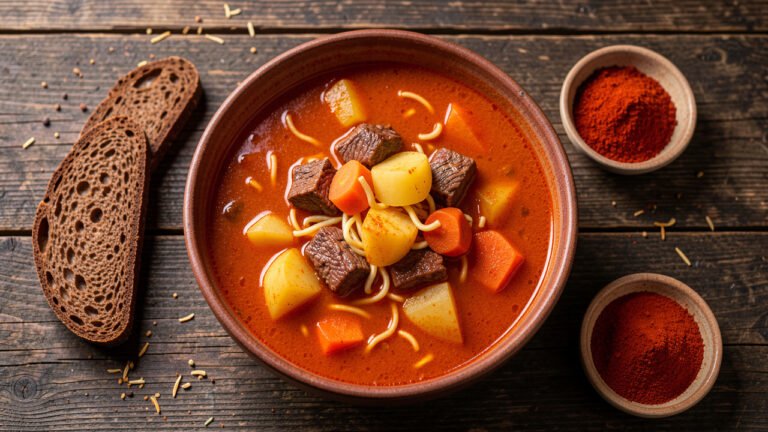
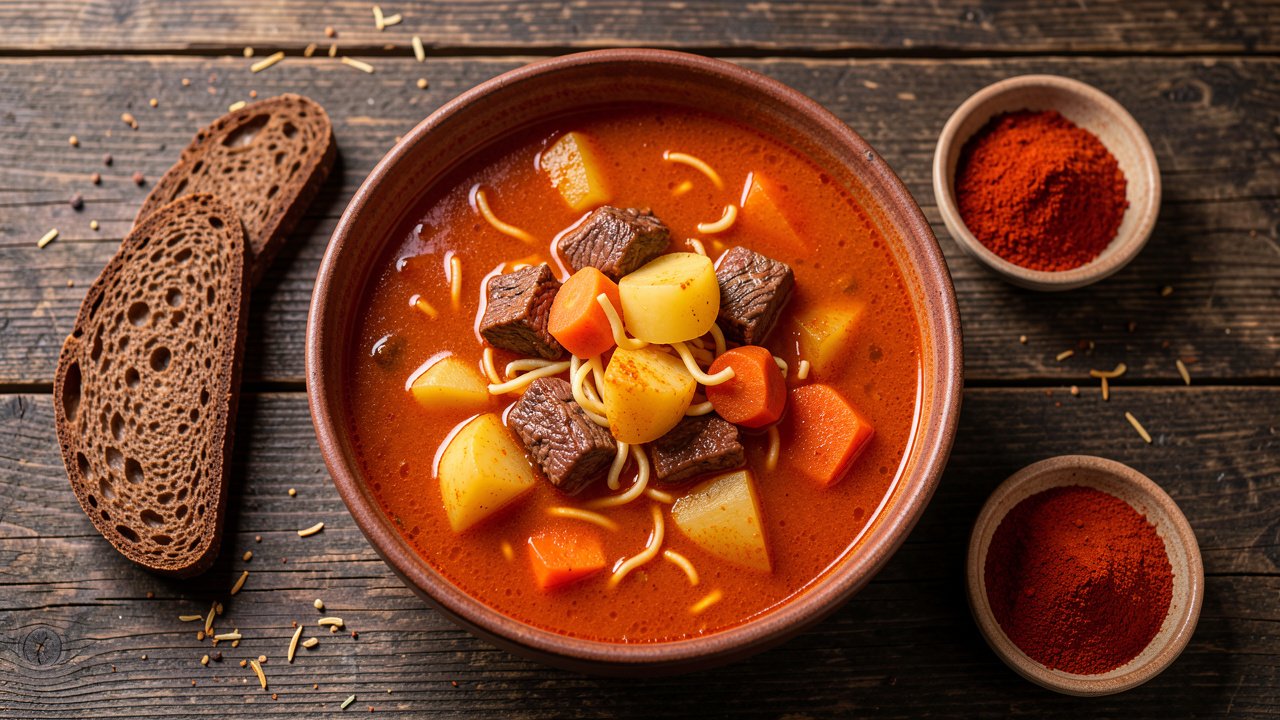
The first time a Hungarian friend watched me make what I called goulash, she was polite right up until she asked why there was no broth. What I had made was porkolt. What she grew up eating was a soup you drink as much as you chew, thin enough to fill a ladle, red-gold from paprika, with beef that falls apart against the spoon. Both are worth cooking. Only one is gulyas.
Why This Hungarian Goulash Works
Gulyas means herdsman. The dish was cooked outdoors in a kettle by cattle herders on the Great Plain, and it was a soup because a soup stretches meat across many people and reheats over a fire for days. The thick, dark, sauce-like thing served as “goulash” in most of the English-speaking world is real Hungarian food, but its name is porkolt. Naming it correctly is the first step to cooking it right, because the two dishes are hydrated completely differently.
Three things carry this recipe, and none can be rushed: the cut of beef, the sheer volume of onion, and paprika handled with a caution that surprises most first-time cooks.
Beef shin is the cut to look for, with chuck a close second. Both are worked muscles laced with collagen, and collagen is the whole point: held at a low simmer for a couple of hours, it melts into gelatin and gives the broth a soft, mouth-coating body no thickener imitates. Lean cuts like sirloin or round have almost no collagen to convert. They tighten, squeeze out their water, and stay dry and stringy however long you cook them. That is not a timing problem; it is the wrong raw material.
The onion is a co-star, not background. You want close to a pound of onion for every pound of meat, cooked slowly until the pieces stop being pieces and dissolve. Those collapsed onions are the body of the broth. There is no flour, roux, or cornstarch in this recipe, and none is needed, because onion and gelatin do the work between them.
The one warning that matters: paprika burns in seconds and burnt paprika cannot be rescued. Its natural sugar scorches long before you expect, turning acrid and taking the whole pot with it. Pull the pot off the burner before the paprika goes in. Every time.
Ingredients
Kitchen Measurement Converter
Quickly convert between common cooking measurements without leaving the recipe. Pick a category, enter a value, and the result updates instantly.
Ingredient Notes & Substitutions
Beef Shin
Ask the butcher for shin, shank, or chuck, cut into cubes a little larger than you think. Collagen-rich cuts shrink as they cook. Mixed stewing packs are fine if the pieces look marbled rather than lean and rosy.
Sweet Paprika
Buy Hungarian sweet paprika, ideally in a tin, and check the date. Paprika fades within a year and goes dusty and flat. If yours smells like nothing, the goulash will taste like nothing.
Onions
Plain yellow onions. The quantity looks absurd and it is correct. Chop them fine so they break down completely; a coarse chop leaves onion chunks instead of a broth with body.
Tomato and Pepper
We should be straight with you. Plenty of Hungarian cooks use no tomato at all, and tomato paste is a modern, largely foreign addition. But fresh tomato with a paprika pepper is genuinely traditional in many home versions, so that is what this recipe uses. Skip both and you still have gulyas.
Caraway
Not optional, and not the same as cumin. Crush the seeds lightly with the flat of a knife to wake the oils. It is the background note that makes the soup taste Hungarian rather than merely red.
Fat
Lard is traditional and carries paprika better than oil, since the pigments are fat-soluble. Beef drippings work. Neutral oil is acceptable but the color will be less vivid.
Equipment
- Heavy pot or Dutch oven
- Sharp knife and board
- Wooden spoon
- Ladle
- Measuring spoons
- Small bowl for paprika
Before You Start
1. Measure the paprika into a bowl now. When the moment comes you will have about five seconds to work, off the heat, with one hand stirring. Fumbling with a tin is how paprika gets burnt.
2. Have the liquid within reach. Cold stock or water goes in immediately after the paprika to drop the pot temperature. Keep it beside the stove, already measured.
3. Chop the onions before anything else. It is the longest job and there is a lot of onion. Get it done while your eyes are fresh and the pot is still cold.
Step-by-Step Instructions
Prep Everything First
Cut the beef into cubes of about 1 inch and pat them dry. Chop the onions fine. Measure the paprika into a small bowl and set it beside the stove with the stock. Crush the caraway. Peel and cube the potatoes but keep them in cold water, since they go in late.
Melt the Onions
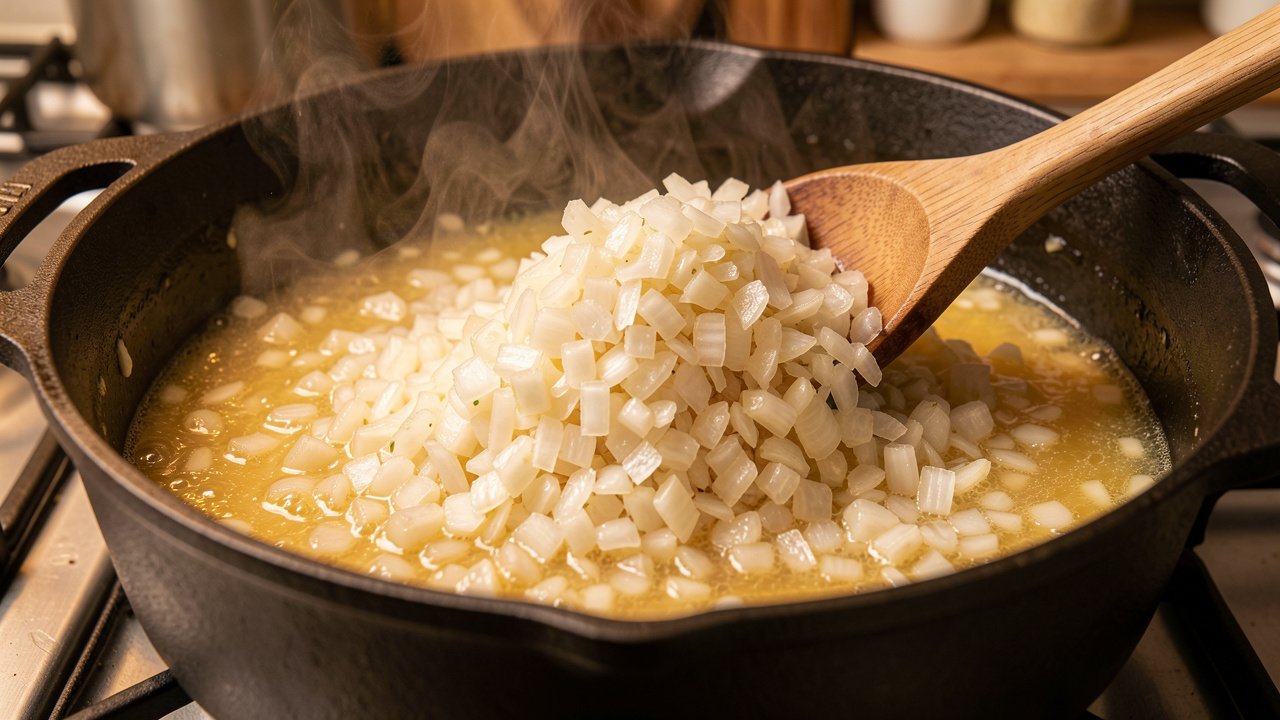
Warm the lard in a heavy pot over medium-low heat and add all the onion with a pinch of salt. This takes 20 to 25 minutes and cannot be hurried. The onions go from crunchy to limp to translucent to a soft golden mass that slumps off the spoon. You are not browning them; you are collapsing them. If they catch, add a splash of water and lower the heat.
Add the Garlic and Caraway
Stir in the minced garlic and the crushed caraway and cook for about a minute, just until the raw garlic smell turns sweet. Keep the heat gentle. Garlic browns fast in hot fat and bitter garlic is a smaller disaster than bitter paprika, but it is still a disaster.
The Paprika Moment
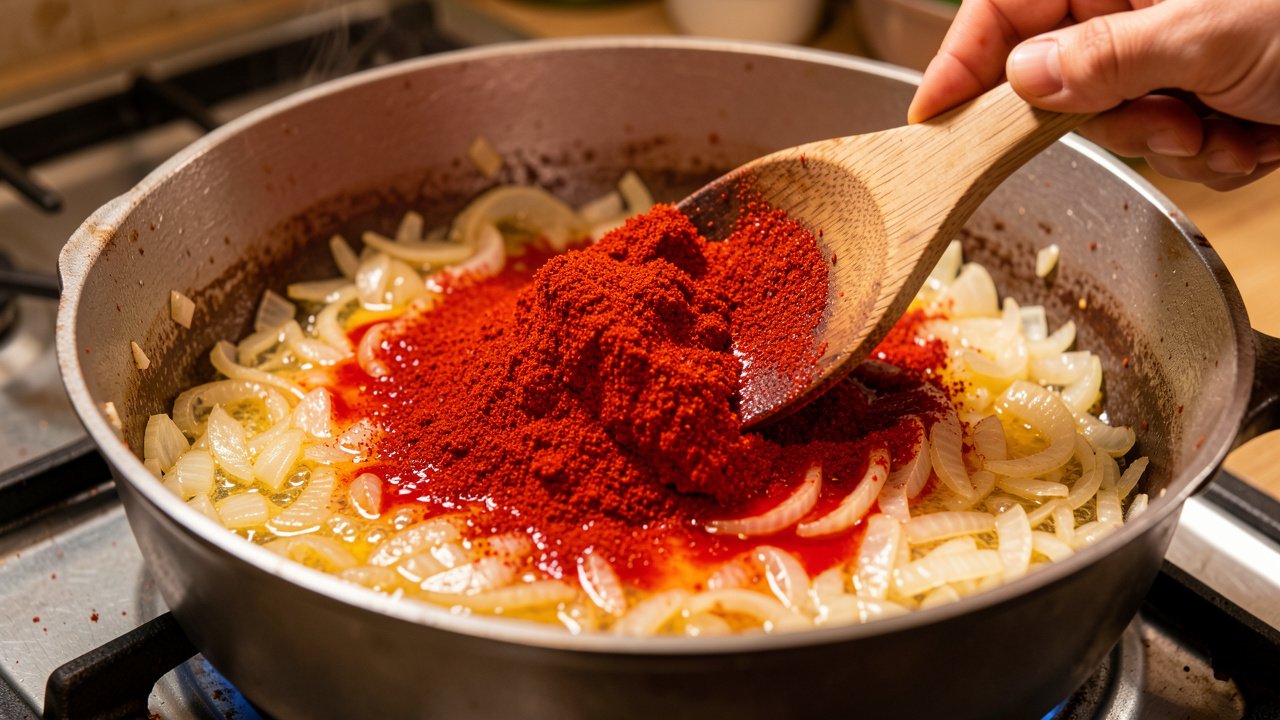
Take the pot off the burner. Not down to low, off. Wait a few seconds, then tip in all the sweet paprika and stir hard and fast so it coats the onions and dissolves into the fat. Within five seconds it should smell sweet and earthy and look intensely red. Immediately pour in the stock, still off the heat, to drop the temperature before anything can scorch. If you smell anything acrid, or the paprika turns brown rather than deep red, stop; it is burnt and there is no fixing it. Wash the pot and start the onions again.
Simmer the Beef Low and Slow
Return the pot to the stove. Add the beef, tomatoes, wax pepper, bay leaf, and salt, and bring it up until a bubble breaks the surface every second or two. That is the target. Hold it there, lid ajar, for about 2 hours. A hard boil makes the muscle fibers seize and wring out their moisture, leaving tough meat swimming in broth. Low and slow lets the collagen relax into gelatin instead. Top up with hot water if the level drops below the meat.
Vegetables, Csipetke, and Serving
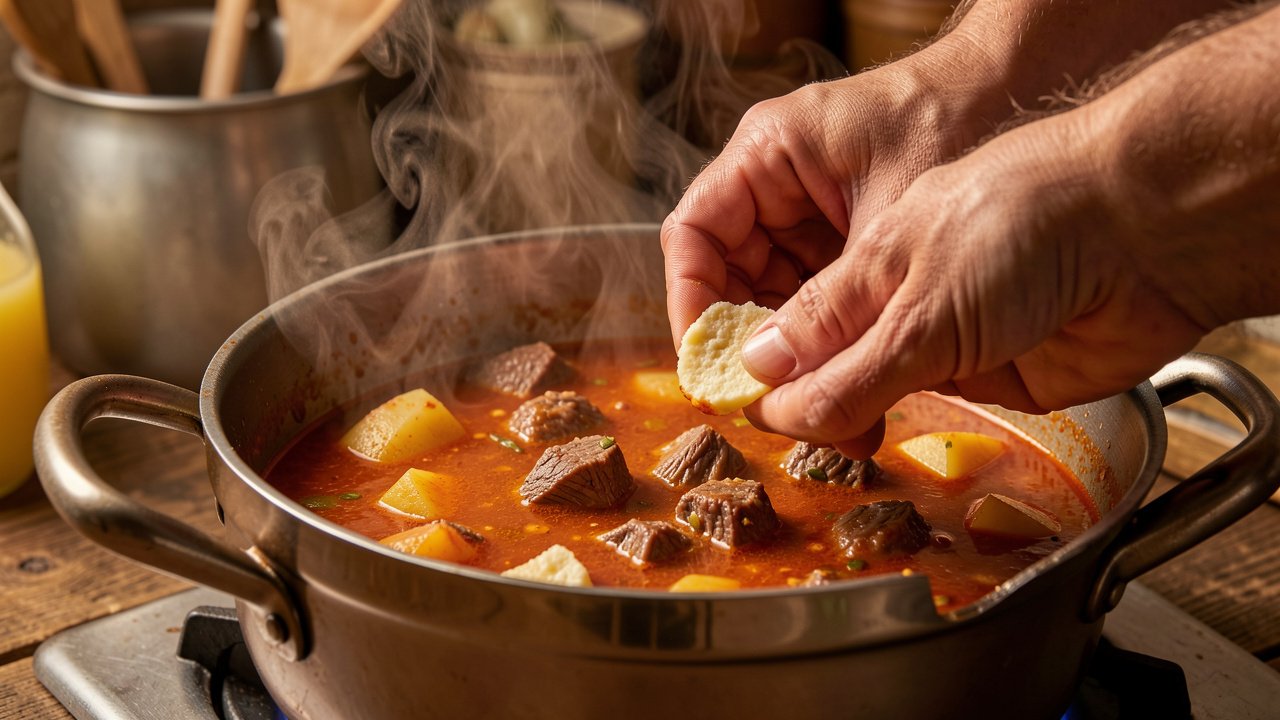
When the beef gives way easily to a spoon, add the carrots, parsnip, and potatoes and simmer 20 minutes more until tender. Meanwhile make the csipetke: knead the flour, egg, and a pinch of salt into a stiff dough, flatten it thin between your palms, and pinch off fingernail-sized scraps straight into the simmering soup. They rise to the surface when cooked, about 4 minutes. Taste for salt, pull out the bay leaf, and ladle it into deep bowls with bread on the side.
Chef’s Tips From Real Kitchen Testing
Cut the beef larger than feels right. Collagen-rich shin loses roughly a third of its volume over two hours, and 1-inch cubes finish at a satisfying half-inch. Small cubes disappear entirely.
Taste the broth before the vegetables go in, not after. Potatoes absorb salt greedily and mute everything, so a broth that tastes correct at that stage will taste underseasoned at the table.
Cook the csipetke in the pot, not separately. The dough scraps release a little starch that gives the broth a barely perceptible silkiness, which is part of the point of them.
Recipe Variations
Serving Suggestions
- Dark rye or a crusty white loaf for the broth
- Pickled cucumbers or pickled peppers on the side
- A dish of hot paprika paste for those who want it
- Deep bowls and a soup spoon, not a plate
Nutrition Facts
Values are estimates per serving and vary with the cut of beef, the fat used, and how salty your stock is.
Make-Ahead Tips
Gulyas is genuinely better on day two, and not as a consolation. Overnight, the gelatin from the shin sets the broth to a soft jelly in the fridge while the paprika keeps working its way into the fat. It reheats rounder and redder than what came off the stove.
Cook through step 5, then cool and refrigerate the beef and broth without the vegetables. The next day, bring it back to a bare simmer, add the potatoes and carrots, and make the csipetke fresh. Potatoes go grainy overnight and the pinched noodles turn to mush, so those two are always last-minute.
Storage, Freezing & Reheating
Common Mistakes to Avoid
Troubleshooting
Broth tastes bitter or harsh? The paprika burned. There is no rescue, and every trick you read about is a cover-up. Start over and take the pot off the heat next time.
Meat still tough after two hours? Either the heat is too high or the cut is too lean. If it was bubbling gently, give it another 45 minutes; collagen converts slower in some pieces than others.
Broth pale and thin-tasting? Old paprika, not enough of it, or onions that never cooked down. Adding more paprika now helps the color but not the depth, since it never met hot fat.
Too greasy on top? Chill it and lift the set fat off, or skim it. A little orange fat is correct and carries the paprika flavor, so do not remove all of it.
A Note on Gulyas and Hungarian Cooking
Paprika reached Hungary through the Ottoman Turks and only became the country’s defining spice in the nineteenth century. The herdsmen’s kettle soup was cooking long before it turned red. Once paprika took hold it reshaped the repertoire, and today gulyas, porkolt, paprikas, and tokany are distinct dishes separated largely by how much liquid they carry.
The word travelled better than the recipe. Hungarian cooking became fashionable abroad, and what foreign kitchens copied was the thick sauced version, which then took the name of the soup and kept it. That is how “goulash” ended up meaning stew in English. If you like slow-simmered tomato-and-meat cooking, our hearty tomato lentil soup runs on the same patience, and the method behind our fresh tomato sauce without sugar is worth knowing. Growing more tomatoes than you can eat is a good problem; canning crushed tomatoes solves it.
Frequently Asked Questions
More Tomato Recipes to Try

Urooj Mukhtar is a classically trained chef and food blogger at TomatoAnswers.com, creating healthy, seasonal, plant-based recipes that put tomatoes at the center of the plate. She focuses on making nutritious, flavour-forward home cooking both accessible and delicious.