Italian Recipes
Pasta e Ceci
Last updated: September 23, 2026
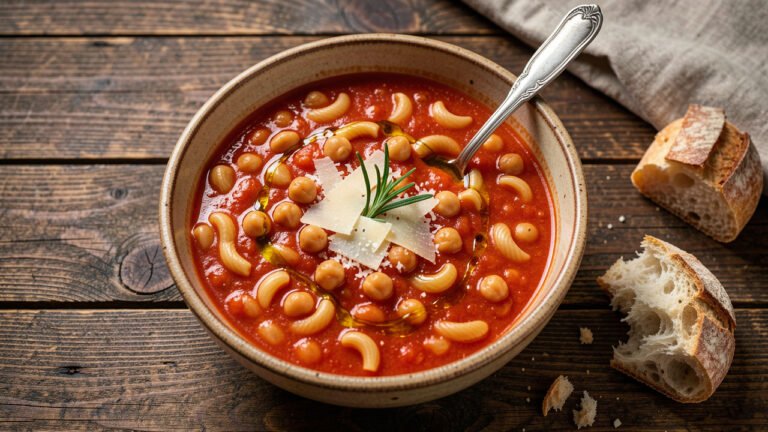
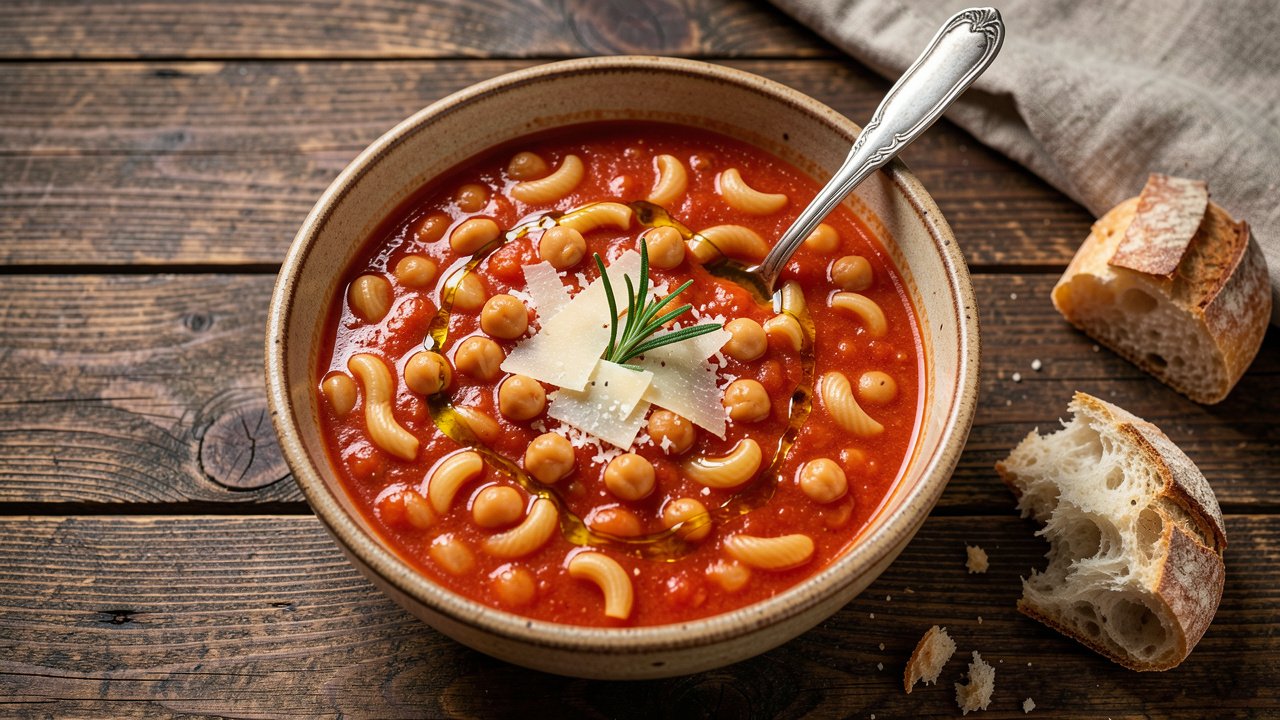
This is peasant food that punches far above its grocery bill. Two cans of chickpeas, a can of tomatoes, a handful of ditalini, and about fifty minutes give you a bowl thick enough to hold a spoon upright. The first few times I made it, I cooked the pasta separately. It was fine. It was also thin, and thin is the one thing pasta e ceci should never be.
Why This Chickpea, Tomato, and Pasta Soup Works
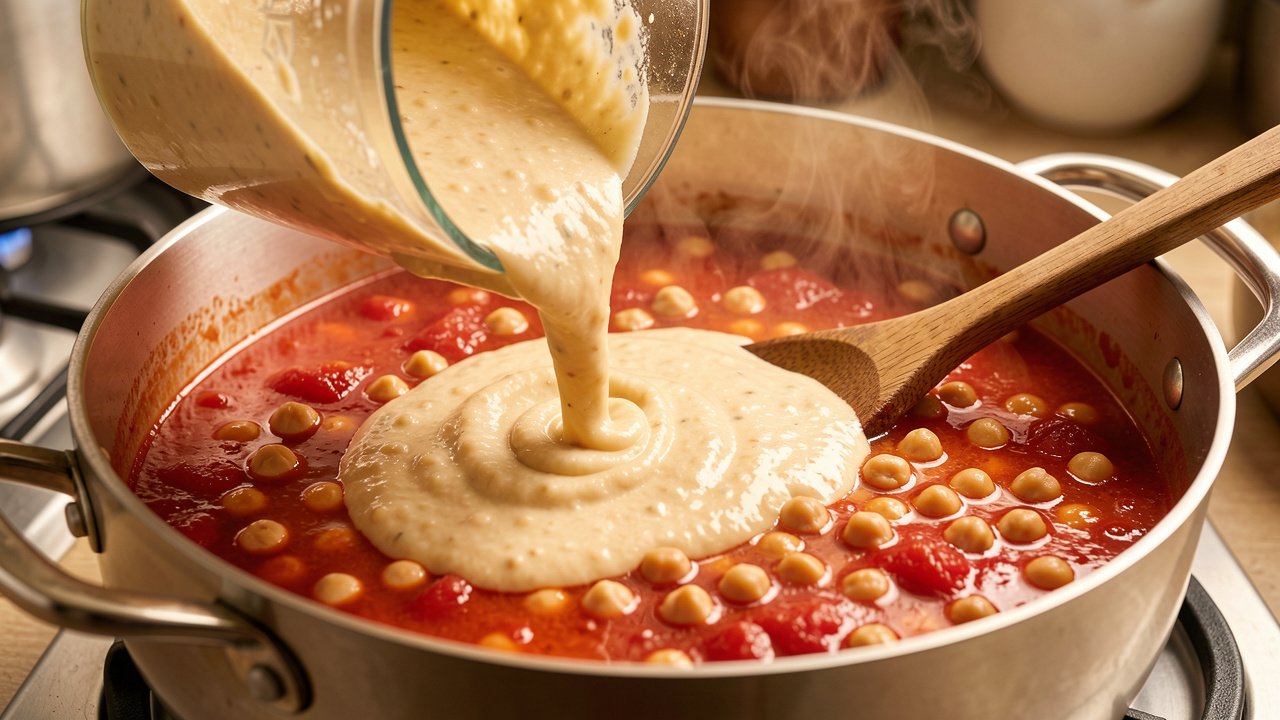
The whole dish turns on one move: you scoop out about a third of the chickpeas once they have simmered, blend them with a ladle of the cooking liquid, and stir that puree back into the pot. Chickpea starch is thick and slightly waxy, so it does the job heavy cream would do in a lesser soup. The broth goes from watery to velvety in the ten seconds it takes to stir it in, and you have not added any dairy.
The second lever is the pasta. Cooked in a separate pot and added at the end, ditalini gives you clean pasta floating in loose tomato broth. Cooked directly in the soup, every bit of starch it sheds stays where you want it. The soup tightens around the pasta, and the pasta drinks up tomato and rosemary instead of plain water.
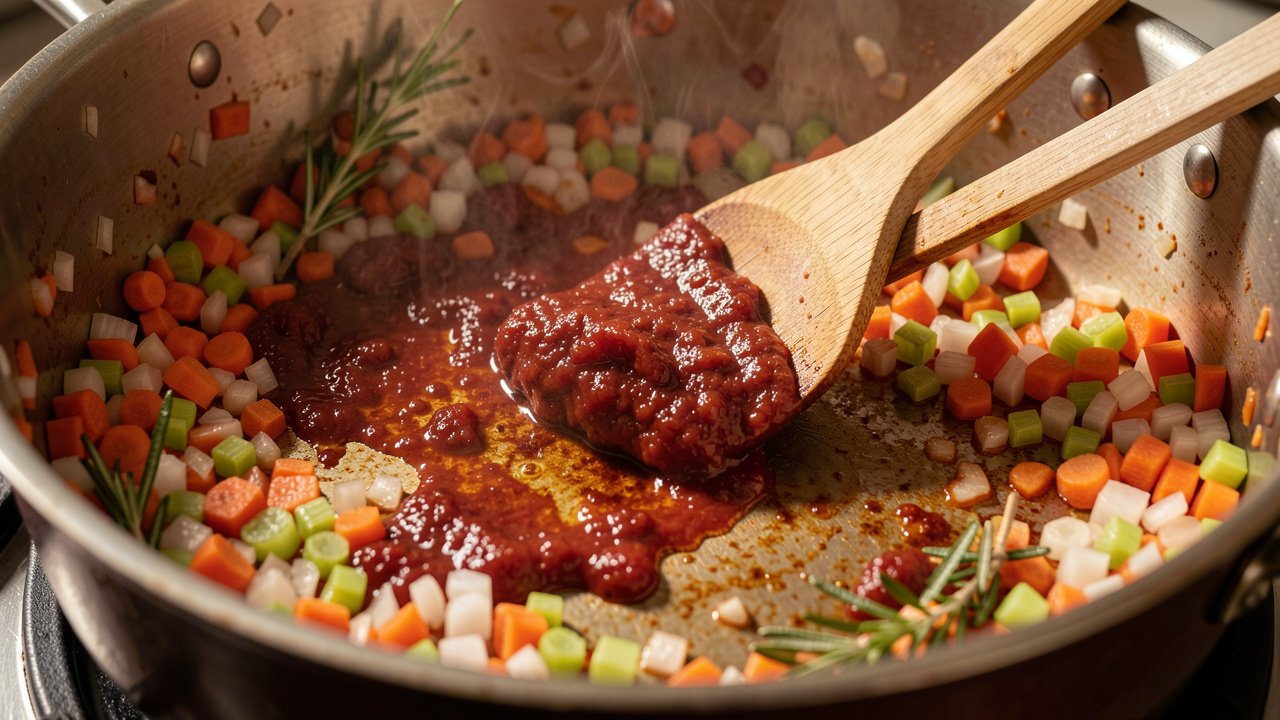
Flavor comes from a soffritto you do not rush and tomato paste you cook until it darkens. Onion, carrot, and celery need a genuine eight to ten minutes over medium heat to go sweet and soft. The paste then fries until it turns from bright red to deep brick, which takes off the tinny edge and leaves savory depth behind.
Rosemary is the third piece. A single sprig dropped in whole perfumes the pot without turning it into a pine forest, and you fish it out before serving. Chopped rosemary stirred through would be aggressive; a whole sprig is a background note.
Pro observation: The tomato paste is done when it smells faintly sweet and leaves a rusty film on the bottom of the pot. That film is flavor. The stock will lift it right off when you pour it in.
Ingredients
Kitchen Measurement Converter
Quickly convert between common cooking measurements without leaving the recipe. Pick a category, enter a value, and the result updates instantly.
Ingredient Notes & Substitutions
Chickpeas
Canned chickpeas are what this soup was built for. Drain and rinse them, though a splash of the can liquid adds body. Dried chickpeas, soaked overnight and simmered until fully tender, taste better and blend smoother, but they must be soft before they go anywhere near the tomatoes.
Tomatoes
One 14-ounce can of chopped or crushed tomatoes is reliable year round. Two cups of fresh ripe tomatoes, chopped small, work in late summer and taste brighter. The tomato paste is not optional either way; it carries the color and the savory backbone.
Ditalini
Small tubes are traditional because they load onto a spoon with a chickpea or two. Tubetti, small shells, or broken spaghetti all work. Avoid long or large shapes, which will not cook evenly in a thick pot.
Parmesan and Stock
Vegetable stock keeps this vegetarian, and a Parmesan rind dropped into the simmer adds real savory depth. Check that your Parmesan is made without animal rennet, or use a pecorino-style alternative.
Equipment
- Heavy soup pot or Dutch oven
- Immersion or countertop blender
- Ladle
- Sharp knife and board
- Wooden spoon
- Measuring cups
Before You Start
1. Dice the soffritto small and even. Quarter-inch pieces melt into the soup instead of showing up as chunks of carrot. Uneven dice leaves some pieces crunchy while the onion browns.
2. Have warm stock ready. Cold stock hitting a hot pot stalls the cooking. Warm it while the soffritto softens.
3. Do not add the pasta until you have blended. Blending after the pasta goes in shreds it into paste. The order matters here.
Step-by-Step Instructions
Build the Soffritto
Warm 3 tablespoons of olive oil in a heavy pot over medium heat. Add the diced onion, carrot, and celery with a pinch of salt and cook 8 to 10 minutes, stirring now and then. You want soft and translucent with a hint of gold at the edges, not browned. If they color fast, drop the heat.
Cook the Tomato Paste Dark
Stir in the garlic, red pepper flakes, and rosemary sprig and cook 60 seconds until fragrant. Add the tomato paste and keep stirring 2 to 3 full minutes. It goes from bright red to deep rust and starts sticking to the bottom. That is right. Stop before it smells burnt.
Add Tomatoes, Chickpeas, and Stock
Pour in the chopped tomatoes and scrape the bottom of the pot to lift everything stuck there. Add the drained chickpeas, warm stock, a teaspoon of salt, and the Parmesan rind if using. Bring to a boil, then lower to a steady simmer and cook 15 minutes uncovered. The chickpeas soften and the liquid starts to taste like something.
Blend a Third of the Chickpeas
Scoop out roughly a third of the chickpeas with about a cup of the liquid. Blend them smooth with an immersion blender in a tall cup, or in a countertop blender with the lid vented so steam can escape. Stir the puree back in and watch: the thin broth turns opaque and creamy almost immediately. You can also pulse an immersion blender in one side of the pot, but stop while whole chickpeas remain.
Cook the Pasta in the Soup
Stir the ditalini straight into the simmering soup and set a timer for the low end of the package time, usually 8 to 10 minutes. Stir every couple of minutes and scrape the bottom, because a thick soup scorches easily. It tightens noticeably as the pasta releases starch. If it grabs the spoon before the pasta is tender, splash in hot stock.
Check Thickness and Finish
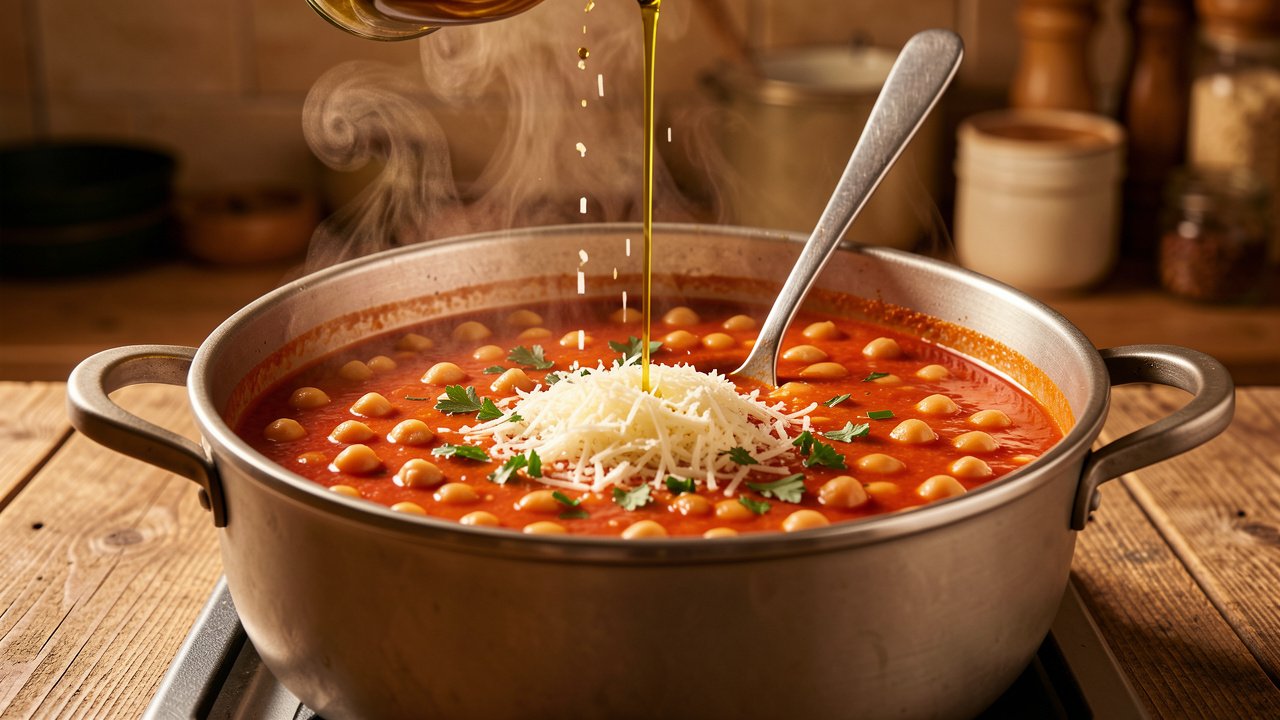
Taste a piece of pasta; it should be tender with the faintest resistance. Fish out the rosemary sprig and the Parmesan rind. Stand a spoon in the center of the pot: it should stay upright for a beat before it tips, and a spoon dragged across the bottom should leave a trail that closes slowly. Season with salt and plenty of black pepper, then ladle into bowls and finish each with a hard drizzle of olive oil, Parmesan, and parsley.
Chef’s Tips From Real Kitchen Testing
Serve it within about fifteen minutes of the pasta finishing. Every minute after that, the ditalini keeps drinking liquid, and a bowl that was perfect at the stove can be stodgy by the time it reaches the table.
Salt in two places, not one: a pinch with the soffritto and a teaspoon with the stock. Chickpeas and pasta both absorb seasoning as they cook, and salt added only at the end sits on the surface.
The finishing olive oil is an ingredient, not a garnish. Use the good peppery bottle and be generous. It floats on the thick surface and hits your tongue first.
Recipe Variations
Serving Suggestions
- Torn crusty bread or grilled ciabatta for scooping
- A sharp green salad with lemon to cut the richness
- Extra Parmesan and cracked black pepper at the table
- A chilled pomegranate spritzer
Nutrition Facts
Values are estimates per serving and shift with your stock, your pasta, and how much Parmesan lands on top.
Make-Ahead Tips
The soup base takes to make-ahead cooking beautifully, but the pasta does not. Cook everything through the blending step, then cool and refrigerate the base for up to three days. When you want dinner, bring it back to a simmer, add a splash of stock to loosen it, then stir in the dry ditalini and cook it fresh. Same ten-minute-to-table result, none of the mush that comes from reheating pasta that has sat in liquid overnight.
Storage, Freezing & Reheating
Common Mistakes to Avoid
Troubleshooting
Too thin? Blend another half cup of chickpeas and stir them in, or simmer uncovered a few minutes longer. Adding pasta to fix thinness only works once; past that it gets gluey.
Too thick, or set solid in the fridge? Hot stock, added a quarter cup at a time over low heat, brings it right back. Do not dump in cold water; it dulls the flavor and you will need to re-salt.
Scorched on the bottom? Stop stirring and ladle the good soup into a clean pot without scraping. Anything you scrape up carries the burnt taste through the whole batch.
A Note on Pasta e Ceci
Pasta e ceci belongs to cucina povera, the Italian tradition of cooking well from very little. Versions turn up from Rome to Puglia, some brothy, some almost a stew, nearly all leaning on legume starch rather than dairy for richness. Chickpeas, tomatoes, olive oil, and rosemary are the same building blocks that make tomatoes a cornerstone of the Mediterranean diet.
The same logic drives our hearty tomato lentil soup, where lentils do the thickening. For a faster route through the same pantry, try tomato basil pasta, or read up on tomato sauce recipes.