Italian Recipes
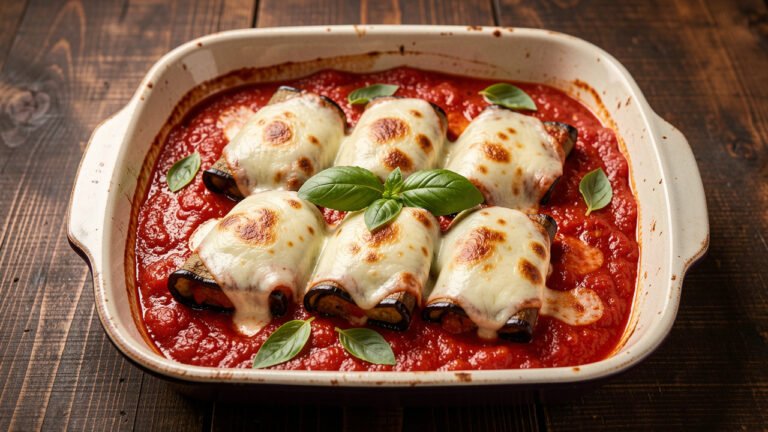
Baked Vegetarian Involtini
Last updated: September 23, 2026
These are not fried eggplant rounds. They are soft planks wrapped around a lemony ricotta filling and baked until the sauce bubbles up around them. The first time I made involtini I sliced the eggplant a hair too thick, and the planks snapped in half the second I tried to roll them. That mistake taught me more than any recipe did.
Why These Eggplant Rolls Work
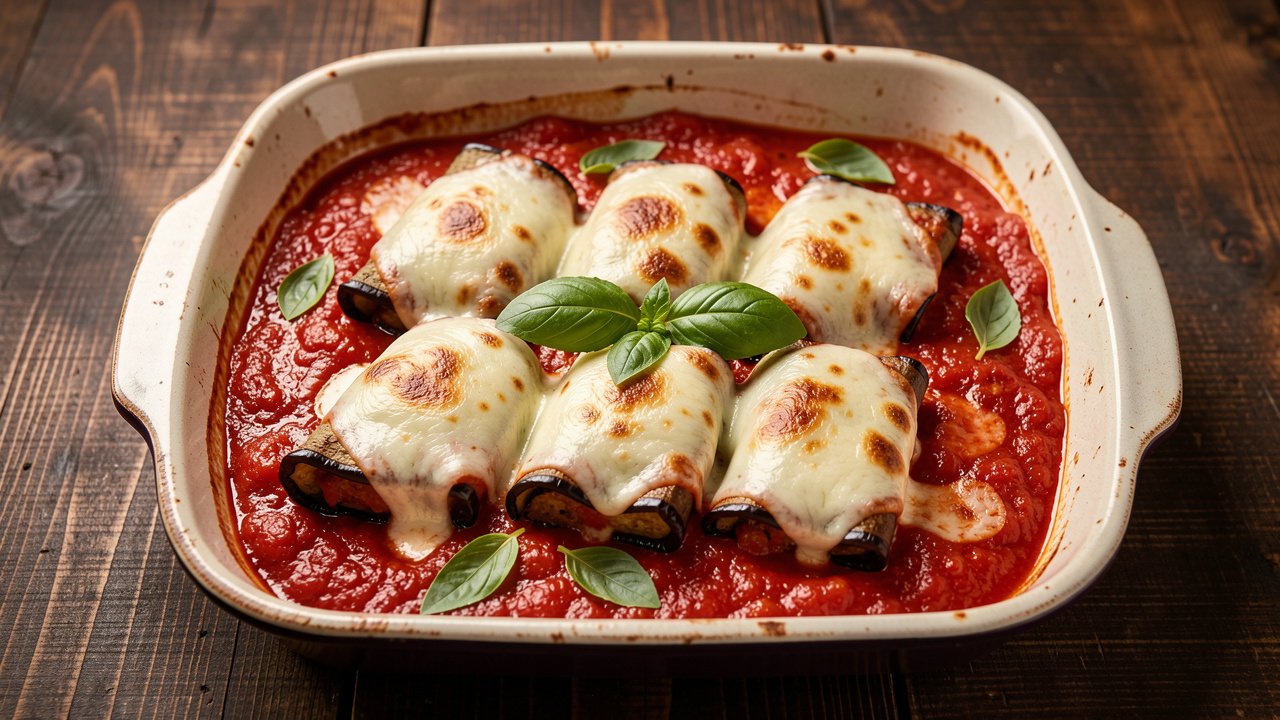
Most eggplant dishes ask you to fry the vegetable until it drinks a cup of oil. This one does not. The planks get a light brush of oil and a stint under high heat, which drives off water and leaves them silky instead of greasy. The finished dish tastes cleanly of tomato rather than of frying.
The filling does real work too. Ricotta alone can taste like wet chalk, so it gets Parmesan for savor, an egg to set it in the oven, basil for perfume, and lemon zest to cut the richness. Skip the zest and you will notice something missing without being able to name it.
Then there is the sauce. Garlic sliced thin and softened in oil with chili flakes gives a slow warmth rather than a sharp bite. The rolls sit half-submerged, so they steam and bake at once: the eggplant soaks up tomato, the tomato picks up creaminess from the ricotta.
Pro observation: A properly roasted plank drapes over your finger like a wet dish towel. If it holds its shape stiffly, it needs a few more minutes or it will crack when you roll it.
Ingredients
Kitchen Measurement Converter
Quickly convert between common cooking measurements without leaving the recipe. Pick a category, enter a value, and the result updates instantly.
Ingredient Notes & Substitutions
Eggplant
Buy long, straight globe or Italian eggplants, not short squat ones; straight fruit gives longer, more even planks. The skin should be tight and shiny, and it should feel light for its size, which means fewer seeds.
Ricotta
Whole-milk ricotta is worth seeking out; part-skim turns watery in the oven. If yours looks loose in the tub, drain it in a sieve for 20 minutes so the filling does not run out of the rolls.
Tomatoes
Canned crushed tomatoes give the most reliable sauce year-round, and San Marzano style are sweeter. Whole peeled tomatoes crushed by hand work too and leave a chunkier texture.
Chili Flakes
One teaspoon gives warm background heat, not a burn. Calabrian chili paste is a fine swap, about two teaspoons. Fresh red chili works, sliced thin and softened with the garlic.
Equipment
- Long sharp chef’s knife
- Two sheet pans
- Colander or wire rack
- 9×13 inch baking dish
- Medium saucepan
- Mixing bowl
- Pastry brush
- Paper towels
- Box grater
- Tongs
Before You Start
1. Build in the salting time. The planks need 20 to 30 minutes under salt before they go anywhere near the oven. Start there and the rest of the recipe flows without waiting around.
2. Make the sauce while the eggplant sits. The salting window is exactly long enough to get the garlic, chili, and tomatoes simmering.
3. Take the ricotta out of the fridge early. Cold ricotta is stiff and tears the planks as you spread it. Twenty minutes on the counter softens it.
Step-by-Step Instructions
Slice the Eggplant Lengthwise
Trim the stem and stand the eggplant upright. Slice from top to bottom into long planks about 1/4 inch thick. Everything else depends on this: too thick and the plank stays stiff and cracks when you roll it; too thin and it tears the moment you lift it off the pan.
Keep the knife flat and let its weight do the work so the thickness stays even end to end. The first and last slices are mostly skin; chop them into the sauce rather than waste them. You should get about six usable planks per eggplant.
Salt the Planks and Pat Them Dry
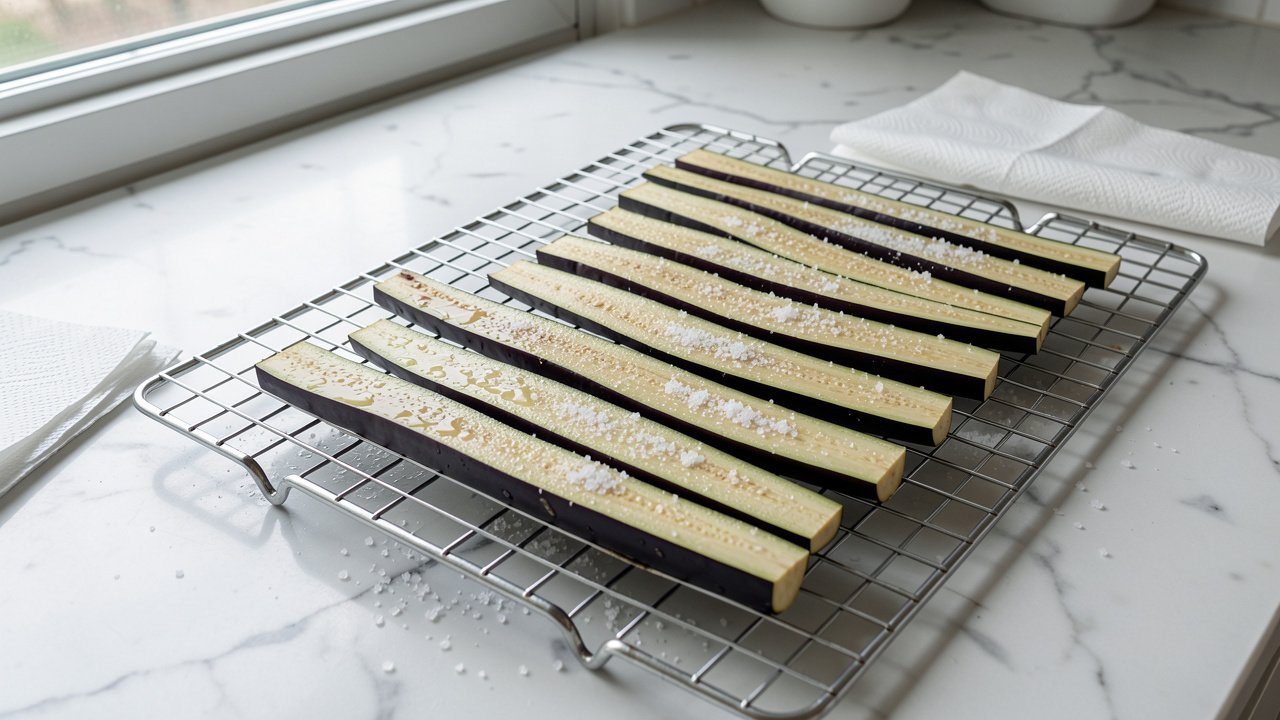
Lay the planks on a rack or in a colander and sprinkle both sides lightly with salt. Leave them 20 to 30 minutes. Beads of water will rise to the surface and the slices will go slightly limp. That water carries the bitterness with it, and pulling it out now means the eggplant roasts instead of steams.
Rinse them briefly if you salted heavily, then press firmly between paper towels. Get them properly dry; surface moisture fights the oven.
Make the Spicy Tomato Sauce
Warm 2 tablespoons of olive oil in a saucepan over medium-low heat. Add the sliced garlic and chili flakes and cook 2 to 3 minutes, until the garlic is pale gold at the edges and smells sweet. Watch closely; garlic goes from golden to burnt in fifteen seconds, and burnt garlic sours the whole dish.
Stir in the tomato paste and cook a minute until it darkens to brick red, then add the crushed tomatoes, sugar, and salt. Simmer 20 minutes uncovered. It is ready when a spoon dragged across the bottom leaves a track that holds for a second before closing.
Roast the Planks Until Pliable
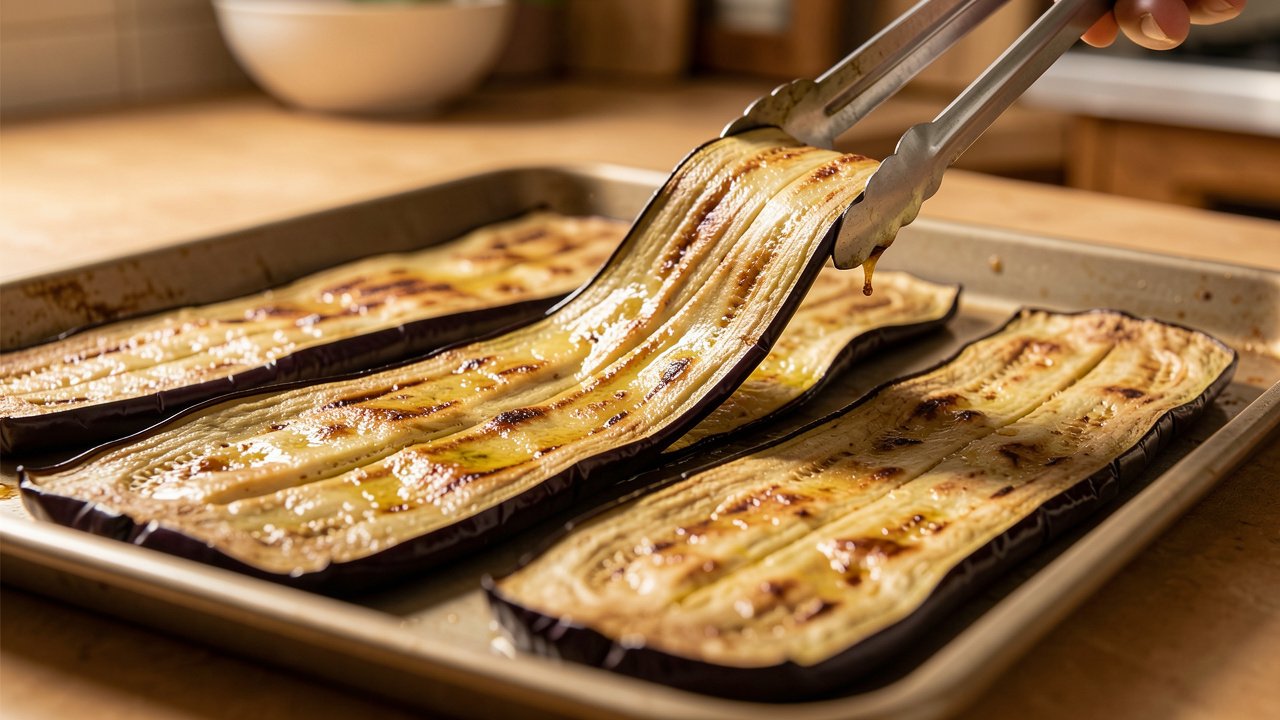
Heat the oven to 425 F. Brush both sides of each dried plank with olive oil and spread them out on two sheet pans, not touching. Roast 12 to 15 minutes, flipping once, until lightly golden and floppy. You are not cooking them through; you are making them bendable.
Test one by lifting an end with tongs. If it flops over without resistance, they are done; if it stands up like a plank of wood, give them 3 minutes more. A hot grill pan works too and adds char lines, about 2 minutes per side. Cool them enough to handle before filling.
Mix the Filling and Roll
Stir the ricotta, Parmesan, egg, basil, lemon zest, and black pepper together until smooth, then taste and season; ricotta absorbs a surprising amount of salt. Lay a cooled plank narrow end nearest you and spread a heaping tablespoon of filling over the bottom two thirds, leaving an inch bare at the far end.
Roll from the narrow end, snug but not tight. Overfilling is the classic error: squeeze in too much and the filling pushes out the sides as you roll, then leaks into the sauce. A thin, even layer gives a neater spiral and a better ratio in every bite.
Nestle Seam-Side Down and Bake
Turn the oven down to 375 F. Spread most of the sauce in the baking dish and set each roll in it seam-side down. This matters more than it sounds: the weight of the roll holds the flap closed, so it stays sealed instead of unwinding as the filling warms and expands.
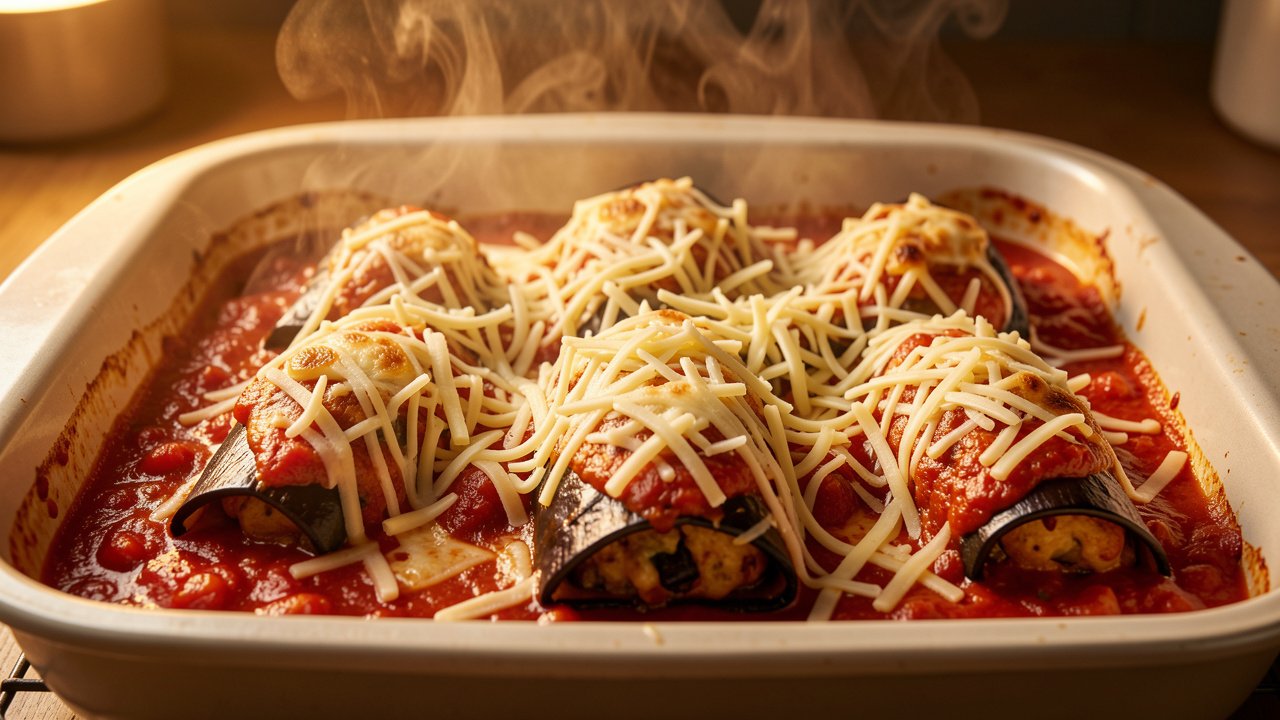
Spoon the rest of the sauce over the tops, scatter the mozzarella, and bake 25 to 30 minutes until the sauce bubbles at the edges and the cheese melts with a few brown freckles. Rest 10 minutes so the rolls firm up and lift out whole, then finish with torn basil.
Chef’s Tips From Real Kitchen Testing
If your knife skills are not steady, use a mandoline on its widest setting. Even thickness is worth more here than any other technique.
Roast the planks a shade past where you think they are ready. Slightly overcooked eggplant still rolls; undercooked eggplant splits down the middle.
Save a spoonful of plain ricotta before adding the egg. Dolloped on the baked rolls, it gives a cool contrast against the chili heat.
Recipe Variations
Serving Suggestions
- Crusty bread for mopping the sauce
- A sharp arugula and lemon salad
- Soft polenta underneath each roll
- A chilled pomegranate spritzer
Nutrition Facts
Values are estimates per serving of three rolls with sauce, and vary with the ricotta and cheese you use.
Make-Ahead Tips
Roast the planks and cook the sauce up to two days ahead, covered, in the fridge. The filling can be mixed a day in advance, though it stiffens overnight, so let it sit out fifteen minutes and stir before spreading.
You can also assemble the whole dish, cheese and all, and refrigerate it up to 24 hours. Bake straight from cold and add 10 minutes. Any longer and the eggplant gives up water into the sauce.
Storage, Freezing & Reheating
Common Mistakes to Avoid
Troubleshooting
Planks cracking as you roll? They are underdone. Put the rest back in the oven for 3 more minutes. Cracked ones can be patched by overlapping two pieces and rolling them together.
Rolls unwinding in the dish? They went in seam-side up, or overfilled. Push them tightly against each other so the neighbors hold them shut.
Watery sauce after baking? The planks were not dried well enough. Pour off the excess, or bake uncovered 8 minutes more to reduce it.
A Note on Italian Involtini
Involtini means little bundles, and Italian cooks make them from anything thin enough to wrap: veal, swordfish, cabbage leaves, and eggplant. The south treats the vegetable as a wrapper the way the north treats pasta sheets. It is the same instinct behind tomato and eggplant lasagna, only rolled instead of layered.
Chili flakes point south too, toward Calabria and Sicily, where heat is standard rather than optional. Our guide to tomato sauce recipes covers the variations worth knowing, and the same garlicky base carries our tomato basil pasta. Eggplant, tomatoes, and olive oil sit at the center of the Mediterranean diet, which is worth remembering while eating something this rich.