Caribbean Recipes
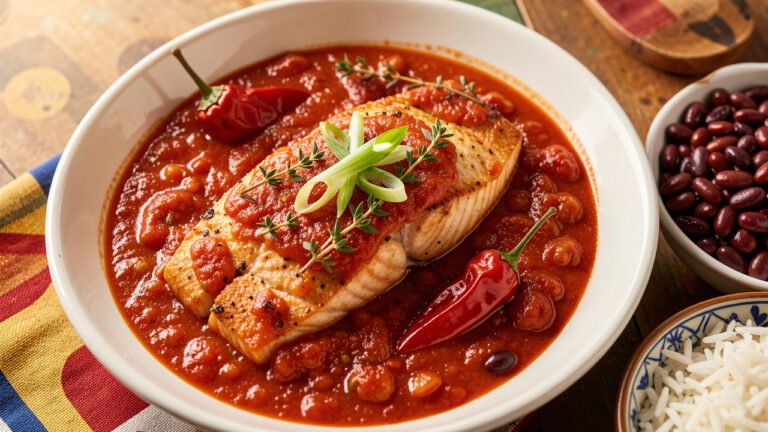
Martinique Creole Fish in Tomato Sauce
This is weeknight comfort food across Martinique and Guadeloupe, the kind of dish that fills a kitchen with the smell of thyme and simmering tomato before anyone has even sat down. The fish stays tender because it is poached, not fried, and the sauce carries all the brightness of the islands: garlic, lime, scallion, and just enough heat from a whole chili to warm you without setting you alight.
The trick I learned the hard way is patience with the fish. The first time I made it, I kept stirring and turning the steaks, and they broke into shreds. Left mostly alone in a gentle simmer, they hold together and soak up the sauce like a sponge.
Why This Court-Bouillon de Poisson Works
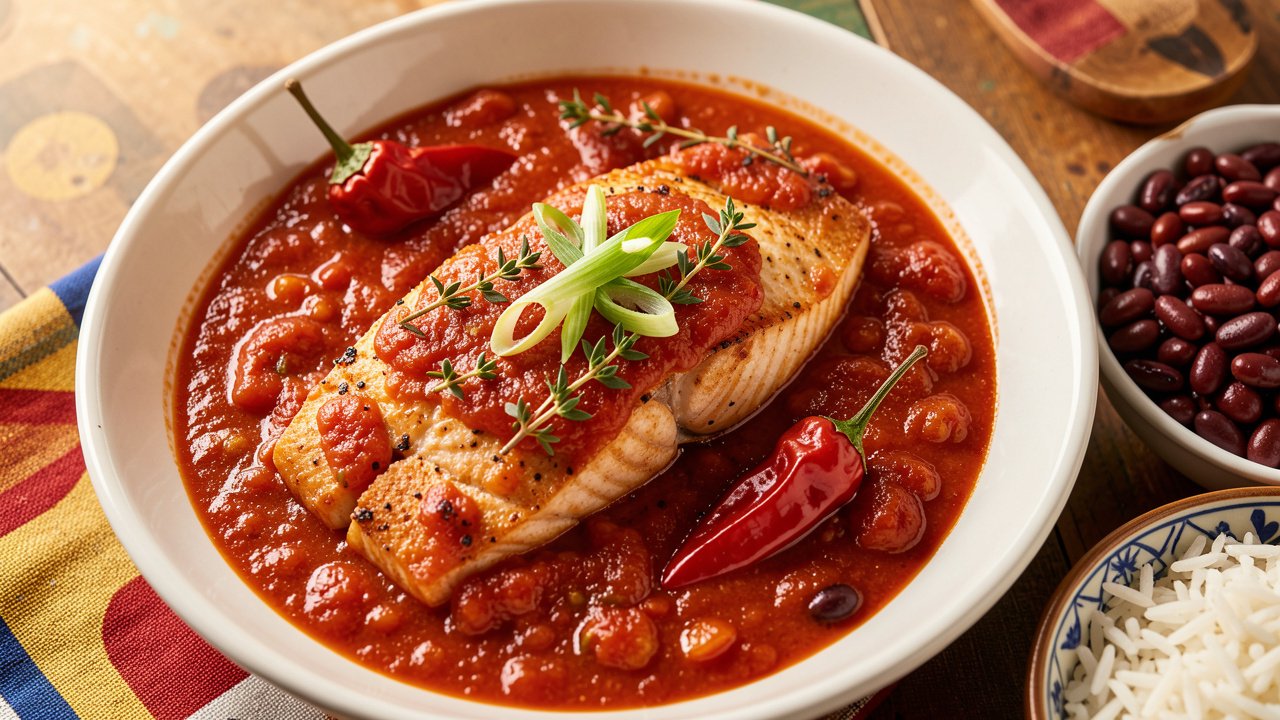
Antillean court-bouillon is not the plain poaching liquid the French name suggests. In Martinique and Guadeloupe it means something richer: a fish stewed in a bold, tomato-forward Creole sauce built on garlic, lime, and a bouquet of thyme and scallion. Everything works together toward the same balance of savory, tangy, and gently fiery.
The lime-and-garlic marinade is the first pillar. A short soak seasons the fish right to the center and firms the flesh, so it holds its shape in the simmer instead of falling apart. It also gives the whole dish that clean, citrusy lift that defines Creole cooking.
The second pillar is the sauce base. You soften onion, garlic, and scallion, then cook down the tomatoes with thyme and a spoon of annatto (roucou) oil until the mixture turns deep and glossy. Only then does the fish go in, so it poaches in flavor rather than plain water.
The last pillar is the whole Scotch bonnet. Dropped in without piercing, it perfumes the pot with fruity aroma and a slow, background warmth, but you can lift it out before it bursts if you want the flavor without much heat. That single move is the difference between a stew that tastes flat and one that tastes like the islands.
Pro observation: The sauce is ready for the fish when it thickens enough to coat the back of a spoon and the annatto has turned it a warm brick-red. If it still looks watery, let it reduce a few minutes longer before the steaks go in.
Ingredients
Kitchen Measurement Converter
Quickly convert between common cooking measurements without leaving the recipe. Pick a category, enter a value, and the result updates instantly.
Ingredient Notes & Substitutions
The Fish
Firm, meaty steaks hold up best. Red snapper and kingfish are traditional, but grouper, mahi-mahi, or any firm halal white fish works. Use steaks or thick fillets with the skin on so they do not fall apart in the simmer.
Annatto (Roucou)
Roucou, made from annatto seeds, gives the sauce its signature warm red color and faint earthy note. If you cannot find annatto oil, a pinch of ground annatto or sweet paprika stirred into the oil is a fair stand-in.
Scotch Bonnet
Drop it in whole and unpierced for aroma without much heat, and fish it out before serving. For more fire, pierce it once or let it simmer longer. A habanero is the closest substitute if you cannot find Scotch bonnet.
Lime and Stock
Fresh lime does double duty here, seasoning the marinade and brightening the finished pot. For the simmering liquid, a good fish stock adds depth; a splash of fish stock or lime keeps the sauce lively right to the end.
Equipment
- Wide, heavy pan or Dutch oven
- Shallow dish for marinating
- Sharp knife and board
- Fish spatula
- Measuring spoons
- Small bowl for spices
Before You Start
1. Marinate the fish first. Rub the steaks with lime, garlic, and salt and let them sit for at least 15 minutes while you build the sauce. This seasons the fish and firms the flesh.
2. Have your seasoning ready. Chop the onion, scallion, garlic, and tomatoes, and gather the thyme, bay leaf, and allspice before the pan is hot, because the base comes together quickly.
3. Start the rice and beans. Court-bouillon is served over rice with red beans, so get them cooking before you begin the sauce so everything lands on the table together.
Step-by-Step Instructions
Marinate the Fish
Pat the fish steaks dry and lay them in a shallow dish. Rub them all over with the juice of two limes, half the minced garlic, and a good pinch of salt. Turn to coat, then set aside to marinate for 15 to 20 minutes while you build the sauce. The lime will firm the flesh and season it through.
Build the Creole Base
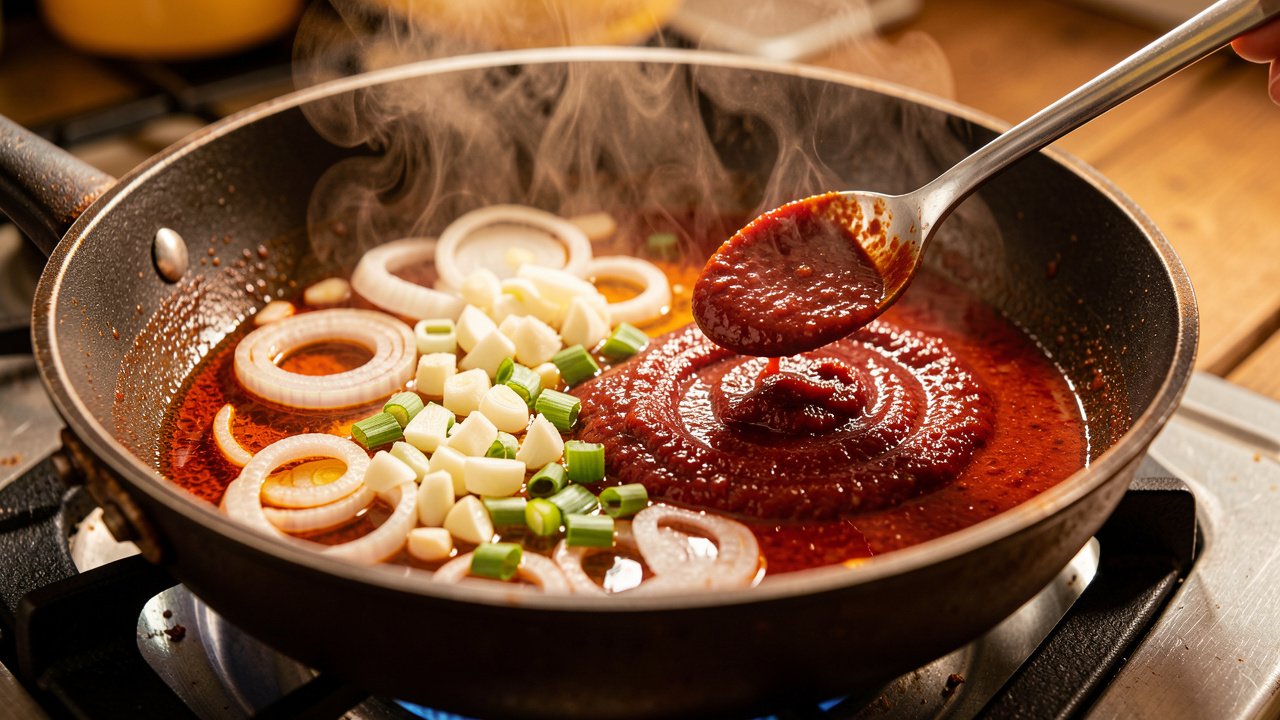
Heat the annatto oil in a wide pan over medium heat until it shimmers and turns a warm red. Add the sliced onion, the rest of the garlic, and most of the scallion, and cook 4 to 5 minutes until soft and fragrant. Stir in the tomato paste and let it darken for a minute to deepen the flavor.
Simmer the Sauce
Add the chopped tomatoes, thyme sprigs, bay leaf, and allspice berries, then pour in the fish stock. Bring to a simmer and cook 10 to 12 minutes, stirring now and then, until the tomatoes collapse and the sauce thickens enough to coat a spoon. Season with salt and taste for balance.
Add the Fish and Scotch Bonnet
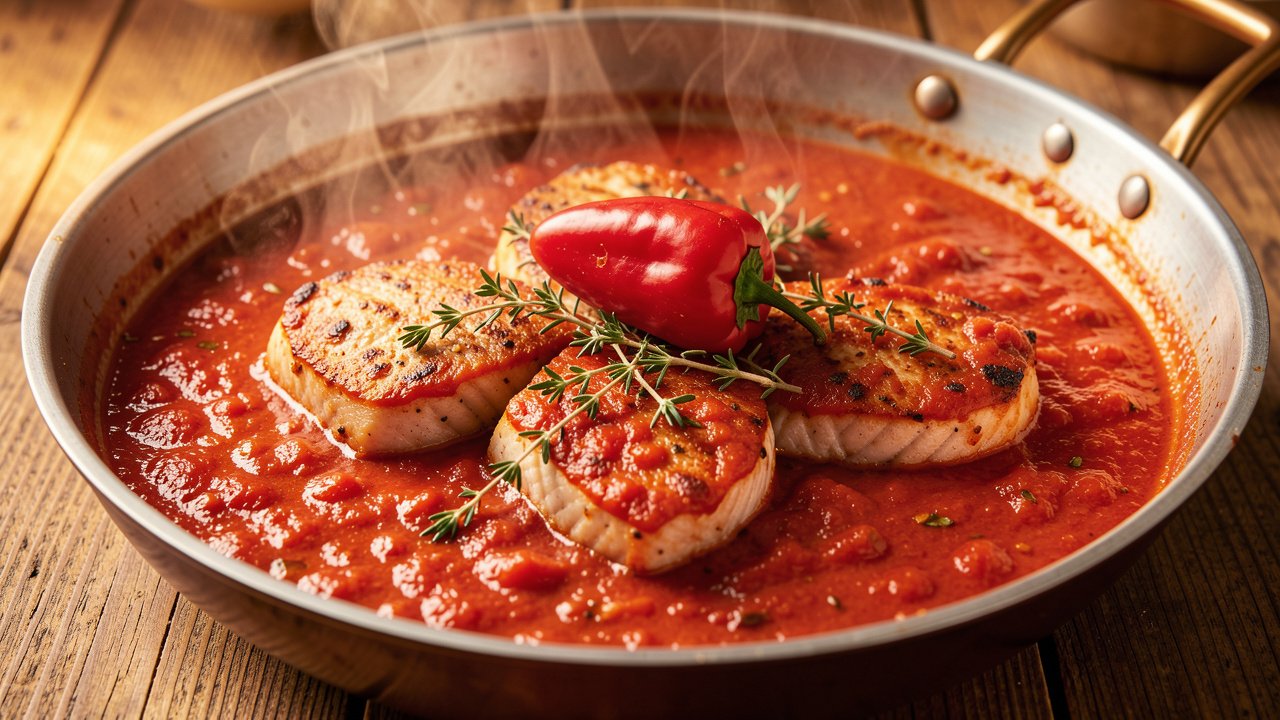
Nestle the marinated fish steaks into the sauce in a single layer and spoon a little sauce over the top. Set the whole Scotch bonnet on the surface without piercing it. Lower the heat so the liquid barely bubbles. Do not stir from here on, or the fish will break up.
Poach Gently Until Done
Cover partially and let the fish poach for 8 to 10 minutes, spooning sauce over it once or twice, until the flesh turns opaque and flakes easily with a fork. Thick steaks take longer than thin fillets, so check the center of the largest piece. For food safety, cook the fish until it reaches an internal temperature of 145 F (63 C).
Brighten and Serve
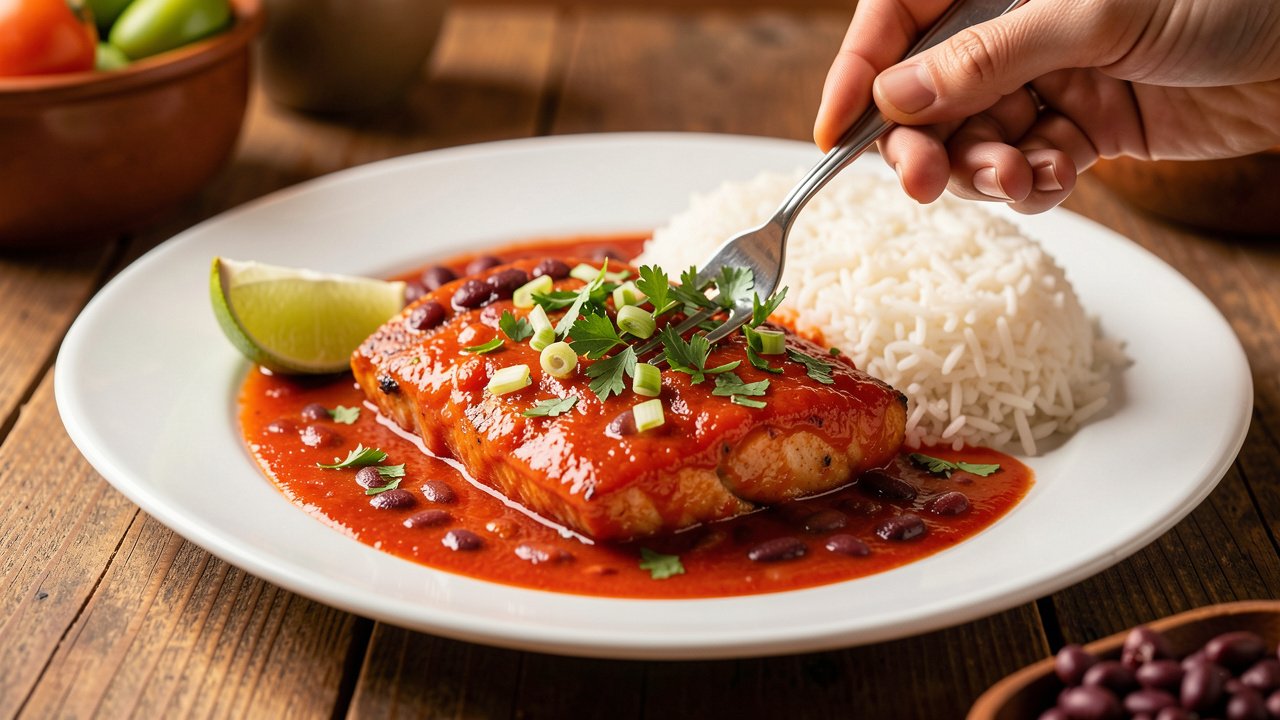
Carefully lift out the Scotch bonnet and the bay leaf. Squeeze in the juice of the remaining lime and scatter the parsley and reserved scallion over the top. Taste and adjust the salt. Serve the fish and sauce hot over steamed rice with red beans on the side.
Chef’s Tips From Real Kitchen Testing
Stop stirring once the fish is in. A gentle simmer and an occasional spoon of sauce over the top keeps the steaks whole; stirring shreds them.
Keep the Scotch bonnet whole and unpierced for aroma without heat. Only pierce it if you want the sauce properly fiery, and lift it out before it bursts.
Reduce the sauce before the fish goes in, not after. A thick, glossy base clings to the fish, while a watery one leaves it pale and bland.
Recipe Variations
Serving Suggestions
- Steamed white rice with red beans
- Boiled green bananas or plantain
- A crisp avocado and lettuce salad
- Extra lime wedges and fresh parsley
Nutrition Facts
| Nutrient | Amount per serving |
|---|---|
| Calories | 340 |
| Protein | 38 g |
| Carbohydrates | 12 g |
| Fat | 15 g |
| Saturated Fat | 3 g |
| Fiber | 3 g |
| Sugar | 6 g |
| Sodium | 640 mg |
Values are estimates per serving and vary with the exact ingredients and brands you use.
Make-Ahead Tips
The Creole sauce actually improves with a short rest, so you can build it a few hours ahead and refrigerate it. When you are ready to eat, reheat the sauce gently, add the marinated fish, and poach it fresh so the steaks stay tender. Cooking the fish to order is the surest way to avoid the dry, overdone texture that comes from reheating cooked fish.
Storage, Freezing & Reheating
Common Mistakes to Avoid
Troubleshooting
Fish falling apart? The simmer was too vigorous or the fish was stirred. Keep the liquid at a bare bubble and move the steaks as little as possible.
Sauce tastes flat? It usually needs salt and a fresh squeeze of lime at the end to wake up the tomato and herbs.
Too watery? Lift out the fish, reduce the sauce for a few minutes on higher heat, then return the fish to warm through.
Too much heat? Remove the Scotch bonnet earlier next time and never pierce it; a splash of stock or a little more tomato mellows the pot.
A Note on Martinican Creole Cooking
Martinican and Guadeloupean cooking grew from many roots, blending French technique with West African, South Asian, and Indigenous Caribbean traditions. The result is a cuisine that leans on bright citrus, garlic, and fresh herbs rather than heavy richness. In this court-bouillon you can taste all of it: the lime-and-garlic marinade that seasons the fish, the whole Scotch bonnet that scents the pot without dominating it, and the annatto (roucou) that lends the sauce its warm island color. It is home cooking at its best, honest and unfussy. If you enjoy fragrant tomato dishes, browse our full collection of tomato recipes for more ideas.
Frequently Asked Questions
More Tomato Recipes to Try
Last updated: September 23, 2026