Angolan Recipes
Angola’s National Dish, Made at Home
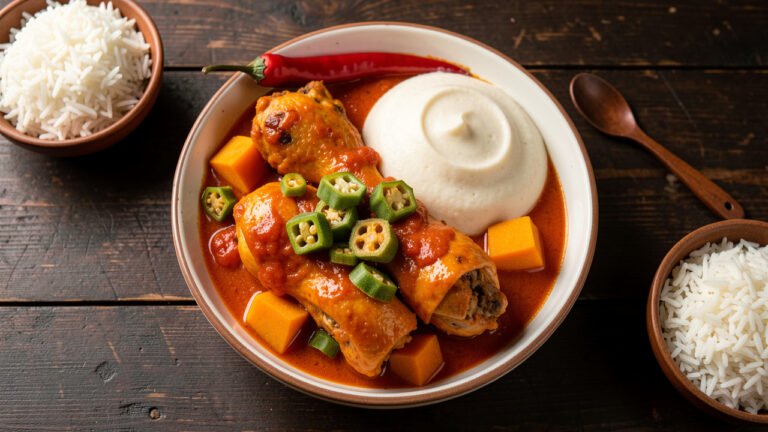
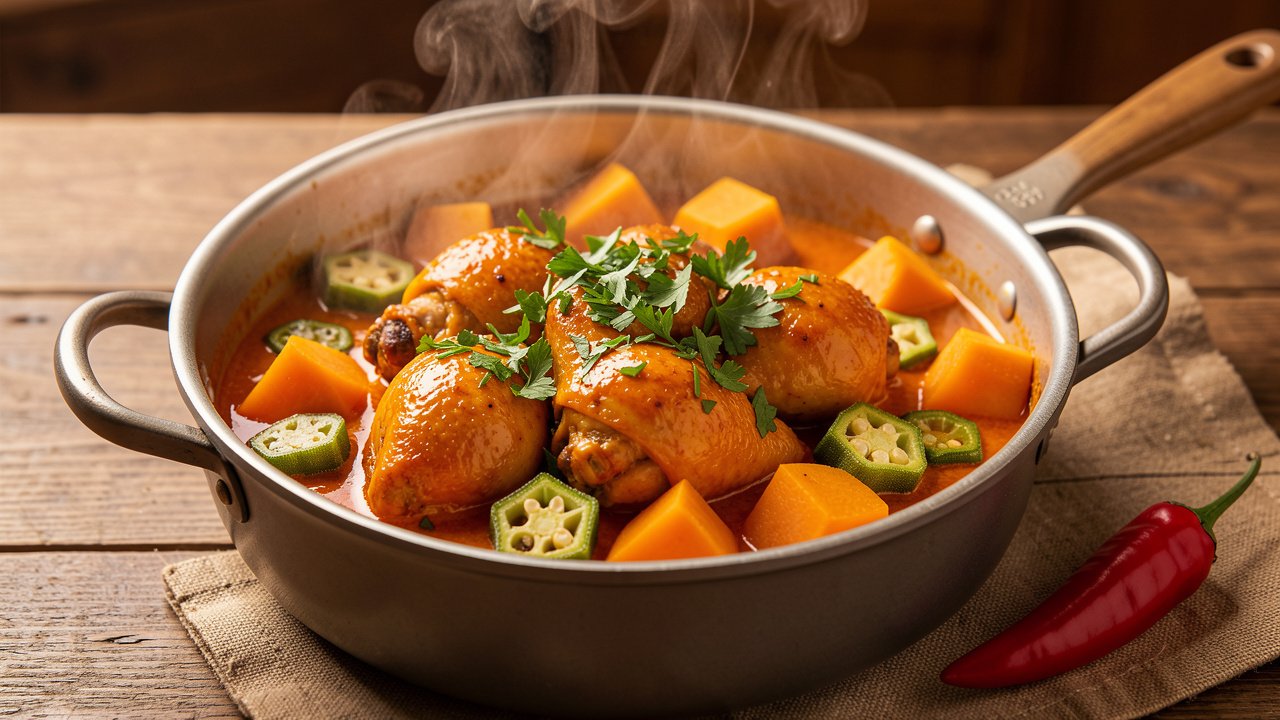
This is the dish Angolan families reach for on Sundays and at celebrations, and once you taste it you understand why. The red palm oil gives the sauce its signature color and a rounded, almost buttery depth, while the tomatoes and onion build a savory base that clings to every piece of chicken. The okra thickens it gently, the pumpkin melts into soft sweetness, and the jindungo sits on the side to add as much fire as you dare.
I learned to respect two small steps here. The citrus-and-garlic marinade is not optional, and the okra hates being over-stirred. Get those right and the muamba comes out glossy, layered, and deeply satisfying.
Why This Muamba de Galinha Works
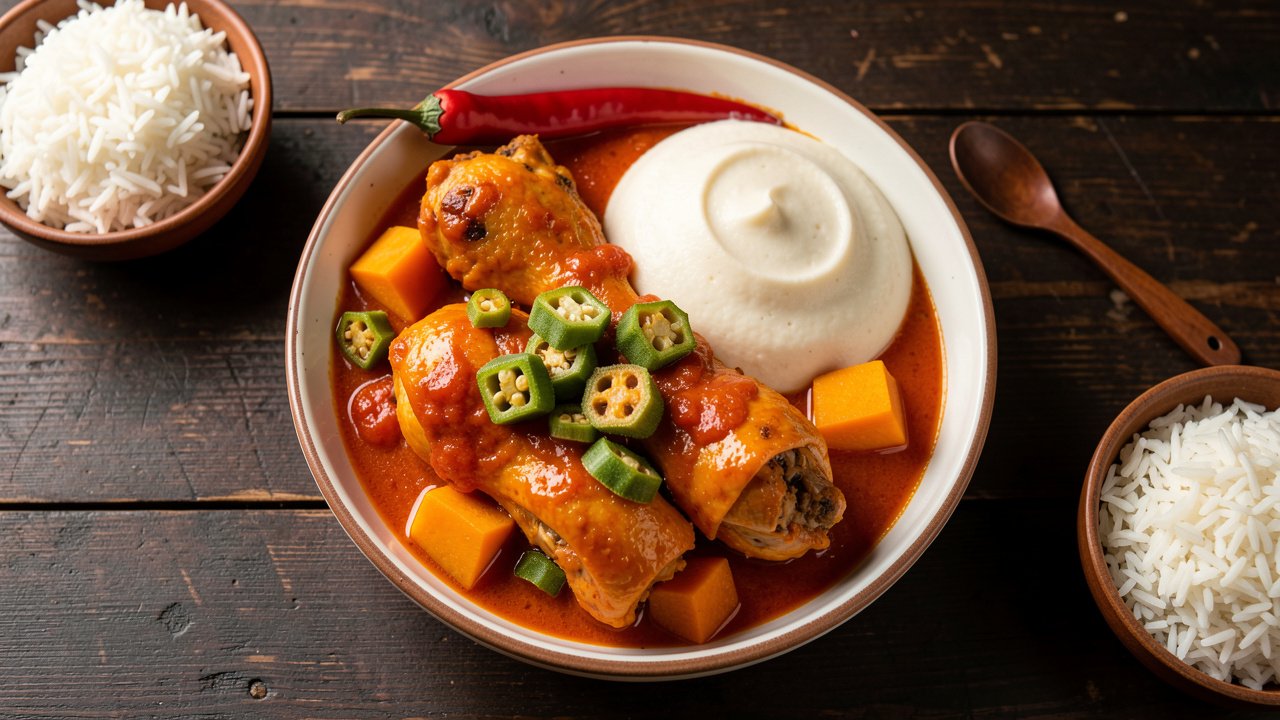
Muamba de Galinha earns its place as Angola’s national dish by doing a lot with a handful of humble ingredients. The magic is layering: you season the chicken, build a savory tomato and onion base, unlock the color and body of red palm oil, then let okra and pumpkin round everything into a thick, spoonable sauce. Each layer tastes of the last, so the finished pot has real depth rather than a single flat note.
The most important early step is the marinade. Rubbing the halal chicken with garlic, lemon, chili, and salt does two things: it seasons the meat from the outside in, and the acidity brightens a sauce that is otherwise rich and heavy. Skip it and the dish still works, but it tastes muddy and one-dimensional instead of lively.
Red palm oil, or dende, is the second non-negotiable for authenticity. It is a fully halal plant oil pressed from the fruit of the oil palm, and it gives muamba its unmistakable deep orange-red color and a savory, slightly earthy flavor that regular oil cannot copy. A little goes a long way, so measure rather than pour freely.
Finally, the okra and pumpkin do the quiet work of thickening. Okra releases a natural body that gives the sauce its cling, and the pumpkin, called abobora locally, softens into sweet pockets that balance the heat of the jindungo. Together they turn a simple braise into something you want to mop up with funge.
Pro observation: The sauce is ready when the red palm oil rises and pools in bright orange beads at the surface. That sheen means the base has cooked through and the flavors have concentrated, not just warmed together.
Ingredients
Kitchen Measurement Converter
Quickly convert between common cooking measurements without leaving the recipe. Pick a category, enter a value, and the result updates instantly.
Ingredient Notes & Substitutions
Halal Chicken
Bone-in, skin-on pieces give the richest flavor and stay juicy through the long simmer. Thighs and drumsticks hold up best. Use certified halal chicken so the finished dish stays fully permissible.
Red Palm Oil
Dende is what makes muamba muamba. It is a halal plant oil with a bold color and savory taste. Look for it in African or Brazilian grocers. If you must, see the palm-free variation below.
Okra
Fresh okra thickens the sauce naturally. Trim the caps but do not slice it to bits, and add it late so it stays tender without turning slimy. Frozen okra works in a pinch.
Pumpkin (Abobora)
Any firm winter squash works: sugar pumpkin, butternut, or kabocha. Cut it into even cubes so it cooks through at the same rate and melts into the sauce for gentle sweetness.
Heat note: Jindungo is the fiery Angolan chili served on the side. Add it whole to perfume the pot, or mash a little in for real fire. A scotch bonnet or bird’s eye chili is a close stand-in.
Equipment
- Large heavy pot or Dutch oven
- Wooden spoon
- Sharp knife and board
- Mixing bowl for marinade
- Measuring spoons and cup
- Tongs for the chicken
Before You Start
1. Marinate first. Rub the halal chicken with garlic, lemon, chili, and salt and let it sit at least 30 minutes, or up to overnight in the fridge. This is the single step that makes the biggest difference to flavor.
2. Cut the pumpkin evenly. Uniform cubes cook at the same rate, so nothing turns to mush while other pieces stay raw in the center.
3. Start your funge or rice alongside. Muamba is meant to be spooned over funge, a smooth cassava porridge, or plain rice, so have it going before the sauce reaches the finish line.
Step-by-Step Instructions
Marinate the Chicken
In a bowl, toss the halal chicken pieces with the minced garlic, lemon juice, chili powder, and 1 teaspoon of the salt. Rub the mixture into the meat, cover, and let it rest at least 30 minutes at room temperature, or refrigerate for several hours. This citrus marinade seasons the chicken and keeps the finished sauce bright.
Sear the Chicken in Palm Oil
Warm the red palm oil in a large pot over medium heat until it turns fluid and vivid orange. Add the marinated chicken in a single layer and sear 3 to 4 minutes per side until lightly browned. Work in batches if needed so the pieces color rather than steam. Lift the chicken out and set it aside.
Build the Tomato Base
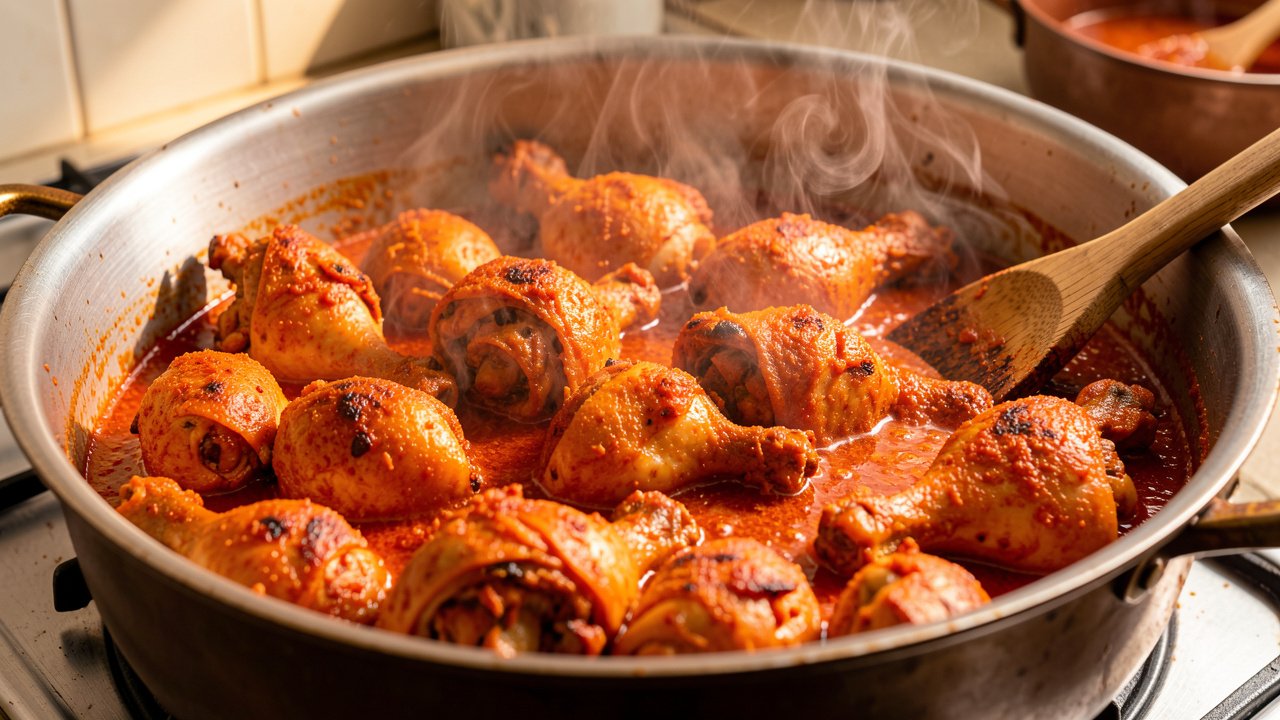
In the same pot, add the chopped onion and cook 5 to 6 minutes until soft and golden. Stir in the tomato paste and cook 1 minute, then add the chopped tomatoes and the remaining salt. Cook 8 to 10 minutes, stirring, until the tomatoes collapse into a thick, savory base and the palm oil starts to rise at the edges.
Simmer the Chicken
Return the chicken and any resting juices to the pot. Pour in the water or stock and tuck the whole jindungo on top without breaking it, so it perfumes the sauce gently. Bring to a simmer, cover, and cook 25 minutes, turning the pieces once, until the chicken is tender and cooked through.
Add the Okra and Pumpkin
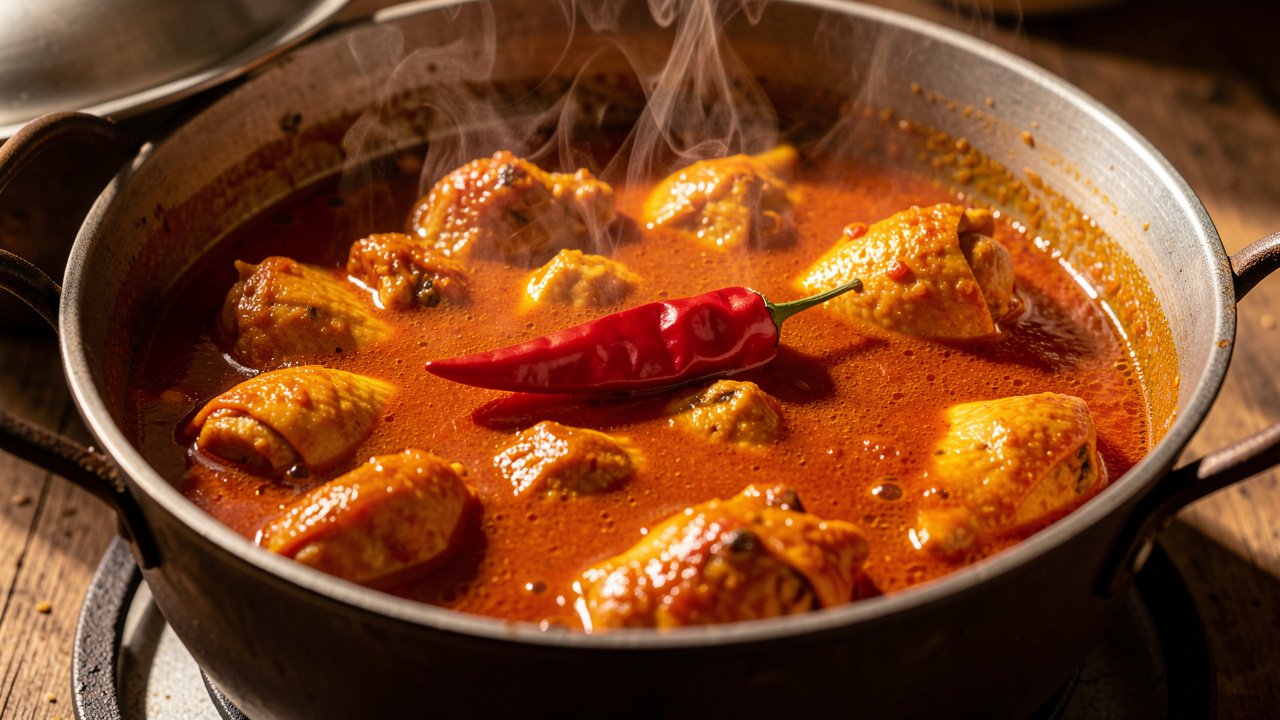
Scatter the cubed pumpkin into the sauce and simmer 8 minutes, then lay the trimmed okra on top. Cover and cook 7 to 10 minutes more, stirring as little as possible, until the pumpkin is soft and the okra is just tender. Gentle handling keeps the okra from turning slimy while it still thickens the sauce.
Check Doneness and Serve
Confirm the chicken is fully cooked; the thickest piece should reach an internal temperature of 165F (74C) with no pink at the bone. Taste the sauce and adjust with salt or a squeeze of lemon. Scatter fresh parsley over the top and serve hot over funge or rice, with the jindungo on the side for anyone who wants extra fire.
Chef’s Tips From Real Kitchen Testing
Do not skip the marinade. Even 30 minutes with garlic, lemon, and chili transforms the chicken and keeps the rich sauce from tasting heavy or flat.
Add the okra late and stir it as little as possible. Over-stirring releases too much of its natural thickener at once and turns the texture slimy instead of silky.
Warm the palm oil gently. It is solid or cloudy when cool and turns clear orange as it heats; scorching it dulls both the color and the flavor you paid for.
Recipe Variations
Serving Suggestions
- Funge, the smooth Angolan cassava porridge
- Plain steamed white rice
- A simple tomato and onion salad on the side
- Extra jindungo and lemon wedges for the table
Nutrition Facts
| Nutrient | Amount per serving |
|---|---|
| Calories | 540 |
| Protein | 34 g |
| Carbohydrates | 18 g |
| Fat | 38 g |
| Saturated Fat | 15 g |
| Fiber | 5 g |
| Sugar | 7 g |
| Sodium | 720 mg |
Values are estimates per serving and vary with the exact ingredients and brands you use.
Make-Ahead Tips
Muamba de Galinha is even better the next day, because the palm oil and tomato base have time to settle and deepen. Cook the chicken and sauce a day ahead, cool, and refrigerate. Reheat gently on the stove and stir in a splash of water to loosen it, since the okra and pumpkin thicken as it sits. If you can, add the okra fresh when reheating so it keeps its bite. Scatter fresh parsley on just before serving.
Storage, Freezing & Reheating
Common Mistakes to Avoid
Troubleshooting
Sauce tastes flat? It usually needs more salt and a squeeze of lemon to wake up the palm oil and tomato base. Add a little at a time and taste as you go.
Okra turned slimy? It was cut too small or stirred too often. Next time add it whole or in large pieces near the end and resist stirring while it cooks.
Sauce too thin? Uncover the pot and simmer a few extra minutes so the okra and pumpkin can thicken it, or mash a couple of pumpkin cubes into the sauce.
Too fiery? Lift out the jindungo and stir in a little extra water or a few more pumpkin cubes to mellow the heat.
A Note on Angolan Cooking
Angolan cuisine grew out of centuries of exchange between local African traditions and Portuguese influence, and muamba sits right at that crossroads. The word muamba refers to a family of rich, oil-based stews thickened with vegetables, and the version made with galinha, or chicken, is the one most often called the national dish. Red palm oil is the thread that ties these dishes together, lending the deep orange color and savory backbone you see across West and Central African cooking.
Funge, a smooth porridge made from cassava or corn flour, is the classic partner, scooped up by hand to carry the sauce. Fresh okra and pumpkin are pantry staples that thicken and sweeten in equal measure, while the jindungo chili keeps the table lively. If you enjoy hearty, tomato-forward bowls like this, browse more ideas in our collection of tomato recipes, or try the cozy, spoonable comfort of our hearty tomato lentil soup.
Frequently Asked Questions
More Tomato Recipes to Try
Last updated: September 23, 2026