Tatar Recipes
Hearty Halal Beef Stew with Tomato and Pickles
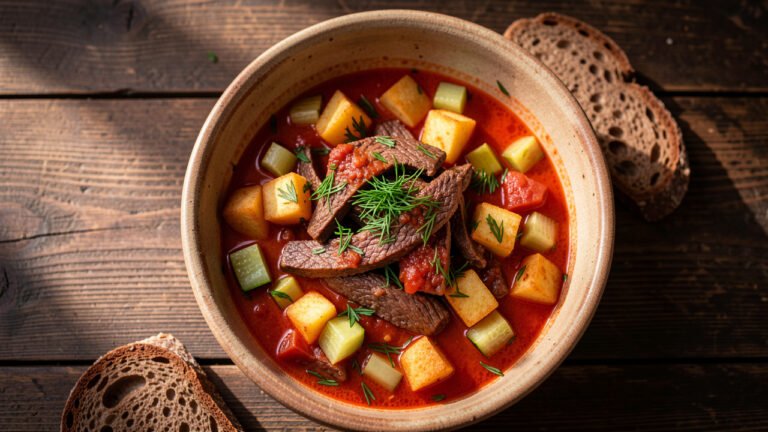
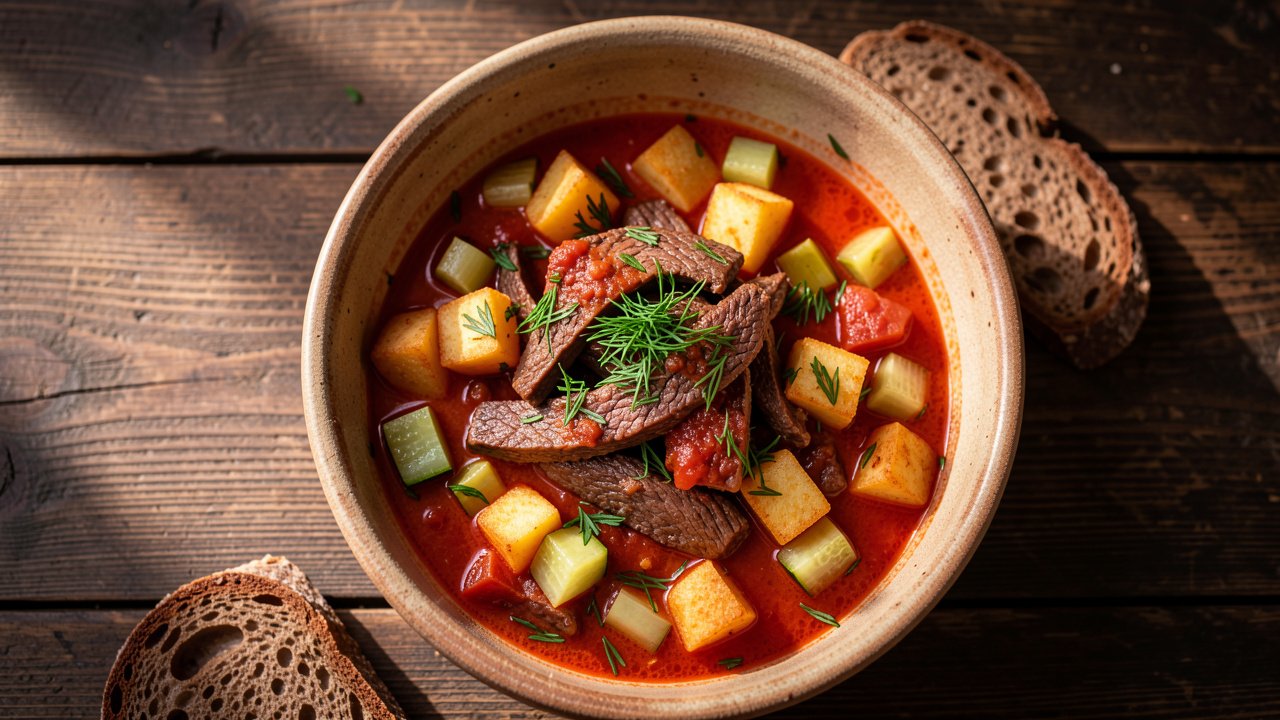
Azu is comfort food with an edge. The braise is deep and savory, but the diced pickles cut right through it with a bright, briny tang that keeps every bite lively. That contrast is the whole point of the dish, and it is what separates a real azu from an ordinary beef and potato stew. The first time I made it I added the potatoes too early and they melted into the sauce; the second time I fried them separately and folded them in at the end, and the difference was night and day.
Why This Azu Recipe Works
Azu is built on a simple idea done carefully: braise tough, flavorful halal beef until it turns tender, then wake the whole pot up with acidity. The long, gentle simmer breaks down the connective tissue in the meat so it goes from chewy to spoon-tender, while the tomatoes and tomato paste reduce into a glossy, brick-red sauce that clings to every strip.
The pickles are not a garnish here; they are structural. Their brine adds a sharp, sour note that balances the richness of the meat and the sweetness of the cooked tomato and onion. Take them out and you have a decent stew. Leave them in and you have azu. That tang is the flavor signature of the dish, and it is worth seeking out proper dill pickles for it.
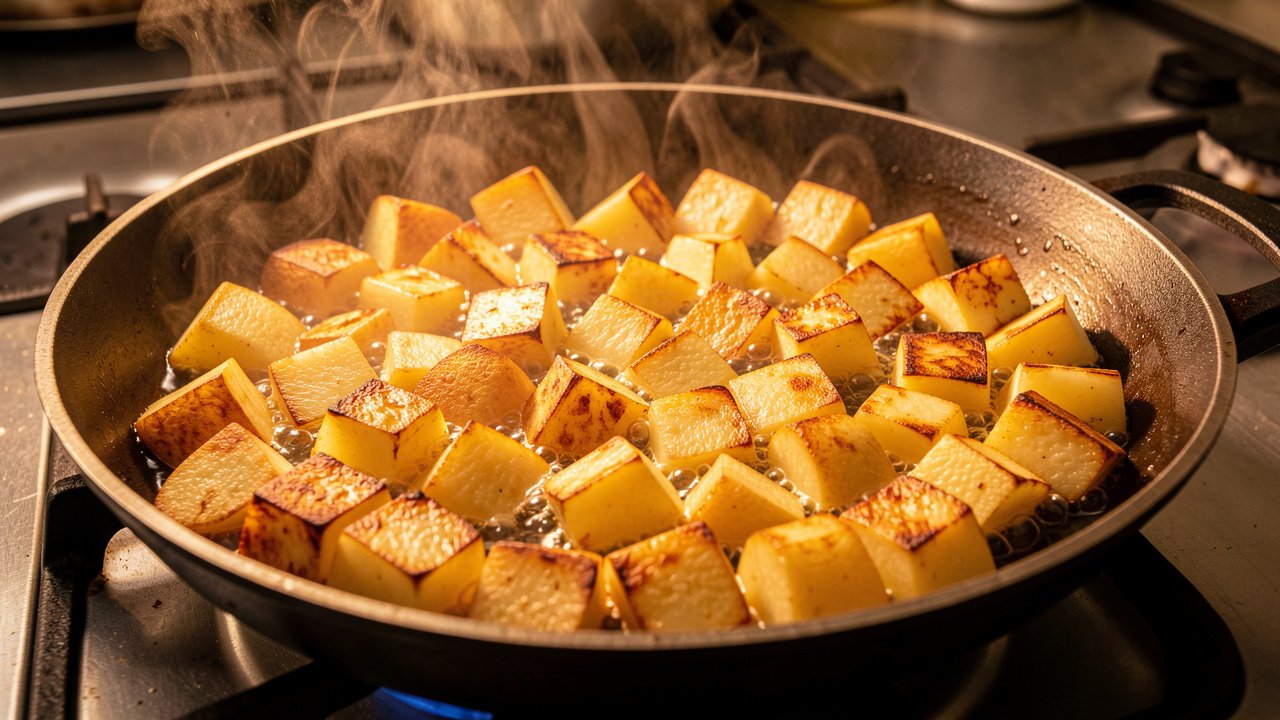
Frying the potatoes separately is the other quiet trick. Cubes of potato are browned in oil until crisp at the edges, then folded into the braise near the very end. Because they only spend a few minutes in the sauce, they hold their shape and keep a little bite instead of dissolving into mush. It is the same logic a good cook uses everywhere: cook each component the way it wants to be cooked, then bring them together.
Finally, this is a forgiving, one-pot-minded dish. Aside from the potatoes, everything builds in a single deep pan, and the braise is happy to sit on a low flame while you get on with other things. It scales up easily for a crowd and tastes even better the next day.
Pro observation: The braise is ready for the potatoes when the beef strips pull apart with light pressure from a spoon and the sauce has thickened enough to coat the back of it. If the meat still resists, give it more time before you go any further.
Ingredients
Kitchen Measurement Converter
Quickly convert between common cooking measurements without leaving the recipe. Pick a category, enter a value, and the result updates instantly.
Ingredient Notes & Substitutions
Halal Beef
Use a cut with a little connective tissue, such as halal beef chuck or shoulder, cut into short strips or bite-size pieces. These cuts turn meltingly tender over a long braise. Lean cuts can dry out, so avoid the leanest options here.
Pickled Cucumbers
Reach for tangy dill pickles rather than sweet ones. They carry the sour backbone of the dish. Dice them small so the brine spreads through the whole pot, and add a splash of their brine if you want an even sharper finish.
Tomatoes and Paste
Ripe fresh tomatoes plus tomato paste give both freshness and depth. Out of season, one 14-ounce can of chopped tomatoes stands in for the fresh ones. The paste is what gives the sauce its rich, brick-red color.
Potatoes
Choose a firm, waxy potato that holds its shape when fried. Floury baking potatoes fall apart more easily. Cut the cubes evenly so they brown at the same rate and stay intact when folded into the sauce.
Equipment
- Deep pan or Dutch oven
- Wide frying pan
- Sharp knife and board
- Wooden spoon
- Slotted spoon
- Measuring spoons
Before You Start
1. Pat the beef dry. Dry strips of halal beef brown far better than damp ones. Blot them with paper towel before they hit the pan so you get real color instead of steam.
2. Cut everything to size. Slice the onions, dice the pickles small, and cube the potatoes evenly. Having the components ready means the braise flows without scrambling.
3. Fry the potatoes near the end. Do not fry them until the beef is nearly tender. Freshly fried cubes folded in at the last moment are the whole idea, so time them to the braise.
Step-by-Step Instructions
Brown the Halal Beef
Pat the strips of halal beef dry and season with a little salt and pepper. Heat 2 tablespoons of the oil in a deep pan over medium-high heat. Working in batches so the pan is not crowded, sear the beef until deeply browned on the outside, about 3 to 4 minutes per batch. Lift the browned meat out with a slotted spoon and set it aside.
Soften the Onion and Garlic
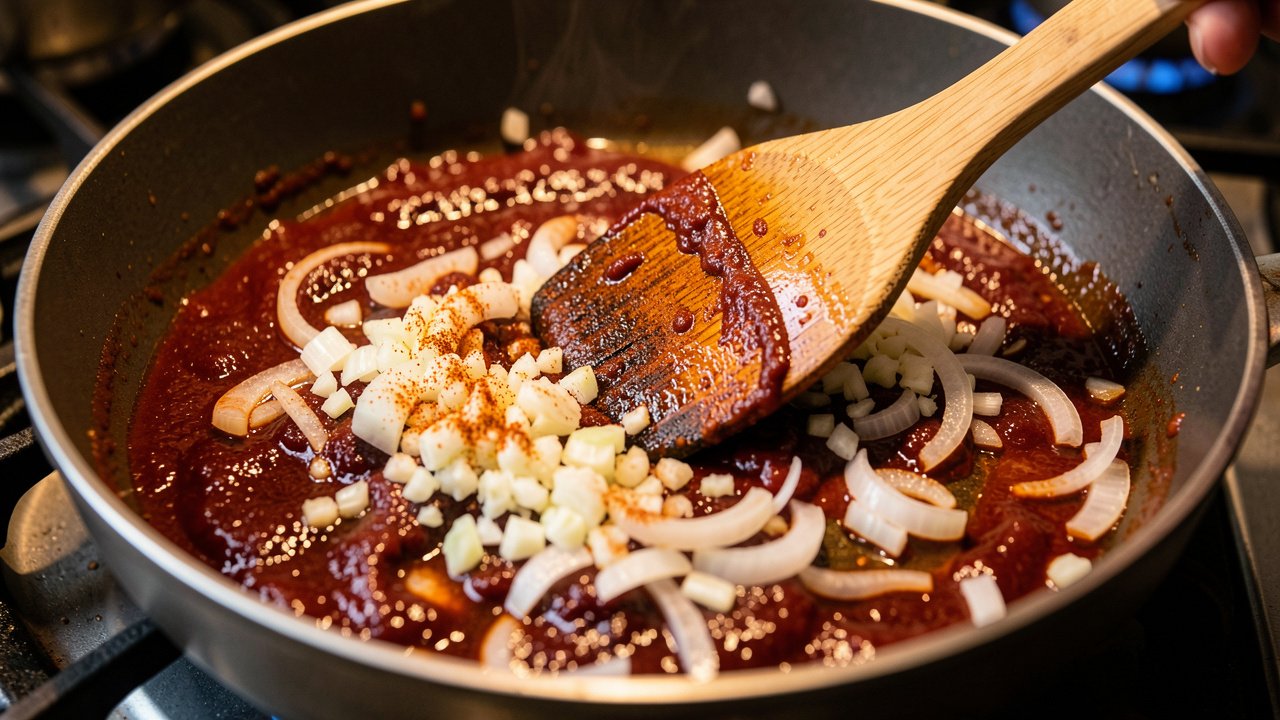
Lower the heat to medium and add the sliced onions to the same pan, scraping up the browned bits left behind. Cook 6 to 7 minutes until soft and golden. Stir in the minced garlic and cook 1 minute more until fragrant, then stir in the tomato paste and paprika and let them cook for a minute so the paste darkens slightly and loses its raw edge.
Build the Braise
Return the beef to the pan along with any resting juices. Add the chopped tomatoes, bay leaves, and enough beef broth or water to almost cover the meat. Stir well, bring to a gentle simmer, then cover and lower the heat. Let it braise quietly for 50 to 60 minutes, stirring now and then, until the beef is fork-tender and the sauce has thickened.
Fry the Potato Cubes
While the beef finishes braising, heat the remaining tablespoon of oil in a wide frying pan over medium-high heat. Add the cubed potatoes and fry, turning occasionally, until golden and crisp at the edges and almost cooked through, about 8 to 10 minutes. Lift them onto a plate lined with paper towel and season lightly with salt.
Add the Pickles and Potatoes
Once the beef is tender, stir the diced pickled cucumbers into the braise and taste the sauce. Adjust with salt, pepper, or a splash of pickle brine for more tang. Gently fold in the fried potato cubes and let everything simmer together, uncovered, for 8 to 10 minutes so the potatoes soak up the sauce while still holding their shape.
Rest, Garnish, and Serve
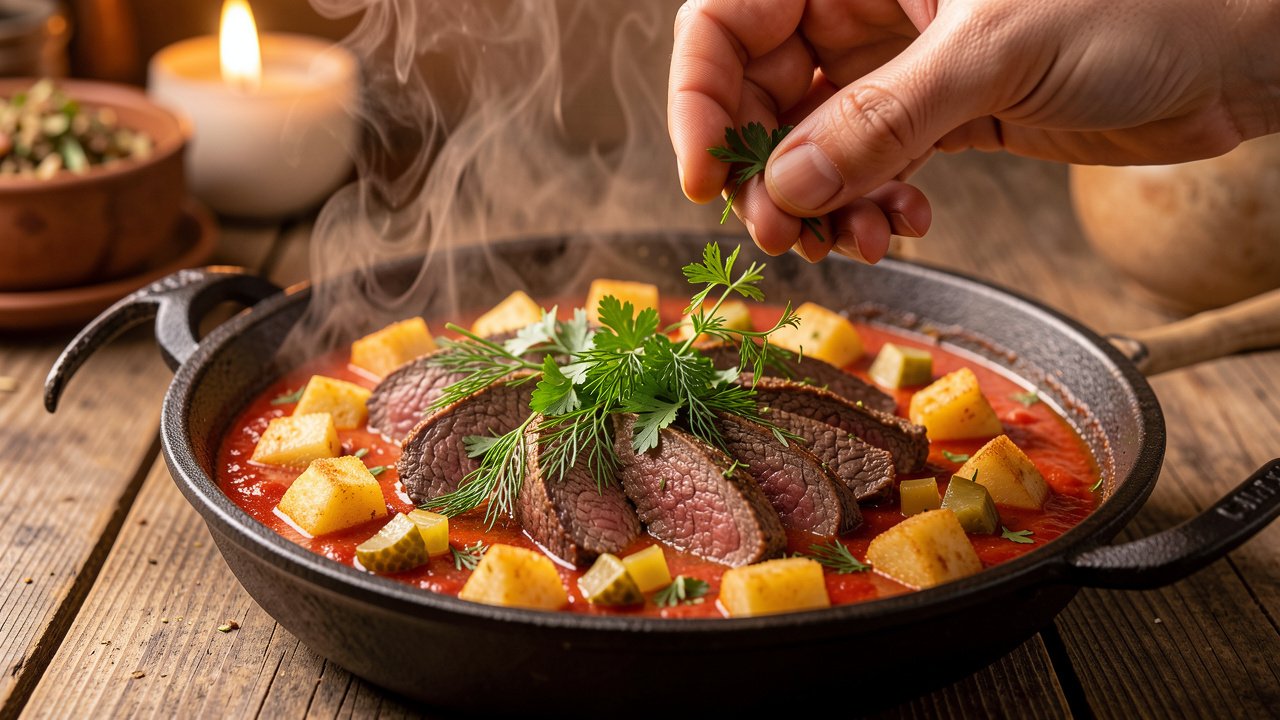
Turn off the heat, remove the bay leaves, and let the azu rest for 5 minutes so the flavors settle. Scatter the chopped parsley and dill over the top and serve hot, straight from the pan, on its own or with slices of dark bread to mop up the sauce.
Chef’s Tips From Real Kitchen Testing
Brown the halal beef in batches. Crowding the pan traps steam and the meat stews instead of searing, so you lose the deep color that gives azu its savory backbone.
Taste before you add extra salt. Pickles and broth both bring their own saltiness, so season the sauce only after the pickles have gone in.
Keep the braise at a bare simmer. A hard boil toughens the strips and makes the sauce reduce too fast; low and slow is what turns the beef tender.
Recipe Variations
Serving Suggestions
- On its own, straight from the pan, in deep bowls
- With slices of dark rye or crusty bread
- Over plain rice or buckwheat to soak up the sauce
- With extra dill, parsley, and a few sliced pickles
Nutrition Facts
| Nutrient | Amount per serving |
|---|---|
| Calories | 430 |
| Protein | 32 g |
| Carbohydrates | 34 g |
| Fat | 18 g |
| Saturated Fat | 5 g |
| Fiber | 5 g |
| Sugar | 7 g |
| Sodium | 780 mg |
Values are estimates per serving and vary with the exact ingredients and brands you use.
Make-Ahead Tips
Azu is an excellent make-ahead dish, because the braise deepens overnight as the pickle tang and tomato mellow together. For the best texture, cook the beef braise a day ahead, cool, and refrigerate it, but fry the potatoes fresh on the day you serve so they stay firm. Reheat the braise gently, fold in the just-fried potatoes and pickles, and finish with fresh herbs right before it goes to the table.
Storage, Freezing & Reheating
Common Mistakes to Avoid
Troubleshooting
Beef still tough? It simply needs more time. Keep the braise at a low simmer and check every 15 minutes until the strips pull apart easily.
Sauce too thin? Uncover the pan and let it reduce for a few minutes, or stir in an extra spoonful of tomato paste to thicken and enrich it.
Not tangy enough? Add more diced pickles or a splash of their brine at the end, tasting as you go until the sourness sings against the meat.
A Note on Tatar Cooking
Azu belongs to the Volga Tatar table, a cuisine shaped by the meadows and rivers of the Volga region where hearty, warming dishes carry cooks through long winters. Preserving was a way of life there, and jars of pickled cucumbers were a pantry staple, so it is no surprise that their bright, briny tang works its way into a beef braise like this one. That pickled-cucumber note is the fingerprint of azu, the thing that makes it unmistakably Tatar rather than just another stew. Halal cooking is central to the tradition, and the dish is built around good halal beef treated with patience. If you enjoy deep, spoonable tomato dishes, our hearty tomato lentil soup shares the same comforting, one-pot spirit, and you can browse more ideas in our full collection of tomato recipes.
Food safety note: Braised beef is at its best when it is cooked well through and fork-tender, well past the 145 F (63 C) minimum for whole cuts. Because the strips simmer for nearly an hour, they easily reach a safe temperature; use the tenderness of the meat, not just a timer, as your guide.
Frequently Asked Questions
More Tomato Recipes to Try
Last updated: September 23, 2026