Maldivian Recipes
Fragrant Tuna and Tomato Curry
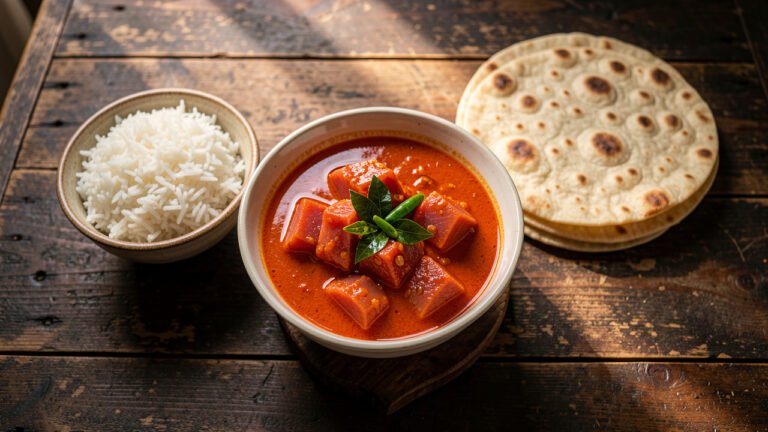
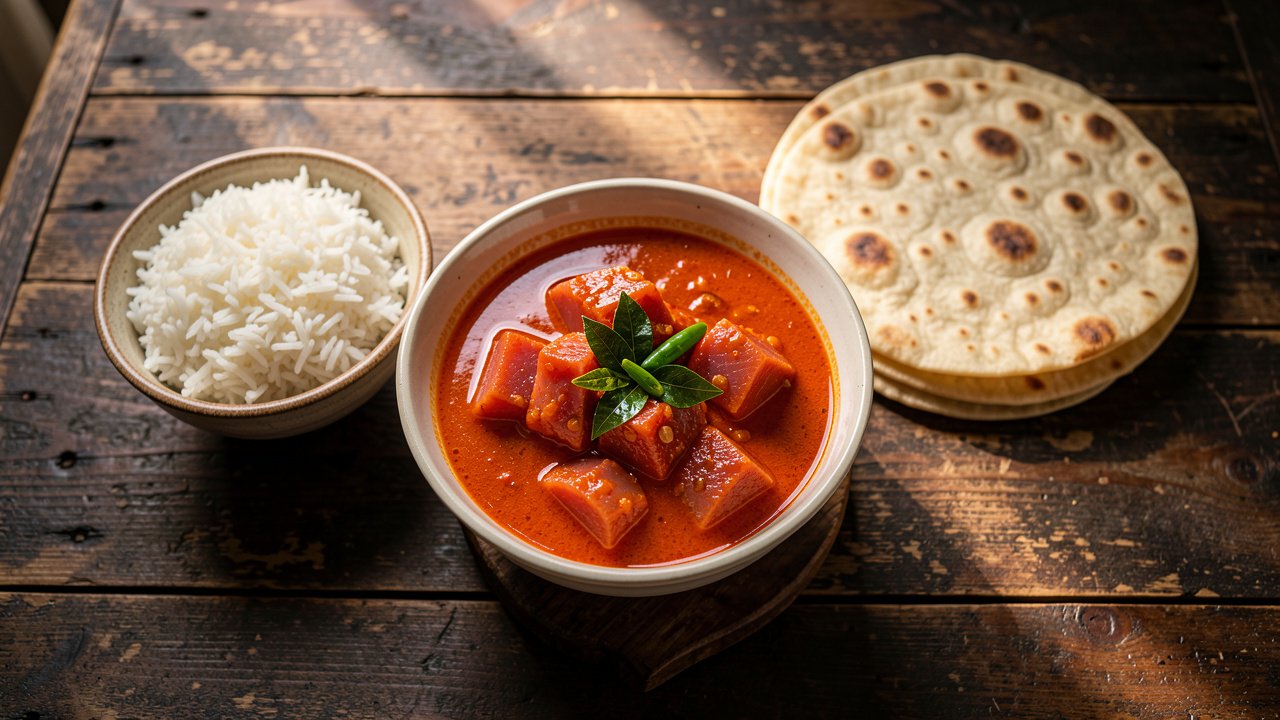
Mas riha is the everyday tuna curry of the Maldives, the dish that turns up on family tables morning, noon, and night. It is built around fresh tuna, the fish that defines Maldivian cooking, simmered gently in a coconut and tomato sauce that is fragrant with curry leaves and pandan. The result is warm, savory, and just a little tangy from lime.
The first time I made it I rushed the tuna and cooked it too long, and it turned dry and stringy. Once I learned to slide the fish in near the end and let it barely finish in the sauce, it stayed tender and moist. That single change is what separates a good mas riha from a great one.
Why This Mas Riha Works
Maldivian cooking is coastal cooking, and tuna is its beating heart. Mas riha takes that everyday fish and gives it a sauce with real depth: tomatoes for body and gentle acidity, onion and garlic for savory backbone, ginger and green chili for warmth, and curry leaves and pandan for that unmistakable island aroma. Coconut milk pulls it all together into something rich but never heavy.
The single most important idea in this recipe is timing the tuna. Tuna is lean and cooks fast, so it goes in near the end and finishes in the sauce in just a few minutes. Treat it gently and it stays moist and flaky; boil it hard or leave it too long and it dries out. Everything else in the pan can take its time, but the fish cannot.
Building the sauce base properly is the other quiet secret. You want the onions soft and golden and the tomatoes cooked down until they lose their raw edge before the coconut milk goes in. That patience is what gives the curry its deep, savory taste rather than a thin, watery one.
It is also a forgiving, everyday dish. The same base welcomes a firmer white fish when tuna is not around, and it happily flexes from mild to fiery depending on how many chilies you add. Once you know the rhythm of it, mas riha becomes a weeknight staple you can cook almost without thinking.
Pro observation: The sauce is ready for the fish when it looks glossy and slightly thickened, with a thin sheen of oil at the edges. That sheen tells you the aromatics and spices have cooked through and the raw taste is gone.
Ingredients
Kitchen Measurement Converter
Quickly convert between common cooking measurements without leaving the recipe. Pick a category, enter a value, and the result updates instantly.
Ingredient Notes & Substitutions
Tuna
Use fresh, firm halal tuna cut into bite-size chunks. Skipjack or yellowfin both work well. If fresh is not available, thick tuna steaks that hold their shape are the next best choice.
Tomatoes
Ripe, red tomatoes give the sauce its body and gentle tang. Out of season, one 14-ounce can of chopped tomatoes works well and is often more reliable than pale fresh ones.
Curry Leaves & Pandan
Fresh curry leaves and a knotted pandan leaf give mas riha its island aroma. If you cannot find pandan, the curry is still good without it; do not swap in bay leaves, which taste completely different.
Coconut Milk
Use full-fat canned coconut milk for a rich, silky sauce. Light coconut milk works but the curry is thinner. Shake the can well before opening so the cream and water combine.
Equipment
- Wide, heavy pan or pot
- Wooden spoon
- Sharp knife and board
- Can opener
- Measuring spoons
- Small bowl for spices
Before You Start
1. Cut the tuna evenly. Bite-size chunks of a similar size cook at the same rate, so no piece is dry while another is still raw in the center.
2. Measure the spices first. The aromatics move quickly once the pan is hot, so have the turmeric, curry powder, cumin, coriander, and pepper ready in a small bowl.
3. Cook your rice or warm roshi alongside. Mas riha is best with steamed rice or roshi flatbread, so start them before you begin the curry.
Step-by-Step Instructions
Prep the Tuna and Aromatics
Cut the tuna into bite-size chunks and pat them dry. Slice the onion, mince the garlic, grate the ginger, and slice the green chilies. Measure the ground spices into a small bowl so they are ready to add together, and have the curry leaves and pandan within reach.
Soften the Aromatics
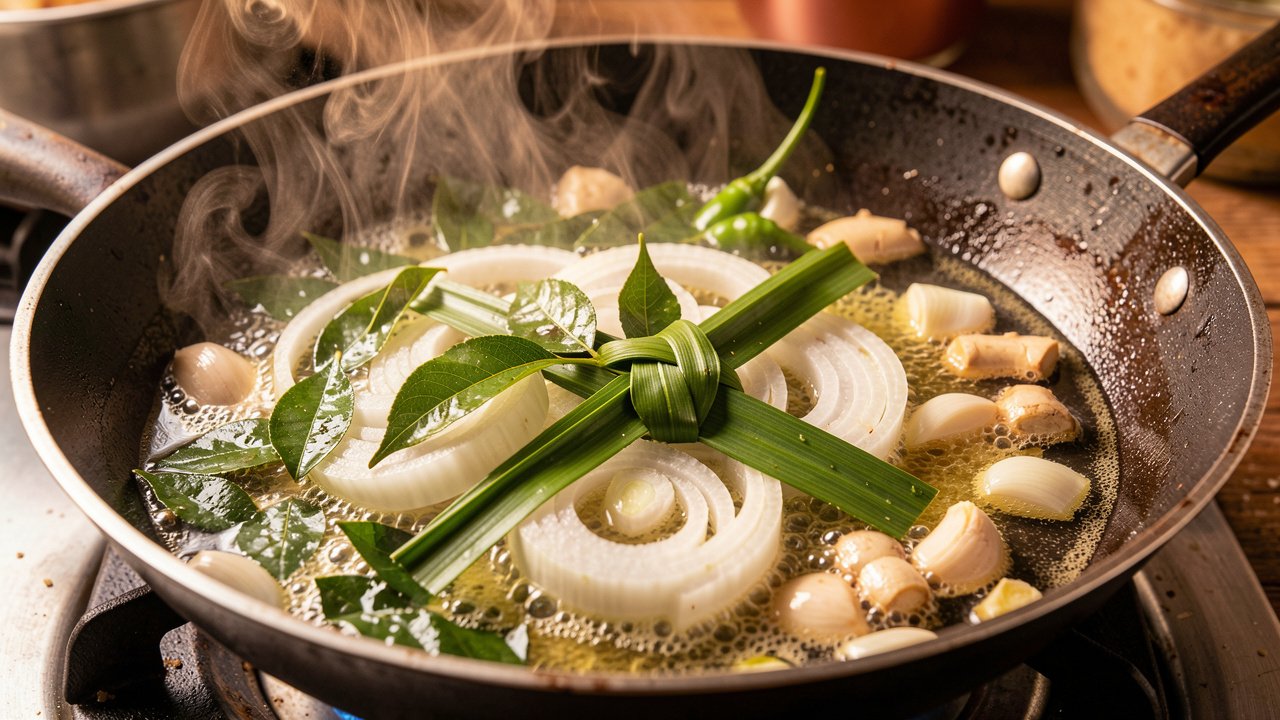
Heat 2 tablespoons of coconut oil in a wide pan over medium heat. Add the sliced onion, curry leaves, and knotted pandan leaf, and cook 5 to 6 minutes until the onion is soft and golden at the edges. Stir in the garlic, ginger, and green chilies and cook 1 minute more until fragrant.
Bloom the Spices and Build the Tomato Base
Add the ground turmeric, Maldivian curry powder, cumin, coriander, and black pepper, and stir for 30 seconds to bloom them. Add the chopped tomatoes and the salt, then cook 8 to 10 minutes, stirring, until the tomatoes collapse into a thick, savory base and the oil starts to sheen at the edges.
Simmer the Coconut Sauce
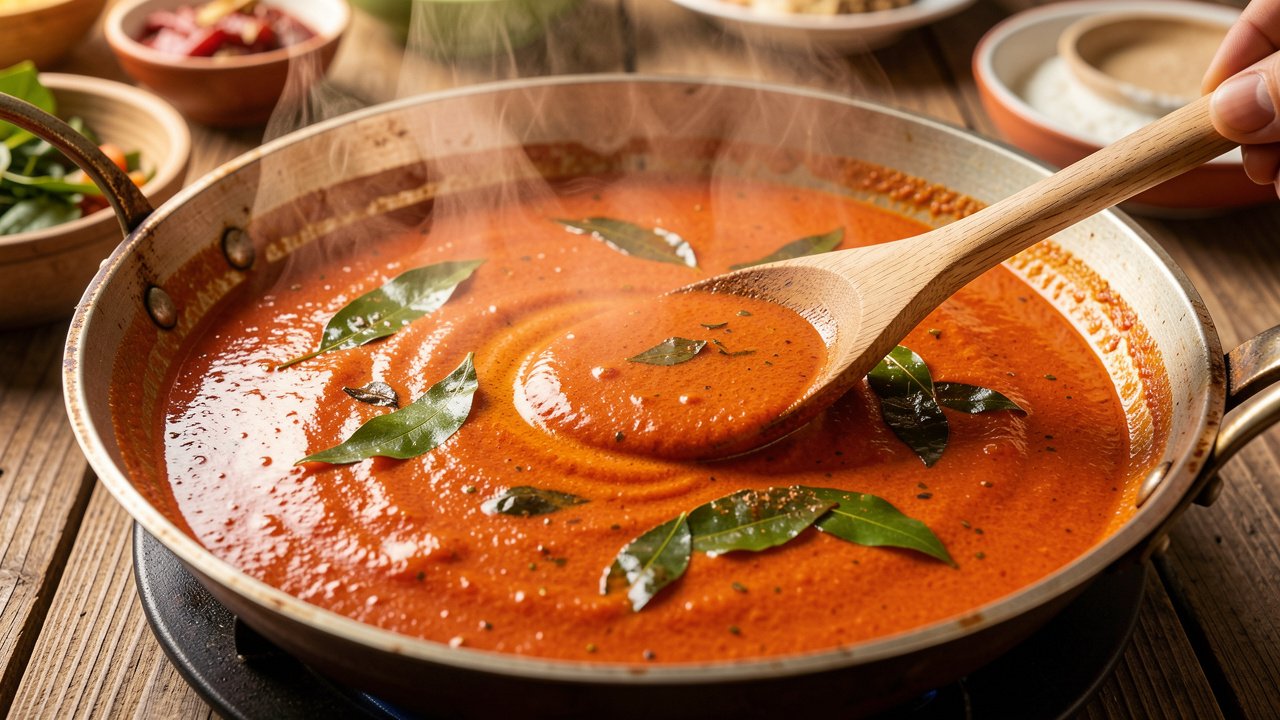
Pour in the coconut milk and stir to combine into a smooth, red-orange sauce. Add a splash of water if you like a looser curry. Bring it to a gentle simmer, then lower the heat and cook 5 minutes so the flavors marry. Keep it at a bare simmer; do not let it boil hard, or the coconut milk can split.
Add the Tuna and Cook Gently
Slide the tuna chunks into the simmering sauce in a single layer and spoon a little sauce over the top. Cook gently for 6 to 8 minutes, turning the pieces once, until the tuna is just cooked through and flakes easily. It should look opaque all the way through; do not stir hard or the chunks will break apart.
Finish with Lime and Serve
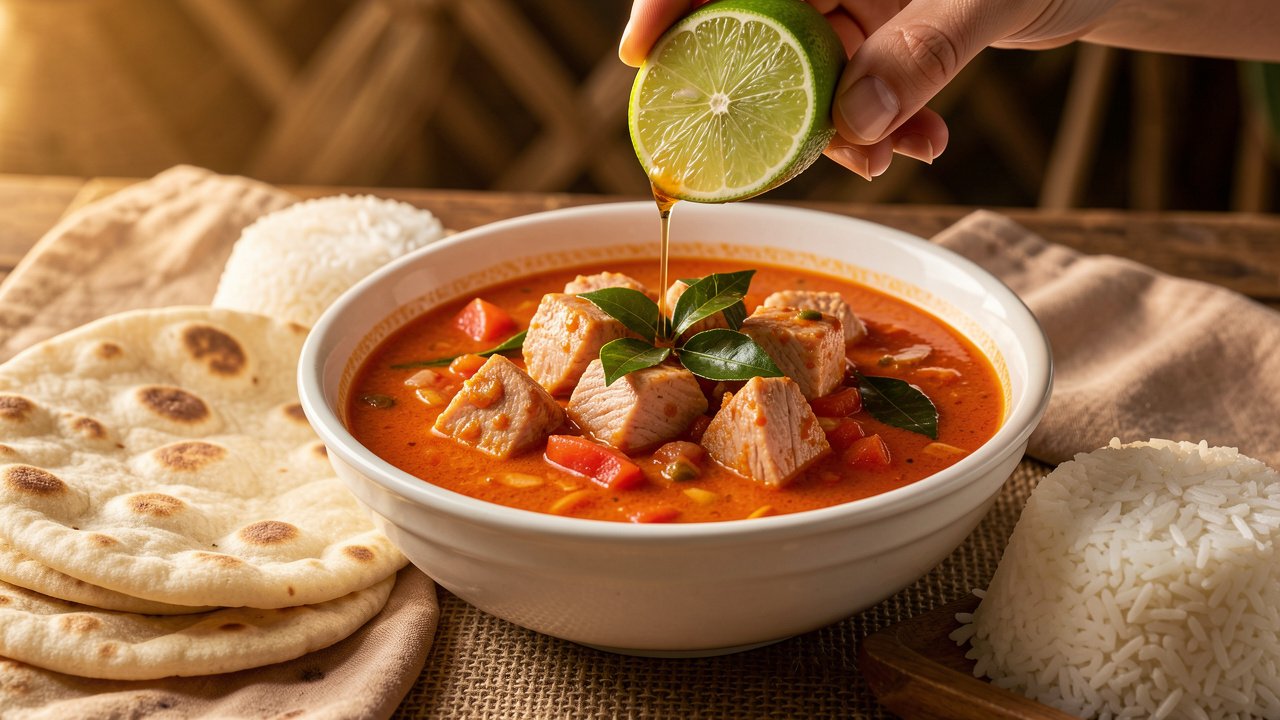
Take the pan off the heat and stir in the lime juice, then taste. Adjust with a little more salt or lime for brightness. Fish out the pandan leaf, then serve the mas riha hot over steamed rice or with warm roshi flatbread, with extra lime wedges on the side.
Chef’s Tips From Real Kitchen Testing
Add the tuna near the end and cook it gently. It only needs a few minutes to turn opaque and flaky; longer than that and it dries out and toughens.
Never boil the coconut milk hard. A gentle simmer keeps the sauce smooth; a rolling boil can make it split and look grainy.
Season and brighten at the end. Taste after the lime goes in and adjust the salt, since underseasoned mas riha tastes flat no matter how good the aromatics were.
Recipe Variations
Serving Suggestions
- Steamed white or basmati rice
- Warm roshi flatbread to scoop the sauce
- A simple sliced onion and lime salad
- Extra lime wedges and green chili on the side
Nutrition Facts
| Nutrient | Amount per serving |
|---|---|
| Calories | 340 |
| Protein | 30 g |
| Carbohydrates | 10 g |
| Fat | 20 g |
| Saturated Fat | 13 g |
| Fiber | 2 g |
| Sugar | 5 g |
| Sodium | 620 mg |
Values are estimates per serving and vary with the exact ingredients and brands you use.
Make-Ahead Tips
You can build the coconut and tomato sauce ahead of time, which is where most of the flavor lives. Cook it through the simmering stage, cool, and refrigerate. When you are ready to eat, reheat the sauce gently, then add the fresh tuna and cook it just before serving so it stays tender rather than reheated and dry. Add the lime at the very end.
Storage, Freezing & Reheating
Common Mistakes to Avoid
Troubleshooting
Curry tastes flat? It usually needs more salt and a squeeze more lime to wake up the flavors right before serving.
Sauce split or grainy? The coconut milk simmered too hard. Lower the heat and whisk in a splash of warm water to bring it back together.
Tuna turned dry? It cooked too long. Next time add the fish later and take the pan off the heat the moment the chunks turn opaque and flake.
A Note on Maldivian Cooking
Maldivian food is shaped by the ocean around it, and tuna is the staple that appears in nearly every kitchen, whether smoked, dried, flaked into a breakfast mash, or simmered into a curry like this one. Coconut and pandan run through the cuisine too, lending sweetness and fragrance, and meals are almost always scooped up with roshi, the soft island flatbread, or spooned over rice. Mas riha sits right at the center of that everyday table. If you enjoy warm, spiced tomato bowls, our creamy Indian tomato soup shares the same comforting, aromatic spirit.
Frequently Asked Questions
More Tomato Recipes to Try
Last updated: September 23, 2026