Mongolian Recipes
Steamed-Then-Fried Noodles with Meat and Tomato
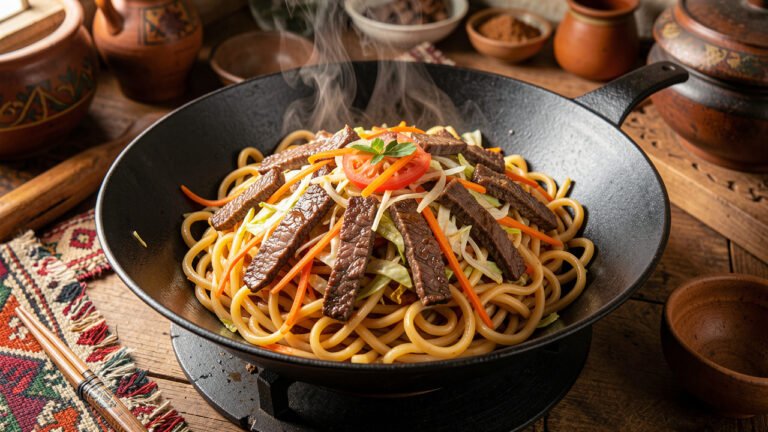
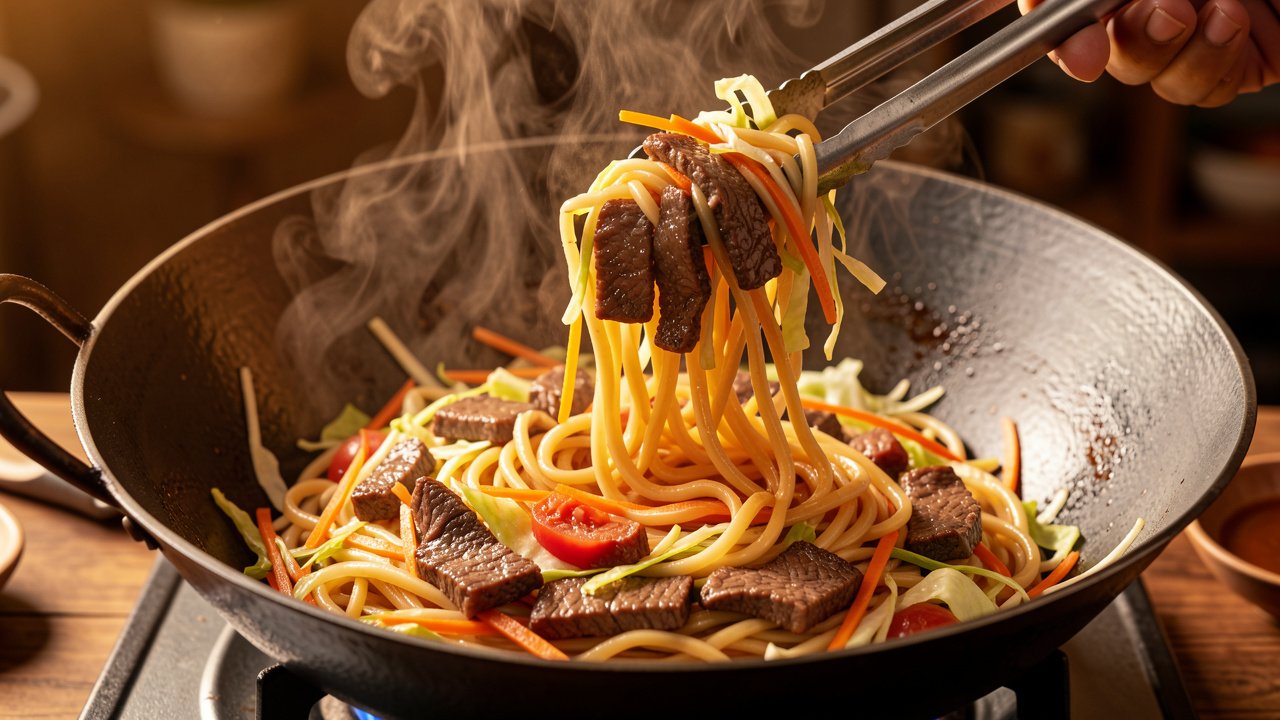
Tsuivan is Mongolian comfort food at its most honest: one deep pan, thick chewy noodles, tender meat, and a pile of vegetables that all cook down into something greater than the sum of its parts. The trick that gives it character is the steam-then-fry method, where the raw noodles cook in the rising steam of the stew below before being folded in to fry. The first time I laid the noodles flat and left the lid on, I understood why this dish tastes so deeply of the meat: the noodles drink it in from the very start.
Why This Tsuivan Works
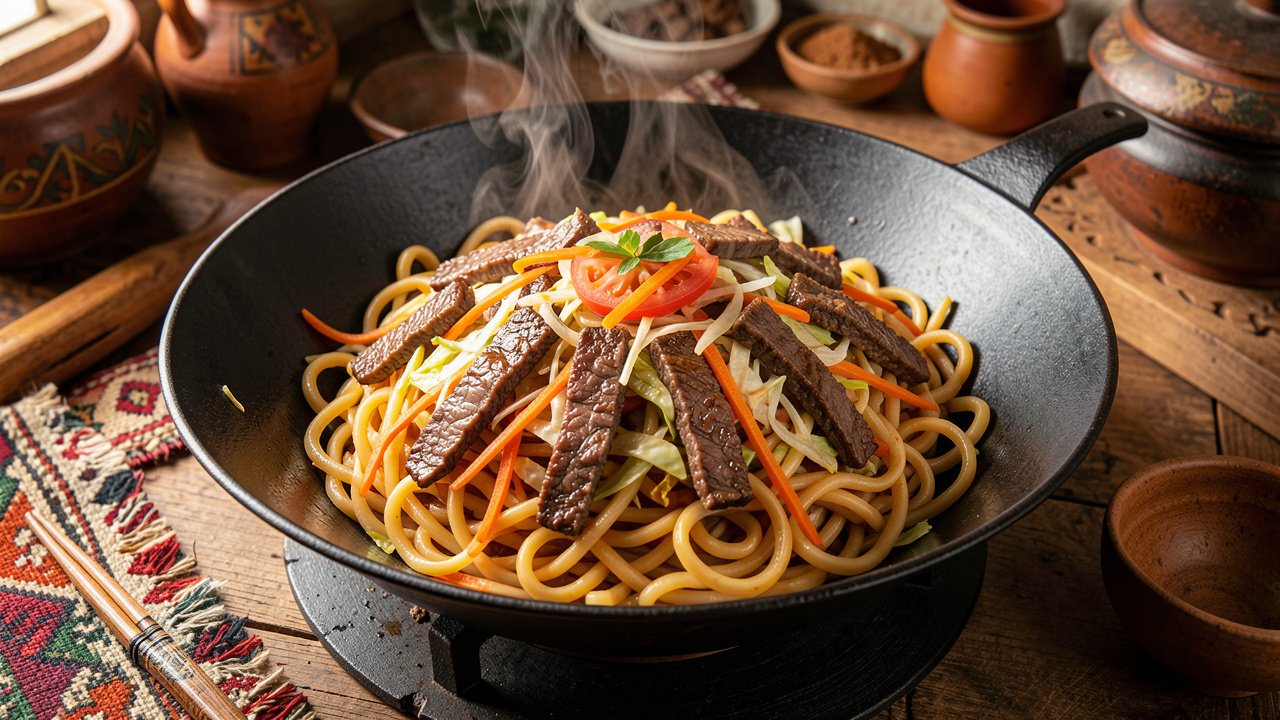
Tsuivan is built on a clever piece of nomadic kitchen logic: cook the meat and vegetables into a shallow stew, then set the raw noodles right on top so they steam over the pan before you fry everything together. That single step is why good tsuivan tastes so meaty all the way through, rather than like plain noodles with a topping. The noodles absorb the savory steam first, then finish frying in the same juices.
The seasoning is deliberately spare. Garlic, tomato, and a little soy do all the work, letting the halal lamb or beef and the sweetness of onion, carrot, and cabbage come forward. Because there is no heavy sauce to hide behind, the quality of your browning matters, which is the second reason this recipe works: you build a proper sear on the meat before anything else goes in.
It is also forgiving and flexible. Whatever firm vegetables you have on hand can join the pan, and the noodles can be hand-cut or store-bought. Once you understand the steam-then-fry rhythm, tsuivan becomes a reliable weeknight one-pan dinner that feeds four generously.
Finally, it reheats beautifully. The fried noodles firm up in the fridge and crisp again in a hot pan, so a big batch carries easily into the next day’s lunch without turning soft or dull.
Pro observation: The noodles are ready to fold in when they have turned soft and pliable from the steam and there is still a little liquid pooling at the bottom of the pan. That liquid is what the noodles fry into, so do not let the pan run completely dry before you toss.
Ingredients
Kitchen Measurement Converter
Quickly convert between common cooking measurements without leaving the recipe. Pick a category, enter a value, and the result updates instantly.
Ingredient Notes & Substitutions
The Meat
Use halal lamb or beef, cut into thin strips against the grain so it stays tender. A cut with a little fat, such as shoulder, gives the noodles more flavor as they steam and fry over it.
The Noodles
Hand-cut wheat noodles are traditional and easy: a firm flour-and-water dough rolled thin and sliced into ribbons. Fresh or dried wheat noodles from the store work well too when time is short.
Cabbage and Carrot
Green cabbage and carrot are the backbone vegetables, adding sweetness and body. Shred them fairly fine so they wilt into the noodles rather than sitting on top in big pieces.
Tomato and Soy
A chopped tomato adds gentle acidity and helps the sauce cling, while a little soy brings savory depth and color. Add the soy near the end so the dish stays balanced and not too salty.
Equipment
- Wide deep pan with lid
- Rolling pin
- Sharp knife and board
- Large mixing bowl
- Tongs or spatula
- Measuring cups
Before You Start
1. Make the noodle dough first. Mix the flour, water, and a pinch of salt into a firm dough and let it rest while you prep, so it rolls out smoothly and does not spring back.
2. Slice the meat thin and even. Thin, uniform strips cook quickly and stay tender. Chilling the meat for 15 minutes makes it much easier to slice cleanly.
3. Cut all the vegetables before you heat the pan. Once the meat is searing, tsuivan moves fast, so have the onion, cabbage, carrot, pepper, and potato ready to go.
Step-by-Step Instructions
Make and Cut the Noodles
Mix the flour with the water and a pinch of salt to form a firm dough, kneading for a few minutes until smooth. Cover and rest 20 minutes, then roll it out thin on a floured surface, dust with more flour, fold loosely, and slice into thin ribbons. Shake them apart and set aside. If using store-bought noodles, skip this step.
Sear the Meat
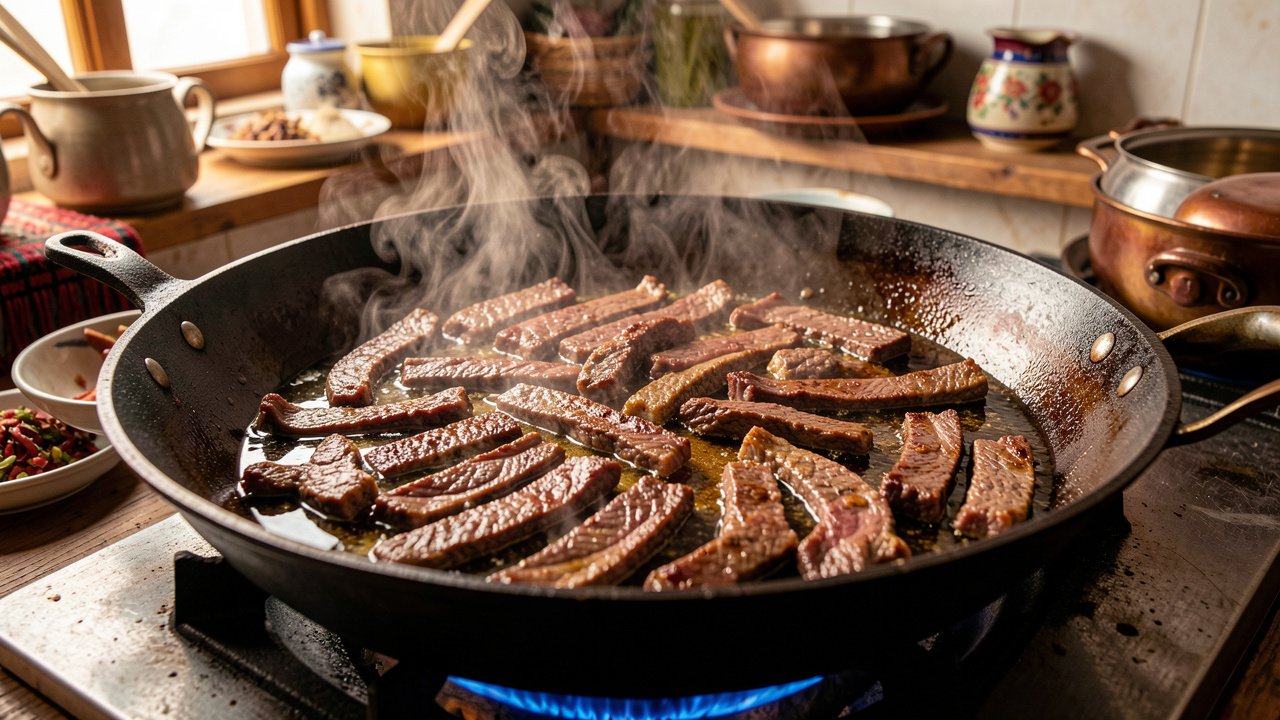
Heat the oil in a wide deep pan over medium-high heat. Add the strips of halal lamb or beef in a single layer and let them sear undisturbed for 2 minutes before stirring. Cook 4 to 5 minutes until well browned, then season with the black pepper and half the salt.
Add Aromatics and Vegetables
Add the sliced onion and cook 3 minutes until softened, then stir in the garlic for 30 seconds until fragrant. Add the potato, carrot, bell pepper, and chopped tomato along with the rest of the salt. Pour in about one cup of water, stir, and bring to a gentle simmer.
Steam the Noodles on Top
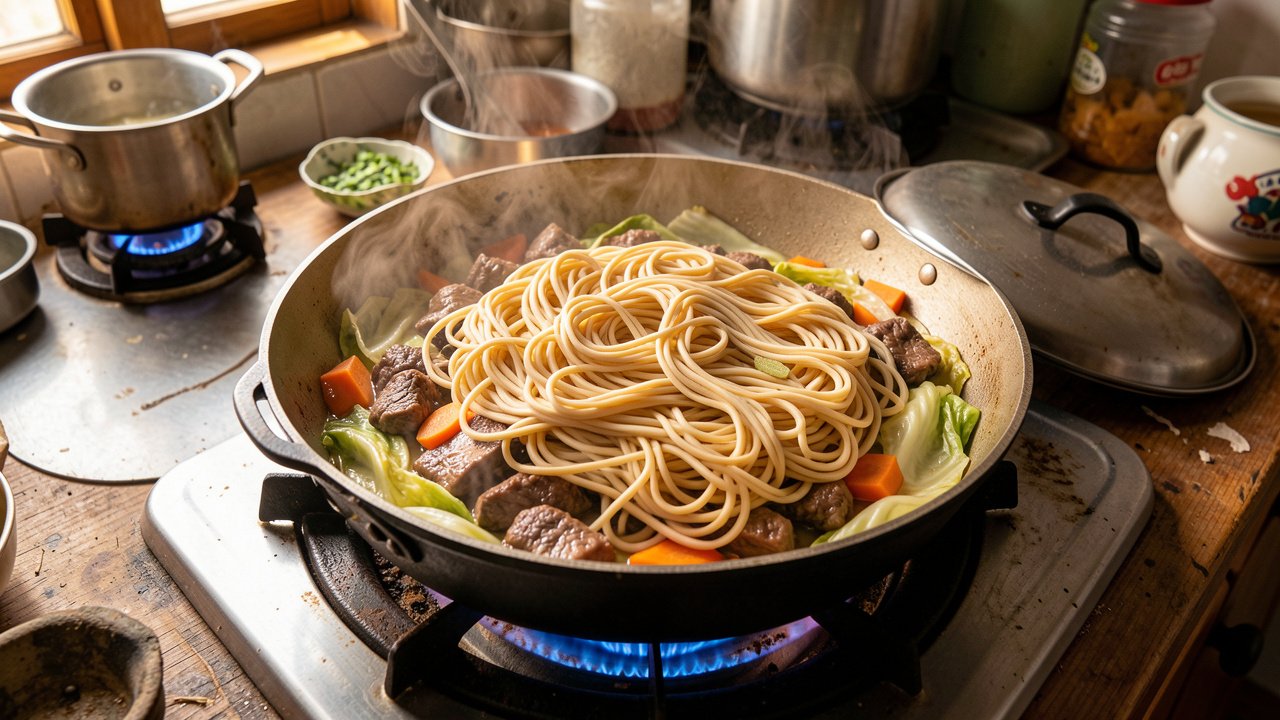
Lay the noodles evenly over the simmering meat and vegetables without stirring them in. Cover the pan tightly and let the noodles steam for 8 to 10 minutes, until they turn soft and pliable. Keep the heat gentle so the liquid does not boil away completely before the noodles are done.
Add the Cabbage and Fry
Uncover, scatter the shredded cabbage over the noodles, and now toss everything together with tongs. Turn the heat up to medium-high and stir-fry for 4 to 5 minutes so the noodles fry in the remaining juices and the cabbage wilts. Give the pan room and do not crowd it, so the noodles fry rather than steam.
Season and Serve
Drizzle the soy sauce around the edge of the pan and toss for another minute so it coats the noodles. Taste and adjust with a little more salt or pepper. Serve the tsuivan hot, straight from the pan, while the noodles are glossy and the edges are lightly crisp.
Chef’s Tips From Real Kitchen Testing
Do not stir the noodles while they steam. Leaving them undisturbed on top lets them cook evenly and soak up flavor; stirring too early leaves them raw in the middle and gummy.
Keep some liquid in the pan for the fry stage. If the pan runs dry before the noodles soften, add a splash of water; those juices are what the noodles fry into.
Work in a wide pan and toss, do not crowd. Piling everything high makes the noodles steam instead of fry, so use your widest pan or cook in two batches.
Recipe Variations
Serving Suggestions
- A simple cucumber and onion salad on the side
- A cup of hot milky Mongolian suutei tsai tea
- A spoonful of chili oil or fresh chili for heat
- Extra soy or a wedge of tomato to finish
Nutrition Facts
| Nutrient | Amount per serving |
|---|---|
| Calories | 540 |
| Protein | 30 g |
| Carbohydrates | 62 g |
| Fat | 18 g |
| Saturated Fat | 5 g |
| Fiber | 5 g |
| Sugar | 6 g |
| Sodium | 720 mg |
Values are estimates per serving and vary with the exact ingredients and brands you use.
Make-Ahead Tips
You can make the noodle dough and even cut the noodles a day ahead; keep the cut noodles dusted with flour, spread on a tray, and loosely covered in the fridge so they do not clump. The meat and vegetables can be sliced ahead too, so on the day you only need to sear, steam, and fry. Tsuivan is best served fresh, but the finished dish reheats well, which makes it a smart batch-cook meal.
Storage, Freezing & Reheating
Common Mistakes to Avoid
Troubleshooting
Noodles came out mushy? They steamed too long or had too much liquid. Next time steam just until pliable and fry off the extra moisture over higher heat.
Noodles stuck together in a clump? They needed more flour when cut and a quick toss when added. Loosen a stuck batch in the pan with a splash of water and tongs.
Dish tastes flat? It usually needs a touch more salt or soy, and a longer sear on the meat next time to build deeper savory flavor.
A Note on Mongolian Cooking
Mongolian home cooking grew out of a nomadic life on the steppe, where meals had to be hearty, filling, and made from what the herds and a small pantry could provide. Wheat noodles, cut by hand and cooked in a single deep pan, became a staple because they stretch a modest amount of meat into a meal for the whole family. The steam-then-fry method at the heart of tsuivan is pure practicality: cooking the noodles over the stew saves fuel and water while packing every strand with flavor. If you enjoy hearty, savory one-pan meals, browse more ideas in our tomato recipes collection, or try the cozy hearty tomato lentil soup for another filling bowl.
Frequently Asked Questions
More Recipes to Try
Last updated: September 23, 2026