Nicaraguan Recipes
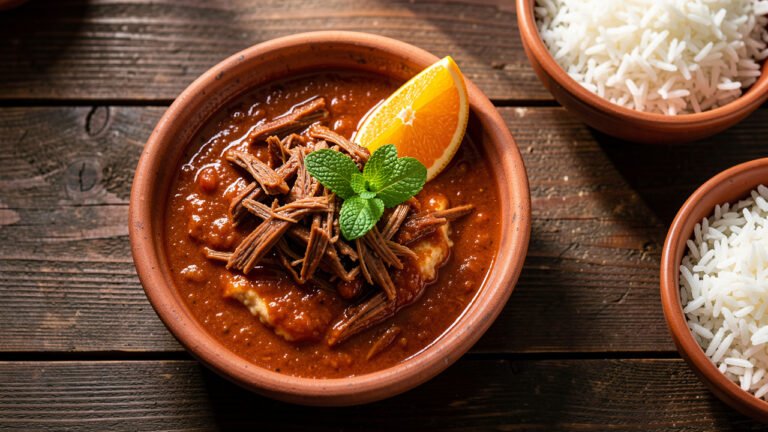
Nicaraguan Shredded Beef and Masa Stew
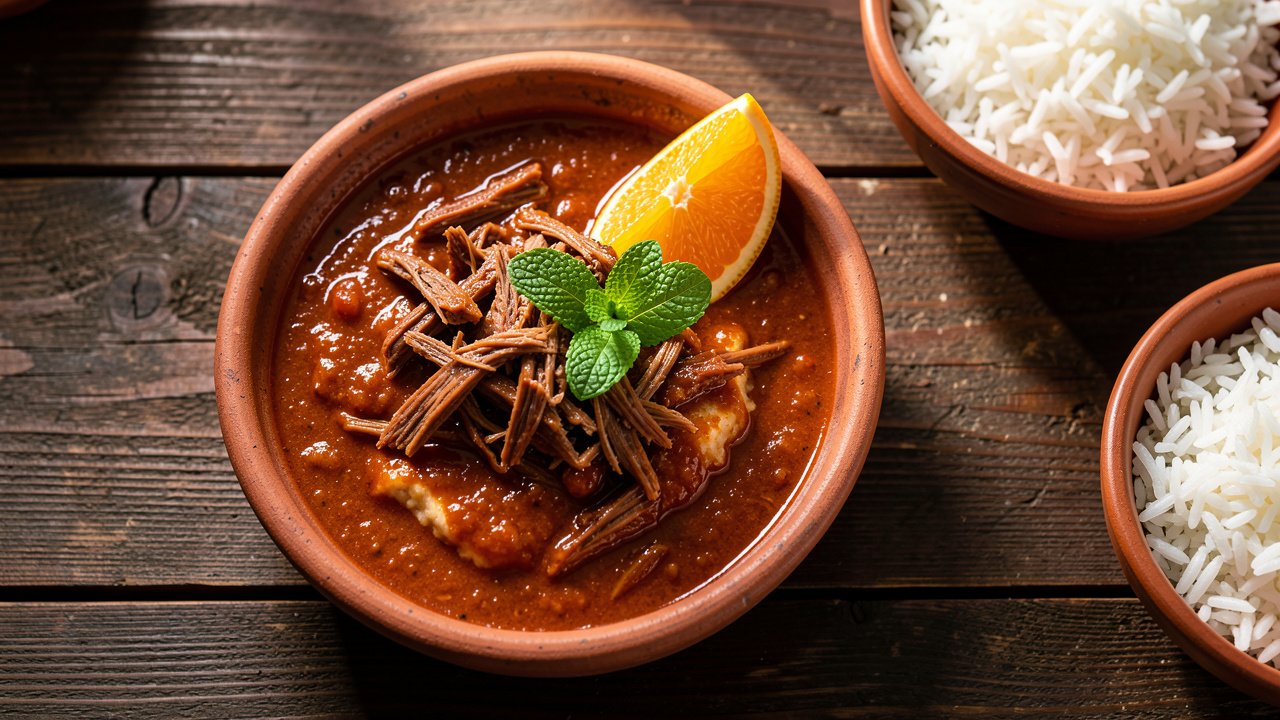
Indio Viejo is one of those dishes that tastes like it took all day and, in a way, it does reward patience. The halal beef simmers until it shreds into soft threads, a fragrant tomato sofrito goes golden in the pan, and then masa turns the whole thing into a thick, comforting stew somewhere between a chili and a savory porridge. The mint and bitter orange at the end keep it from feeling heavy.
The first time I made it I dumped the masa harina straight into the hot pot and ended up with stubborn little dumplings. Dissolving the masa smoothly in liquid first, before it ever touches the heat, is the single trick that separates a silky Indio Viejo from a lumpy one.
Why This Indio Viejo Works
Indio Viejo, which translates to “old Indian,” is a dish with deep indigenous roots, and its logic is simple once you see it. You build savory depth in three layers: tender shredded halal beef, a slow-cooked tomato sofrito perfumed with achiote and cumin, and masa that thickens everything into a spoon-coating stew. Each layer does one job, and together they taste far richer than the short ingredient list suggests.
The masa is what makes this dish unmistakably Nicaraguan. Corn dough, or masa harina loosened with water, is the same base used for tortillas and tamales, and stirred into a stew it lends a gentle corn sweetness and a velvety body you cannot fake with flour or cornstarch.
The fresh mint and sour orange at the end are not garnishes you can skip. They lift the whole pot, cutting the richness with a herbal, citrusy brightness that is the signature finish of a proper Indio Viejo.
Pro observation: The sofrito is ready for the broth when the oil takes on a warm orange tint from the achiote and pools at the edges of the pan. That glossy sheen means the spices have cooked through and the raw edge is gone.
Ingredients
Kitchen Measurement Converter
Quickly convert between common cooking measurements without leaving the recipe. Pick a category, enter a value, and the result updates instantly.
Ingredient Notes & Substitutions
Halal Beef
A working cut like flank, skirt, or brisket is ideal because it shreds beautifully after a long simmer. Use halal beef and simmer it low and slow until fork-tender, then pull it into fine threads by hand or with two forks.
Masa Harina
Masa harina is nixtamalized corn flour, the same one used for tortillas. Fresh masa dough works too. Do not swap in regular cornmeal or cornstarch; the corn flavor and body will be missing.
Achiote
Achiote paste or ground annatto gives the stew its warm color and earthy note. If you only have annatto seeds, steep them in warm oil, then strain. A pinch of paprika can stand in for color in a pinch.
Sour Orange
Bitter orange, also called naranja agria, gives the authentic tang. If you cannot find it, mix two parts fresh orange juice with one part lime juice for a close, bright substitute. Add it gradually and taste.
Equipment
- Large heavy pot or Dutch oven
- Wide skillet for sofrito
- Sharp knife and board
- Two forks for shredding
- Whisk and small bowl
- Wooden spoon
Before You Start
1. Give the beef time. The halal beef needs a long, gentle simmer to turn tender enough to shred, so start it first and reserve the cooking broth. That broth carries a lot of the flavor.
2. Dissolve the masa smoothly. Whisk the masa harina into cool liquid until it is completely lump-free before it goes near the hot pot. This is the difference between silky and lumpy.
3. Chop the sofrito fine. Small, even pieces of onion, bell pepper, and tomato cook down faster into a jammy base and give the finished stew a smooth, unified texture.
Step-by-Step Instructions
Simmer and Shred the Beef
Put the halal beef in a large pot with the bay leaf, half of the chopped onion, a teaspoon of the salt, and enough water to cover by an inch. Bring to a boil, skim off any foam, then lower to a gentle simmer and cook 1.5 hours until the beef is fully cooked through and fork-tender. Lift the beef out, let it cool a few minutes, and shred it into fine threads. Strain and reserve the cooking broth to use later.
Food safety: Simmer the beef until it is cooked all the way through with no pink in the center, reaching at least 160 F, before you shred it. Long, gentle cooking makes it both safe and tender.
Build the Tomato Sofrito
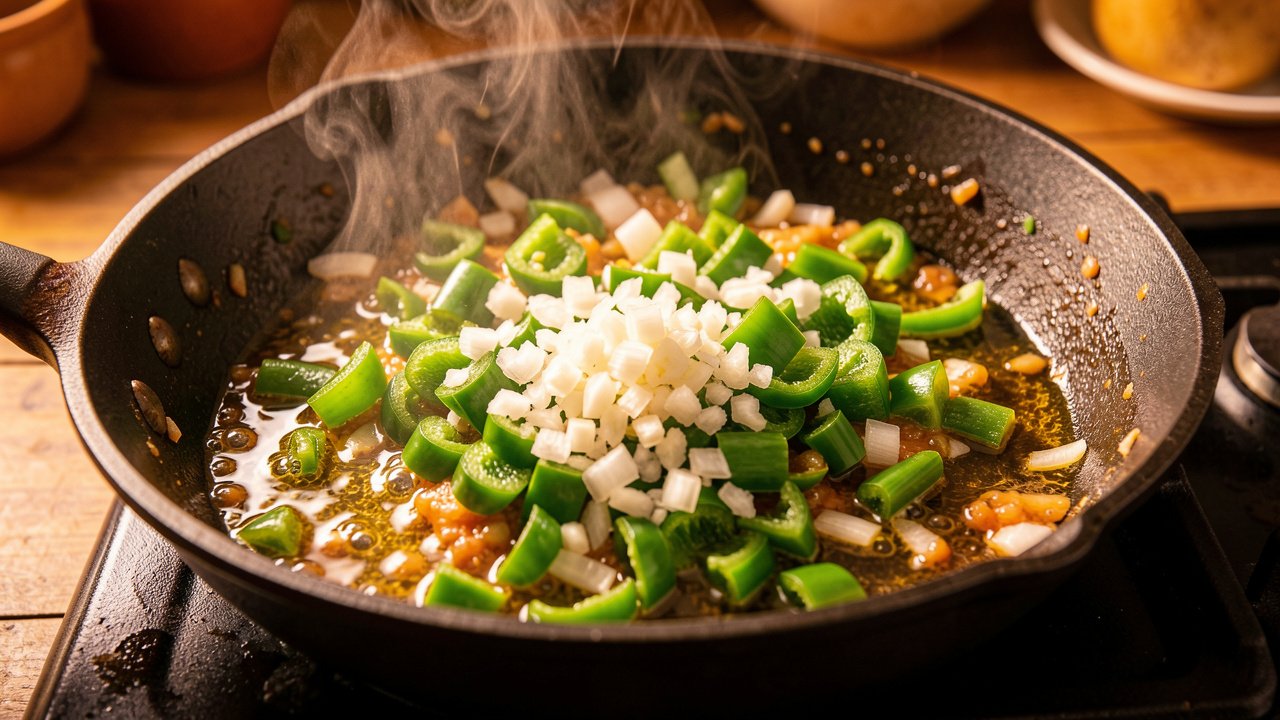
Heat the oil in a wide skillet over medium heat. Add the remaining onion, the green bell pepper, and the garlic, and cook 6 to 7 minutes until soft and lightly golden. Stir often so the garlic does not scorch. This aromatic base is the backbone of the stew.
Add Tomatoes, Achiote, and Cumin
Stir in the chopped tomatoes, achiote paste, and ground cumin along with the black pepper. Cook 8 to 10 minutes, stirring, until the tomatoes collapse into a thick, jammy sauce and the oil takes on a warm orange tint from the achiote. This is when the base turns from raw to deeply savory.
Return the Beef and Broth
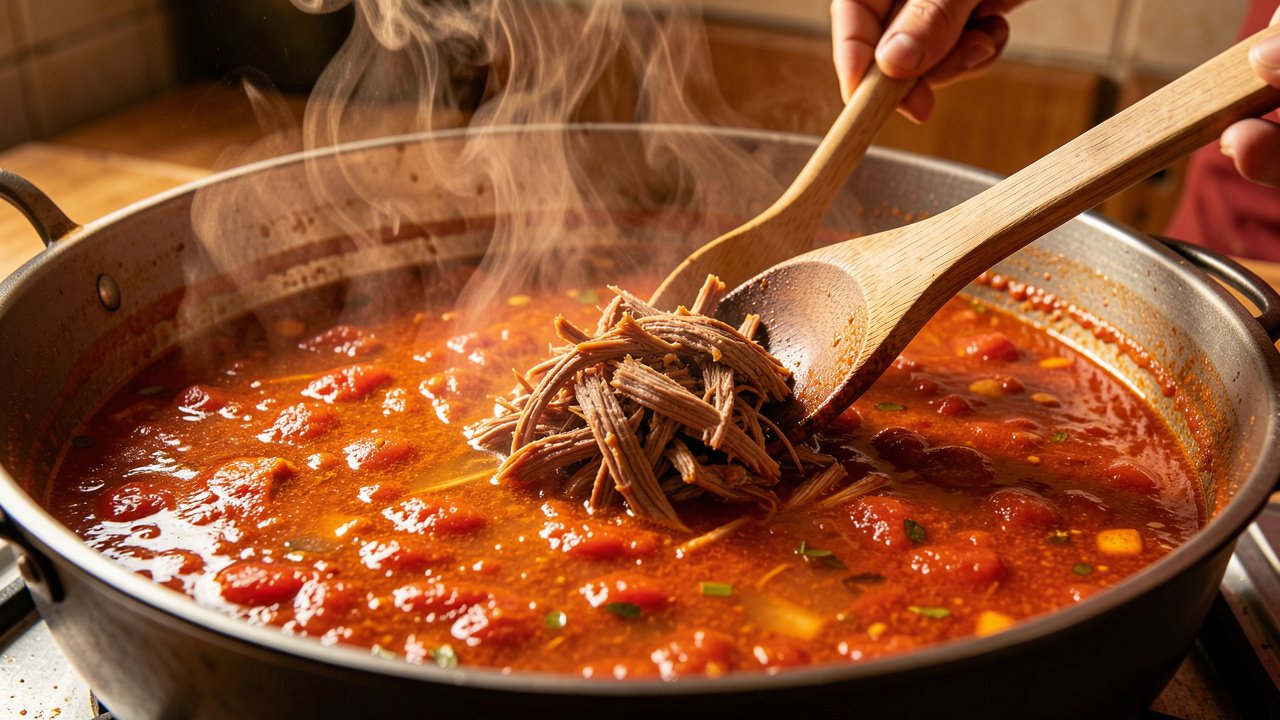
Add the shredded halal beef to the sofrito and stir to coat every thread. Pour in about 3 cups of the reserved beef broth, bring to a gentle simmer, and cook 10 minutes so the beef drinks up the flavor. Keep the remaining broth aside for loosening the masa.
Dissolve and Add the Masa
In a bowl, whisk the masa harina into the sour orange juice and the remaining cup of cool broth until it is completely smooth, with no lumps at all. Pour this slurry into the pot in a slow stream while stirring constantly. Cook 8 to 12 minutes over low heat, stirring often, until the stew thickens into a hearty, porridge-like consistency that coats the spoon. If it gets too thick, loosen it with a splash more broth.
Finish with Mint and Sour Orange
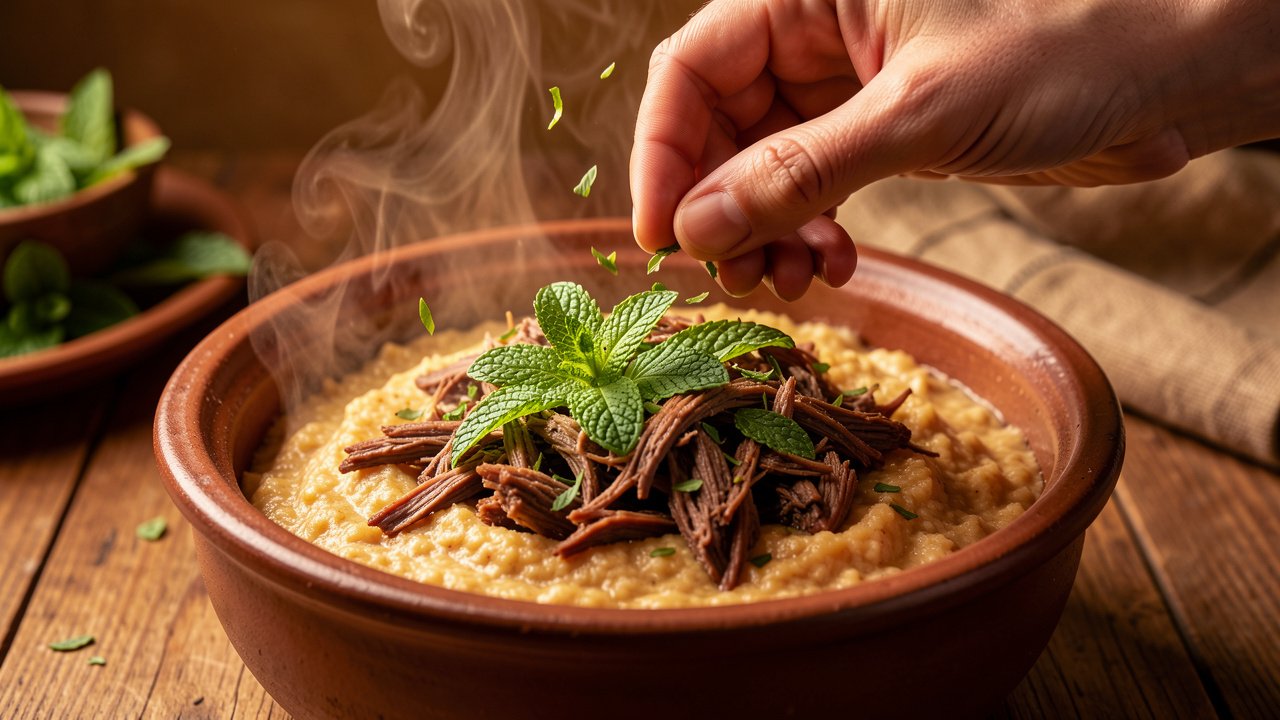
Stir in most of the chopped mint and a final squeeze of sour orange juice, then taste. Adjust with the rest of the salt or a little more citrus for brightness. Scatter the remaining mint over the top and serve hot with white rice or warm tortillas.
Chef’s Tips From Real Kitchen Testing
Always dissolve the masa in cool liquid first and pour it in while stirring. Adding dry masa to a hot pot is how you get stubborn lumps that never smooth out.
Do not throw away the beef cooking broth. It is packed with flavor and is exactly what you want for both simmering the stew and loosening the masa.
Add the mint and sour orange at the very end. Their brightness fades with heat, so a fresh hit right before serving is what makes the dish taste alive.
Recipe Variations
Serving Suggestions
- Fluffy white rice, the classic pairing
- Warm corn tortillas for scooping
- Fried sweet plantains on the side
- Extra mint and sour orange wedges
Nutrition Facts
| Nutrient | Amount per serving |
|---|---|
| Calories | 340 |
| Protein | 26 g |
| Carbohydrates | 22 g |
| Fat | 16 g |
| Saturated Fat | 5 g |
| Fiber | 3 g |
| Sugar | 4 g |
| Sodium | 640 mg |
Values are estimates per serving and vary with the exact ingredients and brands you use.
Make-Ahead Tips
Indio Viejo is a wonderful make-ahead dish, since the flavors settle and deepen overnight in the fridge. It thickens considerably as it rests, so reheat gently and stir in a splash of broth or water to loosen it back to that spoonable texture, then brighten it with fresh mint and sour orange before serving.
Storage, Freezing & Reheating
Common Mistakes to Avoid
Troubleshooting
Lumpy stew? The masa was not fully dissolved before it went in. Whisk hard off the heat, or pass the stew through a sieve, and next time slurry the masa smooth in cool liquid first.
Too thick or pasty? Masa keeps absorbing liquid as it cooks and cools. Stir in warm broth a splash at a time until it loosens back to a spoonable stew.
Tastes flat? It usually needs salt and a bigger squeeze of sour orange. A little more cumin and fresh mint will wake the whole pot up.
A Note on Nicaraguan Cooking
Nicaraguan cooking rests on the country’s indigenous corn heritage, and masa is at the center of it, thickening stews, wrapping tamales, and forming the daily tortilla. Indio Viejo shows off that masa cookery in stew form, seasoned with achiote for color and earth, cumin for warmth, and bitter orange for the sour edge that runs through so many Central American dishes. The dish’s name, “old Indian,” carries a folk history tied to the region’s pre-colonial roots, a reminder that this humble, thrifty stew predates the modern kitchen by centuries. If you love hearty, spoonable bowls like this, our hearty tomato lentil soup shares the same comforting, make-ahead spirit.
Frequently Asked Questions
More Tomato Recipes to Try
Last updated: September 23, 2026