Iraqi Recipes
Iraqi Baked Eggplant and Meatball Casserole
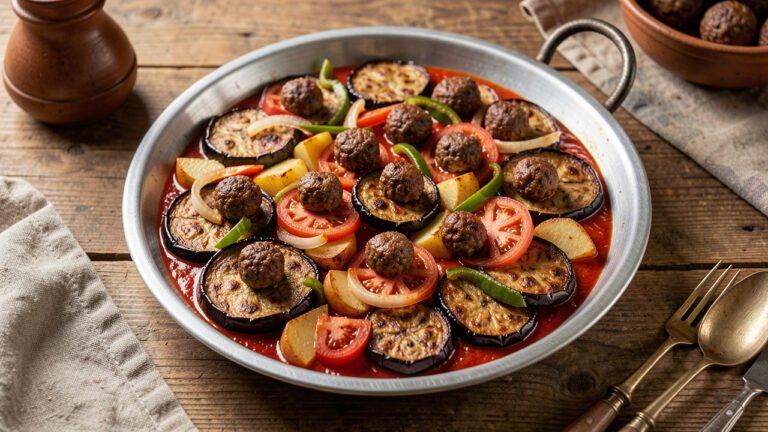
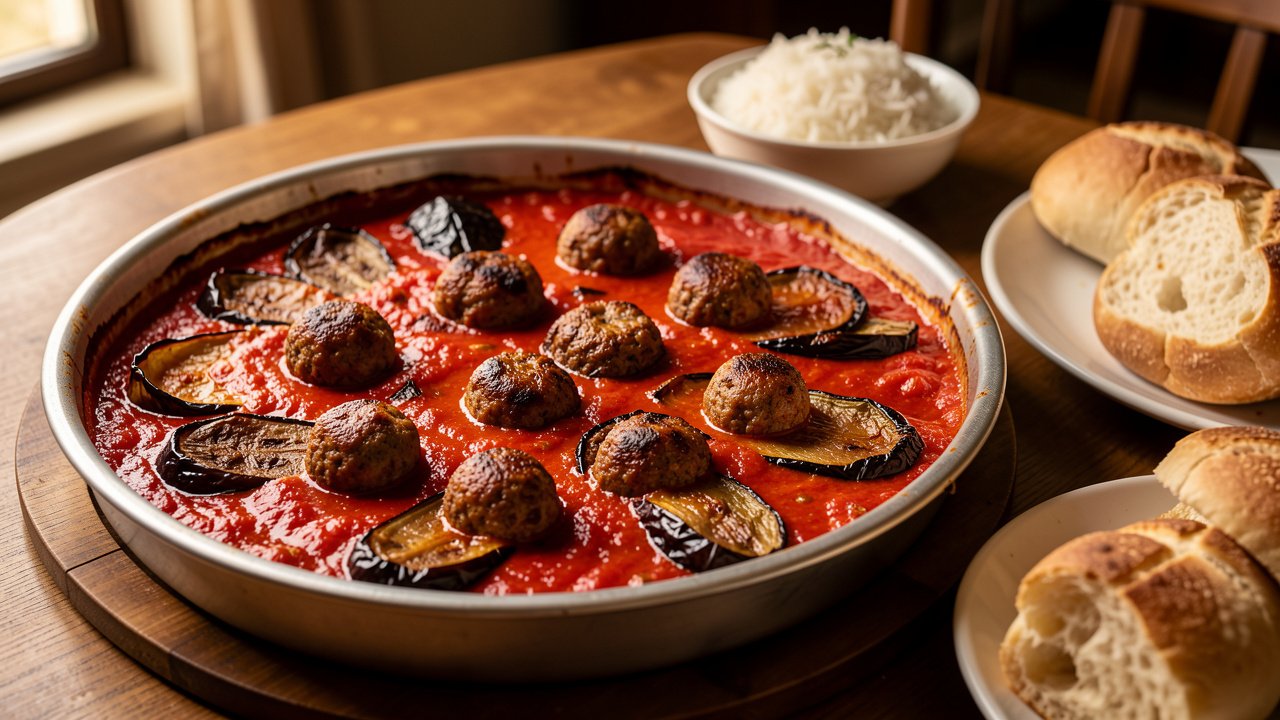
Tepsi baytinijan translates roughly to “eggplant tray,” and that plain name hides how special the dish is. Everything cooks together in one pan, so the meatballs drip their savory juices into the vegetables while the tomato sauce soaks down through every layer. The result tastes far greater than the sum of a handful of humble ingredients.
I learned early on that patience with the eggplant is what separates a good tepsi from a greasy one. Salt it, let it drain, fry it properly, and it stays silky instead of turning into an oil sponge. Do that one thing well and the rest of the tray practically takes care of itself in the oven.
Why This Tepsi Baytinijan Works
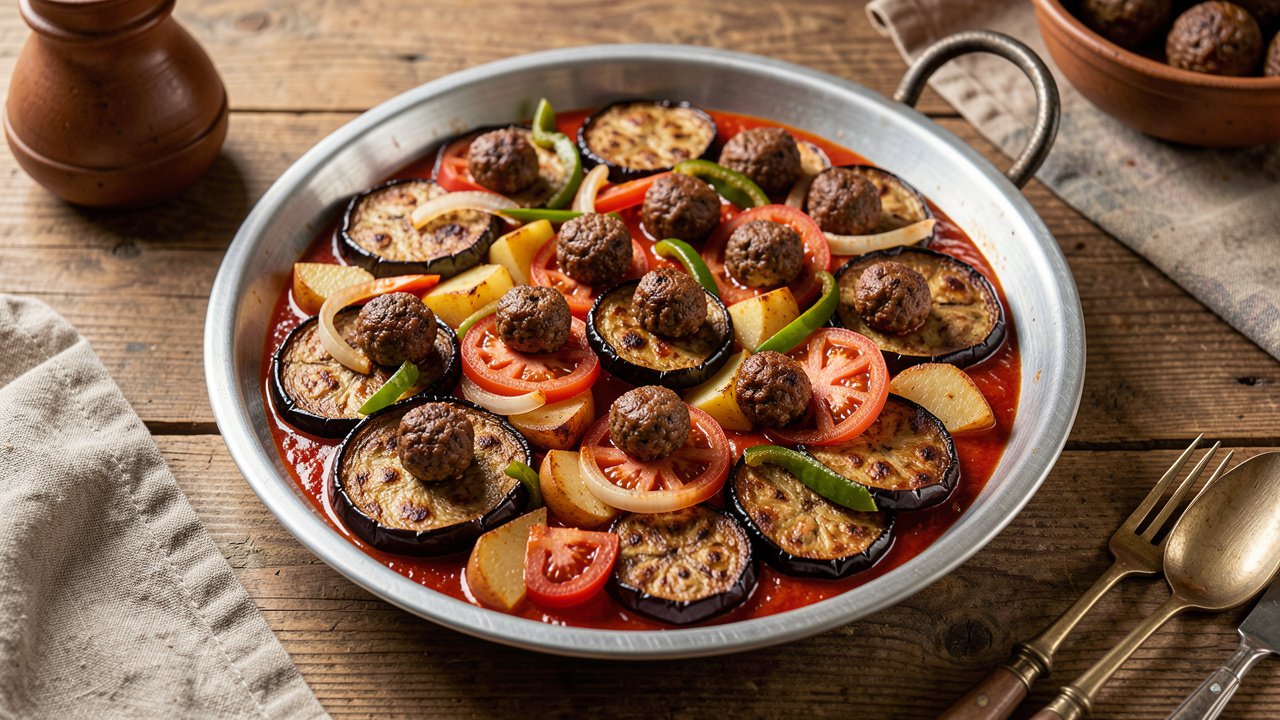
Tepsi baytinijan is built on a simple idea that pays off every time: cook everything in one tray so the flavors mingle instead of staying separate. As the tray bakes, the halal beef or lamb meatballs release their juices, the potatoes soak up the tomato sauce, and the eggplant turns meltingly soft. Nothing is bland, because everything shares the same seasoned liquid.
The single most important step is treating the eggplant properly. Salting the rounds pulls out excess moisture and some of the bitterness, and a quick fry gives them a golden skin that holds up in the oven. Skip that and the eggplant either stays spongy and oily or disappears into mush before the potatoes are done.
Layering also matters. Potatoes go toward the bottom because they take the longest to cook, and the meatballs and eggplant tuck in around them. The garlicky tomato-paste sauce is poured over the whole tray so it seeps down and keeps everything moist while the top caramelizes.
Best of all, it is forgiving and generous. One tray feeds a crowd, it reheats beautifully, and the flavors deepen overnight. Once you learn the rhythm of salting, frying, layering, and baking, you can put a proper Iraqi dinner on the table without hovering over the stove the whole evening.
Pro observation: The tray is ready to come out when the sauce has reduced to a thick glaze clinging to the vegetables and a knife slides through a potato slice with no resistance. If the sauce still looks watery, give it another ten minutes uncovered.
Ingredients
Kitchen Measurement Converter
Quickly convert between common cooking measurements without leaving the recipe. Pick a category, enter a value, and the result updates instantly.
Ingredient Notes & Substitutions
Eggplant
Choose firm, glossy eggplants that feel heavy for their size. Slice into even rounds about a third of an inch thick so they cook at the same rate. Salting and draining before frying is the key to a silky, not oily, texture.
Halal Beef or Lamb
Use halal beef or lamb with a little fat, around 80/20, so the meatballs stay juicy. Lamb gives a richer, more traditional flavor, while beef is milder. A mix of both is common in Iraqi homes.
Tomatoes and Paste
Ripe, sliced tomatoes go between the layers, and tomato paste thinned with water makes the sauce. If your tomatoes are pale, lean more on the paste so the sauce still tastes deep and full.
Spices
Baharat, the Iraqi seven-spice blend, gives the most authentic flavor. If you do not have it, a mix of allspice, cumin, and black pepper is a close, easy stand-in. Paprika adds color and a gentle sweetness.
Equipment
- Large baking tray or oven dish
- Wide frying pan
- Colander for draining
- Mixing bowl
- Sharp knife and board
- Paper towels
Before You Start
1. Salt the eggplant first. Slice and salt the eggplant rounds at least 20 minutes before you plan to fry them, so they have time to release their moisture while you prep everything else.
2. Mix the meatballs early. Combine the meat, grated onion, parsley, and spices and chill briefly so they hold their shape. Roll them small, about the size of a walnut, so they cook through in the tray.
3. Heat the oven. Set it to 400 F (200 C) so it is fully hot by the time the tray is layered and the sauce is poured over.
Step-by-Step Instructions
Salt and Drain the Eggplant
Slice the eggplants into even rounds and lay them in a colander. Sprinkle generously with salt on both sides and let them sit for 20 to 30 minutes. You will see beads of moisture form on the surface. Pat each round dry with paper towels before frying, which prevents splattering and keeps them from soaking up too much oil.
Fry the Eggplant Until Golden
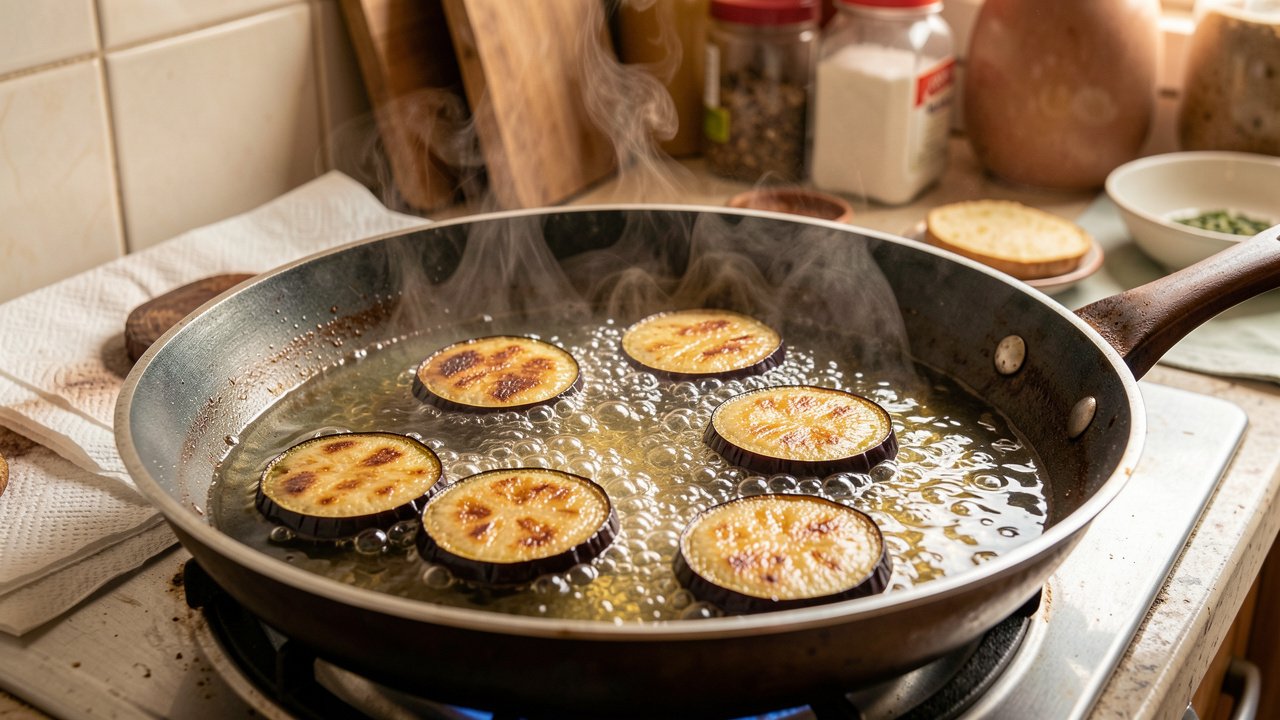
Heat the vegetable oil in a wide pan over medium-high heat. Fry the eggplant rounds in batches until golden on both sides, about 2 to 3 minutes per side. Do not crowd the pan. Drain the fried rounds on paper towels so any extra oil is absorbed. They should be soft in the center with a lightly crisp surface.
Shape the Meatballs
In a bowl, combine the halal beef or lamb with the grated onion, minced garlic, chopped parsley, baharat or allspice, cumin, black pepper, and half a teaspoon of salt. Mix with your hands until just combined, then roll into small walnut-sized meatballs. Lightly brown them in the same pan for a couple of minutes on each side; they do not need to cook through here, since they finish in the oven.
Layer the Tray
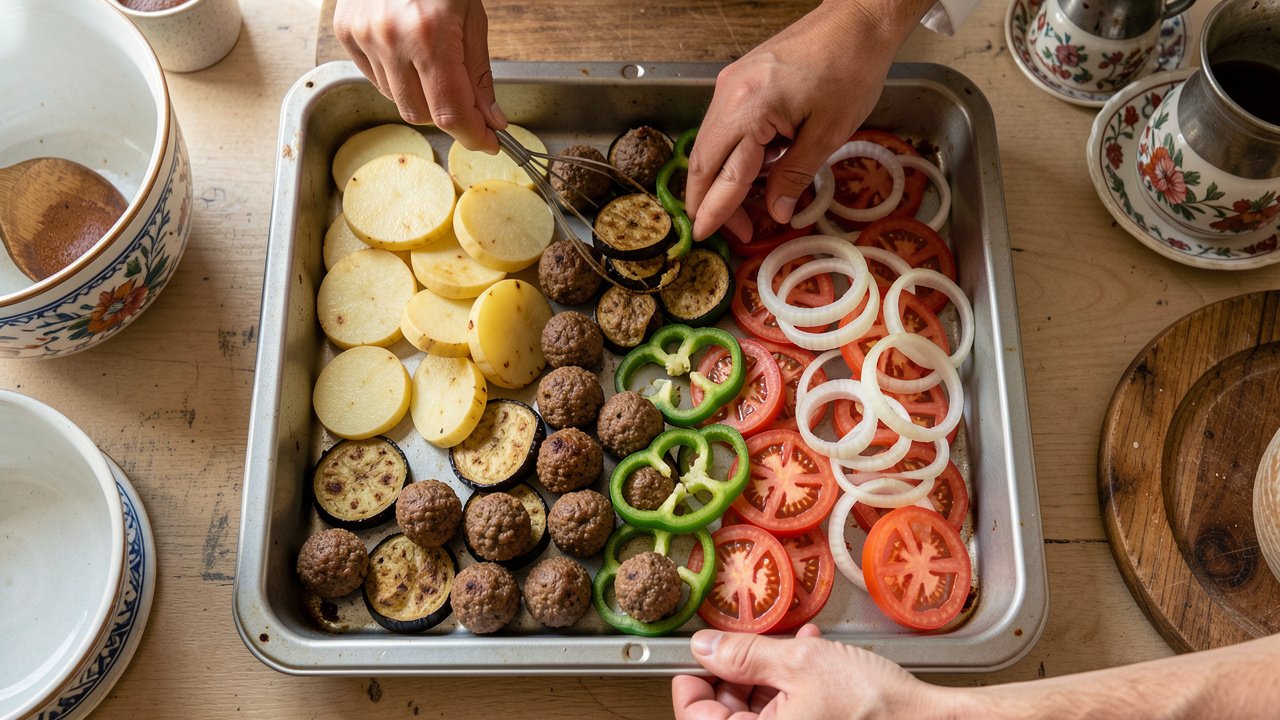
Grease a large baking tray. Arrange the sliced potatoes across the bottom, then layer the fried eggplant, sliced tomatoes, onion rings, green peppers, and the browned meatballs so everything is spread evenly. Tuck the meatballs between the vegetables so each portion gets a little of everything. Season the layers with a light sprinkle of salt as you build.
Make and Pour the Sauce
Stir the tomato paste and paprika into the warm water until smooth, then add the remaining minced garlic and a pinch of salt. Pour this garlicky tomato sauce evenly over the tray so it seeps down through the layers. The liquid should come about halfway up the vegetables; add a splash more water if the tray looks dry. This sauce is what keeps everything moist and ties the whole dish together.
Bake, Rest, and Serve
Cover the tray with foil and bake at 400 F (200 C) for 40 minutes, then uncover and bake another 15 to 20 minutes until the potatoes are fork-tender, the meatballs are cooked through, and the sauce has reduced to a glossy glaze. Let the tray rest 10 minutes before serving so the layers settle. Serve hot with rice or warm bread.
Chef’s Tips From Real Kitchen Testing
Never skip salting the eggplant. Those 20 minutes of draining are what keep the rounds from turning into oil sponges and give the finished tray a clean, silky texture.
Season the meatballs boldly and taste-check by frying a tiny piece first. Underseasoned kufta is the most common reason a tepsi ends up tasting flat.
Use enough sauce. The liquid should reach about halfway up the layers before baking, or the top dries out before the potatoes are tender.
Recipe Variations
Serving Suggestions
- Fluffy white or basmati rice to soak up the sauce
- Warm flatbread or samoon bread
- A simple cucumber, tomato, and onion salad
- Pickles and a squeeze of fresh lemon
Nutrition Facts
| Nutrient | Amount per serving |
|---|---|
| Calories | 430 |
| Protein | 22 g |
| Carbohydrates | 28 g |
| Fat | 26 g |
| Saturated Fat | 7 g |
| Fiber | 7 g |
| Sugar | 9 g |
| Sodium | 680 mg |
Values are estimates per serving and vary with the exact ingredients and brands you use.
Make-Ahead Tips
Tepsi baytinijan is an excellent make-ahead dish, because the flavors settle and deepen overnight. You can fry the eggplant, shape the meatballs, and slice the vegetables a day in advance, storing each component separately in the fridge. Assemble the tray and pour the sauce just before baking. You can also bake the whole tray ahead, cool it, and reheat gently, adding a splash of water to loosen the sauce if it has thickened too much.
Storage, Freezing & Reheating
Common Mistakes to Avoid
Troubleshooting
Potatoes still firm? They were probably sliced too thick or sat above the sauce line. Cover the tray, add a splash of water, and bake longer until a knife slides through easily.
Tray looks dry on top? Spoon some of the sauce from the bottom over the surface, cover with foil, and continue baking so the top layer rehydrates.
Sauce too thin at the end? Uncover the tray for the last 15 minutes so the liquid reduces to a glossy glaze that clings to the vegetables.
A Note on Iraqi Cooking
Iraqi home cooking has a deep love for the tepsi, the round tray that gives this dish its name. Layered tray bakes like this one are everyday comfort food across Iraq, prized because they turn a modest amount of meat and a pile of vegetables into a feast that feeds the whole family. The garlicky tomato base, the warm baharat spicing, and the generous use of eggplant are all hallmarks of the region’s table. If you enjoy hearty, spiced tomato dishes, our hearty tomato lentil soup shares the same warming, home-cooked spirit, and you can browse more ideas in our full collection of tomato recipes.
Frequently Asked Questions
More Tomato Recipes to Try
Last updated: September 23, 2026