Southern Recipes
Crisp Southern Classic
Last updated: September 23, 2026
Everybody tells you to fry green tomatoes because they are firm and dry. Red ones are the harder, better version: sweeter, juicier, and far more likely to turn to mush if you get careless. Every instruction below exists to fight the water inside a ripe tomato.
Why This Fried Red Tomatoes Recipe Works
A green tomato is dense and dry, which is why it forgives sloppy technique. A ripe red tomato is the opposite. Its cell walls have softened and it is holding a lot of loose water, so it wants to slump in the pan and steam its own crust from underneath. That is the whole problem, and it has three answers.
The first is thickness. Half-inch slices have enough structure to stay in one piece and enough interior to stay juicy while the outside browns. Quarter-inch slices collapse before the crust ever sets.
The second is salt and time. Fifteen minutes of salting pulls a startling amount of water to the surface, where a paper towel can take it away. Dry surfaces brown; wet surfaces steam.
The third is the three-layer dredge. Flour grabs the tomato and gives the egg something to hold. Egg is the glue. Cornmeal is the armor, and because it is coarse it stays crunchy instead of turning pasty the way a straight flour coating does against all that moisture.
Pro observation: Watch the edges of the slice, not the top. When the cornmeal at the rim goes from pale sand to deep amber and the sizzle drops from a hard hiss to a steady murmur, that side is done. Flipping early is how the crust falls off.
Ingredients
Kitchen Measurement Converter
Quickly convert between common cooking measurements without leaving the recipe. Pick a category, enter a value, and the result updates instantly.
Ingredient Notes & Substitutions
The Tomatoes
You want firm-ripe, not dead-ripe: red and fragrant, but still resisting when you press a thumb into the shoulder. If it gives easily or the skin wrinkles, that one is for a sandwich. Meaty types like Roma, Amish Paste, or beefsteak have less jelly and fewer seeds, so they hold together best.
Cornmeal
Medium-grind yellow cornmeal is the sweet spot. Fine cornmeal behaves too much like flour and softens fast, and coarse grits-grade meal can stay gritty in the short fry time. Panko works if you want a lighter, spikier crust, though it browns quicker so drop the oil to about 340 degrees.
Frying Fat
Peanut, canola, or vegetable oil all handle 365 degrees without complaint. A neutral oil is the most forgiving choice here and keeps the gravy clean and light. Skip butter for frying; the milk solids burn long before the crust sets.
Milk for the Gravy
Whole milk gives the gravy the right body. Skim thins out and tastes chalky, and a fifty-fifty split of milk and heavy cream is the richest version worth making. Warm the milk first and the roux accepts it far more smoothly.
Equipment
- Cast iron skillet
- Wire cooling rack
- Three shallow bowls
- Instant-read thermometer
- Metal fish spatula
- Balloon whisk
Before You Start
1. Salt the tomatoes first, then do everything else. The slices need fifteen minutes on paper towels while you set up. Treat that as the start of the clock, not an afterthought.
2. Line up the dredge in order. Flour, egg, cornmeal, left to right, with the rack at the end. Keep one hand for dry bowls and one for the egg, or you will build breading on your fingers instead of the tomato.
3. Set the rack over a sheet pan now. Fried tomatoes go straight onto a rack, never onto paper towels, and you do not want to be hunting for one with a spatula in your hand.
Step-by-Step Instructions
Slice and Salt
Cut the tomatoes into rounds a generous half inch thick, discarding the very top and bottom slices, which are mostly skin. Lay them in a single layer on a paper-towel-lined tray, sprinkle both sides with the salt, and leave them for 15 minutes. You will see beads of water rise to the surface. Blot each slice firmly, top and bottom, until it looks matte rather than glossy. This is the step people skip and then wonder why their crust slid off.
Set Up the Three-Bowl Dredge
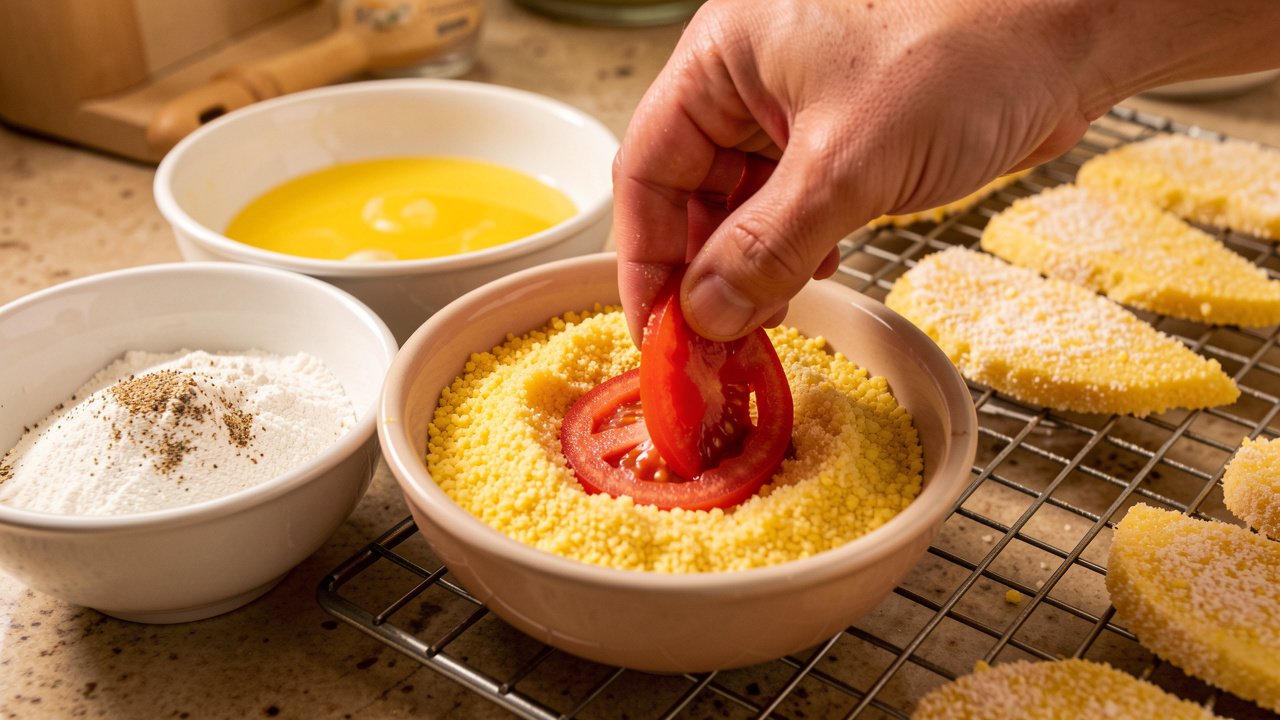
In the first bowl whisk the flour with the black pepper, garlic powder, paprika, and cayenne. In the second beat the eggs with the buttermilk until fully combined and slightly foamy. In the third put the cornmeal. Work one slice at a time: press it into the seasoned flour and tap off every loose speck, dip it in the egg and let the drips fall away, then press it into the cornmeal and pat firmly so the meal embeds rather than just resting there. Set each coated slice on the rack for a few minutes so the coating hydrates and sets.
Bring the Oil to Temperature
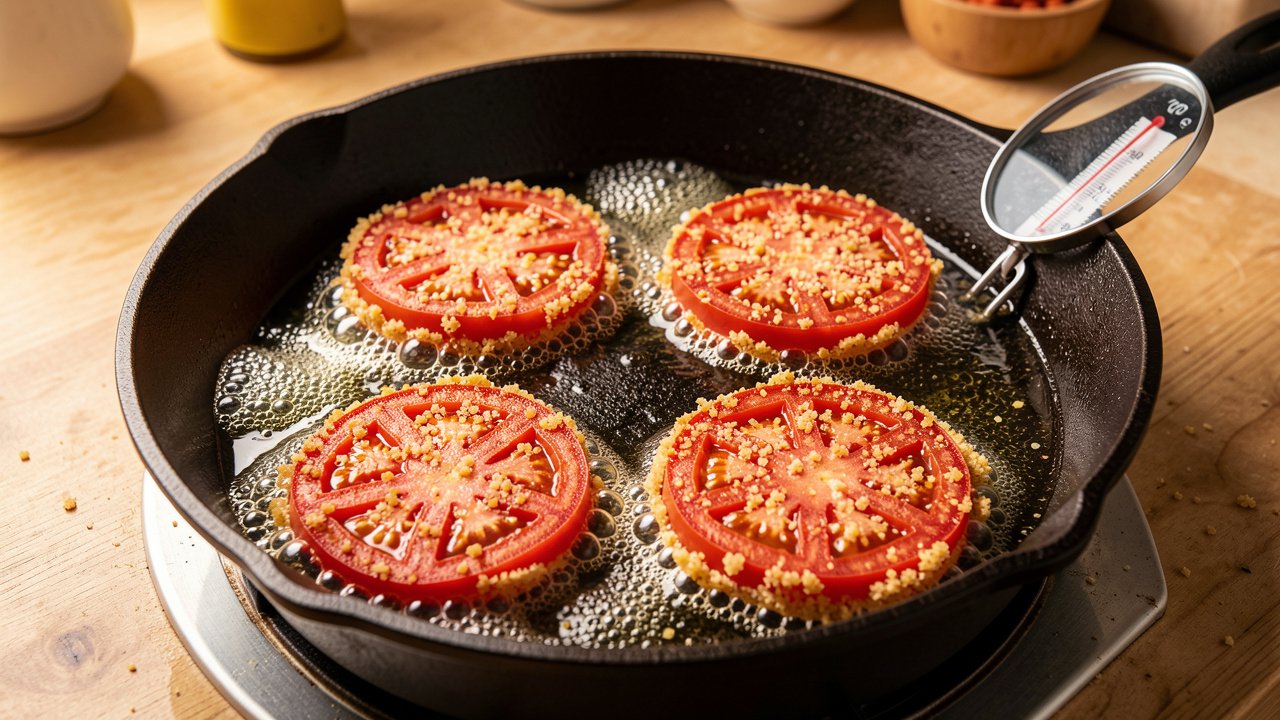
Pour the oil into a cast iron skillet to a depth of about a quarter inch and heat over medium until a thermometer reads 350 to 365 degrees. This window matters more than anything else in the recipe. Below about 330 the crust drinks oil and comes out heavy and greasy. Above 375 the cornmeal scorches in a minute while the tomato inside is still cold and raw. No thermometer? Drop in a pinch of cornmeal: it should sizzle briskly and float, not sink quietly or blacken.
Fry in Batches
Lay in only as many slices as fit without touching, usually three or four. Crowding is not about neatness, it is about physics: every cold, wet slice crashes the oil temperature, and four at 350 fry better than eight at 315. Cook 3 to 4 minutes per side. Flip once, gently, with a thin metal spatula, sliding it fully under the slice rather than stabbing at the edge. Let the oil climb back to temperature between batches.
Drain on a Rack
Move the finished slices to the wire rack, never to a plate of paper towels. On paper, trapped steam has nowhere to go and turns the bottom crust soft within two minutes. On a rack, air circulates underneath and both sides stay crisp. Season them with a light pinch of salt while they are still hot, when it sticks best. If you are frying several batches, slide the whole rack into a 200-degree oven to hold.
Build the Gravy in the Drippings
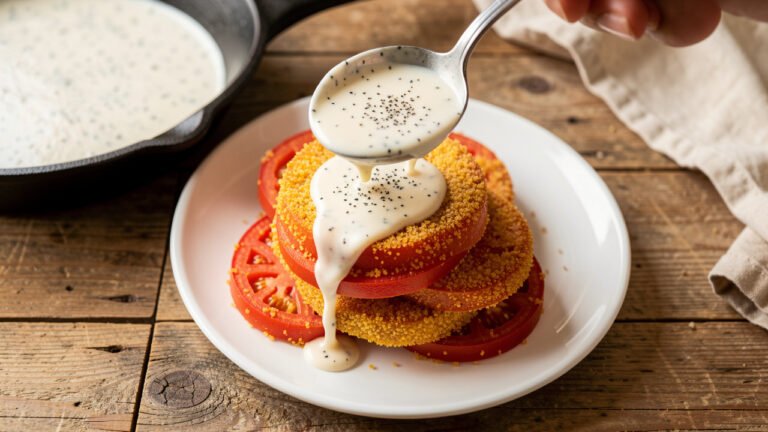
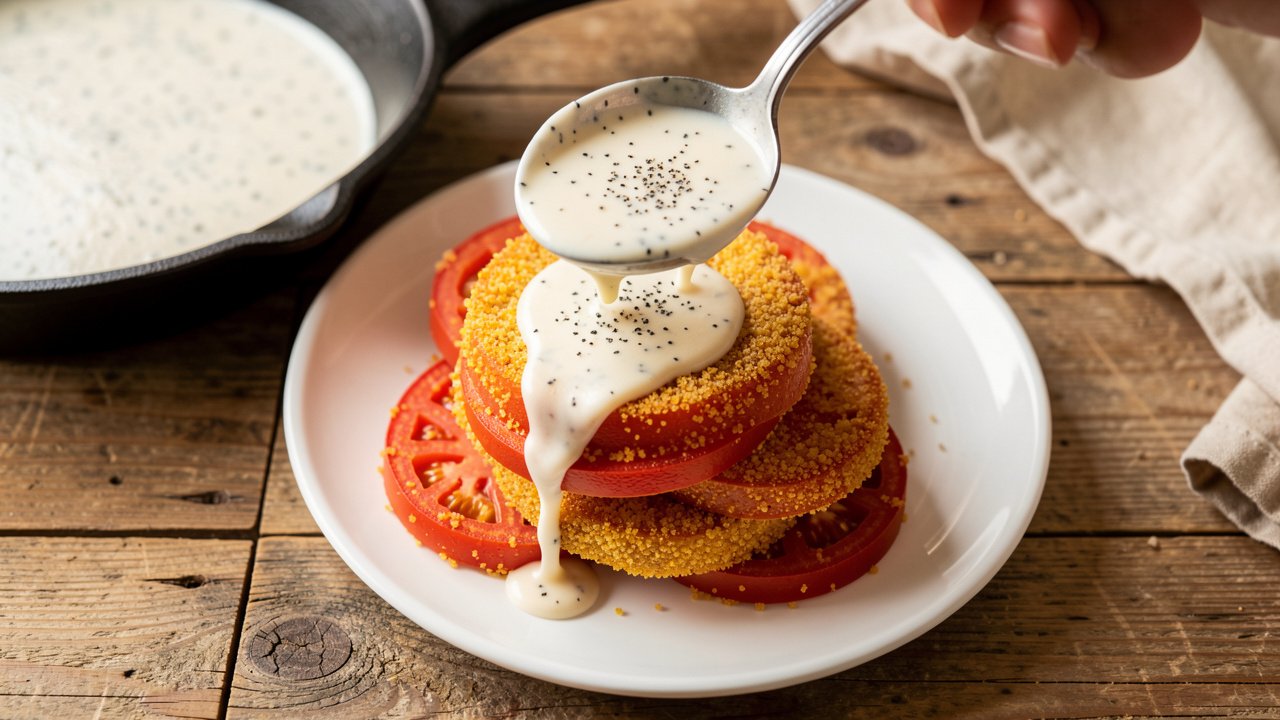
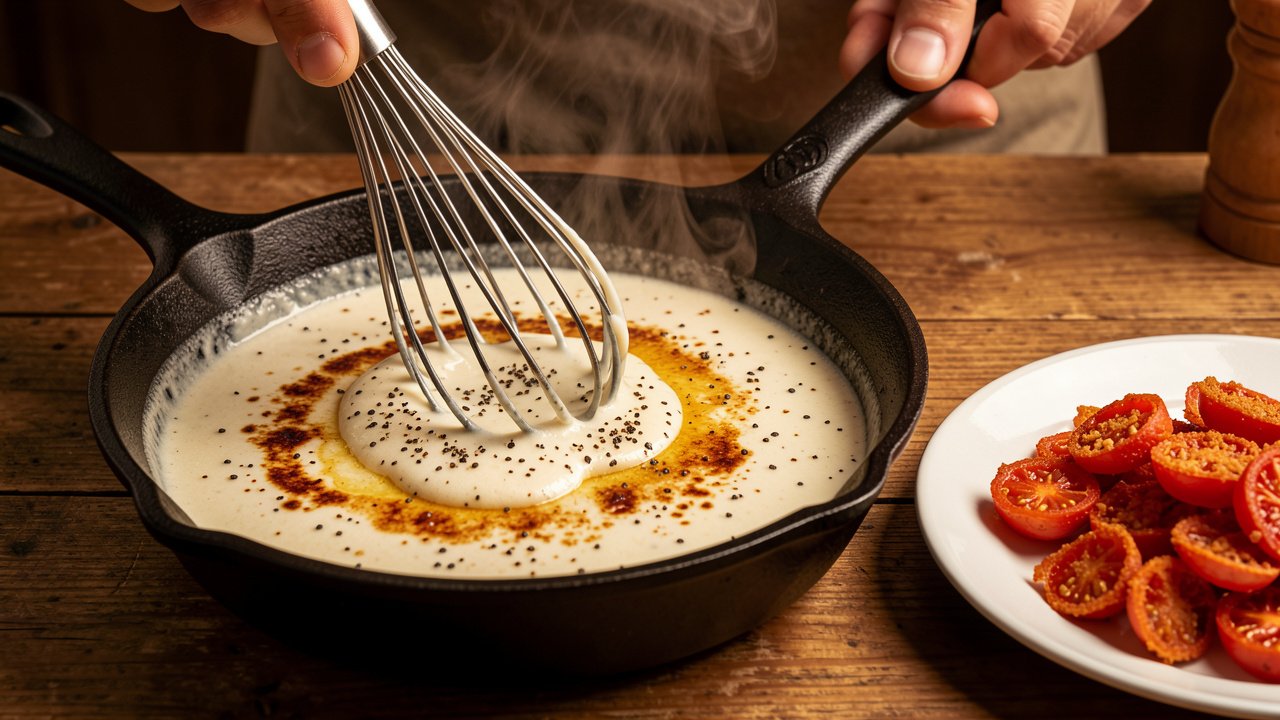
Pour off all but about 3 tablespoons of oil, leaving behind the browned bits stuck to the skillet. That fond is toasted cornmeal and caramelized tomato sugar, and it is the entire reason this gravy tastes like something instead of like white sauce. Whisk the flour into the hot fat and cook 1 to 2 minutes, scraping constantly, until the roux smells nutty and turns the color of straw. Now add the warm milk in a thin stream, whisking hard the whole time. Adding it slowly is what prevents lumps: each splash gets absorbed before the next arrives. Simmer 3 to 5 minutes until it coats a spoon, then finish with plenty of black pepper and salt to taste. Spoon it over the tomatoes right before serving.
Chef’s Tips From Real Kitchen Testing
Chill the coated slices for 10 minutes before frying if your kitchen is warm. A firmer, colder tomato holds its shape through the flip and gives the crust a head start.
Sauce the plate, not the tomatoes, if you are serving a crowd. Gravy underneath keeps the crust crisp for the whole meal instead of the first three bites.
Strain a spoonful of the frying oil into the gravy along with the drippings if your fond looks thin. Cornmeal sediment carries a toasty flavor that plain fat does not.
Recipe Variations
Serving Suggestions
- Over split buttermilk biscuits for brunch
- Alongside fried chicken or a lamb chop
- Stacked on toast with a fried egg
- With hot sauce and sliced scallions
Nutrition Facts
Values are estimates per serving and vary with how much frying oil the coating actually absorbs.
Make-Ahead Tips
The frying will not wait, but the setup will. Slice, salt, and blot the tomatoes up to 3 hours ahead and keep them uncovered on a rack in the fridge, where the cold, dry air pulls out even more moisture and works in your favor. Mix the seasoned flour a week ahead and store it sealed. The gravy can be made an hour early and rewarmed with a splash of milk. Coat the slices only when the oil is already heating; breading that sits too long goes gummy against the wet tomato.
Storage, Freezing & Reheating
Common Mistakes to Avoid
Troubleshooting
Coating slid off in the pan? The tomato surface was still wet, or you flipped before the crust set. Blot harder next time and give each side its full 3 minutes untouched.
Tomatoes greasy and limp? The oil was too cool, likely because the pan was crowded. Fry fewer slices and let the temperature recover between batches.
Gravy lumpy? The milk went in too fast or too cold. Whisk in a splash of warm milk off the heat, and if it will not smooth out, push it through a fine strainer.
A Note on Southern Fried Tomatoes
The green version got famous through a novel and a movie, but red fried tomatoes came first and were always the point. Green tomatoes were what you fried in early summer, or at the end of the season when frost threatened the vines and nothing else was ripe. When the tomatoes actually came in, cooks fried those, and the sweetness against a salty cornmeal crust is the whole reason the dish is worth making. The milk gravy came from the same thrift that produced sawmill and redeye gravy: fat and browned bits were never thrown away. If you have more ripe fruit than you can fry, our guide to canning crushed tomatoes and this fresh tomato sauce without sugar will use up the rest.