Italian Recipes
Seared, Stuffed, and Baked
Last updated: September 23, 2026
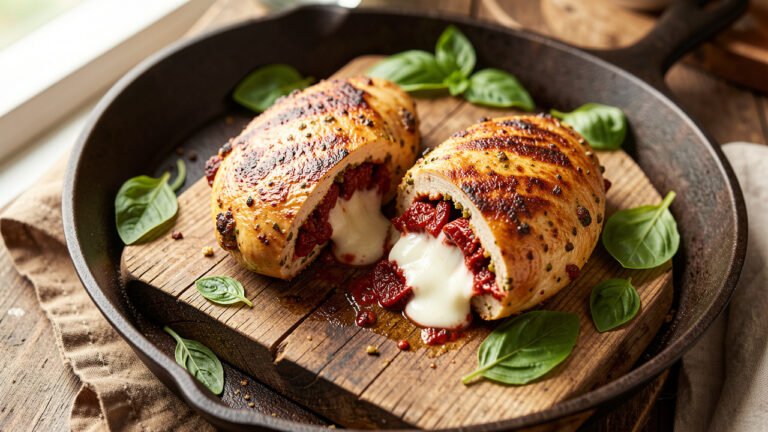
This is the dinner I make when I want chicken breast to stop being boring. The pesto is salty, sweet, and garlicky, the mozzarella turns into a molten ribbon, and the sear gives every slice something to push against. Technique matters more than the ingredient list here, and most of it comes down to the pocket you cut.
Why This Stuffed Chicken Breast Works
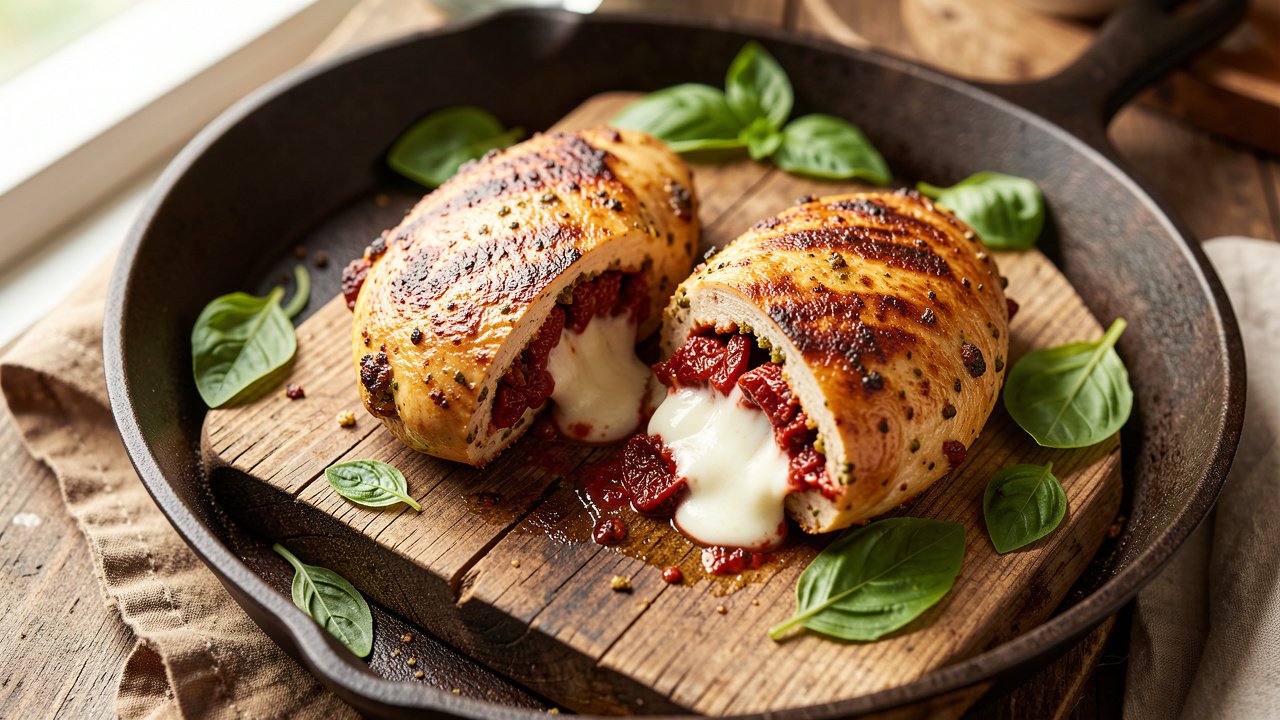
Chicken breast dries out because it is lean and because most people cook it too long. Stuffing it fixes both problems. The pesto is loaded with oil from the sun-dried tomato jar, and as the breast heats up that oil warms and bastes the meat from the inside. The mozzarella does the same.
The pocket is why this version beats the butterfly-and-roll method. Roll a butterflied breast and the seam unrolls, the filling squeezes out both ends, and you spend the night chasing pesto around the pan. A pocket has one small opening and three closed sides.
Searing first and baking second gives you what neither does alone. The skillet builds a browned crust in three or four minutes per side, and the oven then finishes the thick center gently without scorching that crust.
Pro observation: Cold mozzarella melts slower than the chicken cooks, which is what you want. Take it straight from the fridge to the pocket; room-temperature cheese starts leaking during the sear.
Ingredients
Kitchen Measurement Converter
Quickly convert between common cooking measurements without leaving the recipe. Pick a category, enter a value, and the result updates instantly.
Ingredient Notes & Substitutions
Sun-Dried Tomatoes
Buy oil-packed, not dry bagged. Drain them but keep the jar oil; it carries garlic and herb flavor and you need three tablespoons in the pesto. Dry-packed tomatoes need a 20-minute soak first and still taste flatter.
Chicken Breasts
Look for breasts around 8 ounces each and at least an inch thick at the fat end; thin, tapered ones have no meat to hold a pocket. If yours run 12 ounces or more, cut deeper and add 5 minutes in the oven.
Mozzarella
Low-moisture mozzarella sliced from a block melts into a stretchy layer without flooding the pocket. Fresh mozzarella in water tastes better but releases liquid, so pat it very dry. Provolone or fontina both work.
Nuts and Cheese
Pine nuts are buttery and traditional; walnuts are cheaper and give the pesto a deeper, slightly bitter edge. Toast either in a dry pan 2 minutes. Grate the Parmesan yourself, since pre-shredded is coated and turns the pesto grainy.
Equipment
- Oven-safe skillet
- Small food processor
- Sharp boning or paring knife
- Wooden toothpicks
- Instant-read thermometer
- Cutting board and tongs
Before You Start
1. Heat the oven to 400 F now. The skillet goes straight from the stove into the oven, so it has to be at temperature before the sear starts or the chicken sits and steams.
2. Pat the chicken bone dry. Wet chicken will not brown. Blot both sides and leave them on the board while you make the pesto.
3. Count your toothpicks. Two or three per breast, counted out loud. You will want that exact number later, and finding one with your teeth is a bad ending to a good dinner.
Step-by-Step Instructions
Make the Sun-Dried Tomato Pesto
Drain the sun-dried tomatoes, saving the oil. Pulse the tomatoes, garlic, basil, Parmesan, and nuts in a small food processor 8 to 10 times. Add 3 tablespoons of the jar oil and pulse again into a thick, spoonable paste that holds its shape, closer to a tapenade than a sauce. Do not thin it; a runny pesto pours straight out of the pocket in the oven. Taste it. It should be aggressively salty and tangy, because it has to season a large piece of mild meat.
Cut a Deep Pocket in Each Breast
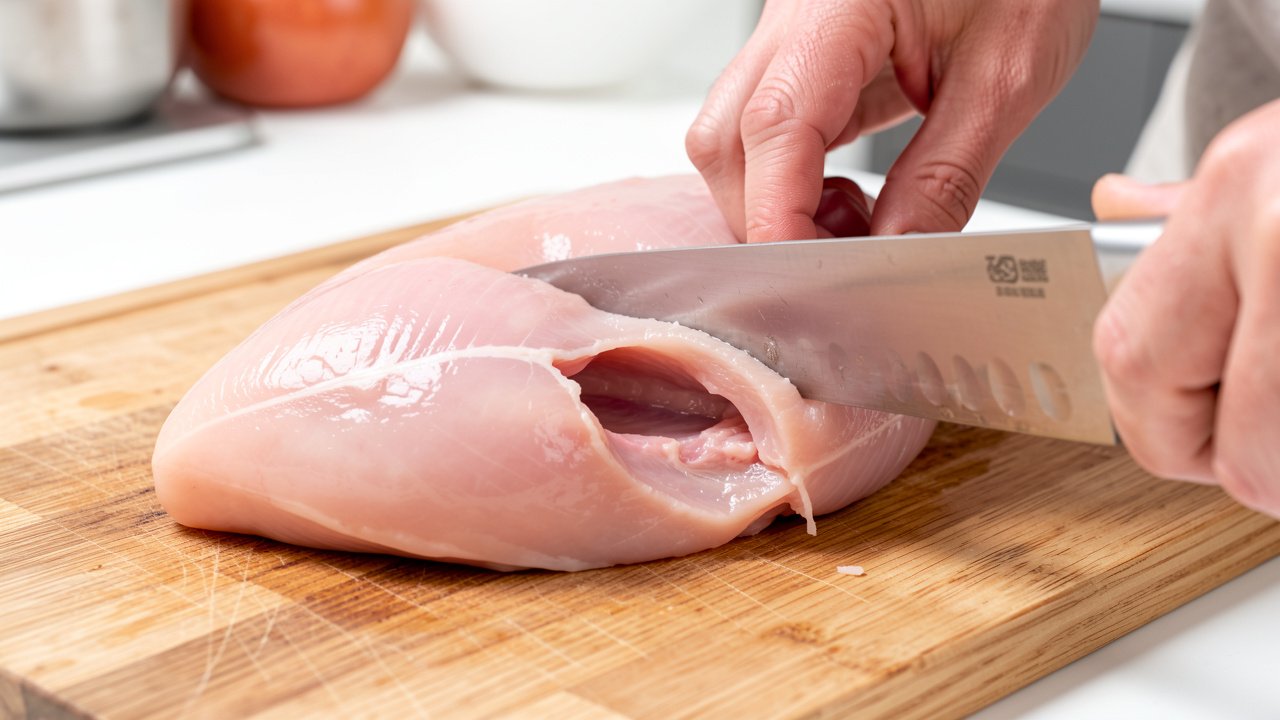
Lay a breast flat and put your palm on top of it. Insert a sharp knife horizontally into the thickest side, about halfway up. Push it in slowly and fan the blade to widen the cavity without making the opening bigger. Stop half an inch short of the far edge, the top, and the bottom. You want a cave, not a book. Do not slice all the way through. If the knife breaks the surface, that hole will leak, so keep the filling away from it.
Stuff and Secure
Spoon about 2 tablespoons of pesto into each pocket and push it to the back with the spoon handle. Add a slice of mozzarella folded to fit, then stop. An overstuffed breast will not close, and whatever you cram in past that point burns on the pan instead of melting in the meat. Press the opening shut and weave two or three toothpicks through the edges at an angle, like stitches. It should look plump but flat, not like a ball.
Season and Sear
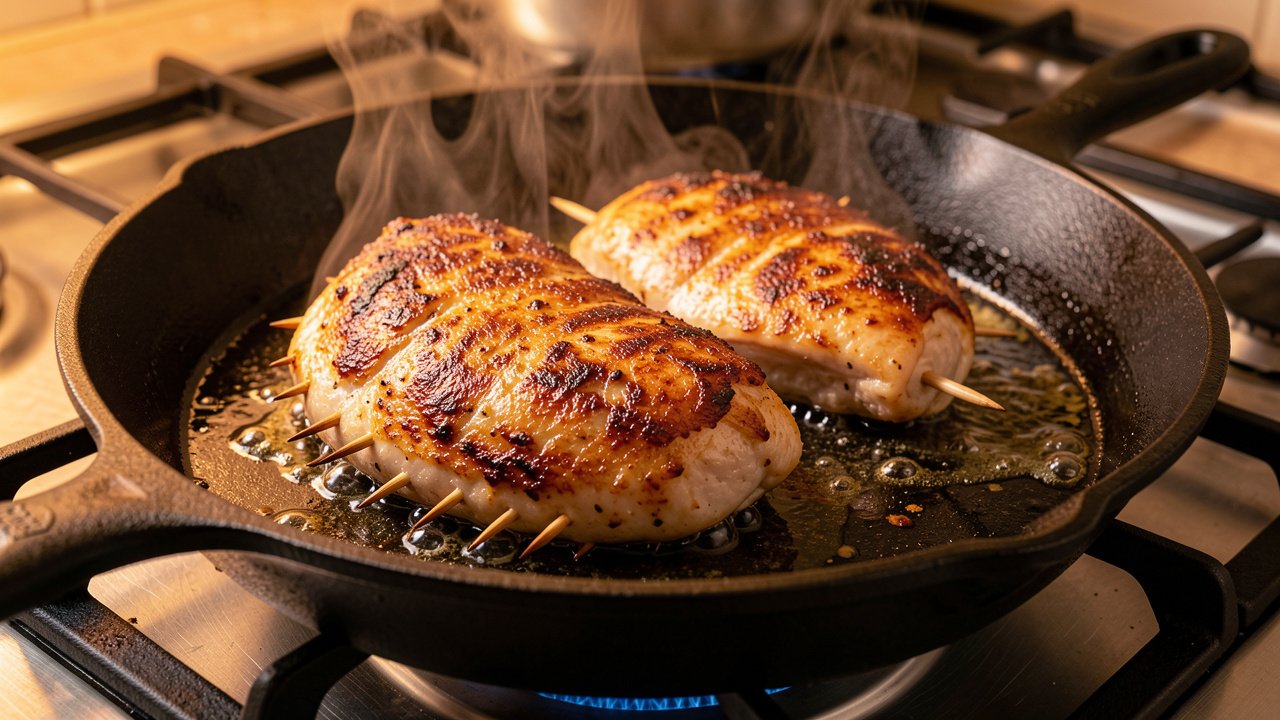
Rub the outsides with salt, pepper, garlic powder, and oregano. Heat a tablespoon of olive oil in the oven-safe skillet over medium-high until it shimmers and moves like water. Lay the breasts in pocket-side up and leave them alone 4 minutes. You want a steady, confident sizzle, not violent spitting. Flip once with tongs when the underside is deep golden and lifts without sticking, then sear the second side 3 minutes.
Bake to 165 F
Slide the whole skillet into the 400 F oven and bake 15 to 18 minutes, checking at 15. Push an instant-read thermometer into the thickest meat from the top, angling away from the pocket so you read chicken and not molten cheese. Pull the pan the moment it hits 165 F. This is where good stuffed chicken goes wrong: two extra minutes do not make it safer, they squeeze water out of the muscle fibers and hand you the dry breast you were avoiding.
Rest, Remove Toothpicks, Slice
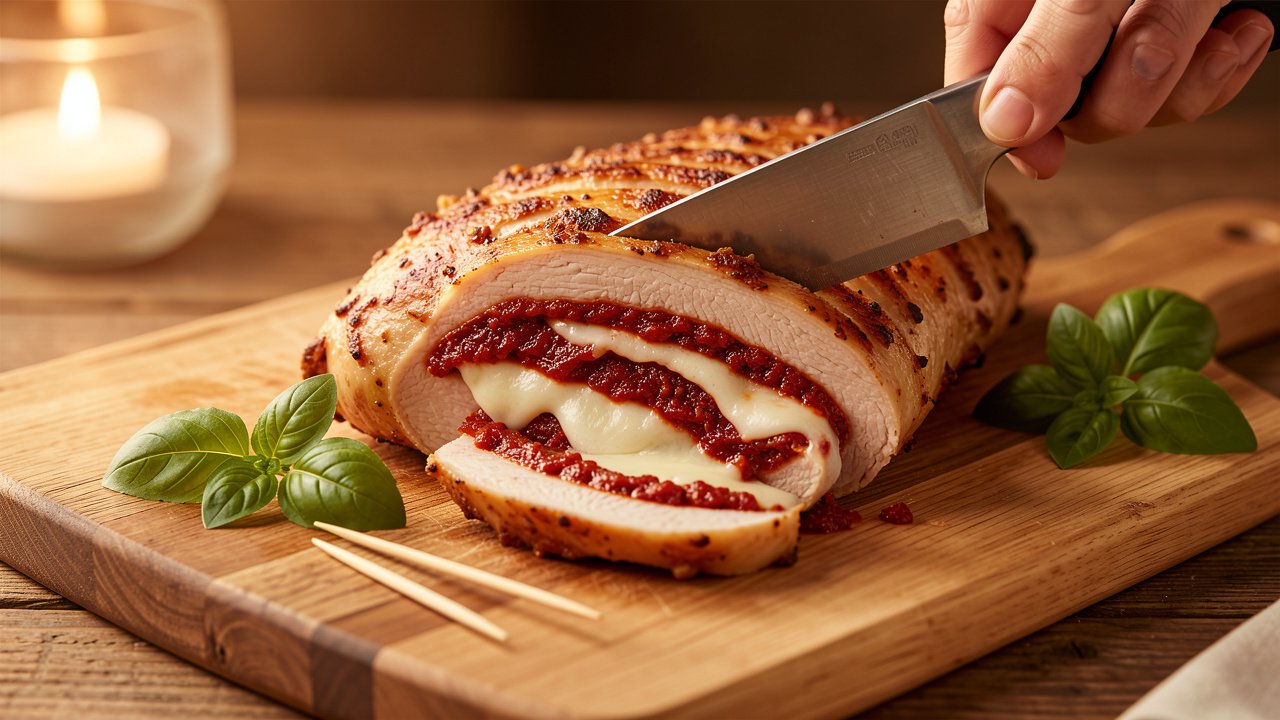
Move the breasts to a board and rest them 5 minutes, uncovered. The juices redistribute and the filling settles from lava to something you can eat. Slicing straight out of the oven sends hot pesto across the board and leaves the meat drier. After resting, pull every toothpick and count them against your starting number, then slice across the breast in thick pieces so each shows a stripe of pesto and cheese.
Chef’s Tips From Real Kitchen Testing
Chill the stuffed breasts 10 minutes before searing if you have time. Firm filling stays put in the pan, and the salt gets a head start on the surface.
Use wooden toothpicks, never plastic or colored. Wood handles a 400 F oven; plastic softens and colored picks bleed dye into pale chicken.
Do not wash the skillet after the chicken comes out. Add a splash of stock to the browned bits, scrape, and you have a pan sauce in 90 seconds.
Recipe Variations
Serving Suggestions
- Buttered orzo or angel hair with the pan drippings
- Roasted broccolini or blistered green beans
- A sharp arugula salad with lemon and shaved Parmesan
- Crusty bread for the pesto that escapes
Nutrition Facts
Values are estimates for one stuffed breast and shift with the size of your chicken.
Make-Ahead Tips
The pesto keeps three days in a jar under a film of oil. It firms up cold, so let it sit out 15 minutes before you spoon it into a pocket.
You can also stuff and secure the breasts up to 8 hours ahead, covered and raw in the fridge. Take them out 20 minutes before cooking, or the bake stretches and the outside overcooks while you wait on the middle.
Storage, Freezing & Reheating
Common Mistakes to Avoid
Troubleshooting
Filling leaked into the pan? The pocket was cut too close to an edge, or you used too much pesto. Back off to 2 tablespoons and angle the toothpicks so they pinch the opening shut rather than just pinning it.
Outside burnt before the inside was done? The sear ran too hot or too long. Medium-high is enough, and 4 minutes on the first side is a ceiling, not a target.
Chicken came out dry? It went past 165 F. Start checking at 15 minutes and remember the temperature climbs while it rests.
Pesto tastes muddy? You over-processed it. Pulse in short bursts; a paste with visible texture tastes brighter than a puree.
A Note on Sun-Dried Tomatoes in Italian Cooking
Sun-dried tomatoes come out of southern Italian preservation habits, where summer tomatoes were split, salted, and left on racks in the sun until they shrank into chewy strips. Drying removes the water but leaves the glutamates, which is why a spoonful adds so much savory depth to mild chicken breast.
If you want more of that concentrated tomato flavor, our tomato basil pasta and creamy tomato spinach tortellini both lean on it, our guide to tomatoes in the Mediterranean diet covers the nutrition side, and a good tomato sauce recipe covers the fresher end.