Southern Recipes
Crispy Southern Italian Bake
Last updated: September 23, 2026
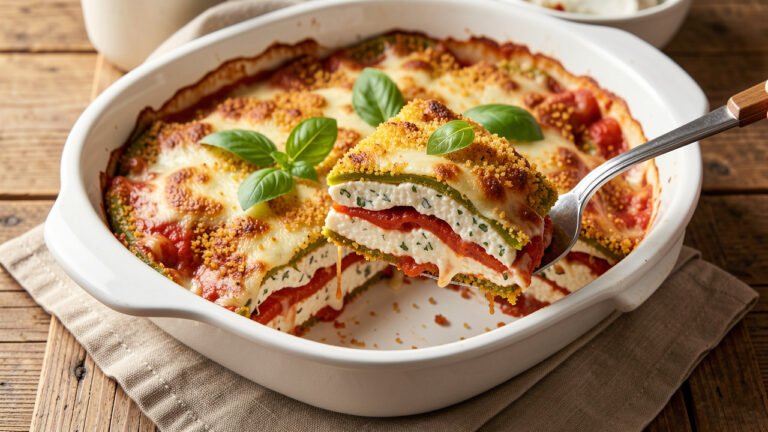
This is what happens when a Southern skillet meets an Italian baking dish. Unripe tomatoes are firm and tart enough to survive frying and then a stint in the oven, which a soft red tomato cannot do. The first time I tried it I skipped the salting step, and the whole pan turned into soup with cheese on top.
Why Fried Green Tomato Lasagna Works
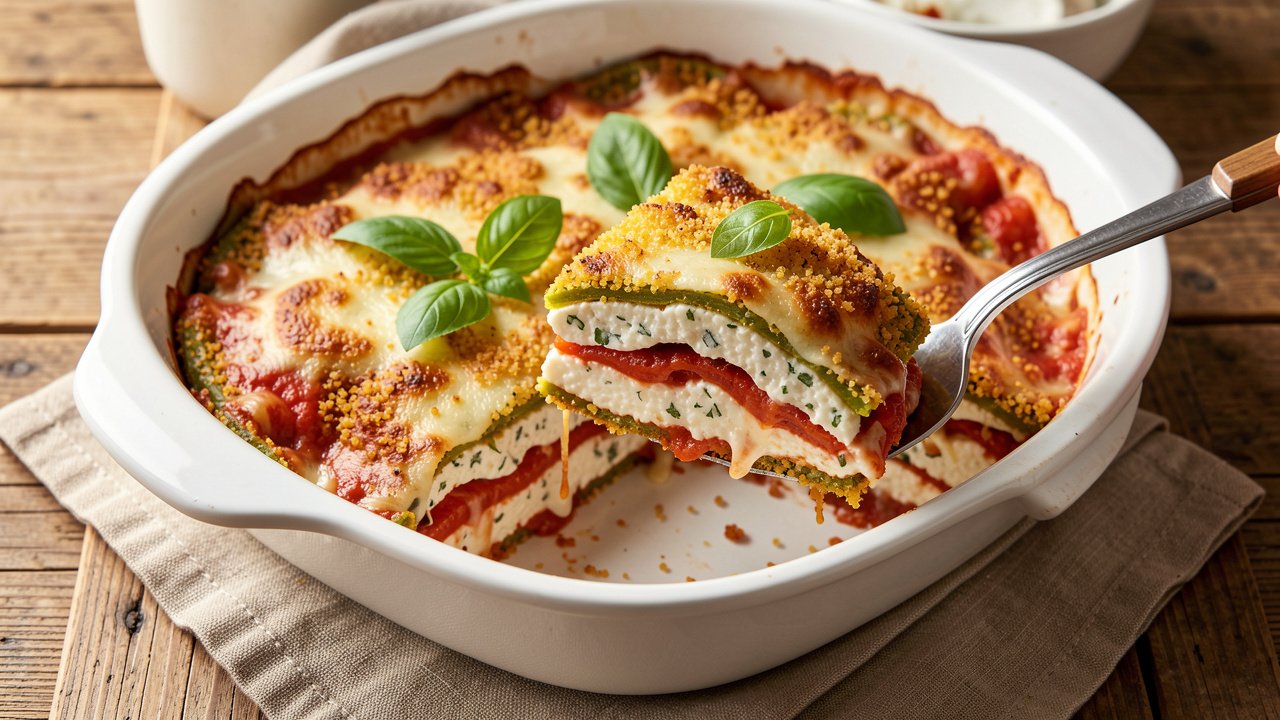
Green tomatoes are picked before they ripen, so their walls are dense and their pectin has not broken down. That structure is the whole reason this dish holds together. A slice behaves almost like a firm vegetable steak in hot oil, browning outside while staying meaty in the middle, where a ripe tomato would collapse into pulp before the crust ever set.
They are also genuinely tart, and that sharp, almost lemony bite cuts through ricotta and mozzarella in a way a sweet summer tomato cannot. The layers stay bright instead of collapsing into one heavy note of dairy.
The fried crust does double duty. It tastes good, but it also acts as a light barrier between the tomato and the sauce. That only works if the crust is genuinely crisp going into the dish; a pale, greasy coating dissolves in the oven and takes the structure with it.
The cornmeal also changes the texture of the bake. Instead of soft pasta you get a slight chew and a faint grit, so every forkful has some friction. The sauce, meanwhile, is deliberately restrained: enough to bind and moisten, not enough to drown. Most failed versions of this dish are failures of enthusiasm with the ladle.
Pro observation: A salted slice is ready to fry when the surface feels leathery and beads of water sit on top like sweat. If it still feels wet and squeaky, it has not given up enough moisture, and that water ends up in your baking dish.
Ingredients
Kitchen Measurement Converter
Quickly convert between common cooking measurements without leaving the recipe. Pick a category, enter a value, and the result updates instantly.
Ingredient Notes & Substitutions
Green Tomatoes
Look for hard, fully green fruit with no blush of pink. Squeeze them: they should barely give. Farm stands sell them in late summer, and any gardener facing a frost will hand you a bucket. Slightly under-ripe red tomatoes are not a substitute.
Cornmeal and Flour
Medium-grind yellow cornmeal gives the classic sandy crunch, and blending it with panko builds a crust that survives the oven better than cornmeal alone. Fine cornmeal turns pasty.
Ricotta
Whole-milk only. Part-skim is watery and loosens in the heat. Drain it in a sieve for 20 minutes if it looks slack, and beat in an egg so the layer sets instead of running when you cut.
Sauce and Mozzarella
Use a thick, cooked sauce, not a thin passata. Mozzarella shredded from a low-moisture block browns properly; fresh mozzarella packed in water releases far too much liquid here.
Equipment
- Cast-iron or heavy skillet
- Wire cooling rack
- Sheet pan
- Three shallow dredging bowls
- 8-inch square baking dish
- Spider or slotted spatula
Before You Start
1. Salt the tomatoes first, then do everything else. The slices need at least 30 minutes to weep. Set them up before you mix the ricotta or heat the oil, and that half hour costs you nothing.
2. Set the rack over the sheet pan now. Fried slices go straight onto a rack, never onto paper towels, where trapped steam softens the bottom crust within a minute.
3. Heat the oven to 375 F while you fry. The dish should meet a fully heated oven so the cheese melts before the crust absorbs sauce.
Step-by-Step Instructions
Slice and Salt the Green Tomatoes
Cut the tomatoes into rounds a scant half inch thick. Thinner slices fry faster but go floppy in the bake; thicker ones stay raw in the center. Lay them in a single layer on a rack, salt both sides, and leave them 30 to 45 minutes. Water will bead up and run off. Blot each slice completely dry before dredging, or the coating slides off in the pan.
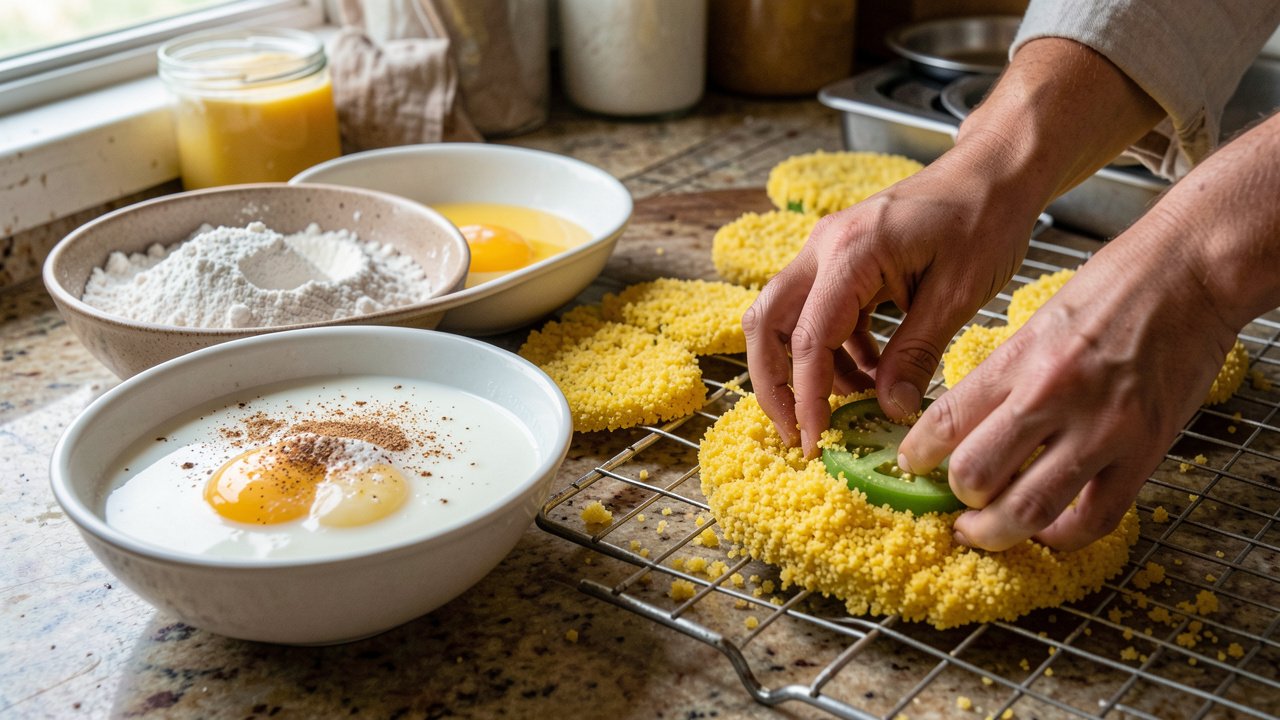
Set Up the Three-Bowl Dredge
Flour, black pepper, and cayenne in the first bowl. Eggs beaten with buttermilk in the second. Cornmeal, panko, and Parmesan in the third. Press each dry slice into the flour, shake off the excess, dip in the egg and let the drips fall, then press firmly into the cornmeal so it sticks. Rest the coated slices on the rack 10 minutes; the crust hydrates and grips better in the oil.
Fry Until Truly Crisp
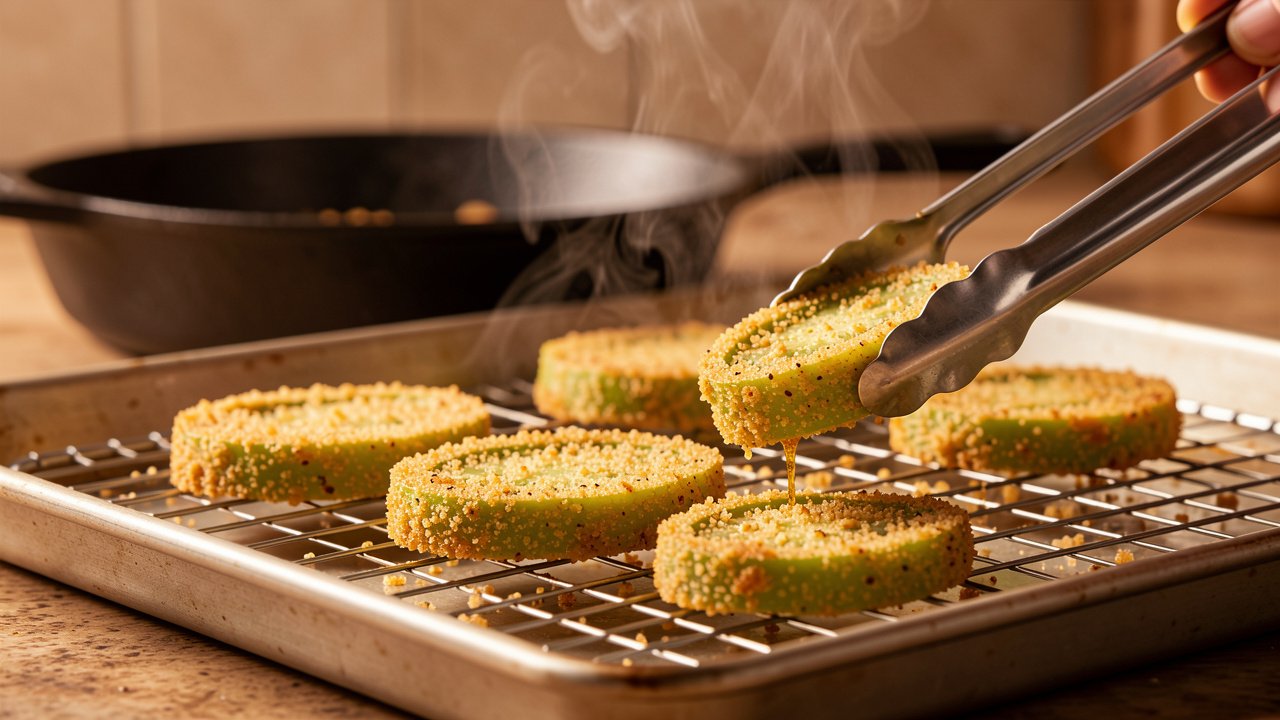
Pour oil a third of an inch deep into a heavy skillet and heat it to 350 to 365 F. A pinch of cornmeal should sizzle briskly and float, not sink and sulk. Fry three or four slices at a time for 2 to 3 minutes a side until the crust is deep golden and sounds hard when you tap it with tongs. Crowding drops the oil temperature and gives you a soft, oily coating, so let the oil recover between batches.
Drain on a Rack, Never Paper
Move each finished slice straight to the wire rack over a sheet pan and salt it while it is still glistening. Air has to reach all sides. On paper towels the underside steams itself soft in about 60 seconds, and no amount of oven time brings that crunch back. Cool the slices 5 minutes; a hot one melts the ricotta on contact.
Season the Ricotta and Layer the Dish
Stir the ricotta with one egg, half the Parmesan, the basil, pepper, and a half teaspoon of salt until thick and spoonable. Spread a thin film of sauce across the bottom of the 8-inch dish, just enough to stop sticking. Add a layer of fried slices, edges barely touching. Dot with a third of the ricotta, spoon over a modest ladle of sauce, scatter mozzarella. Repeat for three layers, finishing with tomatoes, sauce, and the remaining cheese. Do not flood any layer; the sauce should look like a spread, not a pool.
Bake at 375 F, Then Rest
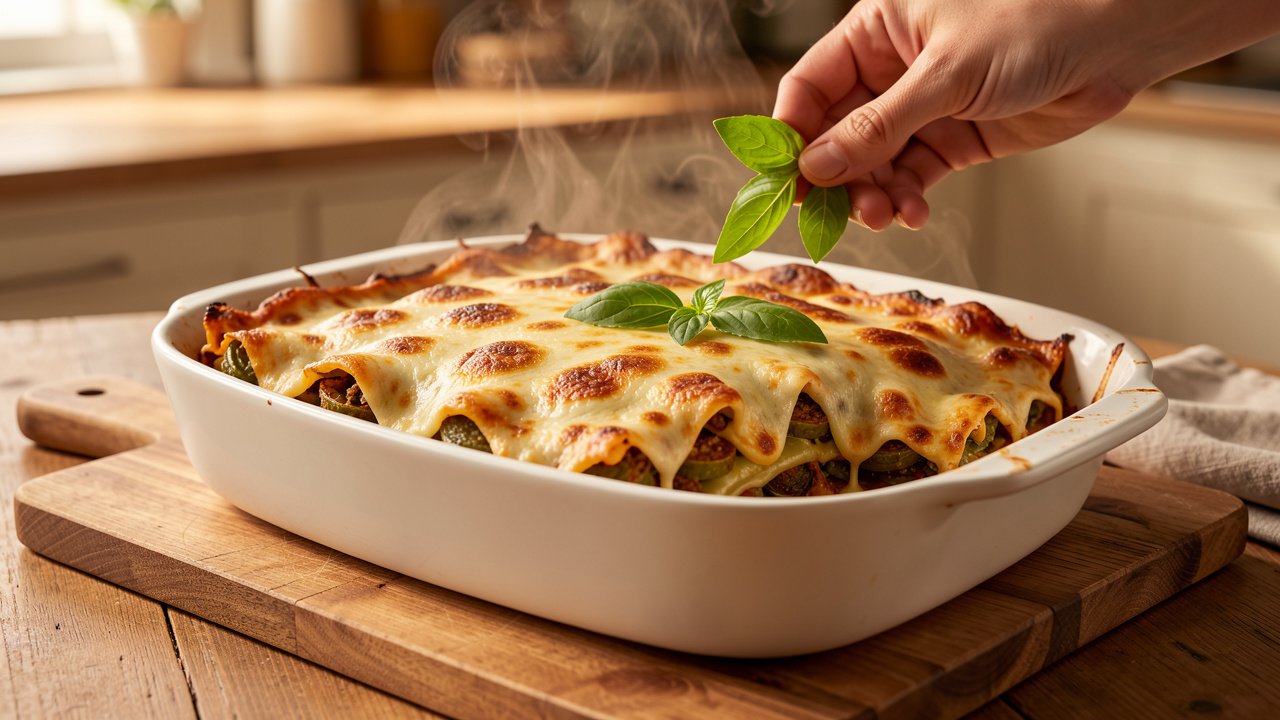
Bake uncovered at 375 F for 30 to 35 minutes, until the edges bubble slowly and the top browns in patches. If the cheese colors before the center is hot, tent it loosely with foil for the last 10 minutes. Then leave it alone for 15 minutes. This is not optional. Straight from the oven the cheese is liquid and the layers slide into a heap; after 15 minutes it sets enough to cut clean squares.
Chef’s Tips From Real Kitchen Testing
Fry a single test slice before committing the batch. It tells you whether the oil is hot enough and whether your coating sticks, for the price of one tomato.
Keep one hand dry and one hand wet through the dredge. Using the same hand for flour and egg builds paste on your fingers that pulls the coating off.
Save the crispest, most evenly browned slices for the top layer. They stay exposed to dry oven heat, so the first bite still snaps.
Recipe Variations
Serving Suggestions
- A sharp green salad with buttermilk dressing
- Garlic bread to catch the sauce at the edges
- Quick-pickled red onions for extra bite
- Cold iced tea or lemon-mint water
Nutrition Facts
Values are estimates per quarter of the dish and vary with how much frying oil the coating absorbs and how salty your sauce is.
Make-Ahead Tips
Fry the tomatoes up to a day ahead and keep them uncovered on a rack in the fridge, where cold dry air helps the crust. Re-crisp them 6 minutes at 400 F before layering. The seasoned ricotta holds two days covered. What does not work is assembling the dish the night before: sitting in sauce overnight softens the coating completely. Assemble and bake in the same hour.
Storage, Freezing & Reheating
Common Mistakes to Avoid
Troubleshooting
Watery pool in the bottom of the dish? The tomatoes were under-salted or not blotted dry. Tilt the dish, spoon the liquid off, and return it to the oven uncovered for 5 minutes.
Coating fell off in the skillet? The slices were damp when they hit the flour, or they were flipped too early. Wait for the crust to release on its own.
Tomatoes still tough after baking? They were cut too thick. Stay at a half inch, and give the bake an extra 8 minutes covered with foil.
Where This Dish Comes From
Fried green tomatoes are a thrifty Southern answer to a garden full of fruit that will not ripen before the first frost. Cooks in the American South have dredged them in cornmeal and fried them in cast iron for well over a century, mostly as a side or a sandwich filling.
Layering them like pasta is a newer, restaurant-driven idea that borrows its architecture from Italian-American baking. If you like the vegetable-instead-of-noodle approach, our tomato and eggplant lasagna uses the same logic with a softer result. The layers only taste as good as what binds them, so read through our tomato sauce recipes before reaching for a jar, and try the tomato and cheese pizza for more crisp-meets-melted-cheese cooking.