Main Course
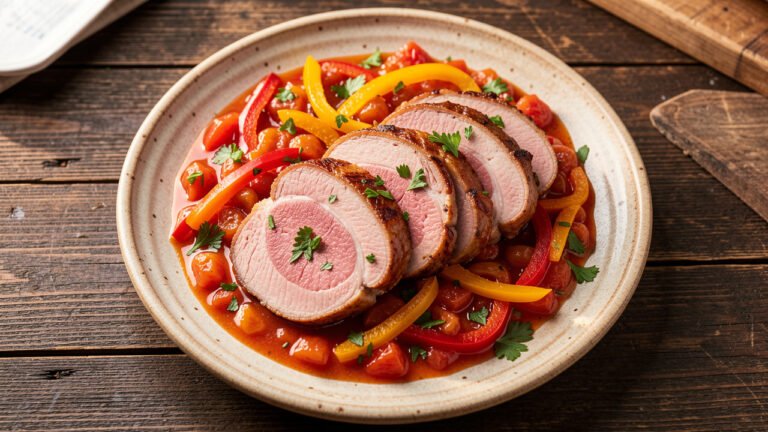
Juicy Seared and Roasted Beef
Last updated: September 23, 2026
Beef tenderloin is one of the leanest, most tender cuts in the meat case, which means it cooks fast and overcooks even faster. The trick is a hard sear for color, a quick roast to 130 F for medium-rare, and a real rest before slicing. While it rests, you build a bright tomato and pepper sauce right in the same pan and scrape up all that browned flavor.
Why This Beef Tenderloin Recipe Works
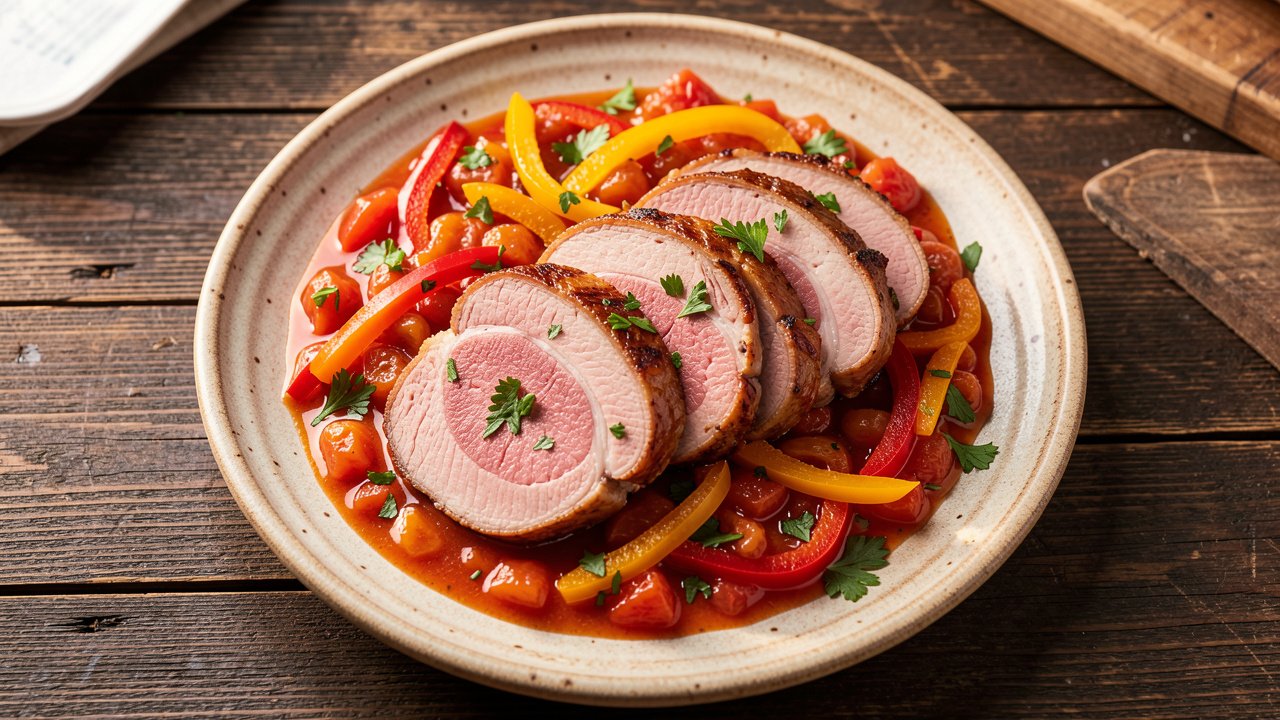
This dish works because the beef and the sauce come from one pan, so nothing tastes disconnected. You sear the tenderloin hard, roast it to a juicy medium-rare 130 F, and then use the browned bits left behind to build a tomato and pepper sauce with real depth. The meat and the sauce share the same savory backbone.
Tenderloin rewards a hot, fast approach. Because it is so lean, a heavy crust from a proper sear gives you the flavor that fattier cuts get for free. Searing all sides before the beef ever goes in the oven means you lock in color without overcooking the inside.
Roasting to 130 F and resting is the part most cooks rush. Beef tenderloin is best medium-rare, so pull the beef a few degrees early, tent it loosely, and let it sit while the sauce simmers. The temperature climbs a little as it rests, and the juices settle back into the meat instead of running out on the board.
The sauce earns its keep by using the fond, the sticky brown film stuck to the pan after searing. Sweating the onions and peppers in that pan, then deglazing with the tomatoes, pulls every bit of that flavor into the sauce. Bell peppers add a gentle sweetness that plays off the acidic tomatoes.
Pro observation: The beef is ready to rest when an instant-read thermometer in the thickest part reads 130 F for medium-rare. If you slice into it right away, the juices flood the board; wait the full rest and they stay in the meat.
Ingredients
Kitchen Measurement Converter
Quickly convert between common cooking measurements without leaving the recipe. Pick a category, enter a value, and the result updates instantly.
Ingredient Notes & Substitutions
Beef Tenderloin
Buy one center-cut beef tenderloin, about a pound and a quarter, not a wider roast, which cooks differently. Trim off the thin silverskin, or it turns chewy and curls the meat as it cooks.
Bell Peppers
Red and yellow peppers are sweeter and better here than green, which can taste sharp. Slice them into thin strips so they soften fully in the time the sauce simmers.
Tomatoes
A 14-ounce can of chopped or crushed tomatoes is reliable year round. In peak summer, three or four ripe fresh tomatoes, chopped, give a fresher, brighter sauce.
Herbs
Dried oregano and a pinch of smoked paprika lean Mediterranean. Fresh basil or parsley stirred in at the end keeps the sauce lively rather than heavy.
Equipment
- Oven-safe skillet or pan
- Instant-read thermometer
- Tongs
- Sharp knife and board
- Foil for tenting
- Wooden spoon
Before You Start
1. Heat the oven early. Set it to 400 F so it is fully hot when the seared beef goes in. A cold oven adds minutes and risks overcooking the outside.
2. Pat the beef bone-dry. Wet meat steams instead of searing. Dry it well with paper towels, then season generously with salt and pepper on all sides.
3. Prep the sauce vegetables first. Slice the onion, garlic, and peppers before you sear, so you can build the sauce the moment the beef comes out to rest.
Step-by-Step Instructions
Trim and Season the Beef
Pat the tenderloin completely dry with paper towels. Slide a knife under the silvery membrane and trim it away. Season the beef all over with salt and black pepper, pressing it in so it sticks. Let it sit at room temperature for 10 minutes while the oven heats to 400 F.
Sear It Hard on All Sides
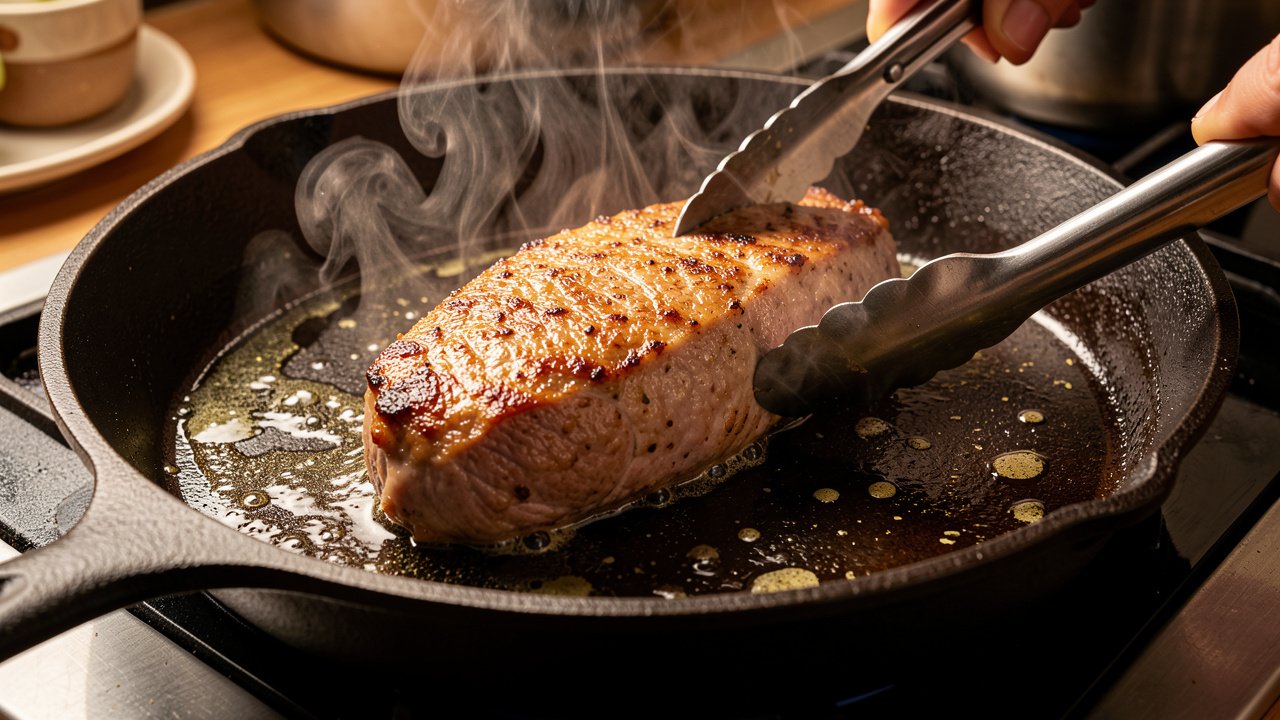
Heat 1 tablespoon of oil in an oven-safe skillet over medium-high until it shimmers. Lay the beef in and leave it alone for 2 to 3 minutes until a deep brown crust forms, then turn and repeat on every side. Do not move it early or the crust will not build. You want color on all four sides.
Roast to 130 F and Rest
Slide the whole skillet into the hot oven and roast 12 to 16 minutes, depending on thickness. Start checking early: pull the beef when an instant-read thermometer in the thickest part hits 130 F for medium-rare. Move it to a board, tent loosely with foil, and rest 5 to 10 minutes. Do not skip this; the meat keeps cooking and reabsorbs its juices.
Build the Sauce on the Fond
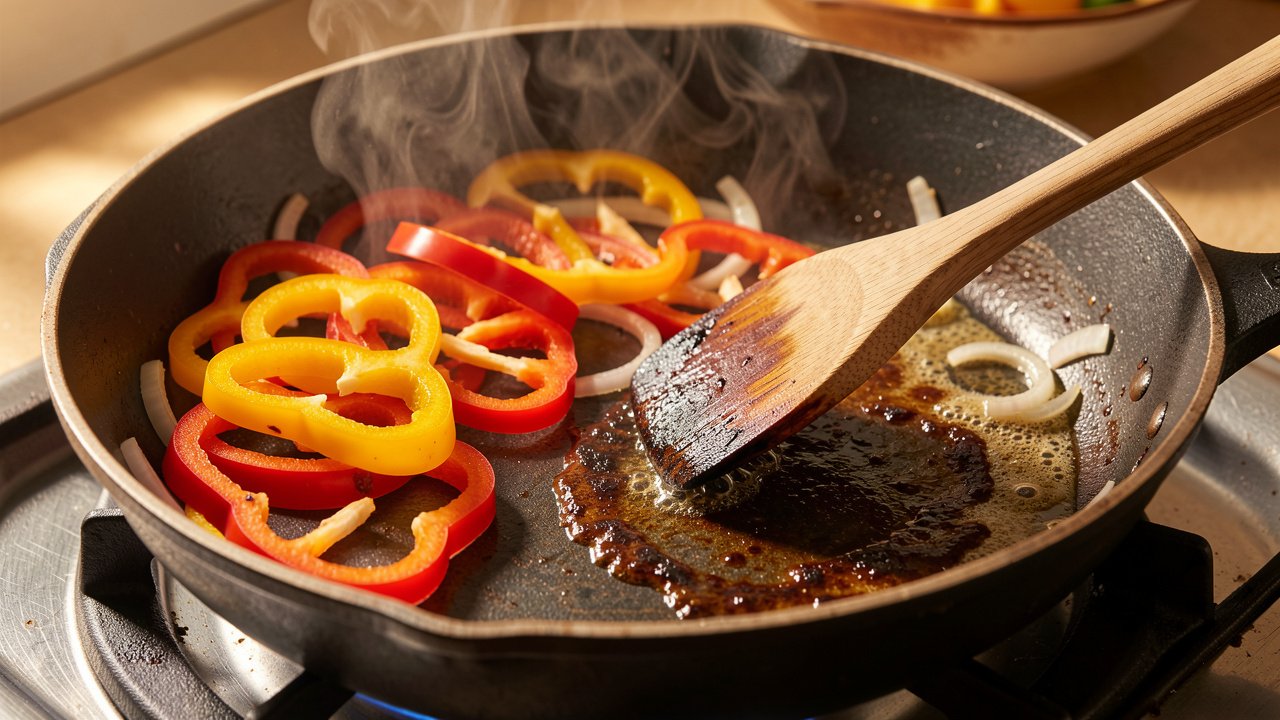
Set the same skillet over medium heat; the handle is hot, so use a towel. Add the onion and peppers and cook 6 to 7 minutes until soft, scraping up the browned fond stuck to the pan. Stir in the garlic, oregano, and smoked paprika and cook 1 minute until fragrant. That crusty film is pure flavor going straight into the sauce.
Simmer the Tomato and Pepper Sauce
Pour in the tomatoes with a splash of water or broth and a pinch of salt. Stir, scraping the pan once more, then simmer 8 to 10 minutes until the peppers are tender and the sauce thickens slightly. Taste and adjust with salt, a pinch of sugar if the tomatoes are sharp, or a little more paprika for warmth.
Slice Against the Grain and Serve
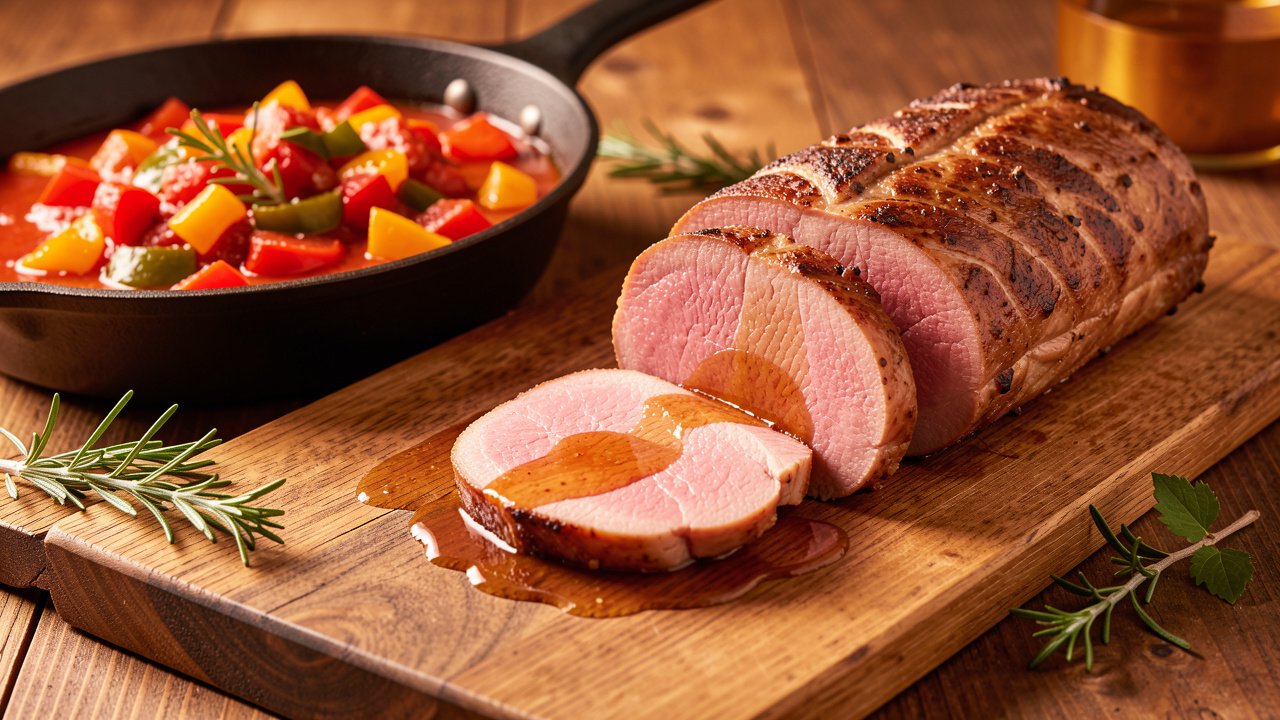
Look at the muscle lines running along the beef and cut across them into half-inch medallions. Slicing against the grain shortens the fibers so each bite is tender. Fold any resting juices back into the sauce, arrange the slices over the top, and scatter fresh parsley or basil before serving.
Chef’s Tips From Real Kitchen Testing
Trust the thermometer, not the clock. Tenderloins vary in thickness, so 130 F is your real signal to pull the beef for medium-rare, whether that takes 12 minutes or 16.
Rest the beef on a board, not back in the hot pan. Sitting in the skillet keeps cooking it toward dry and gray. A board and loose foil hold the heat gently.
Use an oven-safe skillet you can move from stovetop to oven. Switching pans loses the fond, which is the whole reason the sauce tastes so deep.
Recipe Variations
Serving Suggestions
- Creamy mashed potatoes or polenta
- Crusty bread to mop up the sauce
- Buttered rice or orzo
- A simple green salad with lemon
Nutrition Facts
Values are estimates per serving of beef and sauce, without sides, and vary with portion size and oil used.
Make-Ahead Tips
The tomato and pepper sauce is the easy make-ahead part; its flavor deepens overnight in the fridge. Cook the sauce a day ahead, cool, and refrigerate, then reheat gently while you sear and roast the beef fresh. Beef tenderloin is best cooked just before serving, since reheating lean beef tends to dry it out.
Storage, Freezing & Reheating
Common Mistakes to Avoid
Troubleshooting
Beef came out dry? It went past 135 F or missed the rest. Next time pull it earlier and spoon extra sauce over the slices to bring back moisture.
Sauce too thin? Simmer it a few minutes longer with the beef resting, or mash some peppers against the pan to thicken it naturally.
Sauce tastes sharp? The tomatoes need balance. Add a small pinch of sugar and a little salt, and let it simmer another minute.
A Note on Mediterranean Beef and Peppers
Beef braised or simmered with peppers and tomatoes shows up all around the Mediterranean, from Spanish and Italian tables to the Balkans, where sweet peppers and ripe tomatoes are pantry staples. This lighter, faster take keeps that sunny flavor without a long braise. If you love that combination, our tomato sauce recipes and guide to tomatoes in the Mediterranean diet are worth a look.