French Recipes
Flaky Puff Pastry, No Soggy Bottom
Last updated: September 23, 2026
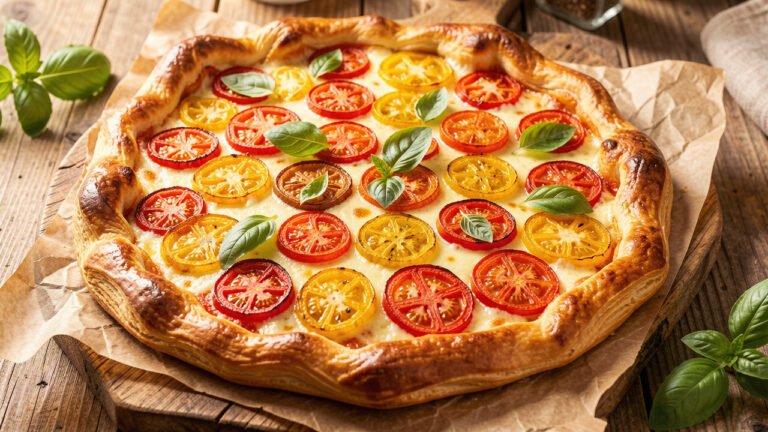
This is the tart I make when good tomatoes are in season and I want something that looks fancy but takes almost no skill. The whole thing rides on one idea: get the moisture out of the tomatoes and put a barrier between them and the pastry. Do that, and the bottom stays shatteringly crisp instead of turning to wet cardboard.
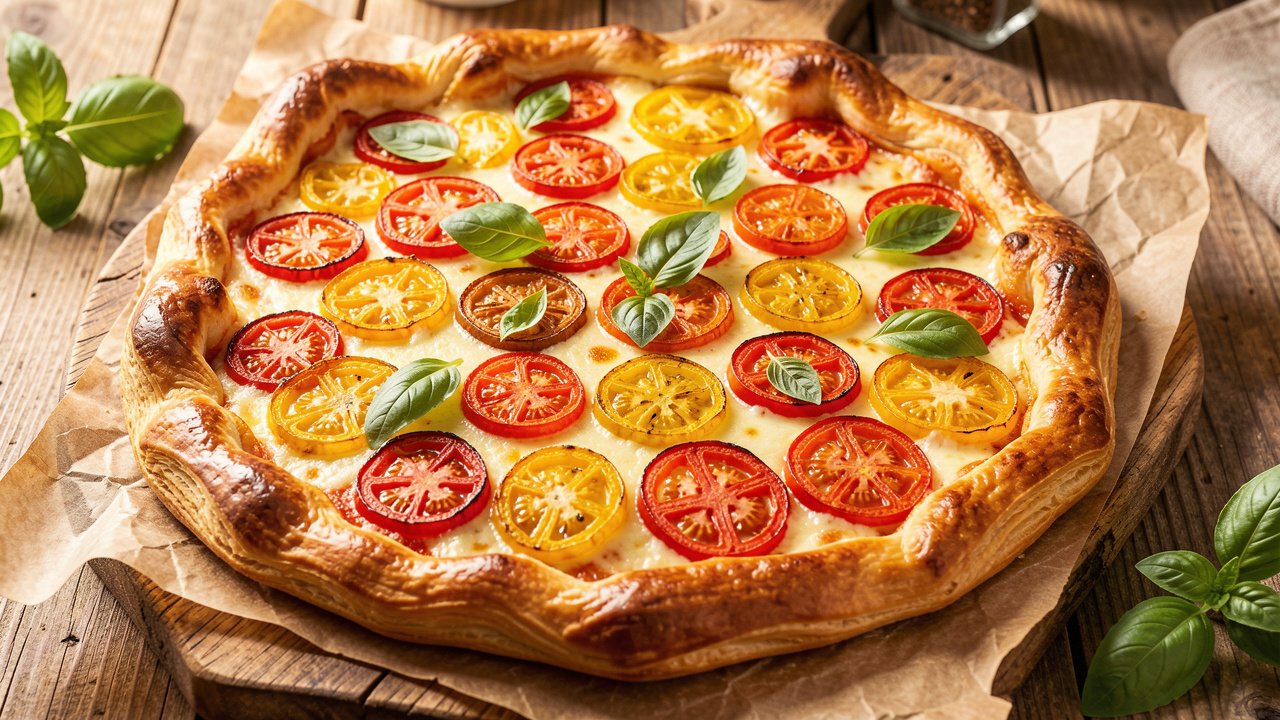
Why This Oven-Roasted Tomato Tart Works
A tomato tart sounds simple, and it is, but it fails in exactly one predictable way: the bottom goes soggy. Tomatoes are mostly water, and water is the enemy of flaky pastry. Every choice in this recipe exists to fight that water, so you end up with a base that crackles when you cut it.
The first fix is the tomatoes themselves. Slicing them, salting them, and letting them drain pulls out a surprising amount of liquid before they ever touch the dough. Roasting them, or at least giving them a hot oven, concentrates their flavor and drives off more moisture, so the topping tastes deep and sweet rather than watery.
The second fix is the barrier layer. A thin coat of Dijon mustard plus a scattering of grated cheese sits between the tomatoes and the pastry and soaks up stray juice as it bakes. The mustard also adds a sharp savory note that keeps the tart from tasting flat.
The third fix is heat and cold working together. Cold pastry going into a hot oven puffs hard and sets fast, which locks in the flake before the tomatoes can weigh it down. High heat, around 400 F, browns the underside properly so it is cooked through, not pale and doughy.
Pro observation: Lift a corner of the tart with a spatula before you pull it out. If the underside is deep golden brown, it is done. If it is blond and soft, give it another five minutes, even if the top already looks good.
Ingredients
Kitchen Measurement Converter
Quickly convert between common cooking measurements without leaving the recipe. Pick a category, enter a value, and the result updates instantly.
Ingredient Notes & Substitutions
Puff Pastry
All-butter puff pastry gives the best flake and flavor. Keep it cold right up to baking. A shortcrust base also works if you prefer something sturdier and less airy; blind-bake it first for the crispest result.
Tomatoes
Firm, ripe tomatoes with less water, like Roma or vine tomatoes, hold their shape best. A mix of red and yellow looks beautiful. Whatever you use, slice and drain them so they do not flood the pastry.
Cheese
Grated Gruyere, Parmesan, or a sharp cheddar melts into the barrier layer and adds savory depth. A little goat cheese dotted on top is lovely too. Avoid very wet fresh mozzarella, which adds moisture you are trying to remove.
Dijon & Herbs
Dijon mustard is both flavor and moisture insurance. Fresh thyme in the oven and fresh basil at the end are classic. If you skip the cheese, a light dusting of breadcrumb works as an extra moisture barrier.
Equipment
- Rimmed sheet pan
- Parchment paper
- Sharp knife and board
- Colander or rack
- Pastry brush
- Box grater
Before You Start
1. Salt the tomatoes early. Slice and salt them at least 15 to 20 minutes ahead so they can shed water while you set up. This one step does the most to prevent a soggy bottom.
2. Keep the pastry cold. Thaw puff pastry in the fridge, not on the counter. If it warms and turns floppy while you work, slide it back into the fridge for 10 minutes before baking.
3. Preheat fully. Get the oven to 400 F and let it hold there. Cold pastry meeting a truly hot oven is what gives you that dramatic, crisp rise.
Step-by-Step Instructions
Slice and Drain the Tomatoes
Slice the tomatoes about a quarter inch thick. Lay them on a rack or a paper-towel-lined tray, sprinkle both sides lightly with salt, and leave them 15 to 20 minutes. You will see beads of water form on the surface. Blot them dry before they go on the tart; this is the single best move against sogginess.
Roll and Score the Pastry
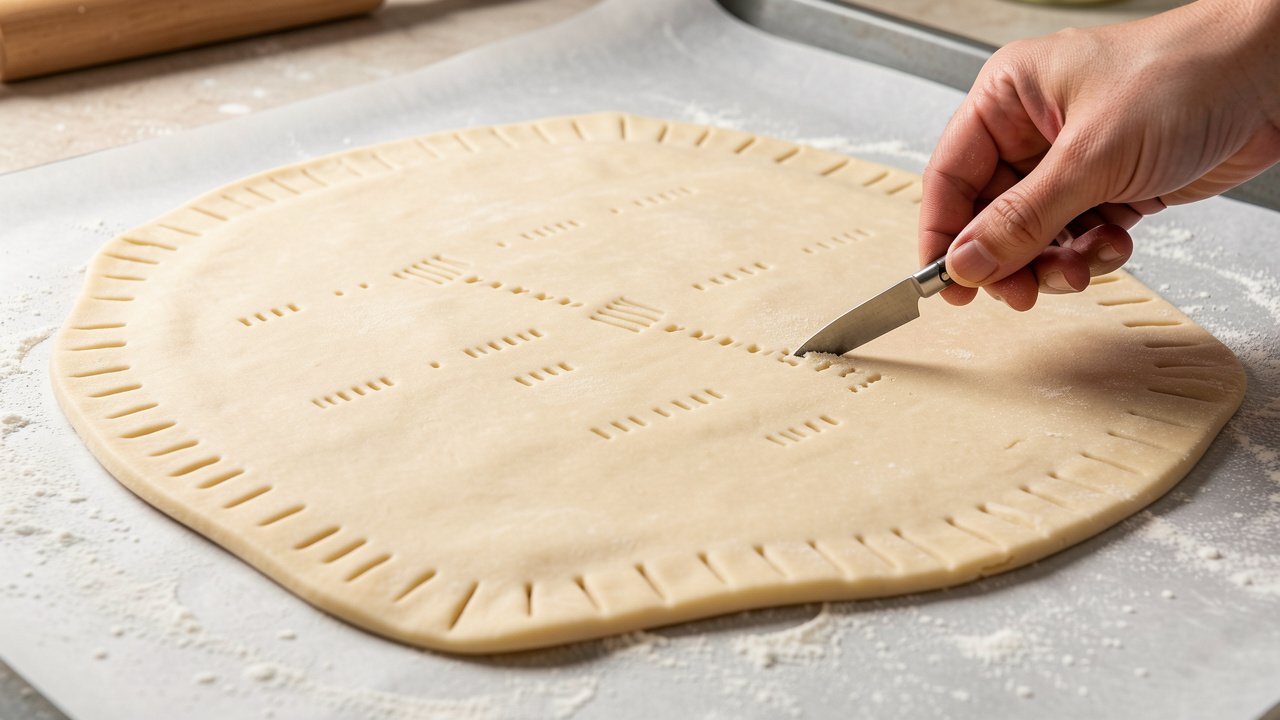
Unfold the cold puff pastry onto a parchment-lined sheet pan. Roll it just enough to smooth the seams. With a knife, score a border about half an inch from the edge, cutting halfway through but not all the way. That border will puff up into a raised frame. Prick the inside area all over with a fork to keep it from ballooning.
Spread the Moisture Barrier
Brush a thin, even layer of Dijon mustard over the pricked center, staying inside the scored border. Scatter the grated cheese over the mustard. This mustard-and-cheese layer is your barrier: it flavors the tart and soaks up any juice the tomatoes release, so the pastry underneath stays dry and crisp.
Arrange and Season the Tomatoes
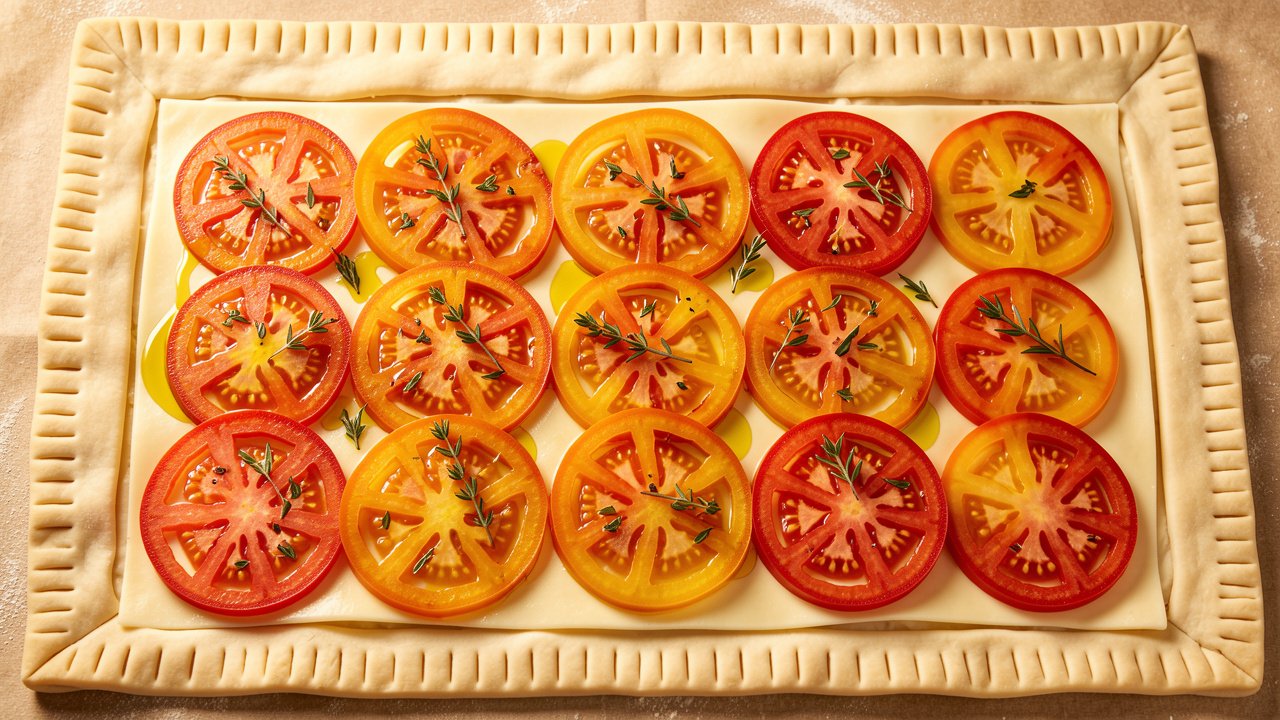
Lay the drained tomato slices over the cheese in slightly overlapping rows or a tight spiral, keeping them off the border. Drizzle with olive oil, season with a little salt and pepper, and scatter fresh thyme leaves. Do not crowd them with thick, wet slabs; a single even layer roasts and concentrates far better.
Bake at High Heat
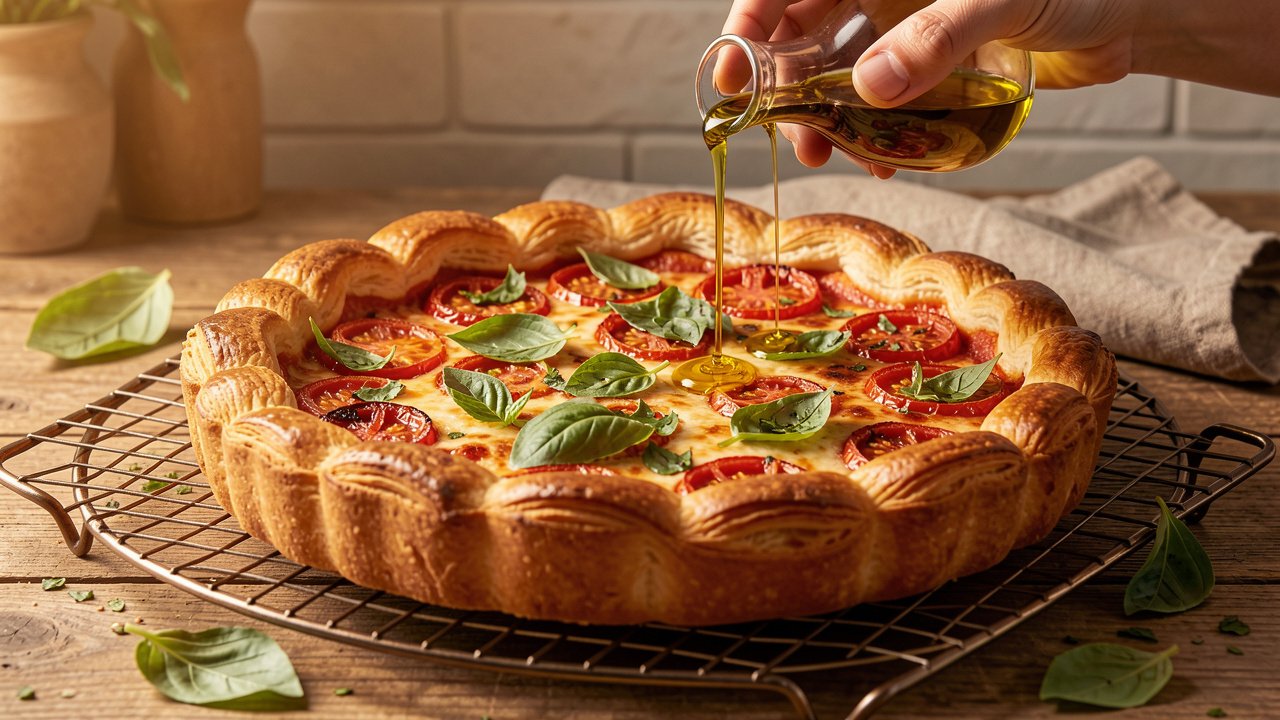
Bake at 400 F for 28 to 35 minutes. The border should rise and turn deep golden, the tomatoes should shrink and caramelize at the edges, and the smell should be sweet and savory. If the top browns before the bottom sets, lower the tart to a bottom rack for the last few minutes so the underside can catch up.
Check the Bottom, Cool, and Finish
Slide a spatula under the tart and check the underside is deep golden and firm, not pale. Let it cool on a rack for 5 to 10 minutes so the base crisps and firms up before slicing. Finish with torn fresh basil, a last drizzle of olive oil, and flaky salt, then cut into squares and serve warm.
Chef’s Tips From Real Kitchen Testing
Bake on the lower third of the oven or a preheated baking steel. Direct bottom heat is the surest way to brown the underside fully and avoid a raw, doughy center.
Brush the border with a little beaten egg before baking for a glossy, deeply bronzed frame. Keep the egg wash off the cut lines so the layers can still rise.
If your tomatoes are very juicy, pre-roast the slices at 400 F for 10 minutes on a lined tray first, then cool before topping. It removes even more water for the crispest possible base.
Recipe Variations
Serving Suggestions
- A crisp green salad with a sharp vinaigrette
- Chilled sparkling water with lemon
- Cut small as a party appetizer or canape
- A bowl of olives and cured meats alongside
Nutrition Facts
Values are estimates per slice, based on six slices, and vary with the pastry and cheese you use.
Make-Ahead Tips
You can prep the components a few hours ahead: slice and drain the tomatoes, and keep the scored pastry cold on its sheet pan in the fridge. Assemble and bake just before serving for the crispest base. A fully baked tart is best the day it is made, but leftovers still taste great gently rewarmed. Do not top with fresh basil until the very end, since it darkens quickly once cut.
Storage, Freezing & Reheating
Common Mistakes to Avoid
Troubleshooting
Soggy bottom? The tomatoes were too wet or the oven too cool. Next time drain them longer, pre-roast the slices, and bake lower in a fully preheated oven.
Border did not puff? The pastry warmed up too much before baking, or you scored all the way through. Keep it cold and cut only halfway down.
Center still doughy? It needed more direct bottom heat. Move it to a lower rack and give it another five minutes.
A Note on the French Tomato Tart
The savory tomato tart belongs to a wider French tradition of using good pastry as a base for whatever is ripe and local, close cousin to the tomato tarte and to Provencal vegetable tarts. Its charm is how few ingredients it needs when the tomatoes are at their peak. If you love that combination of tomato and pastry, our tomato and cheese pizza and tomato basil pasta chase the same summery flavor, and roasted tomatoes fit neatly into the tomatoes in the Mediterranean diet.