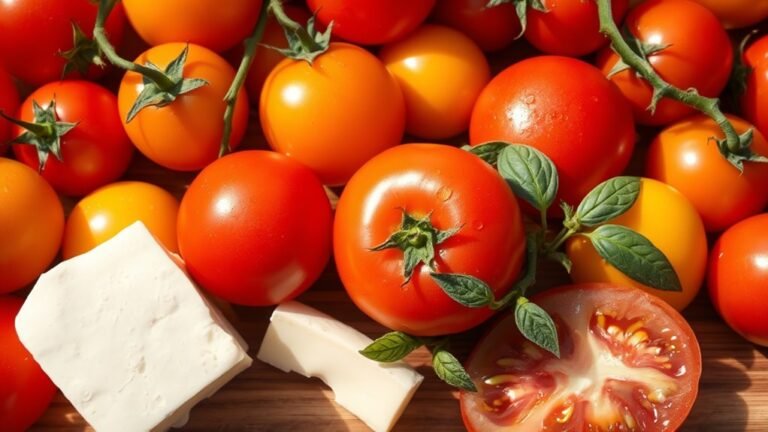
Ever wonder if your favourite salad staple does more than add colour? Those juicy tomatoes are quietly packing vitamin K1, a key nutrient for strong bones and healthy blood. But here’s the catch: your body can’t absorb it well alone. I’ll show you how to unlock its full potential with simple, delicious food pairings.
Let’s dive into how you can easily make this nutrient work harder for you every day.
Vitamin K in Tomatoes: Amount, Benefits, and Food Pairings
Key Takeaways
- Provides ~9.7 mcg of vitamin K1 per medium raw tomato, supporting essential bodily functions.
- Benefits blood clotting, bone strength, and cardiovascular health through its vitamin K content.
- Enhances nutrient absorption by pairing with healthy fats like olive oil.
- Combine with richer sources like leafy greens for a more significant vitamin K intake.
- Optimize uptake in meals such as Caprese salad or with roasted salmon.
Why Vitamin K Matters for Your Health
You probably know vitamin K helps with blood clotting, but that’s just the start.
What most people miss is its role in building strong bones. It guides calcium into your skeleton where you need it, supporting your bone density for the long haul.
That said, its job doesn’t end there. Vitamin K is also a guardian for your heart. It helps keep calcium out of your artery walls, which promotes better cardiovascular wellness.
Here’s the thing: by including vitamin K in your diet, you’re supporting several core systems at once. It’s a simple, proactive step to feel your best.
How Much Vitamin K Is Really in a Tomato?
Curious about how much vitamin K you’re actually getting from tomatoes? Here’s the thing: it varies a lot depending on the type and form.
A medium raw tomato, for instance, has about 9.7 mcg. That said, more concentrated forms pack a bigger punch. Sun-dried tomatoes are the real standout—a half-cup serving delivers roughly 43.0 mcg.
What most people miss is how everyday products measure up. A cup of cherry tomatoes offers 14.2 mcg, while a cup of canned stewed has 17.8 mcg. Even tomato paste contributes, with 26.9 mcg in just a half-cup.
The Type of Vitamin K in Tomatoes: Understanding K1
the vitamin K in tomatoes is almost all vitamin K1. You find this same form abundantly in leafy greens.
It’s best known for a crucial job: blood coagulation. That’s your body’s natural process for clotting and healing wounds.
So that tomato on your sandwich? It’s part of a whole family of foods supporting this essential function.
What most people miss is how recognizing the type matters. It helps you make informed choices.
Every slice you add directly supports your body’s everyday needs.
Can Tomatoes Meet Your Daily Vitamin K Needs?
Tomatoes do give you vitamin K1, but here’s the thing: you’d have to eat a lot to cover your full daily need. One medium raw tomato only gets you about 10% of the way there. That said, they’re still a great addition to your diet.
Think of tomatoes as a helpful teammate, not the whole squad. They chip in toward your vitamin K goals alongside other foods. Every bit builds a more balanced plate.
What most people miss is just how many it would take. Check out the breakdown:
| Your Daily Goal | Tomatoes Needed | Visual Equivalent |
|---|---|---|
| 100% DV (~120 mcg) | ~10-12 medium tomatoes | A large salad bowl full |
| 50% DV | ~5-6 medium tomatoes | A hearty side serving |
| 25% DV | ~2-3 medium tomatoes | A fresh salsa or bruschetta topping |
How Tomato Vitamin K Compares to Other Foods
Tomatoes do contain vitamin K, but here’s the thing: the amount is pretty modest.
Just compare it to leafy giants like kale or spinach. A single serving of those can deliver over 100% of your daily value.
A medium tomato, by contrast, typically gives you just 7-10%. That puts it more in line with fruits like blueberries or vegetables like carrots and green beans.
What most people miss is that this isn’t a bad thing. You’re not relying on tomatoes alone for this nutrient.
That said, they become a perfect supportive player. Enjoy them in a salad with spinach, or cook them alongside other rich sources to easily build a balanced intake.
The Key Health Benefits of Vitamin K
You’re probably hearing a lot about vitamin K lately. Here’s the thing: it acts as your body’s natural clotting manager, crucial for helping wounds heal properly.
That said, its benefits go deeper. What most people miss is its role as a guardian for your bones. It teams up with other nutrients to maintain bone strength as you age. Every time you eat foods like tomatoes, you’re supporting your long-term mobility.
Think of vitamin K as a key player on your wellness team. It quietly ensures some of your most fundamental systems run smoothly.
Maximize Absorption: Eat Your Tomatoes With Fat
Want to get the most vitamin K from your tomatoes? Eat them with some healthy fat, like olive oil or avocado. Here’s the thing—vitamin K is fat-soluble. That means your body absorbs it best when it’s paired with dietary fat.
Without that fat, a lot of this valuable nutrient just passes right through you. It’s a simple trick to make your meals more nourishing.
Think of it as unlocking your food’s full potential. Drizzle oil on your salad or add avocado to your sandwich. You’re not just boosting flavor—you’re making sure you get all the health benefits. It’s an easy, smart habit for your well-being.
Simple, Tasty Food Pairings for Better Vitamin K Uptake
Fat helps you absorb vitamin K from tomatoes, so pairing them wisely makes a real difference. Here’s the thing: you’re building a delicious plate where everything works together. This turns a simple meal into smarter nourishment.
What most people miss is how a simple trick makes your meals tastier and more effective. Pairing tomatoes with healthy fats simply releases more of their vitamin K for your body to use.
Try these easy combinations that feel meant to be:
| Tomato Form | Perfect Pairing | Why It Works |
|---|---|---|
| Fresh Slices | Avocado & Olive Oil | Creamy fat boosts absorption |
| Sun-Dried | Mixed into Pasta | Hearty oils carry the vitamin |
| Sauce | Simmered with Ground Meat | Natural fats make it bioavailable |
That said, you’re not just eating. You’re getting so much more from your food.
5 Easy Recipes to Boost Vitamin K With Tomatoes
Knowing why tomatoes pair so well with Vitamin K-rich greens is helpful—but the real magic happens when you actually eat them.
These 5 simple recipes make it effortless. Every dish combines juicy tomatoes with powerhouse greens (like spinach or kale) plus healthy fats for maximum absorption. All are family-friendly, quick to make, and taste amazing.
1. Quick Tomato & Spinach Smoothie
Blend 2 ripe tomatoes, a big handful of fresh spinach, ½ banana (for natural sweetness), and 1 tbsp olive oil until silky. Pour and enjoy first thing in the morning. It’s ready in 2 minutes and gives your whole family a huge Vitamin K head start for the day.
2. One-Pan Roasted Salmon with Cherry Tomatoes & Kale
Toss cherry tomatoes, chopped kale, and salmon fillets on a sheet pan with olive oil, garlic, and a pinch of salt. Roast at 400°F (200°C) for 15–18 minutes. The salmon’s healthy fats help your body soak up every bit of Vitamin K from the kale and tomatoes—plus zero cleanup. Perfect for busy evenings.
3. Classic Caprese Salad
Layer thick tomato slices with fresh basil leaves and mozzarella. Drizzle generously with olive oil and a touch of balsamic. This timeless favorite looks fancy but takes just 5 minutes and sneaks in extra Vitamin K while tasting like summer on a plate.
4. Easy 15-Minute Shakshuka with Spinach & Tomatoes
In a skillet, sauté chopped tomatoes and a big handful of spinach with garlic and spices (cumin, paprika). Crack in 4–6 eggs and simmer until the whites set. Finish with a swirl of olive oil. It’s a one-pan wonder packed with Vitamin K and perfect for breakfast, lunch, or dinner.
5. One-Pot Tomato Kale Pasta
Cook your favorite pasta, then toss it with sautéed cherry tomatoes, shredded kale, garlic, and plenty of olive oil (add a sprinkle of parmesan for extra flavor and fat). Ready in 20 minutes with almost no dishes. A cozy weeknight winner that quietly boosts Vitamin K.
Better health doesn’t need fancy kitchens or hours of work. These tasty, everyday recipes are your simple path to feeling stronger and more energized. Pick one to try tonight—your body (and your family) will thank you!
Don’t overlook the vitamin K in your tomatoes—it’s a valuable player for your bones and heart. Pair them with a healthy fat like olive oil to maximize absorption, and combine them with leafy greens to effortlessly boost your daily intake. It’s all about smart combinations for your well-being. Ready to put this into practice? Share your favorite tomato-rich meal below