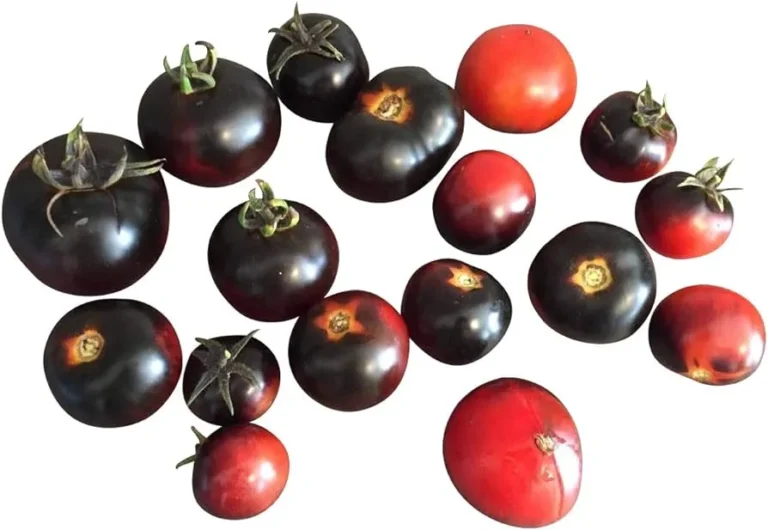
Indigo Ruby tomatoes stand out for their colouring: red fruit with a dark purple-black blush on the top half. Seed catalogues list Indigo Ruby as an F1 hybrid (not an heirloom) bred by Peter Mes and sold under the “Indigo” name that began with Oregon State University’s purple tomato breeding. The purple colour comes from anthocyanins, pigments that ordinary red tomatoes have very little of in their fruit.
In this blog post, we’ll look at what is known about Indigo Ruby tomatoes, what their nutrition is likely to be, and how to use them in your diet.
An Introduction to Indigo Ruby Tomatoes
The Indigo line began with Indigo Rose, the purple tomato that Oregon State University breeder Jim Myers released in 2011. They combined the genetics of heirloom tomatoes with wild tomatoes native to Chile and the Galapagos Islands that contained higher levels of anthocyanins.
Anthocyanins are antioxidant pigments that give foods like blueberries, blackberries, and eggplants rich purple and red colours. They act as antioxidants in laboratory tests; research on their health effects in people is still developing.
By crossing these wild tomato plants with heirlooms, researchers developed a cultivar with higher anthocyanins that gave the tomatoes an indigo hue when ripe. Thus, the Indigo Rose tomato was born!
Seed catalogues describe Indigo Ruby as small, plum-shaped fruit of about 1–2 oz, borne in clusters of 4–6 on determinate plants and maturing about 85 days from transplant. Flavour descriptions vary: some catalogues call it sweet and aromatic, others pleasantly tart. When sliced open, you’ll see they have a stark crimson interior contrasting their dark purple exterior.
Indigo Ruby tomatoes grow well in home gardens and have become sought after at farmers’ markets. Like other tomatoes, they are a low-calorie way to add vegetables to your meals.
Nutrient Profile – What’s in Indigo Ruby Tomatoes?
USDA publishes no separate nutrition data for Indigo Ruby or Indigo Rose, so the points below describe nutrients found in tomatoes in general (figures are USDA averages for raw red tomatoes), plus the anthocyanins that set purple types apart:
- Vitamin C – Raw red tomatoes average about 14 mg per 100 g, roughly 15% of the Daily Value. Vitamin C is needed for normal immune function and collagen production.
- Vitamin A – Tomatoes supply beta-carotene and other carotenoids that the body can convert to vitamin A, which is needed for normal vision, skin, and mucous membranes.
- Vitamin K – Red tomatoes provide a modest amount (about 8 mcg per 100 g), used for blood clotting and bone metabolism.
- Potassium – Red tomatoes average about 237 mg per 100 g. Diets rich in potassium are associated with healthier blood pressure.
- Anthocyanins – The purple pigments. Standard red tomatoes have very little anthocyanin in their fruit, so purple-blushed types like Indigo Ruby contain more. Anthocyanins show antioxidant and anti-inflammatory activity in laboratory studies, but their effects in people eating tomatoes have not been established.
- Lycopene – The red flesh contains lycopene, the carotenoid that makes tomatoes red. We found no published figures comparing Indigo Ruby’s lycopene with other tomatoes. Observational studies link tomato-rich diets with lower rates of some cancers and heart disease, but they cannot prove cause and effect.
- Carotenoids – Tomatoes contain carotenoids such as beta-carotene and lutein; beta-carotene is a source of vitamin A.
- Flavonoids – Tomatoes contain small amounts of flavonoids such as quercetin, mostly in the skin.
The main documented nutritional difference between Indigo types and standard red tomatoes is the anthocyanin in the skin. Otherwise, their nutrition is expected to be broadly similar to other small red tomatoes.
Top Health Benefits of Indigo Ruby Tomatoes
The sections below summarise what research says about the nutrients in tomatoes, including purple types. Most of this evidence comes from studies of tomatoes in general, laboratory work, or animal research, not from Indigo Ruby itself:
1. Indigo Ruby Tomatoes May Support Heart Health
Observational studies link diets rich in tomatoes, lycopene, and potassium with lower rates of heart disease, and some small trials suggest tomato products may modestly improve blood lipids. No studies have tested Indigo Ruby specifically, and these findings do not prove that eating tomatoes prevents heart problems.
2. Indigo Ruby Tomatoes and Cancer Risk
In laboratory and animal studies, anthocyanins have shown effects against cancer cells, but these findings have not been confirmed in people. When the US FDA reviewed the evidence in 2005, it found only very limited evidence linking tomato consumption with a lower risk of prostate, ovarian, gastric, and pancreatic cancers, and no credible evidence for lycopene itself.
3. Indigo Ruby Tomatoes and Vision Health
Tomatoes contain small amounts of lutein and zeaxanthin, carotenoids that collect in the retina. They are studied for eye health mainly as supplements for people who already have age-related macular degeneration; there is no evidence that eating tomatoes prevents the disease.
4. Indigo Ruby Tomatoes and Immunity
Tomatoes provide vitamin C, which the body needs for normal immune function. That does not mean eating them will prevent infections.
5. Indigo Ruby Tomatoes and Bone Health
Tomatoes provide vitamin K and potassium, which play roles in normal bone metabolism. There is no evidence that tomatoes on their own reduce the risk of osteoporosis.
6. Indigo Ruby Tomatoes and Digestion
The fiber in tomatoes (about 1.2 g per 100 g for red tomatoes) contributes to your daily fiber intake, which supports regular bowel movements. Research on lycopene and gut bacteria is at an early stage.
7. Indigo Ruby Tomatoes and Skin Health
Vitamin C is needed to make collagen. In one small randomised trial, eating tomato paste daily for 12 weeks modestly reduced skin reddening after UV exposure. Tomatoes do not replace sunscreen, and effects on skin ageing are unproven.
8. Indigo Ruby Tomatoes and Blood Sugar
Some laboratory and early human studies suggest anthocyanins from foods such as berries may affect insulin sensitivity, but no studies have tested Indigo Ruby tomatoes. If you have diabetes, follow the eating plan agreed with your doctor or dietitian, and talk to them before relying on any food to manage blood sugar.
In short, Indigo Ruby tomatoes are a nutritious, colourful vegetable, but most health claims made for them are extrapolated from research on tomatoes in general or on anthocyanins from other foods.
How Do Indigo Ruby Tomatoes Compare to Regular Tomatoes?
Published nutrient comparisons for Indigo Ruby are not available, so the table below sticks to differences that are documented and marks the rest as unmeasured:
| Difference | Indigo Rose | Regular Tomato | Emoji |
|---|---|---|---|
| Anthocyanins | Much higher (purple skin) | — | 💜 |
| Lycopene | No published comparison | — | 🍅 |
| Vitamin C | No published comparison | — | 🍊 |
| Flavor | Described as sweet and aromatic, or pleasantly tart | Varies by variety | 😋 |
| Beta-carotene | No published comparison | — | 🥕 |
| Blood pressure | Not studied in people | — | ❤️ |
| Cancer research | Lab studies only | — | 💪 |
| Flesh | No published comparison | Varies by variety | 🍖 |
- Details are here!
- More anthocyanins – The purple blush contains anthocyanins, which standard red tomatoes largely lack in their fruit.
- Lycopene – The red flesh contains lycopene; we found no published data showing Indigo types have more than other red tomatoes.
- Vitamin C – Like other tomatoes, they provide vitamin C; no published comparison with common cultivars was found.
- Flavour – Catalogue descriptions range from sweet and aromatic to pleasantly tart.
- Beta-carotene – Tomatoes contain beta-carotene, a precursor of vitamin A; no variety-specific figures are published.
- Blood pressure – Tomatoes provide potassium, but no studies have tested Indigo Ruby for blood pressure effects.
- Cancer research – Anthocyanins have shown effects on cancer cells in laboratory studies only; this has not been shown in people.
- Size – The small, plum-shaped fruit (about 1–2 oz) suits salads, snacking, and halving.
Both purple and ordinary red tomatoes are nutritious choices. The documented difference in Indigo types is their anthocyanin content; other claimed advantages have not been measured.
Simple Ways to Eat More Indigo Ruby Tomatoes
Adding more of these tomatoes to your diet is easy:
- Make sandwiches with sliced chicken or turkey, lettuce, and juicy tomato slices on toasted bread.
- Toss them into leafy salads, pasta salads, or grain bowls for pops of colour and nutrients.
- Skewer grape-sized tomatoes with other veggies as a fun kabob or appetizer.
- Add halved Indigo Rose tomatoes with chicken, fish, or plant proteins to sheet pan meals.
- Layer tomatoes, fresh mozzarella, basil leaves, olive oil, and balsamic vinegar for an easy Caprese salad.
- Blend into homemade gazpacho soup along with cucumbers, peppers, and seasoning.
- Make a colorful summer salsa with tomatillos, red onions, jalapenos, and tomato chunks.
- Roast tomatoes drizzled with olive oil, garlic, salt, and pepper.
- Grill larger tomatoes, corn, asparagus, zucchini, onion, and mushrooms.
However you choose to enjoy them, Indigo Ruby tomatoes are an easy, colourful addition to meals and snacks.
Indigo Ruby Tomatoes Fun Facts
Here are 10 fun facts about Indigo Ruby tomatoes:
- The Indigo line traces back to Oregon State University breeding that crossed cultivated tomatoes with wild relatives from Chile and the Galapagos Islands, which carried genes for purple pigment.
- Indigo Ruby tomatoes provide plant compounds and nutrients such as anthocyanins, vitamin C, and lycopene.
- While most tomatoes are red, Indigo Ruby tomatoes get their unique purple color from natural pigments called anthocyanins.
- Each Indigo Ruby fruit weighs only about 1–2 oz, so a handful adds a little vitamin C to your day.
- Sliced Indigo Ruby tomatoes make colorful, nutritious toppings for burgers, sandwiches, tacos, and flatbread pizzas.
- Researchers are studying anthocyanins for possible anti-inflammatory effects, but no study has shown that eating purple tomatoes lowers blood pressure.
- The flesh of the Indigo Ruby tomato is firm yet juicy with a balanced sweet and rich tomato flavor.
- Try this Indigo Ruby Tomato Recipe: slice and enjoy with fresh mozzarella, basil, olive oil, and balsamic vinegar.
- In addition to anthocyanins, Indigo Ruby tomatoes contain lycopene, an antioxidant that may help reduce cancer risk.
- Kids love snacking petite Indigo Ruby tomatoes right off the vine for a sweet, nutritious summer treat!
Frequently Asked Questions
Where can I find Indigo Rose tomato plants or seeds to grow myself?
You can purchase Indigo Rose tomato plants, seeds, or seedlings from online retailers specializing in heirloom vegetable varieties. Local gardening centers may also carry them when in season. They grow well in home gardens and containers.
What is the best way to store fresh Indigo Rose tomatoes?
Keep fresh tomatoes at room temperature, away from direct sunlight. Once ripe, they can be moved to the refrigerator to extend shelf life up to 2 weeks. Allow refrigerated tomatoes to come to room temp before eating for best flavour.
Can you eat Indigo Rose tomato skins?
Yes! The skin of all tomatoes is edible and contains beneficial nutrients and fiber. Washing tomatoes well helps remove any dirt or residue on the skins.
Do the anthocyanins in Indigo Rose tomatoes stain?
Like other anthocyanin-rich foods, the purple pigment can stain lighter surfaces, clothes, or plasticware if not cleaned promptly. Stains are harmless but can be annoying. Rinse dishes and hands after prepping to avoid lingering stains.
Can you cook, can, freeze, or dry Indigo Rose tomatoes?
Absolutely! Their firm flesh matches all cooking methods like roasting, sautéing, stewing, etc. You can preserve harvested tomatoes through canning, freezing, and drying. Cooking concentrates flavour, although it reduces some of the vitamin C.
Do Indigo Rose tomatoes taste different than red tomatoes?
Descriptions vary: some growers find them sweet and aromatic, others pleasantly tart. Like most small tomatoes, they taste best fresh and fully ripe.
The Takeaway on Indigo Ruby Tomato Benefits
Indigo Ruby tomatoes offer the nutrients found in tomatoes generally, plus anthocyanins in their purple-blushed skin. Claims that they reduce cancer risk or improve heart health, bones, or eyesight have not been tested in people. Their vivid colour makes them an attractive ingredient.
Adding a variety of colourful tomatoes to your regular rotation is an easy way to eat more vegetables. If you have a health condition, talk to your doctor or dietitian about your overall diet rather than relying on any single food.