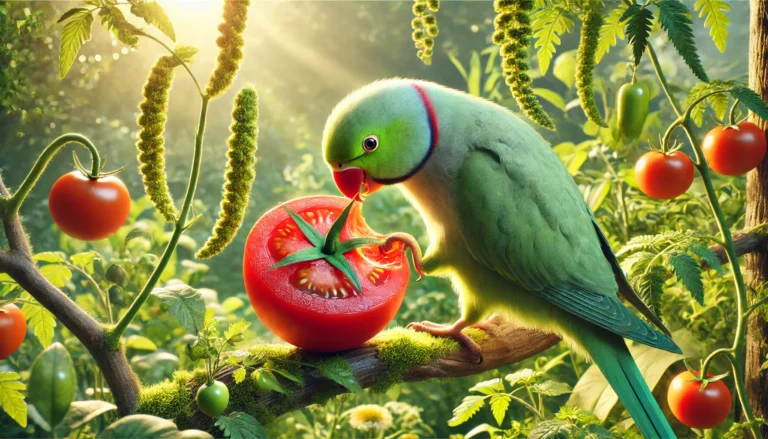
Parakeets are colourful, sociable birds, and their owners naturally want to feed them well.
One question that often arises is whether parakeets can eat tomatoes. Tomatoes are a common staple in many households, but it’s important to know whether they are safe for our feathered friends.
In this article, we will explore the nutritional value of tomatoes and the risks associated with feeding them to parakeets. We’ll also discuss how to safely prepare tomatoes for your parakeet and other fruits and vegetables that are safe alternatives.
Can Parakeets Eat Tomatoes?
So, let’s dive into the world of parakeet nutrition!
Key Takeaways
- Parakeets can eat tomatoes, but excessive intake can lead to digestive problems.
- Certain parts of the tomato plant contain solanine and alpha-tomatine, which can be poisonous.
- Ripe cherry or grape tomatoes are ideal choices for parakeets.
- The seeds and inner membrane of tomatoes can be removed if you prefer, but all leaves, stems, and green fruit must be removed. Ask an avian veterinarian before adding new foods.
The Nutritional Value of Tomatoes
It helps to know that tomatoes contain some vitamins and minerals, including vitamin C, which plays a role in normal immune function. They also contain vitamin A, which supports healthy vision, promotes growth and development, and helps maintain healthy skin and feathers.
In addition to vitamins, tomatoes provide important minerals like potassium and manganese.
Potassium is necessary for proper muscle function, while manganese plays a role in bone development and wound healing. These nutrients make ripe tomato an acceptable occasional treat, but fresh produce should be only a modest part of a pellet-based diet.
Plain raw ripe tomato is fine. Never offer cooked tomato dishes, sauces, soups, or ketchup made for people, since they often contain salt, onion, or garlic.
However, as with any new food introduced into your parakeet’s diet, there are risks involved. Let’s take a closer look at the potential dangers of feeding tomatoes to your feathered friend.
The Risks of Feeding Tomatoes to Parakeets
This section covers the potential risks of feeding tomatoes to parakeets. While tomatoes are generally considered safe for birds, it’s important to note that they can still cause digestive issues such as diarrhoea or vomiting if not given in moderation.
Additionally, there is a risk of toxicity from the plant itself, and some parakeets may have allergies or sensitivities to certain components found in tomatoes. It’s crucial for pet owners to be aware of these risks before incorporating tomatoes into their bird’s diet.
Potential for Digestive Issues
Unfortunately, parakeets may experience some tummy troubles if they consume too many tomatoes. Tomatoes are acidic and watery, and too much fruit of any kind can loosen droppings or upset a small bird’s stomach.
As a responsible pet owner, being mindful of your parakeet’s diet and limiting their tomato consumption is important. While small amounts of tomatoes are generally safe for parakeets, it’s best to avoid feeding them too much or too often.
In the next section, we’ll explore the risks of toxicity associated with certain parts of the tomato plant and how to keep your feathered friend safe.
Risks of Toxicity
Beware of the potential dangers associated with certain parts of the tomato plant, as they can be toxic to your feathered friend.
While tomatoes themselves are not harmful to parakeets and can provide some nutritional benefits, it’s important to remember that other parts of the plant contain solanine and alpha-tomatine, which can be poisonous in large amounts.
To prevent accidental poisoning, ensure your parakeet only has access to ripe tomatoes and remove any stems or leaves before offering them. Signs of illness in birds can be subtle, such as fluffed feathers, lethargy, regurgitation, or changes in droppings. If you suspect your parakeet has eaten tomato leaves, stems, or green fruit, contact an avian or exotics veterinarian right away.
Allergies and Sensitivities
Just like humans, some pets may experience allergies or sensitivities when consuming certain foods. Parakeets are no exception to this rule. While tomatoes are generally safe for parakeets to consume, food sensitivities are possible in any animal, although tomato allergy in birds is not well documented.
As such, it is possible for your feathered friend to have an allergic reaction or sensitivity to tomatoes.
To help determine whether your parakeet may be experiencing an allergic reaction or sensitivity, consider observing their behaviour after consuming a small amount of tomato. Watch for any change after a new food, such as vomiting or regurgitation, loose droppings, or breathing difficulty.
If you notice any of these symptoms in your pet after feeding them tomatoes, consult with your veterinarian immediately. It may be necessary to remove tomatoes from their diet altogether if they continue to have negative reactions.
| Food | Guidance |
|---|---|
| Tomatoes | Offer only small amounts; stop if problems appear |
| Dairy Products | Offer only small amounts; stop if problems appear |
| Nuts | Offer only small amounts; stop if problems appear |
Individual birds can react to foods such as tomatoes, dairy, or nuts, although true food allergies in birds are not well documented.
Some foods, such as avocado, chocolate, and onion, are toxic to birds and should never be offered. The table above summarizes how to approach the foods mentioned here.
Introducing new foods one at a time makes it easier to spot a problem.
Next, here is how to prepare tomatoes safely.
Remember that while tomatoes are generally safe for consumption by most birds, including parakeets, it is important to take precautions when preparing them at home.
You can take several steps to ensure that the tomatoes remain fresh and free from harmful bacteria before offering them to your pet.
How to Safely Prepare Tomatoes for Your Parakeet?
Preparing tomatoes for your parakeet is straightforward. When it comes to feeding your feathered friend, it’s important to choose the right tomato varieties and prepare them in a way that’s suitable for their digestive system.
Ripe cherry or grape tomatoes are ideal choices as they are small enough for parakeets to consume easily. Wash the tomato well and offer a few small pieces as an occasional treat. VCA advises that fruits and vegetables make up no more than 20-25% of a budgie’s daily diet, with pellets as the base, and that fresh food be removed from the cage within a couple of hours so it does not spoil.
While tomatoes are generally safe for parakeets, there are some precautions you should take. Avoid serving unripe or green tomatoes as they contain solanine, which can be toxic to birds. Never offer the leaves, stems, or vines, and ask an avian veterinarian if you are unsure about any new food.
Remember that moderation is key when feeding any type of food to your pet bird.
Moving on from tomatoes, there are other fruits and vegetables safe for parakeets that you can incorporate into their diet. Let’s explore some options together!
Other Fruits and Vegetables Safe for Parakeets
Here are a few more options beyond tomatoes.
Leafy greens like kale are good choices that provide important vitamins and minerals.
Berries such as strawberries, blueberries, and raspberries are also safe and delicious treats for parakeets.
And if you want to mix it up even more, apples and pears can also be given in small amounts.
It’s important to always introduce new foods slowly to your bird’s diet and monitor their reactions closely.
Leafy Greens
Leafy greens are a great addition to your parakeet’s diet, adding both colour and nutrition to their meals.
However, spinach may not be the best choice for our feathered companions. It contains high levels of oxalates that can bind with calcium in the body, which can reduce calcium absorption, so it is best offered only occasionally.
Fortunately, there are plenty of alternatives that provide similar nutritional benefits without the risks. Kale, collard greens, and mustard greens are all excellent choices that offer vitamins A, C, and K, calcium, and iron.
When cooking for parakeets, it’s important to remember that they have different digestive systems than humans. They require fresh produce free from pesticides and other harmful chemicals. It’s also essential to avoid any seasoning or spices that could upset their stomachs or cause adverse reactions.
Leafy greens can be served raw or cooked lightly by steaming them until tender but still retaining some crunchiness. They provide an array of nutrients necessary for optimal parakeet health. As we discuss berries next, remember how these fruits can complement leafy green consumption in your feathered friend’s diet.
Berries
As mentioned above, leafy greens are a great addition to a parakeet’s diet. However, it’s important not to rely solely on one type of food group. Parakeets need variety in their diet, just like humans do.
That’s where berries come into play. Berries are a delicious and nutritious addition to any parakeet’s diet. There are many different types of berries that can be fed to parakeets, including strawberries, raspberries, and blueberries.
When it comes to growing techniques for these fruits, it’s recommended that they be grown organically without pesticides or other harmful chemicals. Additionally, it’s important to thoroughly wash any berries before feeding them to your bird.
Stick to common, well-known berries. Some wild berries, such as raw elderberries, can be harmful, so check with an avian vet before offering anything unusual.
By incorporating a variety of different types of berries into your parakeet’s diet, you can add variety to their pellet-based diet.
Moving forward from this topic about berries, we will now explore whether apples and pears are safe for our beloved parakeets to eat.
Apples and Pears
Apples and pears are popular fruits that can be safely added to a parakeet’s diet. Both fruits are rich in vitamins, minerals, and dietary fibre that can provide various health benefits to your feathered friend. However, when it comes to choosing between the two, there are some differences that you need to consider.
Apple vs. pear: which is better for parakeets?
Apples have higher levels of Vitamin C than pears, which is essential for maintaining a healthy immune system in birds. On the other hand, pears contain more potassium than apples, which plays a crucial role in regulating blood pressure and heart function.
When feeding your parakeet with either fruit, make sure to remove the seeds and core, because apple and pear seeds contain amygdalin, which can release cyanide. Sweet vs. tart: the taste preferences of parakeets regarding apples and pears also vary from bird to bird.
Some parakeets prefer sweet fruits like ripe apples, while others enjoy tart ones like unripe pears. Therefore, it’s best to offer both options and see which one your pet likes better!
Frequently Asked Questions
How often should I feed tomatoes to my parakeet?
Offer tomatoes sparingly, a few small pieces at a time, as an occasional treat. You can vary their diet with other fruits and vegetables like leafy greens, carrots, or bell peppers for a well-rounded tomato nutrition alternative.
Can parakeets eat the skin of tomatoes?
The skin of a ripe, well-washed tomato is not known to be harmful; solanine is concentrated in the leaves, stems, and green fruit. However, the flesh of tomatoes is a good source of vitamins A and C, and antioxidants. Moderation is key for reaping the benefits without risks.
Do I need to remove the seeds from the tomatoes before feeding them to my parakeet?
Removing tomato seeds for parakeets isn’t generally considered necessary, though some owners remove them for convenience. Tomatoes provide some vitamins and minerals but should remain an occasional treat.
Are there any specific types of tomatoes that are better for parakeets?
No particular variety is known to be better. Any fully ripe tomato works; small cherry or grape tomatoes are simply easy to cut into bird-sized pieces.
Can parakeets eat cooked tomatoes, or do they need to be raw?
Plain cooked tomato is not known to be harmful, but cooked tomato dishes for people usually contain salt, oil, onion, or garlic, so raw ripe tomato is the simpler choice. Raw tomatoes provide nutrients that can benefit a parakeet’s health, such as vitamin C and potassium. However, excessive feeding of any food can lead to health risks.
Conclusion
In conclusion, while parakeets may find the juicy red flesh of tomatoes appealing, it’s important to consider their nutritional value and potential risks.
Tomatoes contain vitamins A and C, which can be beneficial for your bird’s health, but they also have high levels of acidity that can cause digestive issues if overconsumed.
To safely feed your parakeet tomatoes, wash them well, remove any stems or leaves, and cut them into small pieces. Limiting tomato intake to small amounts as a treat rather than a staple in their diet is also recommended.
Remember that plenty of other fruits and vegetables are safe for your feathered friend to enjoy, such as apples, carrots, and leafy greens.
Overall, understanding certain foods’ nutritional needs and potential hazards is crucial when caring for a pet bird. Ask an avian or exotics veterinarian if you have questions about your parakeet’s diet. By making informed decisions, you can help your parakeet lead a healthy and happy life.