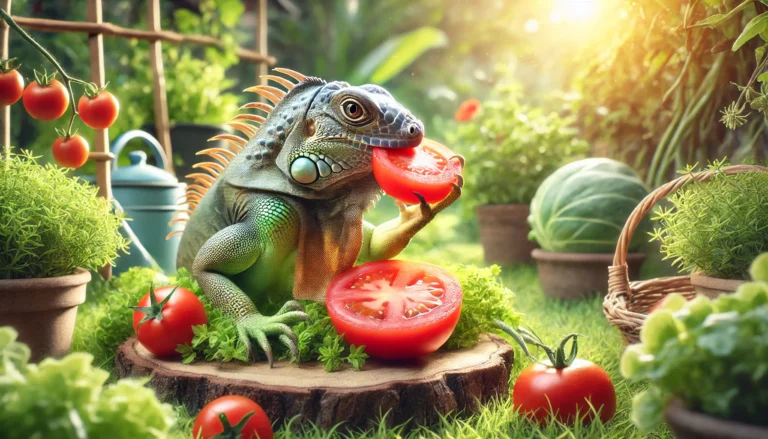
Iguana owners want to give their pets the best possible care and nutrition, and vegetables are a core part of a healthy iguana diet.
That raises the question of which foods are safe, and tomatoes are a common one. Tomatoes are popular among humans due to their rich taste and high nutritional value.
But can these juicy red fruits be included in an iguana’s diet? In this article, we will explore the topic of whether or not iguanas can eat tomatoes.
We’ll dive into the nutritional benefits of tomatoes, the potential risks they pose for our reptilian friends, how to introduce them into your iguana’s diet properly, and alternatives to consider if tomatoes aren’t suitable for your pet.
Can Iguanas Eat Tomatoes?
So let’s get started!
Key Takeaways
- Tomatoes should only be given to iguanas in moderation because fruit should be a small part of an iguana’s diet, and the leaves, stems, and green fruit contain toxic alkaloids.
- Iguanas require a variety of fruits and vegetables in their diet, with leafy greens and fruits being essential for a balanced diet.
- VCA lists tomatoes as an acceptable fruit for iguanas, but fruit should make up less than 20% of the diet.
- Before introducing tomatoes to an iguana’s diet, consult a reptile veterinarian, and make sure the tomato is ripe, has been thoroughly washed, and has had the stem and any green parts removed before feeding it to the pet.
Understanding Iguana Diets
Iguanas can’t survive on tomatoes alone; their diet should be mostly leafy greens and other vegetables, with only a little fruit. Iguana digestion is unique, requiring specific nutrients to maintain their health.
In the wild, iguanas feed on various leaves, flowers, and fruits to ensure they receive all the necessary nutrients. As a pet owner, providing your iguana with a balanced diet that includes leafy greens such as kale or collard greens and fruits like strawberries or papayas is crucial.
It’s also important to establish regular feeding schedules that coincide with your iguana’s natural eating habits. Providing your iguana with an appropriate diet and feeding schedule can help ensure they live a healthy life.
Now let’s explore the nutritional value of tomatoes in an iguana’s diet.
Nutritional Value of Tomatoes
When researching the nutritional value of tomatoes, a few key points stand out.
First, tomatoes are rich in vitamins and minerals, such as vitamin C, potassium, and lycopene, which have many health benefits.
Second, they have a high water content, though iguanas should always have fresh water available too.
Lastly, they contain more phosphorus than calcium (USDA data), which matters because iguanas need more calcium than phosphorus in their diet.
Knowing these facts can help us make informed decisions about including tomatoes in an iguana’s diet.
Vitamins and Minerals
You’ll be pleased to know that including tomatoes in your iguana’s diet can provide them with essential vitamins and minerals. As noted above, tomatoes are a great source of nutrition in general, with vitamin C, some carotenoids, and potassium. For iguanas, however, tomatoes are a treat rather than a key nutrient source.
The table below summarizes these vitamins and minerals and some of their sources:
| Vitamin/Mineral | Benefits | Sources |
|---|---|---|
| Vitamin C | Supports normal immune function and tissue repair | Tomatoes, bell peppers, broccoli |
| Vitamin A | Supports eye health; aids in growth and development | Carrots, sweet potato, kale |
| Potassium | Regulates fluid balance; supports heart function | Bananas, squash, collard greens |
Incorporating these foods into your iguana’s diet can help ensure they receive a well-rounded mix of essential nutrients. With their nutritional needs met through a balanced diet including tomatoes and other veggies rich in vitamins and minerals like those listed above – your iguana can get the range of nutrients it needs.
Water Content
Monitoring their water intake is important to ensure optimal health for your pet iguana.
As reptiles, they require adequate hydration to maintain proper bodily functions. One way to maintain their hydration levels is by providing them with hydrating foods in their diet. This includes fruits with high water content, such as melons, strawberries, and tomatoes.
Tomatoes are about 94% water according to USDA data, which is one reason VCA describes fruits as water-rich but nutrient-poor for iguanas. Not only do they provide hydration, but they also contain essential vitamins and minerals such as vitamin C and potassium.
However, it’s important to note that tomatoes should be given in moderation because too much fruit displaces the calcium-rich greens iguanas need.
In the next section, we will discuss the importance of monitoring oxalates and other compounds in your iguana’s diet.
Oxalates and Other Compounds
If your iguana is a picky eater, it’s important to be aware of the plant compounds in their diet. One compound that can cause concern is oxalate toxicity. Oxalates are found in many plant foods and can bind with calcium. Tomatoes contain only small amounts, but high-oxalate greens such as spinach should be fed sparingly.
These crystals can accumulate in organs such as the kidneys and cause health issues for your pet. It’s essential to note that not all plant compounds are harmful to iguanas.
However, if you’re considering adding foods with high levels of oxalates to your pet’s diet, it’s crucial to do so in moderation.
In this way, you’ll be able to balance out the different food groups and avoid potential risks down the line. In the following section, we will explore these potential risks of tomatoes for iguanas further.
Potential Risks of Tomatoes for Iguanas
Eating tomatoes may pose potential risks for your iguana. These risks include digestive issues and toxicity from the plant’s alkaloids. Tomatoes contain solanine, a toxic compound commonly found in nightshades that could cause gastrointestinal problems for iguanas.
Additionally, tomato leaves and stems also contain tomatine, another poisonous alkaloid that can result in severe digestive distress.
Possible problems include:
1) Too much tomato may cause loose stools or other digestive upset.
2) Eating the leaves, stems, or green fruit exposes an iguana to solanine and tomatine; if this happens, contact a reptile veterinarian.
3) Iguanas with pre-existing health conditions like kidney disease or gout should avoid eating tomatoes unless their veterinarian approves, since diet changes matter more for these animals.
If you’re considering introducing tomatoes to your iguana’s diet, it’s crucial to consult with a veterinarian who specializes in reptile care first. They can provide you with specific guidelines on how much tomato your pet can consume without putting their health at risk.
In the next section, we will discuss some essential steps you should follow when introducing new foods into your pet’s diet.
Introducing Tomatoes to Your Iguana
Although tomatoes can pose some risks to iguanas, they can still be a nutritious addition to their diet when prepared correctly.
Before introducing tomatoes to your iguana’s diet, it’s important to ensure the tomato is ripe and thoroughly washed.
When preparing tomatoes for your iguana, it’s best to remove the stem and any green parts of the tomato, as these contain solanine which could be harmful. You may also want to consider chopping the tomato into small pieces or mashing it up before feeding it to your pet.
Offer only a few small pieces of tomato occasionally; VCA advises keeping all fruit to less than 20% of the diet, offered as a top dressing on vegetables. Never offer tomato sauce, soup, ketchup, or other seasoned products.
As with any new food introduced into an animal’s diet, observing how your iguana reacts after eating tomatoes is important. If you notice any signs of discomfort or illness, discontinue feeding them this particular food item.
In the next section, we’ll discuss alternatives to tomatoes that may benefit your iguana’s health and well-being.
Alternatives to Tomatoes
Looking for alternative options to feeding your pet lizard can be a smart move, especially if you want to ensure that they receive optimal nutrition.
While tomatoes are safe for iguanas to eat in moderation, there are other fruits that could serve as excellent tomato substitutes. For instance, giving your iguana slices of kiwi or papaya is an excellent way to add variety and flavour to their diet.
When it comes to introducing new foods into your iguana’s diet, it’s essential always to err on the side of caution and monitor their reaction closely. Safe fruits for iguanas include strawberries, bananas, and mangoes.
Introducing these fruits gradually will help prevent any digestive issues or allergic reactions. Ultimately, offering a diverse range of fruits will not only satisfy your pet lizard’s taste buds but also provide them with the vitamins and minerals needed for healthy growth and development.
FAQs about Can Iguanas Eat Tomatoes
How often should I feed my iguana tomatoes?
Offer tomatoes only occasionally as a treat, not as a regular food. A balanced diet is based on calcium-rich leafy greens and other vegetables, with a calcium supplement if your reptile veterinarian recommends one.
Can iguanas eat tomato leaves or stems?
Due to their toxicity, it’s not recommended for iguanas to consume tomato leaves or stems. Alternatively, feed them other vegetables like collard, mustard, and turnip greens.
Are there any specific types of tomatoes that are better for iguanas?
No particular tomato varieties are known to be better for iguanas. Choose ripe red tomatoes as they have the highest nutritional benefits for iguanas. Avoid green or unripe tomatoes, which can be toxic.
Can iguanas eat tomato sauce or ketchup?
Tomato-based products are not recommended for iguanas because they usually contain salt, sugar, onion, garlic, or other seasonings. Tomato sauce or ketchup should be avoided. Stick to a balanced diet of greens and vegetables with a little fruit.
What are some signs that my iguana may not be tolerating tomatoes well?
If your iguana has diarrhoea, vomiting, or lethargy after eating tomatoes, stop feeding them and contact a reptile veterinarian. It’s important to feed tomatoes in moderation and monitor their feeding frequency.
Conclusion
In conclusion, while tomatoes may seem like a healthy choice for your iguana, it’s important to consider their nutritional value and potential risks before introducing them into their diet.
As herbivores, iguanas require diverse greens and vegetables to meet their dietary needs. While tomatoes do offer some nutrients, they’re not essential for an iguana’s health.
That being said, if you do choose to give your iguana tomatoes, make sure to introduce them slowly and in small amounts. Watch for any signs of digestive issues or discomfort. If possible, opt for organic tomatoes that haven’t been treated with pesticides or chemicals.
An iguana fed mostly tomatoes or other fruit will not get the calcium and nutrients it needs, and poor diets are a common cause of illness in pet iguanas.
If you have questions about your iguana’s diet, ask a reptile veterinarian.
Proper nutrition is one of the most important parts of iguana care.