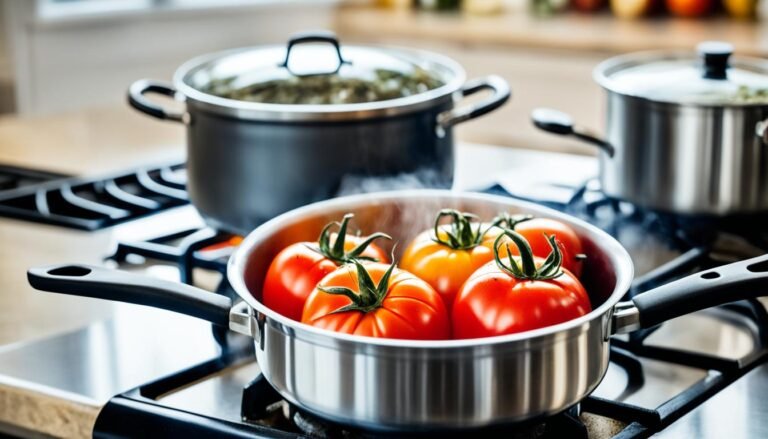
Did you know that making 1 quart of crushed tomatoes needs 3 lbs. of fresh ones? Tomatoes are a key item in home gardens and farms. For those who love gardening and cooking, preserving summer tomatoes is special. Water bath canning is a simple, proven way to maintain their taste all year.
So, I’m going to guide you through water bath canning step by step. I’ll cover how to pick the right gear and prepare, fill, and process your jars. It’s also key to add acid to keep the food safe. Plus, we’ll talk about pressure canning versus water bath canning. You’ll finish ready and confident to save your own tomatoes for the months ahead.
Key Takeaways
- Water bath canning is a safe and effective way to preserve the flavor of fresh tomatoes for year-round enjoyment.
- Proper food safety measures, such as adding acid, are crucial when canning tomatoes to prevent the growth of harmful bacteria.
- Understanding the differences between pressure canning and water bath canning can help you choose the best method for your needs.
- Careful preparation of your tomatoes and equipment is the key to successful water bath canning.
- Properly sealed and stored canned tomatoes can last up to a year, providing a taste of summer all winter long.
Pressure Canners vs. Water Bath Canners
There are two main ways to can tomatoes: pressure canning and water bath canning. Which you choose depends on how acidic the food is.
Using a Pressure Canner for Tomatoes
Pressure canning is best for foods low in acid, like meats, seafood, and some veggies including tomatoes. It uses high-pressure steam to kill dangerous bacteria, making it safe to eat these foods later on. The USDA says pressure canning is the only safe way to preserve low-acid foods at home.
Using a Water Bath Canner for Tomatoes
Water bath canning is for high-acid foods, like fruits, pickles, jams, and tomatoes (when you add something to make them more acidic). Though it takes more time than pressure canning, it is a good way to make these foods safe to eat later as long as you follow the right steps.
Studies show that tomatoes canned with pressure are healthier than those done with a water bath. This is because the quick heating and cooling keep more nutrients in the food. Still, both methods make tasty and nutritious tomato products that are better than those you buy from stores.
For the best results, it’s crucial to stick to approved canning recipes from the USDA, no matter the method. Places like the National Center for Home Food Preservation and the Centers for Disease Control and Prevention can tell you how to can safely with both methods.
The Importance of Adding Acid to Canned Tomatoes
Making sure tomatoes are acidic enough is important. This stops harmful bacteria like botulism from growing. Some types of tomatoes today don’t have enough acid. They have a pH of 4.6 or higher, and a few can be even higher, at pH 5. By adding citric acid, lemon juice, or vinegar, you can make the tomatoes safer. This lowers the pH to a level where botulism spores can’t grow. Then, you can safely can them in a water bath.
Understanding the Role of Acidity in Food Preservation
Acidity keeps canned foods safe. If the food is more acidic, bad bacteria can’t survive. Tomatoes are usually acidic enough to can safely in a water bath. But, because tomato pH can vary, it’s important to use recipes that have been researched. This ensures your canned tomatoes will be safe to eat for a long time.
Citric Acid, Vinegar, & Lemon Juice: Pros and Cons
In home canning, citric acid, vinegar, and lemon juice are often used to boost acidity. Citric acid is great because it keeps the taste the same while adding acid. Vinegar and lemon juice change the flavor a bit, but they work well to make the tomatoes more acidic. When choosing lemon juice, use bottled. It’s better for canning since its acidity is consistent.
How to Add Acid to Canned Tomatoes
When canning tomatoes, use 2 tablespoons of bottled lemon juice or 1/2 teaspoon of citric acid for each quart of tomatoes. For smaller jars, use 1 tablespoon of lemon juice or 1/4 teaspoon of citric acid. It’s important to measure accurately. This makes sure the tomatoes are acidic enough to keep bacteria from growing while they’re stored.
“It is critical to use current, research-based recipes when canning tomatoes and any produce to ensure a safely preserved product for consumption.”
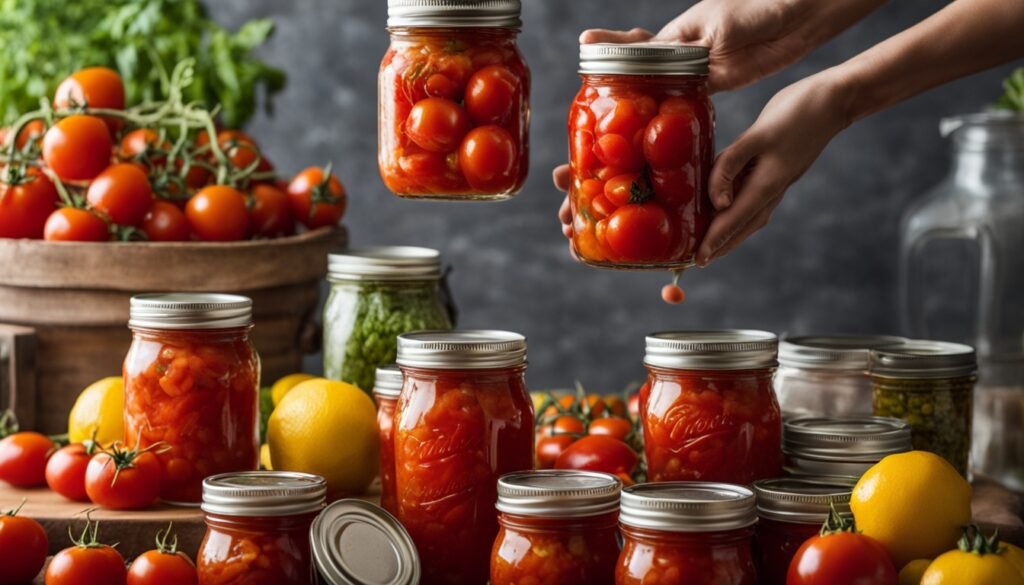
Adding acid to your canned tomatoes is key for their safety. By knowing the importance of acidity and using the right amount of citric acid, lemon juice, or vinegar, you can make sure your tomatoes are safe to keep and eat later.
Step-by-Step Canning Tomatoes in Water Bath
Canning tomatoes with a water bath is a well-loved way to keep the taste of fresh tomatoes. Just follow a few steps to make sure they’re tasty and safe to eat all year long.
- Start by cleaning your canning jars, lids, and tools very well. You can also clean them in the oven at 275°F for 20 minutes.
- Next, blanch your tomatoes in boiling water for a short time. Use 60 to 90 seconds for big ones, or 30 seconds for small ones. This makes the peels come off easily.
- Then, take off the peels, cores, and cut the tomatoes. You can either crush or dice them, as you like. For crushed tomatoes, blend 25% first, then add the rest later.
- Put your prepared tomatoes into clean jars, leaving some space at the top.
- Put the right amount of lemon juice or vinegar in each jar. Use 1 tablespoon of lemon juice or 2 tablespoons of vinegar for pint jars. For quart jars, it’s 2 tablespoons of lemon juice or 4 tablespoons of vinegar.
- Now, close the jars tightly with their lids and bands.
- Beforehand, fill your water bath canner with hot water. It should cover the jars by at least 2 inches when you put them in the canner. Also, put 2 tablespoons of vinegar in the water to stop hard water marks.
- Lower the filled jars into the boiling water bath. Let them process for the right time: 35 minutes for pints and 45 minutes for quarts.
- After cooking, take the jars out of the canner. Let them cool for about 12 hours. Then, check the seals, remove the bands, and store your jars in a cool, dark, dry place.
Canning tomatoes this way is simple and keeps the tomato flavor fresh the whole year.
| Canning Jar Size | Lemon Juice or Vinegar | Citric Acid |
|---|---|---|
| Pint | 1 tbsp lemon juice or 2 tbsp vinegar | 1/4 tsp |
| Quart | 2 tbsp lemon juice or 4 tbsp vinegar | 1/2 tsp |
The table above shows how much acid to add for safety, by jar size. It’s very important for safe canning.
“Canning tomatoes is a rewarding way to preserve the harvest and enjoy the fresh flavors of summer all year round.” – Jane Doe, Canning Expert
Water bath canning is safe and good for tomatoes, if you do it right. With care and these steps, you can make tasty canned tomatoes for your pantry.
Preparing Your Equipment & Sanitize Your Jars
Before you start canning, it’s key to get your canning equipment ready and your jars cleaned. It is very important to wash and make your tools and jars sterile. This step is vital in keeping your canned food safe.
First, wash your jars and lids well. You might do this by putting them in the oven at 275°F for 20, using the dishwasher, boiling them in water for 11 minutes, or zapping them in the microwave for 30-45.
After cleaning your jars and lids, set up a clean area to work. Get your canning tools ready like the water bath canner, funnel, and any others. Having everything clean and close will make canning easier.
| Canning Equipment Checklist |
|---|
| – Water bath canner or pressure canner |
| – Canning jars (pint or quart size) |
| – Canning lids and rings |
| – Canning funnel |
| – Ladle |
| – Jar lifter |
| – Kitchen towels |
Take the time to get your canning equipment and jars ready for canning. It will make your canning a safe and happy time.
Preparing Your Tomatoes
Getting tomatoes ready starts your canning adventure right. You might want crushed, whole, diced, sauced, or juiced tomatoes. First, wash the tomatoes well. Cut out any bad spots.
Blanching Technique for Easy Tomato Skin Removal
Blanching tomatoes helps skin removal. Boil a big pot of water. Put the tomatoes in for 30-60 seconds until the skins crack. Then, cool them fast in an ice-water bath.
Crushed Tomatoes
For crushed tomatoes, quarter blanched ones. Cook them in a pan on low for 3 hours, stirring sometimes.
Whole, Dice, or Quarter Tomatoes
For whole, diced, or quartered tomatoes, just do the blanching. Then cut them up how you want.
Tomato Sauce
For sauce, quarter the tomatoes. Boil them for 5 minutes, then press them through a sieve or food mill. Simmer until it’s the sauce thickness you like.
Tomato Juice
For making juice, quarter the tomatoes. Boil them for 5 minutes, then sieve or mill.
Choose your method, but always start with fresh, ripe tomatoes. Follow good canning safety. This ensures your canned tomatoes stay tasty and safe to eat. Check out Billy Parisi’s guide, Martha Stewart’s instructions, or Better Homes & Gardens’ tutorial for more help.
Preparing Your Water Bath Canner
Canning tomatoes at home is rewarding. But, it’s key to follow safety steps. Make sure to prepare your water bath canner first.
Start by filling the canner with hot water. The water should cover the jar tops by 2 inches. Boil the water and add 2 tablespoons of vinegar. This step helps keep your jars clear.
A water bath canner usually costs $30 to $35. You can buy one at kitchen stores and big-box retailers. Canning jars, like 8-ounce ones, cost about $13 per dozen at stores such as Publix and Kroger.
Now, you’re set to can your tomatoes. Time needed in the canner might be 35 to 60 minutes. This varies with your altitude and jar size. The USDA says you can safely can green tomatoes, too.
A jar funnel is a great buy, costing about $3. It makes filling jars much easier. Look for it at your nearby grocery or hardware store.
For successful canning, always follow tips on cover times. Properly preparing your canner is crucial. Then, you can enjoy your homemade canned tomatoes for months.
Water Bath Canning Tomatoes
Filling Canning Jars with Prepared Tomatoes
First, you need to put the right amount of acid in each canning jar. This keeps the tomatoes safe to eat. Add these into every pint jar: 1 tablespoon of lemon juice, 2 tablespoons of vinegar, or 1/4 teaspoon of citric acid. For quart jars, use 2 tablespoons of lemon juice, 4 tablespoons of vinegar, or 1/2 teaspoon of citric acid.
Next, gently put in the hot tomato mix or whole tomatoes. Make sure you leave 1/2 inch at the top of the jar. Then, use something not metal to get rid of air bubbles. Clean the tops of the jars, close them with lids and rings, and spin the rings only a bit.
Processing Jars in Water Bath Canner
Now, lower the jars into the boiling canner using special tongs. Make sure the water covers the jars by at least an inch. Let the water boil again, then cook the jars for 35 minutes if they are pint-sized or 45 minutes for quart jars.
After cooking, leave the jars in the water for 5 minutes. This prevents siphoning. When they cool down for a whole day, you can store them in a cool, dry spot.
“Peeling tomatoes before canning is necessary for safety reasons as the skin can harbor bacteria.”
Water bath canning is a good way to store tomatoes without needing a pressure canner. Always use bottled lemon juice for tomatoes. If you use white vinegar, it might change the taste.
It’s not safe to can tomatoes in an Instant Pot or oven. Don’t can tomatoes with low-acid foods like peppers or onions, unless you follow a trusted recipe.
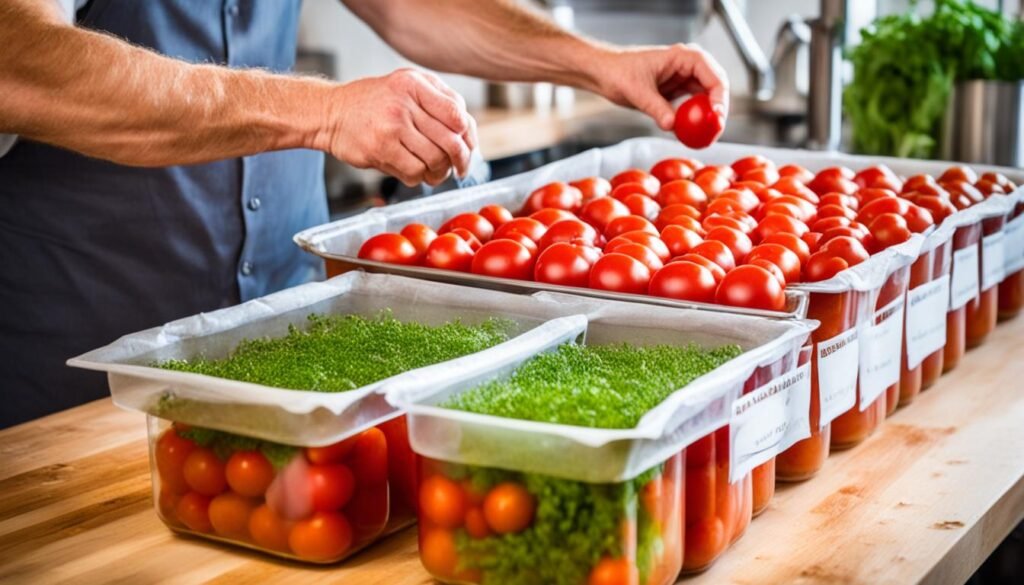
Canning diced tomatoes is simpler and quicker than making sauce. It avoids extra cooking. When canning without liquid, the time needed is twice as much as with boiling water. For 7 quarts of stewed tomatoes, you need about 22 pounds of tomatoes. That’s around 3 pounds per quart. Stewed tomatoes should be boiled 35 minutes for pints and 45 minutes for quarts in a water bath canner.
Conclusion
Canning tomatoes with the water bath method is great. It keeps summer’s fresh taste all year. Just follow the steps and keep safe with food safety tips. You’ll make safe and tasty tomato treats at home.
You can make crushed or whole tomatoes, sauce, or even juice. This method lets you keep the summer’s harvest. Enjoy tomatoes from your garden or the market all year.
Learning to can at home is rewarding. It saves you money and lets you enjoy great tastes anytime. Have fun canning tomatoes and make your meals better with this easy method.
FAQ
What are the main differences between pressure canning and water bath canning for tomatoes?
Pressure canning kills bacteria fast with high-pressure steam heat. Water bath canning uses a longer boiling time in water. Both ways make tomatoes safe to eat. But, tomatoes canned under pressure keep more nutrients. Yet, those canned in water bath taste great and are good for you too.
Why is adding acid to canned tomatoes so important?
It’s vital to stop harmful bacteria, like botulism, for safe long-term storage. Tomatoes don’t always have enough acid. Adding acid makes sure bacteria won’t grow. Citric acid, vinegar, and lemon juice help keep your canned tomatoes safe.
How do I properly prepare my tomatoes for water bath canning?
First, wash the tomatoes well. Cut off any parts that look bad. To remove their skins easily, blanch the tomatoes. If you’re making sauce or juice, you can skip this step.
What steps do I need to follow when water bath canning tomatoes?
Wash your canning jars and lids to prepare. Put acid (like lemon juice) in each jar. Fill the jars with hot tomatoes, leaving some space at the top. Lower the jars into a hot water bath canner. Process them for the right time: 35 minutes for pints and 45 minutes for quarts.
Source Links
- https://www.almanac.com/how-to-can-tomatoes
- https://extension.sdstate.edu/water-bathing-vs-pressure-canning
- https://www.thespruceeats.com/boiling-water-bath-versus-pressure-canning-1327438
- https://melissaknorris.com/pioneering-today-canning-101-water-bath-vs-pressure-cooker/
- https://www.canr.msu.edu/news/acidifying_your_home_canned_tomatoes
- https://www.clemson.edu/extension/food/canning/canning-tips/27tomato-products-acidify.html
- https://www.clemson.edu/extension/food/canning/canning-tips/32acidifying-pressure-canned-tomatoes.html
- https://thenewlighterlife.com/canning-tomatoes-in-water-bath-canner/
- https://farmflavor.com/lifestyle/canning-tomatoes/
- https://www.southernplate.com/class-canning-tomatoes-complete-video/
- https://www.bhg.com/recipes/how-to/preserving-canning/canning-tomatoes/
- https://www.pbsutah.org/blogs/modern-gardener/canning-tomatoes-for-beginners/
- https://www.lanascooking.com/home-canned-tomatoes/
- https://www.billyparisi.com/canning-tomatoes-how-to/
- https://www.marthastewart.com/how-to-can-tomatoes-7643621
- https://pickyourown.org/canning_tomatoes.htm
- https://www.allrecipes.com/article/how-to-can-tomatoes/
- https://oneacrevintagehome.com/tomatoes-water-bath-canning/
- https://www.sustainablecooks.com/canning-stewed-tomatoes/
- https://www.fermetournesol.qc.ca/en/blogs/recettes-tourne-sol/conserves_tomates
- https://www.seriouseats.com/canned-whole-tomatoes-preservation-recipe
- https://extension.illinois.edu/food/preserving-tomatoes