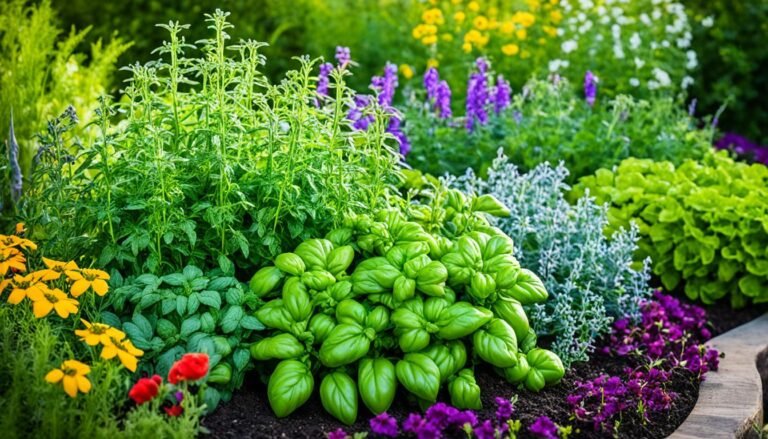
Tomatoes are beloved and rewarding to grow in the garden. Yet, they can fall prey to pests and diseases. These issues may threaten their success. But, have you thought about how to naturally protect your tomato plants? What if you could boost their growth and flavor? The secret is in using specific herbs as their companions.
Companion planting is when you grow different plants together for mutual benefit. It’s a traditional method that can change your tomato garden. By planting certain herbs, you can fight off pests, make the soil healthier, and even make your tomatoes taste better. Are you excited to learn about herbs that work well with tomatoes? Let’s explore the best herbs that can help your garden reach its full potential.
Key Takeaways
- Companion planting with herbs can help protect your tomato plants from pests and diseases
- Certain herbs like basil, parsley, and mint can repel insects and attract beneficial predators
- Herbs can also improve soil health and enhance the flavor of your tomatoes
- Careful selection and placement of companion herbs is crucial for maximizing their benefits
- Incorporating a diverse array of companion plants can create a more resilient and productive tomato garden
Introduction
Companion planting means growing certain plants together to help them all thrive. By planting herbs with your tomatoes, you’ll make your garden healthier. You can lower the chance of pests, fight off diseases in the soil, and reduce weeds. This way, you help your plants grow strong and also get better tasting tomatoes.
Benefits of Companion Planting
Planting herbs with tomatoes has many good points. It does these things:
- Repel pests with the aromatic compounds emitted by certain herbs
- Make it harder for pests to locate and infest your tomato plants
- Attract beneficial insects that prey on common tomato pests
- Improve the availability of key nutrients in the soil
- Suppress weed growth, reducing competition for resources
- Increase the overall biodiversity and resilience of your garden ecosystem
How Herbs Benefit Tomato Plants
Herbs are great friends to tomato plants. They help in many ways. For instance, basil makes tomatoes tastier and helps them grow. It keeps bugs like thrips and tomato hornworms away. Parsley brings in good bugs that eat pests, and mint scares off bad insects. With lots of different herbs, your garden will be full of life. This helps your tomatoes be healthy and produce more.
Basil
Basil is the number one choice for a tomato companion plant. It keeps away bad bugs like aphids and hornworms. After it flowers, it brings in good bugs and makes your tomatoes taste better. But, it might grow too much and block sunlight from the tomatoes. So, keep it about 8-12 inches away and trim it often.
Enhancing Flavor and Growth
Basil makes tomatoes taste better when they grow together. The big leaves of basil protect the soil and keep it moist, which helps the tomatoes grow. Basil also gives some shade to tomatoes, making their home even better.
Repelling Pests
Basil is great at keeping pests away from tomatoes. Its smell scares off bad bugs like whiteflies and aphids. This makes the place better for tomatoes to grow strong. Also, basil helps keep away flying bugs like mosquitoes, making the garden more pleasant.
Planting Tips for Basil
- Start with 4 or 5 basil seeds around each tomato plant, about a foot away.
- Basil grows fast and is ready to pick in just a month.
- It does well in pots by itself or with tomatoes, helping with flavor and pest control.
- Plant basil seeds for quick sprouting, usually in a week or less in warm soil.
- Some basil plants might grow on their own again, which can be a nice surprise.
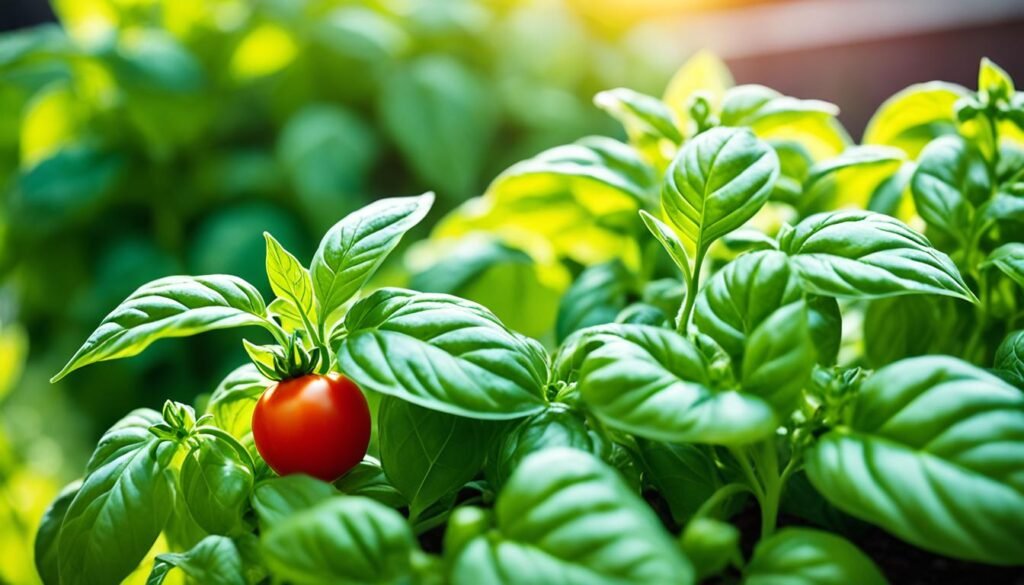
“Basil, tomatoes, and garlic form a trio that benefits each other in the garden.”
By using basil with tomatoes, your garden wins in many ways. You get less pests and better taste in your tomatoes. Just remember the right planting tips and you’ll have a great tomato harvest.
Parsley
Parsley is an aromatic herb that loves being with tomato plants. It gives many benefits for your tomatoes. It helps them grow strong and healthy.
Attracting Beneficial Insects
Parsley is great at bringing good bugs to your garden. Its flowers attract hoverflies. These flies eat pests like thrips and aphids, which can hurt tomatoes. Parsley also draws parasitic wasps. They control bad bugs like caterpillars and beetles that might attack your tomatoes.
Improving Soil Health
Parsley grows low and covers the ground well. This keeps the soil moist and stops weeds from growing. When it breaks down, it adds nutrients to the soil. This makes the earth better for growing tomatoes.
Planting Tips for Parsley
- Plant parsley where it gets some shade from taller tomato plants.
- It likes well-draining soil that’s not too acidic or basic, especially 6.0 to 7.0 pH.
- Keep the soil moist; parsley does not like drying out.
- Let some of your parsley plants flower and make seeds to bring more good bugs to your garden.
Adding parsley to your tomato garden helps protect them from pests. It also makes the soil healthier. This herb is a friend to your tomatoes. Learn more about planting parsley with your tomatoes from these sites: Meadowlark Journal, The Spruce, and Nature Fresh.
“Parsley is a versatile herb that can provide numerous benefits when planted alongside tomatoes. From attracting beneficial insects to improving soil health, this herb is a valuable addition to any tomato garden.”
Mint
Mint is a fragrant herb that works well with tomatoes. It has helped keep away ants, cockroaches, and flies for many years. Mint next to tomatoes makes them healthier and can stop weeds from growing. But, be careful. Some mint types can grow too fast and take over. It’s better to keep them in their own area.
Repelling Harmful Insects
Mint’s smell is strong and unique. Bugs like ants, cockroaches, and flies don’t like it. By planting mint around your tomatoes, you make a shield against these pests. This way, your garden stays bug-free.
Enhancing Soil Fertility
Mint does more than just keep pests away. It also makes the soil better for tomatoes. Mint, as a quick-spreading plant, stops weeds and adds to the soil’s nutrition. Its deep roots open up the soil, making it easier for plants to get food and water.
Planting Tips for Mint
- Choose a sunny spot with good drainage to plant your mint.
- Since mint grows fast, put it in a pot or a separate bed to control it.
- Trim mint often to keep it healthy and in check.
- Try different kinds of mint for unique flavors and smells.
Adding mint to your tomato area can help a lot. It keeps pests away and makes the soil better. Try different ways of planting to see what works best in your garden. Then, enjoy the great mix of flavors in your dishes with mint and tomatoes.
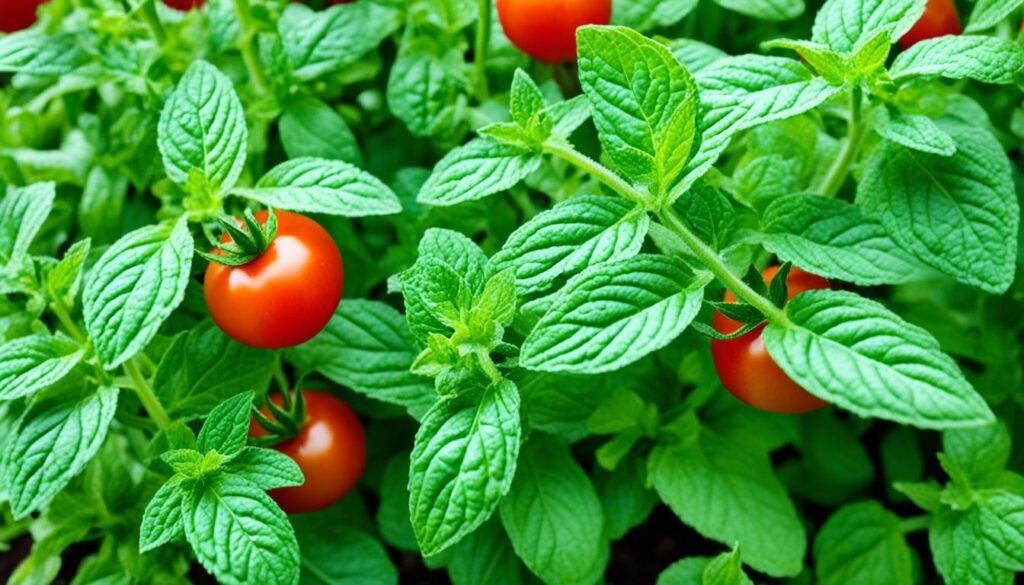
“Mint is often paired with tomatoes, especially in tabouli and sometimes combined with breadcrumbs on top of a baked tomato.”
Chives
Chives are more than a tasty herb; they’re great with tomatoes. They keep pests away and help your tomatoes grow bigger and tastier.
Deterring Pests
Chives can help keep pests off your tomatoes. Their oils, rich in sulfur, scare off aphids, slugs, and beetles. They might even stop the powdery mildew from harming your plants.
Enhancing Growth and Flavor
Not just for pests, chives boost your tomatoes’ taste and health. They enhance soil and offer natural nutrients. Garlic chives are especially good for making food and the veggies beside them better.
Planting Tips for Chives
- Chives like soil that drains well, lots of sun, and is full of organic matter.
- Plant them 6-12 inches away from your tomatoes around the base.
- Since chives come back each year, they keep helping your tomatoes.
- Cut them often to help them grow more and keep pests away from your garden.
Adding chives to your tomato garden means better taste and fewer pests. Let chives charm your tomatoes with their superpowers.
Miracle-Gro: In Good Company: Tomatoes and CompanionMeadowlark Journal: Chives: A Versatile CompanionSouthern Living: The Best TomatoCompanion
Oregano
Oregano is a great plant friend for tomatoes. It grows low but strong, covering the ground well. Oregano also keeps away bugs, making your tomato garden better.
Providing Ground Cover
Oregano can spread around tomatoes, acting like a blanket. This stops weeds and keeps the soil moist. Your tomato plants will be happier without the competition from weeds.
Repelling Insects
One of the best things about oregano is how it keeps bugs away from your tomatoes. Its smell scares off pests like aphids, spider mites, and whiteflies. So, plant some oregano by your tomatoes to protect them naturally.
Planting Tips for Oregano
- Choose a sunny place with soil that drains well for your oregano.
- Give them space, about 12 to 18 inches apart, so they can grow freely.
- Keep them watered, especially at the start, to make sure they grow strong.
- Cut them back often so they grow bushier and not too tall.
- Pick the leaves a lot to help them keep growing and stop flowering too soon.
Add oregano to your tomato garden for lots of helpful effects. It fights weeds and bugs, making your tomatoes happier and healthier. Let oregano work its magic and get better tomatoes!
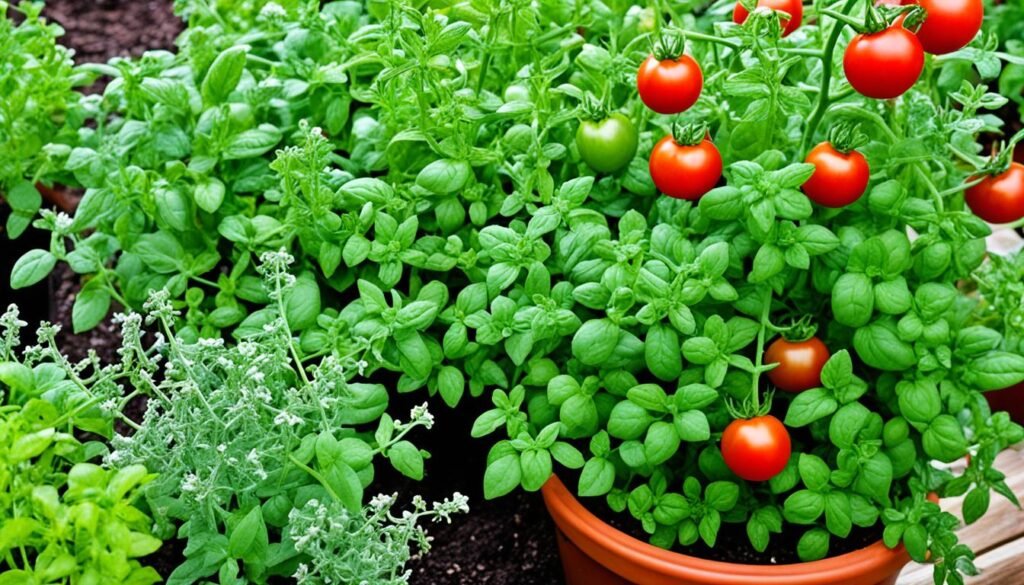
If you want to know more about planting friends with your tomatoes, click on these:
- Fresh Herb Tomato Sauce Recipe
- The Top Tomato Companion Plants for a Successful
- Tomato Herb Salad Recipe
Conclusion
Planting herbs and other greens near your tomato plants offers many perks. These include keeping pests away, making them taste better, and making the soil healthier. It also adds more variety to your herb garden. So, by placing plants like basil, parsley, mint, chives, and oregano with tomatoes, you create a great environment for everyone.
Summary of Key Benefits
Companion planting with tomatoes helps naturally control pests and makes them grow better. Basil and garlic can keep away bad bugs. Marigolds and nasturtiums draw in good bugs that eat the pests. Some plants, like legumes, put nitrogen back in the soil, which helps tomatoes. Mixing plants in your garden makes it stronger and healthier for your organic gardening.
Encouragement to Try Companion Planting
Think about trying out companion planting, especially with your tomatoes. The right mix of herbs and plants can boost your tomato crop. It also makes your garden full of life. Try different combos and see what works best for your tomatoes. A garden with companion plants is truly rewarding.
FAQ
What are the benefits of companion planting with herbs for tomatoes?
Companion planting with herbs boosts tomatoes in many ways. It fights off pests naturally and improves the flavor of the tomatoes. Also, it makes the soil better and adds more plant variety in the garden. Herbs such as basil, parsley, mint, chives, and oregano team up with tomato plants. This is to fight pests, bring in helpful bugs, and create the best growing setup.
How can basil help tomato plants?
Basil is great for tomatoes as it keeps harmful bugs away. It deters pests like aphids, whiteflies, spider mites, and hornworms. Plus, it draws in good pollinators and makes the tomatoes taste better. But, remember to keep basil at least 8-12 inches from tomatoes. It’s also crucial to trim it often. This stops it from growing too big and taking up space in the tomato area.
What benefits do parsley and other herbs provide for tomatoes?
Parsley does a lot for tomatoes by inviting helpful insects. Swallowtail butterflies and hoverflies love to stop by. They eat pests and keep the garden in balance. Plus, parsley keeps the soil moist and stops weeds as a ground cover. Mint, chives, and oregano also work against pests. They make the soil better and provide more cover. All this helps the tomatoes grow well and stay healthy.
How can I incorporate herbs into my tomato garden effectively?
To get the best from herbs with your tomatoes, look at how each herb grows. Pick the right spot for each one to keep them from taking over. Some herbs, like mint, can quickly spread everywhere. So, it’s smart to put them in a space of their own. Placing herbs in a spiral or random spots near the tomatoes helps. This way, every plant can get what it needs without fighting for space or food.
Source Links
- Using Herbs as Tomato Companion Plants – Amy K. Fewell
- Four Herb Companions for Tomatoes – Stoney Creek Farm
- The 21 Best (and 7 Worst) Companion Plants for Tomatoes
- 18 Tomato Companion Plants
- Tomato Companion Plants: 22 Science-based Plant Partners for Tomatoes
- The Perfect Planting Pair: Tomatoes & Basil
- Can You Grow Tomatoes With Basil?
- Planting Basil With Tomato Plants – How To Grow Incredible Tomatoes!
- Basil & Tomato Container Garden
- Parsley’s Perfect Partners: Companion Planting for Parsley — Meadowlark Journal
- 15 Companion Plants to Bring Out the Best in Your Parsley
- The Best Herbs & Spices to Pair with Tomatoes | Nature Fresh Farms
- Tomatoes with Seasonal Herbs – FineGardening
- Tomatoes with Mint Basil Pesto
- 10 Best Herbs to Pair with Tomatoes
- In Good Company: Tomatoes and Companion Planting
- The Best Chive Companion Plants — Meadowlark Journal
- 9 Plants You Should Never Grow With Tomatoes
- Fresh Herb Tomato Sauce — Simple Ecology
- The Top Tomato Companion Plants for a Successful Harvest | Agrio
- Tomato Herb Salad Recipe – Fit Men Cook
- What Is the Best Companion Plant for Tomatoes: Enhancing Growth and Flavor – Forestry.com
- First Time Gardener Planting Tomatoes & Dealing with Tomato Rot
- Nutritional Composition and Bioactive Compounds in Tomatoes and Their Impact on Human Health and Disease: A Review

Shakeel Muzaffar is a seasoned tomato gardener, SEO content strategist, and certified homoeopath.
As the founder of TomatoAnswers.com, he combines hands-on cultivation experience with evidence-based research from horticultural journals and peer-reviewed studies. His work focuses on the nutritional and therapeutic potential of tomatoes, blending practical gardening insights, natural health expertise, and AI-driven innovation to help readers grow smarter, eat healthier, and live more sustainably.