
Exploring the Autonomous Greenhouse Challenge
Remote crop management reaches new heights with this groundbreaking challenge. The Autonomous Greenhouse Challenge, hosted by Wageningen University & Research, brings together teams from across the globe to revolutionise indoor farming. This initiative focuses on leveraging artificial intelligence and sensor data to optimise greenhouse systems, reducing the need for constant human intervention.
The challenge is structured in two rounds, combining a hackathon with a remote growing experiment. Participants develop algorithms to control environmental factors like temperature, light, humidity, and CO2 levels. This approach not only enhances crop production but also improves cost efficiency, making it a game-changer for the industry.
Understanding Artificial Intelligence in Greenhouse Management
At the heart of this challenge is the use of artificial intelligence to manage greenhouse environments. Teams rely on sensor data to make real-time adjustments, ensuring optimal conditions for plant growth. This method minimises resource waste and maximises yield, showcasing the potential of technology in modern agriculture.
Insights from the Bleiswijk Competition
The Bleiswijk competition, a key part of the challenge, highlights the collaboration between academia and industry. Institutions like Wageningen University & Research and TU Delft play a pivotal role, providing the expertise needed to drive innovation. Teams adopt unique strategies, blending multidisciplinary knowledge to create robust algorithms.
This challenge not only fosters innovation but also sets the stage for the future of remote crop management. By combining cutting-edge technology with collaborative research, it paves the way for more efficient and sustainable farming practices. To learn more about this initiative, visit the Autonomous Greenhouse Challenge.
Implementing AI smart greenhouse tomatoes Strategies
Precision agriculture is reshaping the way growers optimise their yields. By integrating advanced systems, the agricultural sector is witnessing a transformation in how crops are managed. These strategies focus on leveraging technology to enhance efficiency and sustainability.
Leveraging Technology for Optimal Crop Production
Modern greenhouses are equipped with sensors and monitoring tools that collect real-time data. This information is used to adjust environmental factors like temperature, humidity, and light. Such precise control ensures optimal conditions for growth, maximising both quality and quantity.
Collaborations between industry leaders, such as Syngenta and Four Growers, have further refined these methods. Their joint research has led to the development of robotics and advanced algorithms. These innovations support precision agriculture, enhancing harvesting and yield optimisation.
Remote Monitoring and Data-Driven Adjustments
Remote monitoring systems play a crucial role in modern greenhouse management. By collecting accurate data, growers can make informed decisions in real time. This approach reduces the need for manual intervention, saving both time and costs.
Advances in machine learning and sensor technology have also contributed significantly. These tools enable continuous learning and adaptation based on live feedback. As a result, the sector is moving towards more sustainable and efficient practices.
By adopting these strategies, growers can achieve higher productivity while minimising resource waste. This method sets a precedent for the future of agriculture, ensuring a balance between efficiency and sustainability.
Integrating Robotics and Data-Driven Innovations
The future of farming is being reshaped by robotics and data-driven solutions. These advancements are addressing key challenges in modern agriculture, such as labour shortages and inefficiencies. By combining cutting-edge technology with collaborative research, the sector is moving towards more sustainable and productive practices.

Robotic Pollination and Harvesting Developments
Robotics is playing a pivotal role in tasks like pollination and harvesting, particularly for crops like tomatoes. For instance, Arugga AI Farming has developed robotic systems that use air pulses to mimic bumblebee buzz pollination. This innovation is especially useful in environments lacking natural pollinators.
Similarly, the collaboration between Syngenta and Four Growers has led to breakthroughs in robotic harvesting. Their systems use advanced algorithms to identify and pick ripe tomatoes with precision. These developments not only reduce labour costs but also minimise crop damage.
Enhancing Efficiency Through Machine Learning
Machine learning is transforming how growers manage their operations. By analysing real-time data, these algorithms optimise environmental conditions like temperature and humidity. This ensures better crop yields and resource efficiency.
For example, trials at Costa Group’s facility in New South Wales have shown significant improvements in production. Machine learning models help predict optimal harvest times, reducing waste and maximising output.
Collaborative Research and Industry Innovations
Collaboration between researchers and industry leaders is driving innovation in agriculture. Institutions like Wageningen University & Research are working with companies to develop smarter automation methods. These partnerships are crucial for advancing technology and addressing global food security challenges.
By establishing robust links between academia and industry, the sector is ensuring continuous development. This approach not only fosters innovation but also makes advanced technologies accessible to growers worldwide. For more insights, explore the latest research on robotics in agriculture.
Conclusion
Innovations in agriculture are transforming how we approach crop production. The integration of advanced systems, such as robotics and data-driven solutions, is revolutionising the greenhouse sector. These technologies not only cut costs but also enhance production efficiency, addressing challenges like labour shortages.
Remote monitoring and real-time adjustments based on datum have become essential tools for modern growers. This approach ensures optimal conditions for crops like tomatoes, maximising yield and sustainability. The ongoing research and industry partnerships are crucial for sustaining this innovation in the coming year.
By adopting these strategies, you can improve your operations and contribute to a more efficient agricultural sector. Explore how these advancements can be integrated into your practices to stay ahead in this evolving industry.
FAQ
How does artificial intelligence improve greenhouse management?
Artificial intelligence enhances greenhouse management by analysing data to optimise conditions like temperature, humidity, and light. This leads to better crop yields and resource efficiency.
What is the Autonomous Greenhouse Challenge?
The Autonomous Greenhouse Challenge is a competition where teams use AI to manage crop production remotely. It aims to advance innovation in the agricultural sector.
Can technology reduce costs in crop production?
Yes, technology like remote monitoring and data-driven adjustments can lower costs by minimising waste and improving resource allocation.
What role do robotics play in modern greenhouses?
Robotics assist in tasks such as pollination and harvesting, increasing efficiency and reducing labour costs in crop production.
How does machine learning benefit greenhouse operations?
Machine learning analyses patterns in data to predict optimal growing conditions, helping growers make informed decisions and improve yields.
Are there collaborative efforts in greenhouse innovation?
Yes, researchers and industry leaders often collaborate to develop new methods and technologies, driving progress in the sector.
Source Links
- Classification of Tomato Harvest Timing Using an AI Camera and Analysis Based on Experimental Results
- Biofeedback is the future of autonomous greenhouse cultivation
- Smart Sensors and Artificial Intelligence Driven Alert System for Optimizing Red Peppers Drying in Southern Italy
- AI
- Frontiers | Leveraging deep learning for plant disease and pest detection: a comprehensive review and future directions
- "Biofeedback is the future of autonomous greenhouse cultivation"
- Design of tomato picking robot detection and localization system based on deep learning neural networks algorithm of Yolov5 – Scientific Reports
- Compliant Motion Planning Integrating Human Skill for Robotic Arm Collecting Tomato Bunch Based on Improved DDPG
- Technological Advances in Smart and Sustainable Agriculture: The Role of Internet of Things, Artificial Intelligence, Big Data Analysis, Machine Learning & Deep Learning
- AI-ML Applications in Agriculture and Food Processing
- Internet of Things (IoT) and Artificial Intelligence (AI) in Agriculture: Applications for Sustainable Crop Protection
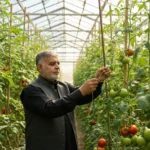
Shakeel Muzaffar is a seasoned tomato gardener, SEO content strategist, and certified homoeopath.
As the founder of TomatoAnswers.com, he combines hands-on cultivation experience with evidence-based research from horticultural journals and peer-reviewed studies. His work focuses on the nutritional and therapeutic potential of tomatoes, blending practical gardening insights, natural health expertise, and AI-driven innovation to help readers grow smarter, eat healthier, and live more sustainably.